
Campground for Socialists
In 1972, San Francisco's Union Street was the scene for upwardly mobile singles.

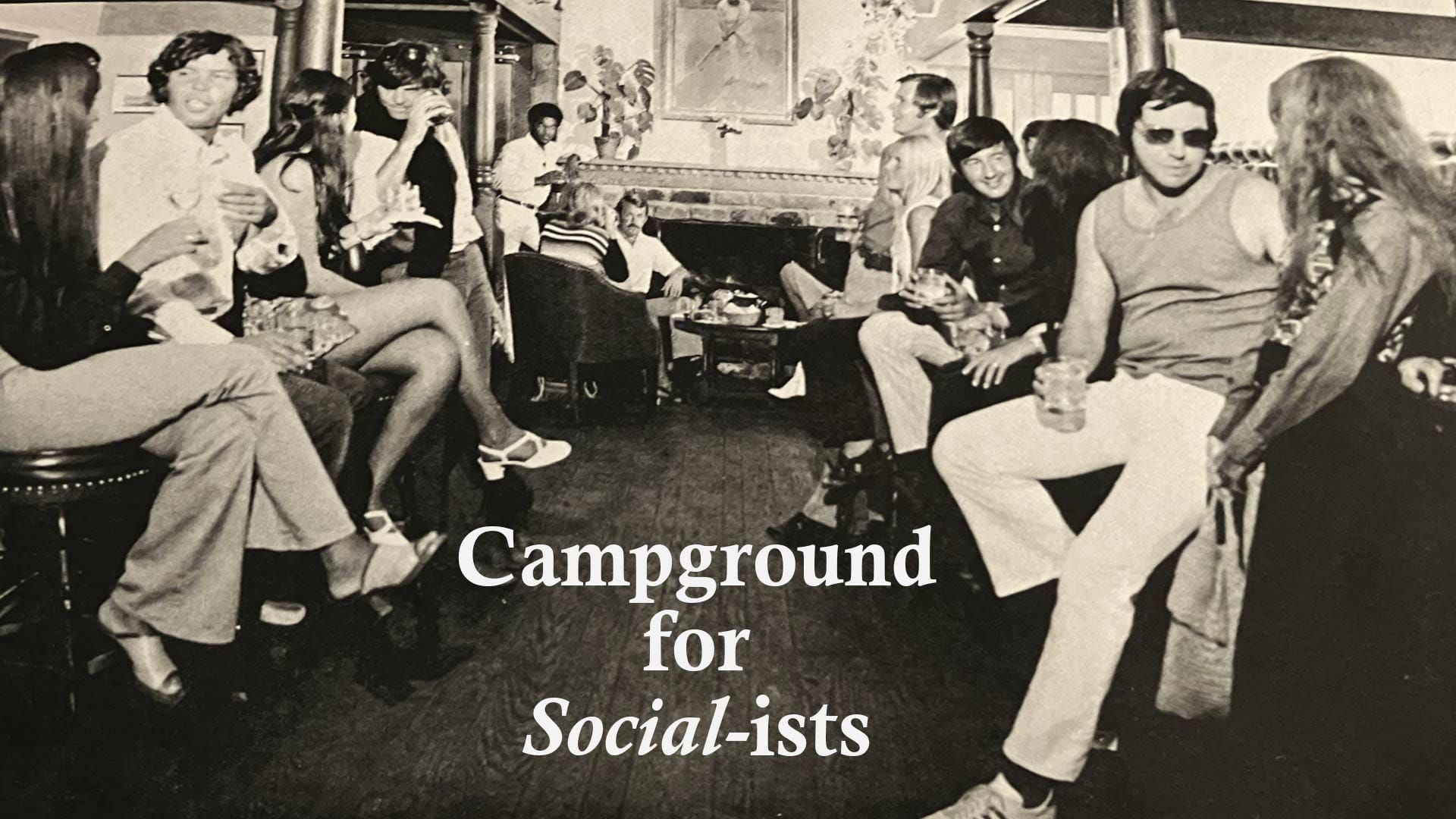
Union Street in 1972
Last year my step-mother Pat and her old friend Suzanne decided to spend a weekend in San Francisco and rented a room in Cow Hollow to relive their post-college glory years.
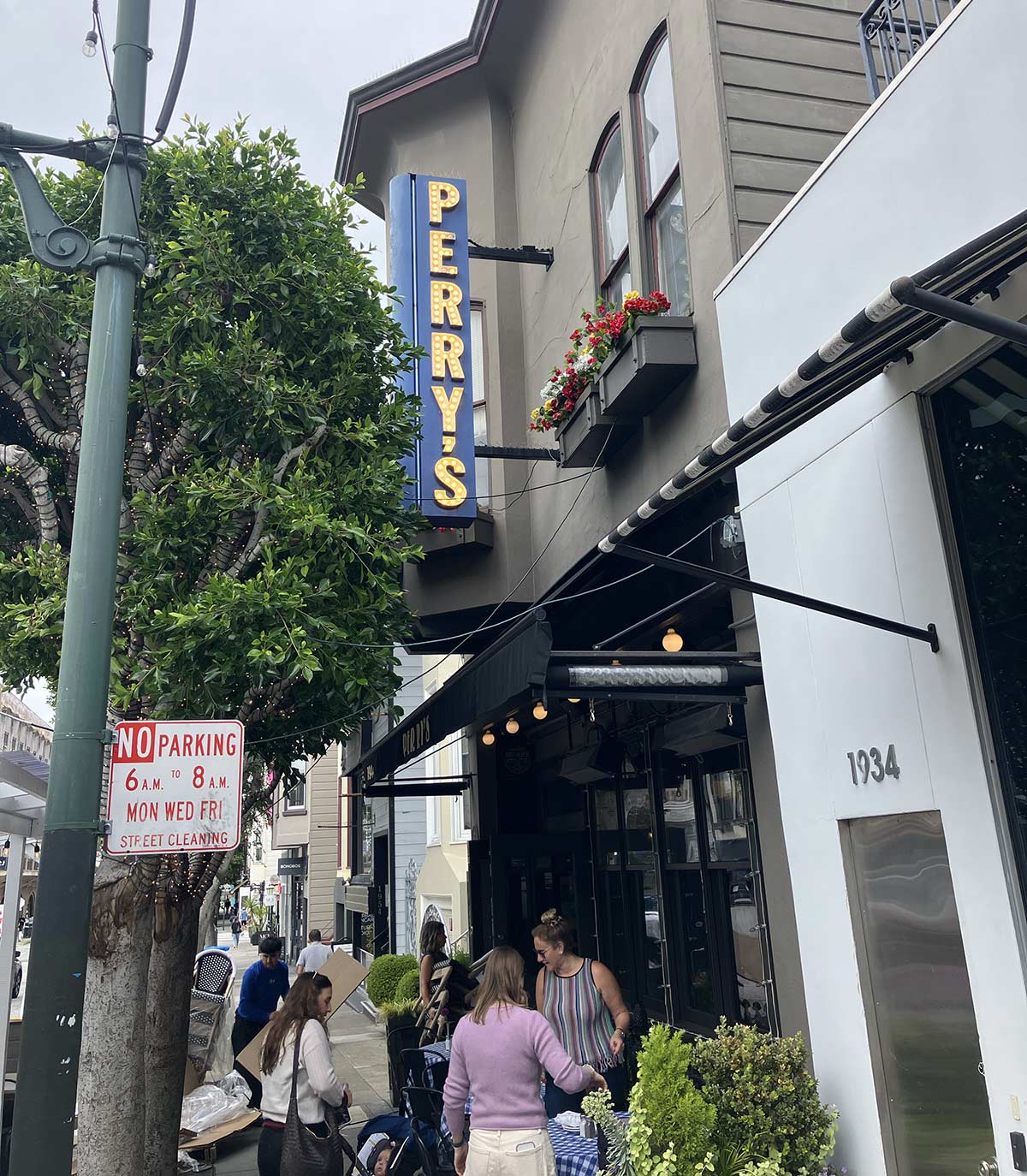
We had dinner at Perry’s, which took them back: dark wood, blue-and-white checkered table clothes, magazine covers on the wall signed by 49ers who are now collecting pensions. Perry’s is a nostalgic place and popular with gray-haired couples.
Once upon a time Perry’s and Union Street were a different scene.
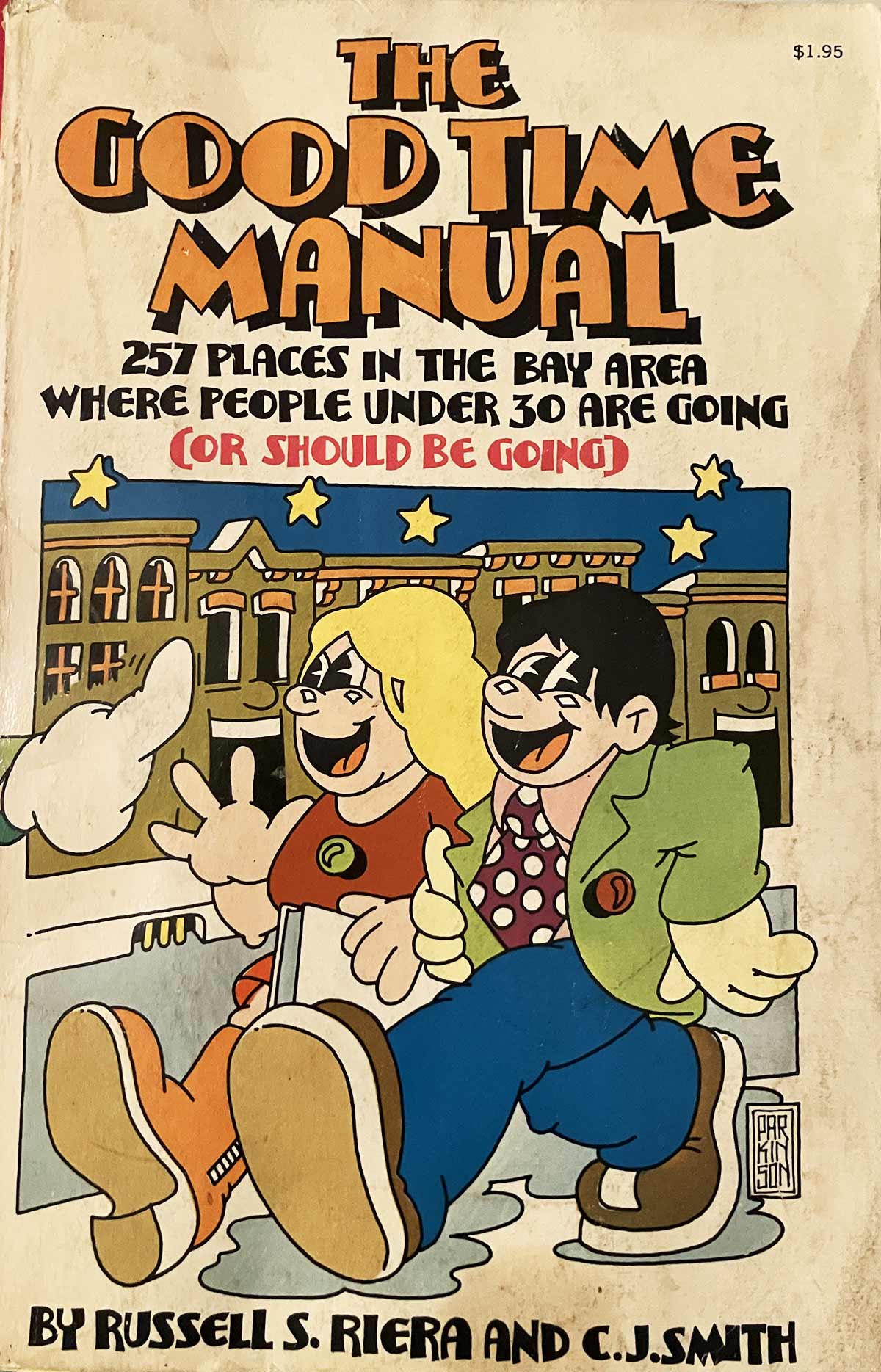
The Good Time Manual: 257 Places in the Bay Area Where People Under 30 Are Going (published in 1972), joked Union Street was the “Campground for Socialists”:
“Without looking too hard, you’re liable to find secretaries in doeskin pantsuits and blue-jeaned stews with hair long as a horse’s mane standard equipment in the half-dozen alcoholic service stations which have sprouted up here…”
Union Street was San Francisco’s upscale meat market at the dawn of the sexually liberated looking-out-for-number-one-me-generation-Kent State-Watergate-boogie-on-down decade that was the 1970s.
The shift started in the mid 1960s.
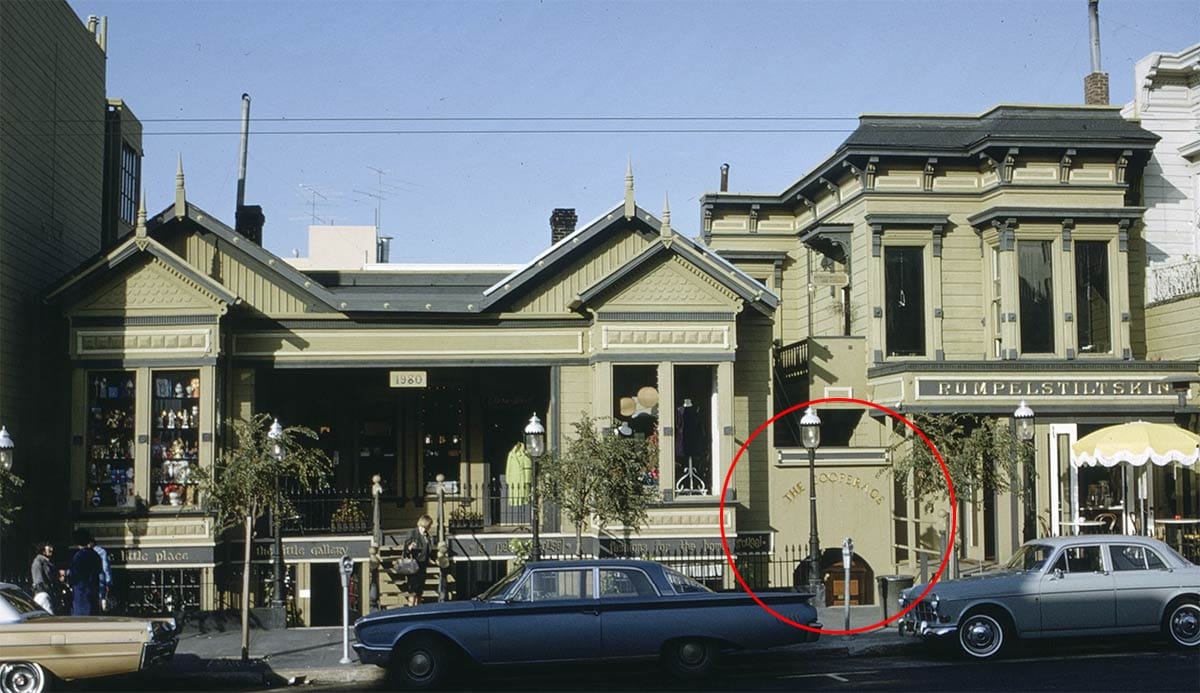
Decorators and clothing boutiques had begun opening in quaint Victorian buildings along the street, spurred by creative adaptive-reuse designs by architect Beverly Willis. Into the basement of one of these projects moved a steakhouse-for-singles called The Cooperage at 1980 Union Street.
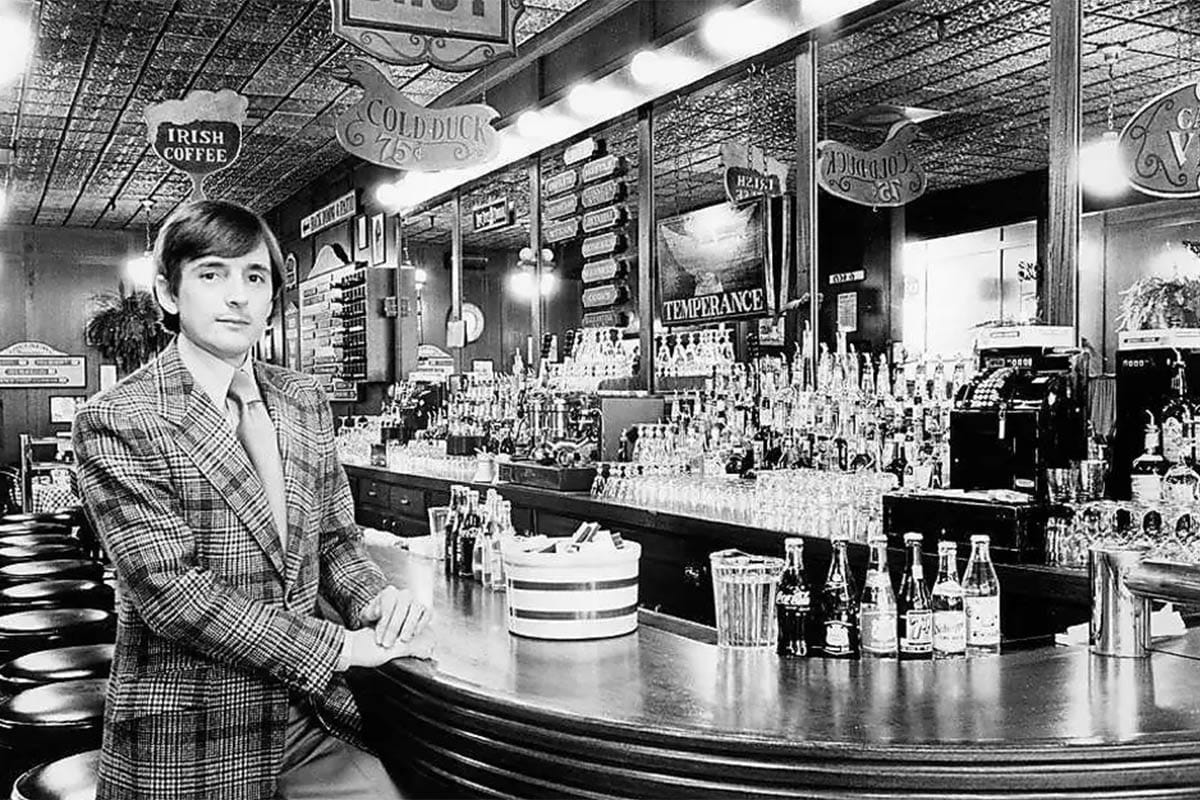
In The Cooperage, “[t]he brightest lighting [was] provided by the cigarette machine, which gives off just enough glow to let you see reasonabl[y] well who you’re talking to.”
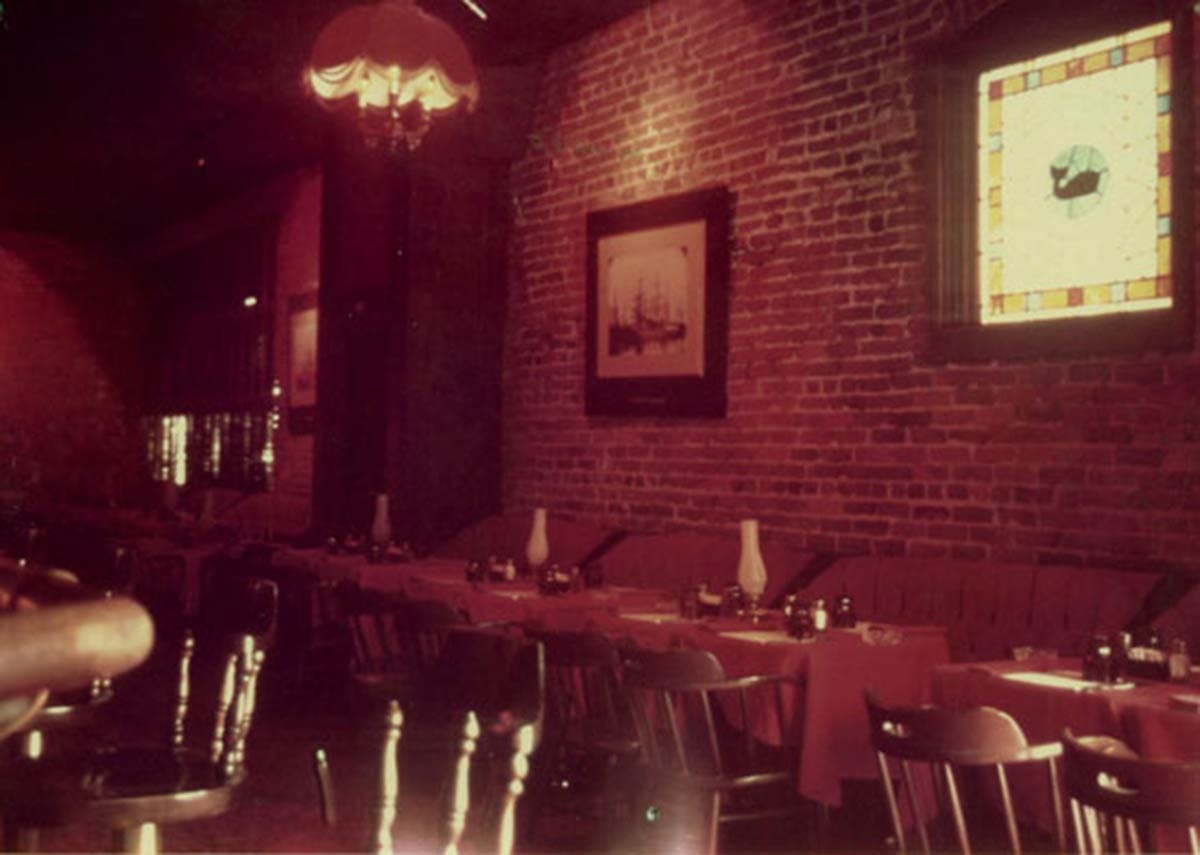
Flying from the Coop came a string of new bars opening on Union and down Fillmore Street in the late 1960s and early 1970s, including Perry’s. Places like Thomas Lord’s and The Vintner arrived with ferns and Victorian bric-a-brac.
In the “boy-meets-girl saloons,” the Chronicle reported in 1970, “the conversation is as tightly scripted as a low-budget movie.”
“Hello there.”
“Buy you a drink?”
“Where are you from?”
“How long have you been here?”
“What do you do?”
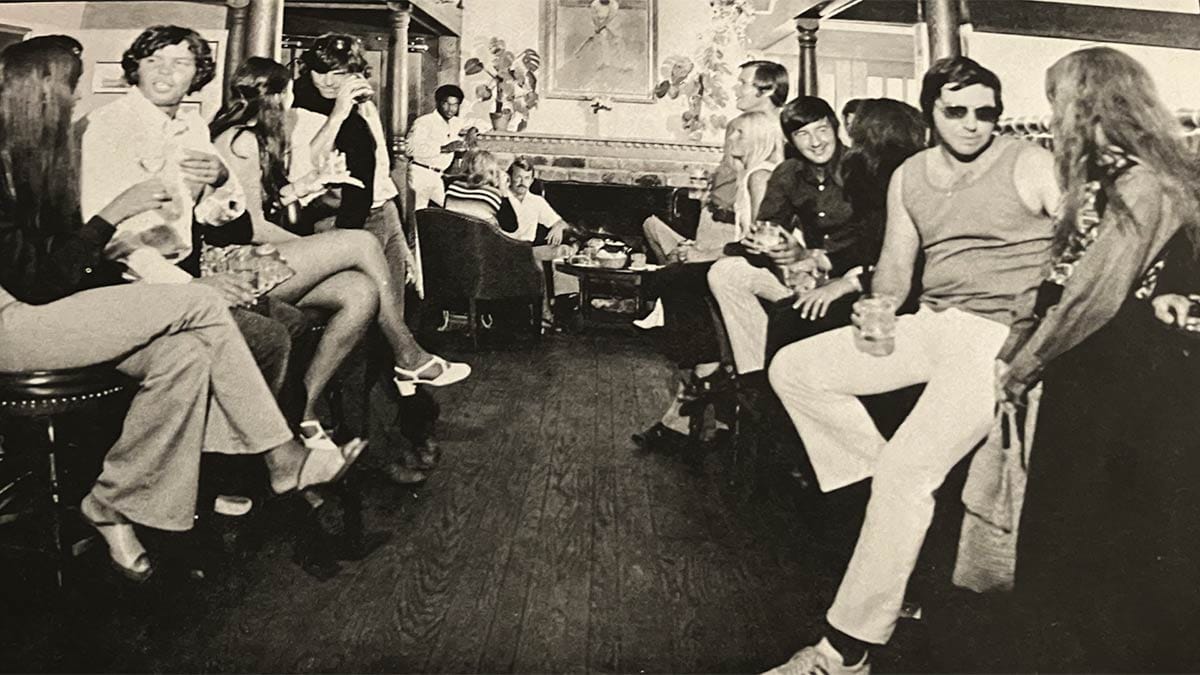
As opposed to North Beach with its neo-beatniks or the Haight-Ashbury with its scruffy hippies, Union Street offered a polished and posh hunting ground for the young and available.
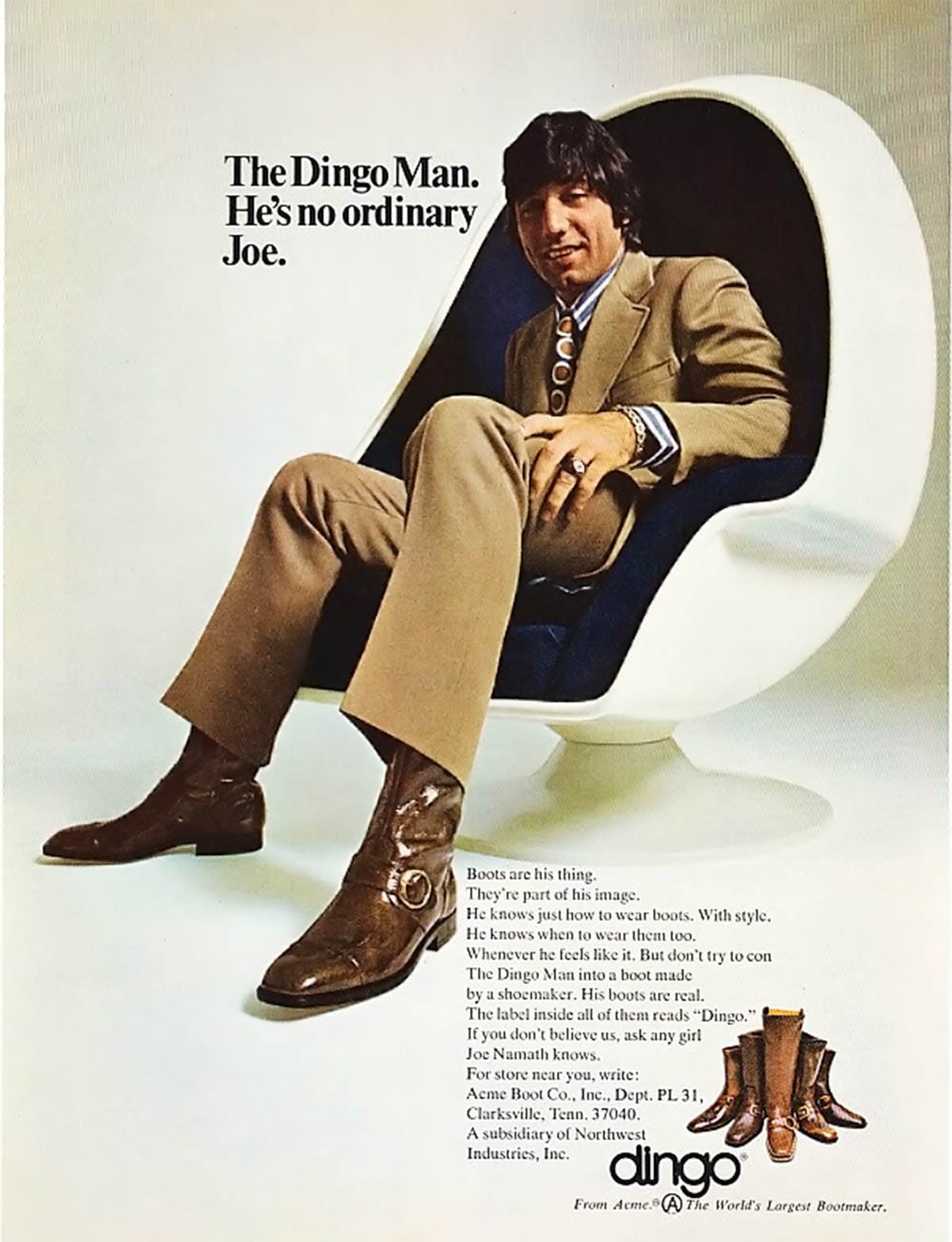
“Rising young lawyer types looking for someone to shift the gears in their 240 Z’s are also part of the scene,” the Good Time Manual instructs us, “along with IBM salesmen and accountants in ale-colored flairs and Dingo boots.”
Today’s young people may need Google Translate to make sense of the above paragraph, but let’s just say it was the upwardly mobile driving-and-dressing-to-taste who crowded places along Union Street in the 1970s.
There was a definitely a sense of money and status baked in to the Union Street scene.
Perry’s was opened by a young couple listed in the New York Social Register. Fashion directors sent their clothing models and photographers parading between the bars and boutiques for magazine and newspaper advertising spreads. The mayor’s wife ran a curio shop on the street. Upscale boutiques sold “everything from drip-dry wedding dresses to sequined leather shorts” between the night spots.
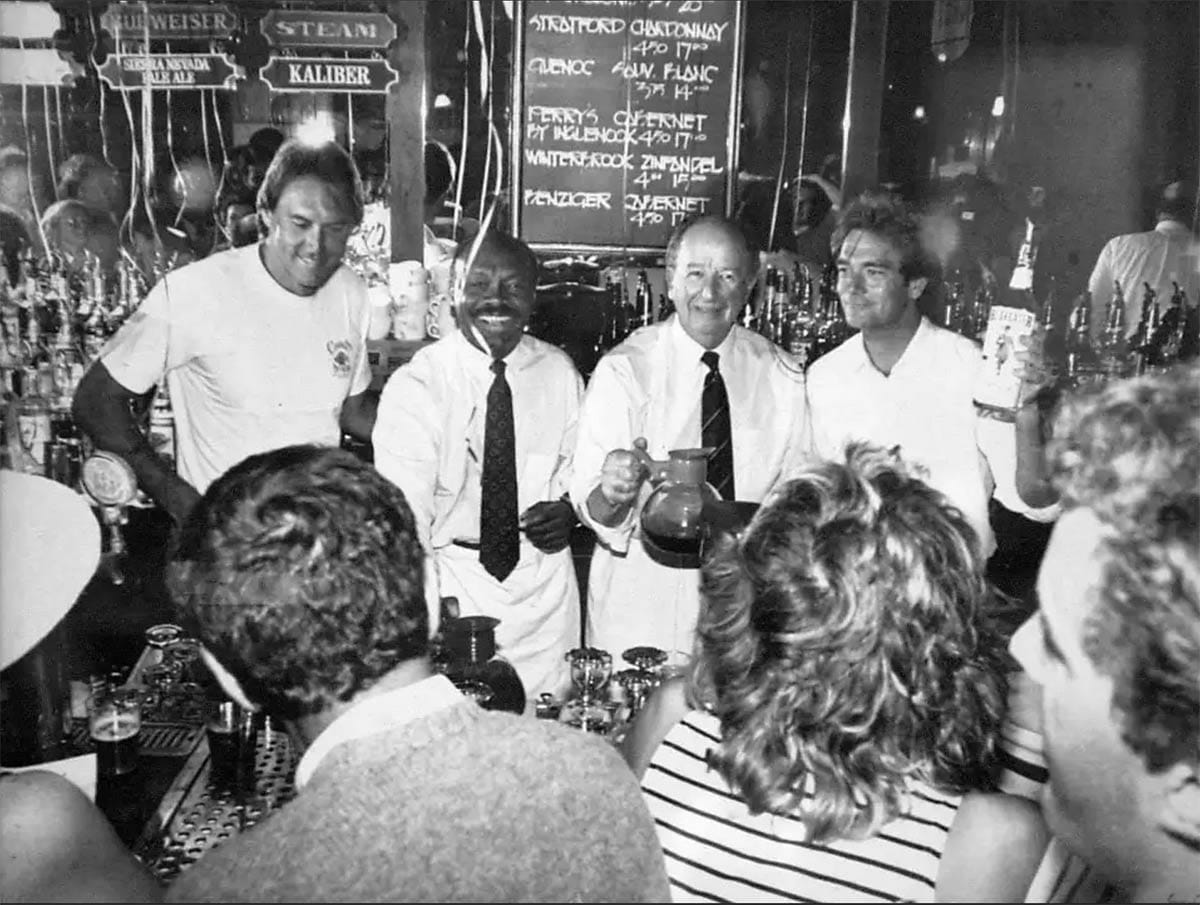
Crusty old journalists, rising politicos, and local professional athletes all joined the scene, whether to gawk from a safe stool or wade into the “come here often?” scrum. It was still a thing when I was an under-aged teenager in places I shouldn’t be in the early 1980s.
But Union Street was not my thing. We called it “preppy” before the word yuppie was invented. A lot of blow-dried hair and swagger I could not pull off as a skinny penniless 17-year-old. (I did a better job of melding into the slightly more open Pierce Street Annex crowd around the block.)
And it wasn’t just me. In the early 1970s any neighborhood corridor looking to boost its image or any new bar/restaurant seeking to make a trendy splash went to pains to assure the media and locals that they weren’t trying for “another Union Street,” which was synonymous with parking woes, night noise, and high-rents.
When a new bar proposed to open on upper Polk Street at Vallejo Street in 1974 one opponent protested “This part of Polk street has been sort of a quaint little neighborhood area… if it does turn into a Union street, it will become plastic, like Union.”
Many of the bars and restaurants, like Perry’s, weren’t thrilled with the high-octane singles scene either.
And things change. As one reporter noted about Union Street in 1970, “San Franciscans are a capricious and fickle bunch, and what’s fashionable today may be out tomorrow.”
Beautiful young people with good jobs started congregating more down the hill on Fillmore Street and along Chestnut Street. And now meeting people in bars isn’t really a thing.
(Says the 60-year-old who has been married for almost 30 years... young people, let me know if I am wrong.)
Union Street quieted down and started skewing older. It lost many of its art galleries and fondue-pot stores, but it still has some excellent restaurants and neighborhood-serving businesses, even if customers today are looking less for a mate and more for a trendy mattress, a Pilates class, or a discotheque groomer for their Shih Tzu.
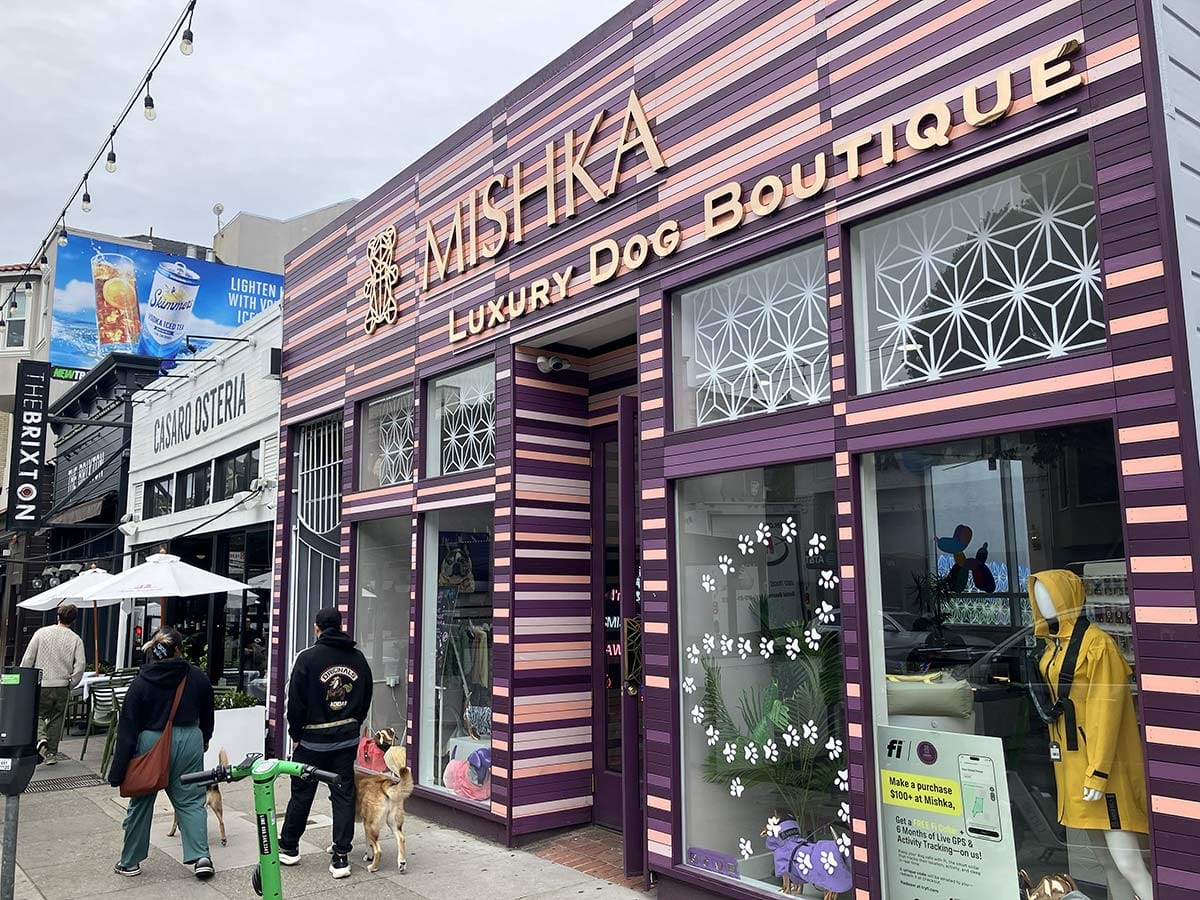
But there’s still the Bus Stop bar, those charming Victorian storefronts up and down the street, and Perry’s.
After Pat, Suzanne, Nancy, and I finished our dinner last year, we stepped out onto a dark, quiet Union Street.
The women commented on how different it was from the 1970s... but it was all right.
Two women in their mid 70s want different things than two women in their early 20s, and Perry’s had treated them well.
Woody Beer and Coffee Fund
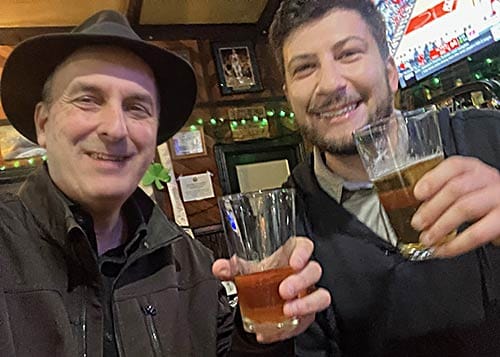
There is an esprit de corps amongst those who have contributed to the Woody Beer and Coffee Fund, like Cathie S. and Steve C. (F.O.W.).
It is a shared pride in ensuring I will treat someone, somewhere to a drink.
Is it God’s work? Can a better world be born from small talk over a beverage?
There’s only one way to find out.
Sources
Blake Green, “Bringing the Eastern Spirits West,” San Francisco Chronicle, October 28, 1969, pg. 17.
Kevin Keating, “The Horizontal Department Store,” San Francisco Chronicle, July 26, 1970, California Living section, pg. 18.
Russell S. Riera and C. J. Smith, The Good Time Manual: 257 Places in the Bay Area Where People Under 30 are Going (Berkeley, CA: Moss Publications, 1972)
George Williamson, “New Bar’s Battle at Polk Gulch,” San Francisco Chronicle, August 19, 1974, pg. 3.