
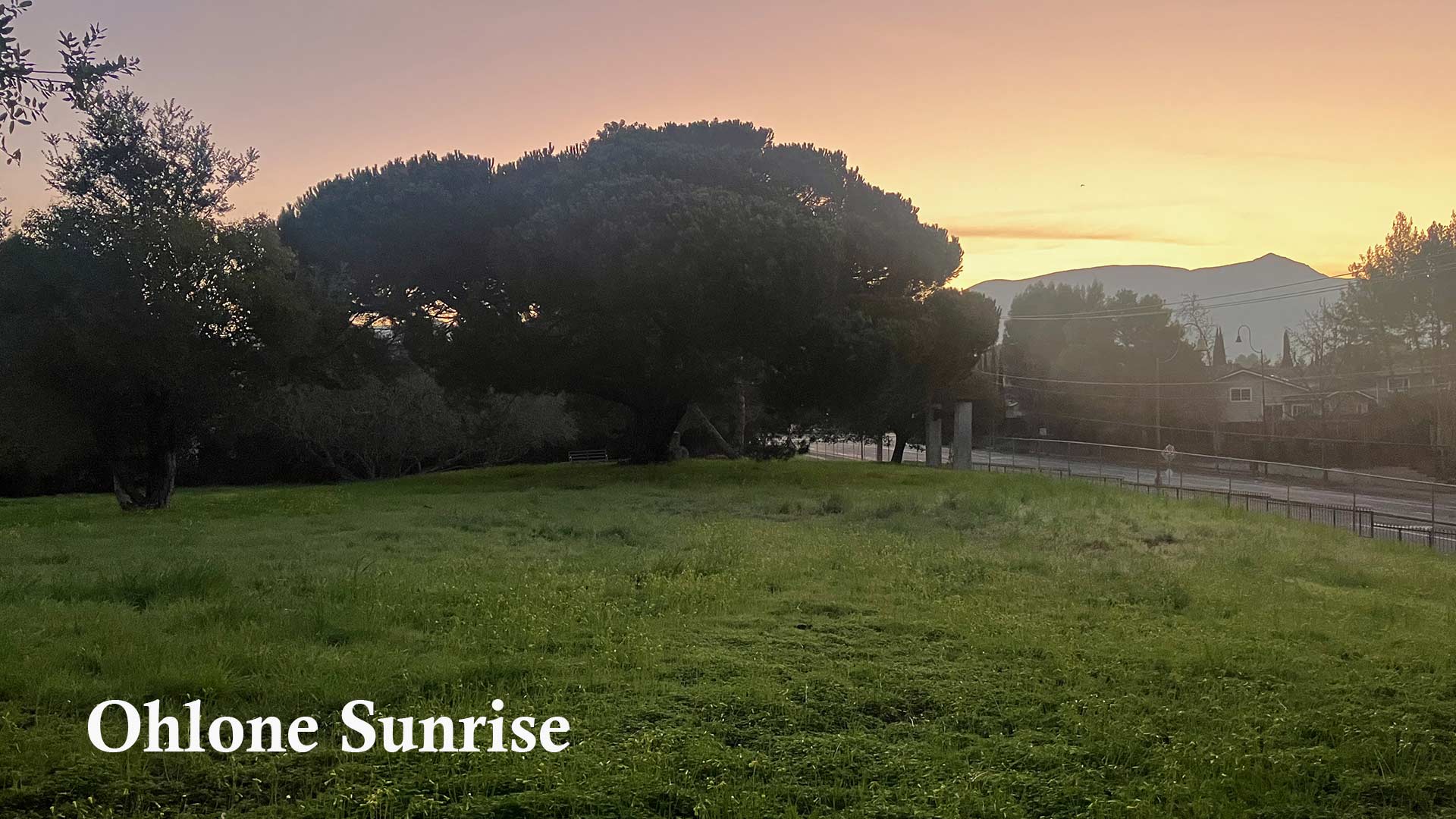
Ohlone Sunrise
In 1989, seven ancestors were moved to make way for San Francisco's Yerba Buena Gardens.
(A warning that I have included a photo of scientists uncovering human remains and a grave site. I mean to honor, not disrespect, but if showing an image of the dead feels wrong to you, I’d say skip this story.)
In the 1980s, archeologist Allen Pastron had carved out a career working for developers and government agencies. After the city of San Francisco started requiring archaeological evaluation of construction sites downtown, Pastron created the Archeo-Tec company and became an expert on the hulls of sailing ships, detritus from Gold Rush stores, and the assorted 19th century garbage one could find under the ground.
In 1986, when Nordstrom planned construction of the San Francisco Centre at 5th and Market streets—today a mall much in the news for being shut down and in need of a new future—Pastron was hired to lead some digging.
He expected to find the foundations of the 19th century Lincoln Grammar School and not much else.
Instead, he landed in 2,000 B.C.
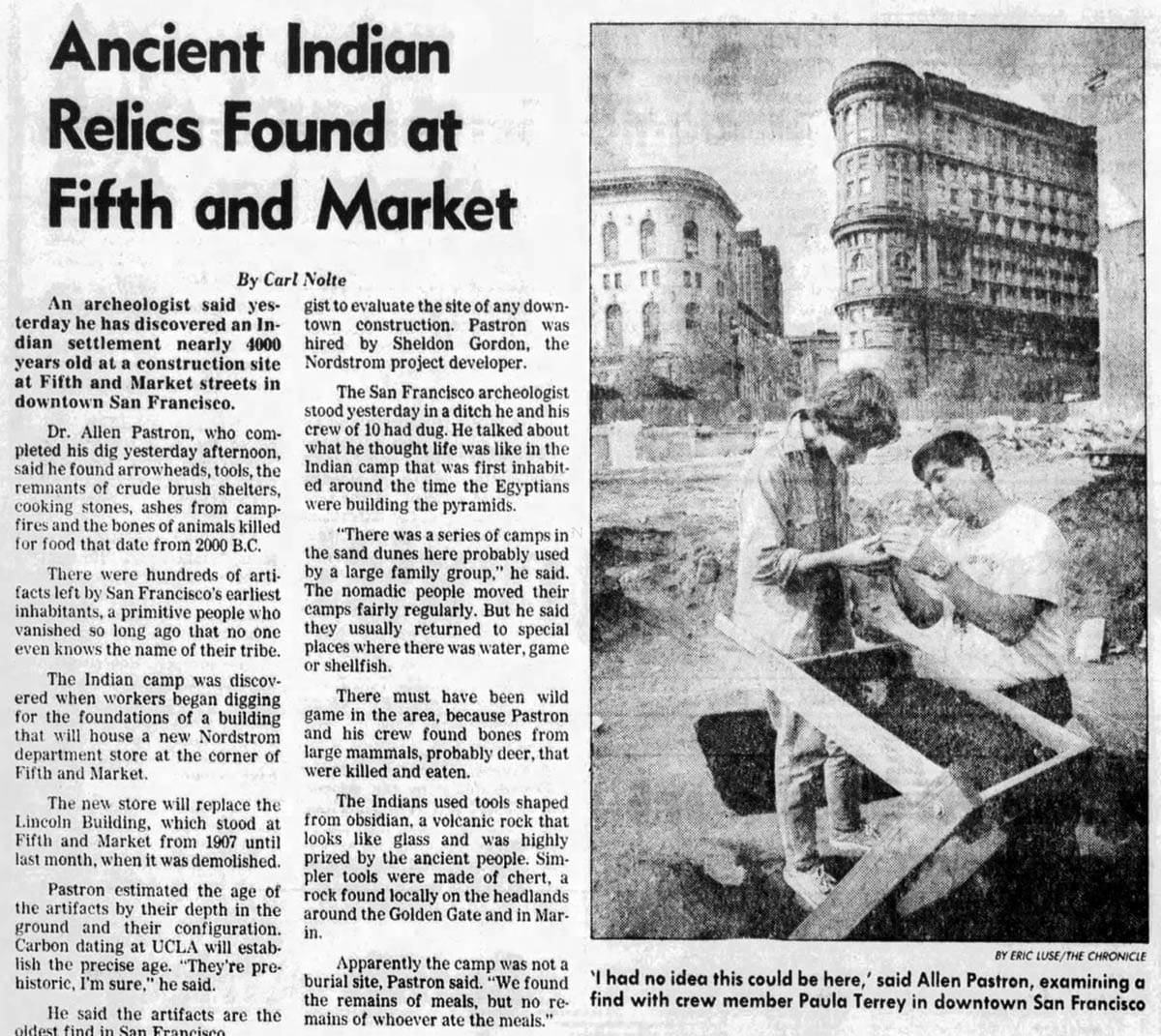
Remnants of brush shelters, cooking stones, campfire ashes, and the bones of large mammals indicated a settlement Pastron believed was the oldest discovered in modern San Francisco. The dinners cooked on those stones were eaten not only before San Francisco, but before St. Francis, before Christianity, and before almost everything people like me think the world is.
The archeologists had a month of digging and screening before they had to make way for the mall’s construction crews and cement trucks.
“We found the remains of meals,” Pastron said, “but no remains of whoever ate the meals.”
Here First, Here Forever
Indigenous people are mostly left out of our state’s history for the stories and lives of the Spanish, the Americans, and people like me whose family arrived in the speck of time that is last century or last year.