
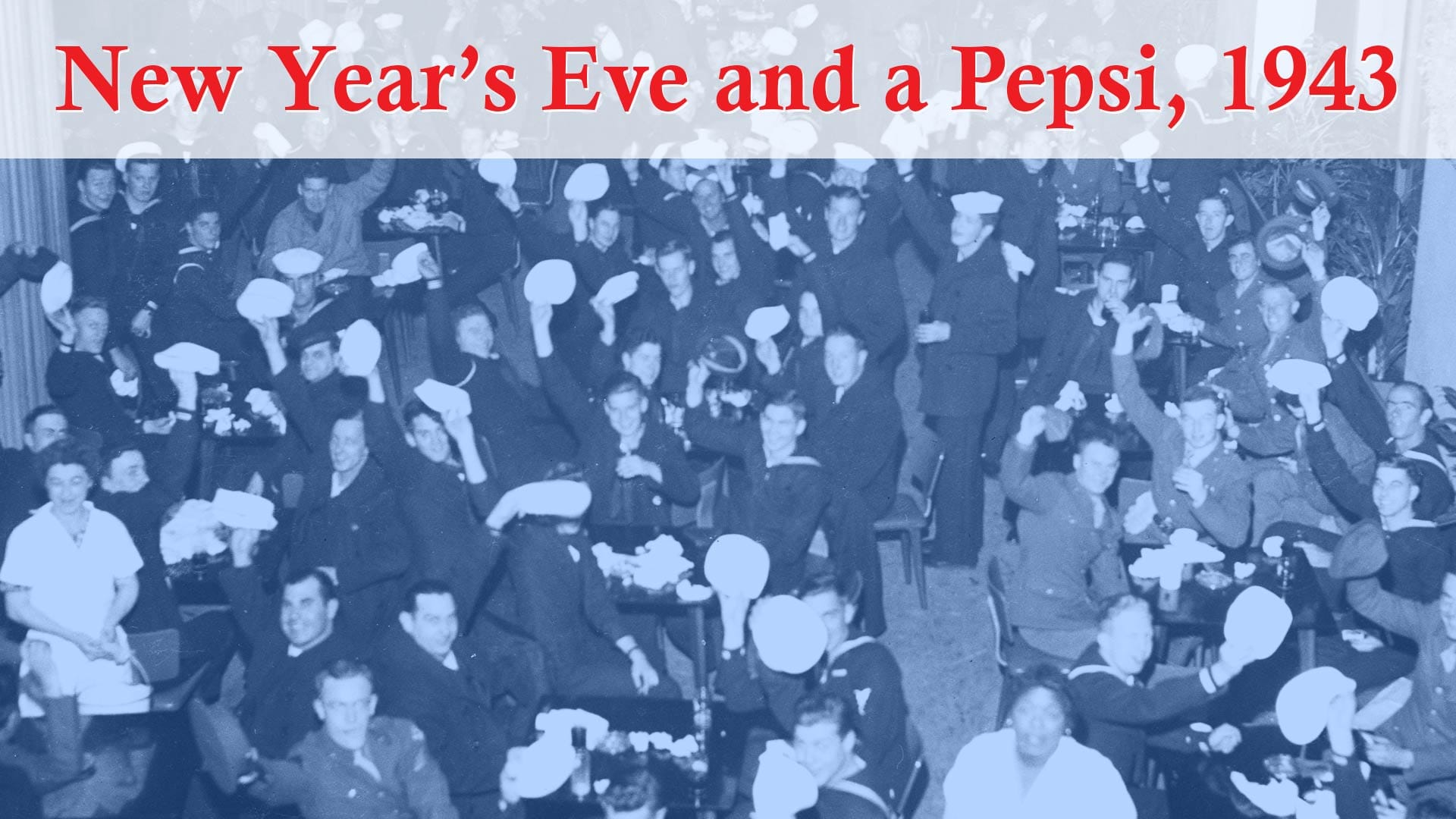
New Year's Eve and a Pepsi, 1943
Ringing in the new year in the middle of World War II at San Francisco's Pepsi-Cola Center.
Likely we are all ready to turn the page on 2025, yes?
If you think this was a hard year, 1943 was worse: the world was in the middle of a war that would be responsible for 70-85 million deaths. But a new year offers hope for a new beginning, so on New Year’s Eve 1943, San Francisco did its best to celebrate.
Despite the grim realities of World War II, the San Francisco Chronicle noted a new optimism in that year’s gaiety: “[T]aking the predictions of the war analysts at their face value—collapse of Hitlerism in ‘44—San Francisco turned New Year’s eve into a bibulous, roisterous, raucous prevue of victory.”
The Examiner reporter, who may have missed the better parties, offered a more measured assessment: “With a strange mixture of abandon and restraint, San Francisco accorded 1943 a reasonable facsimile of the traditional year-end sendoff last night, and then settled back for a more or less sober inspection of A. D. 1944.”
Each of the major hotels, constrained by wartime price controls, set a standard price for an evening of dining and dancing: $8.03 per person, tax included, drinks extra. (This would be $150 in 2025.) They had all sold out a week earlier.
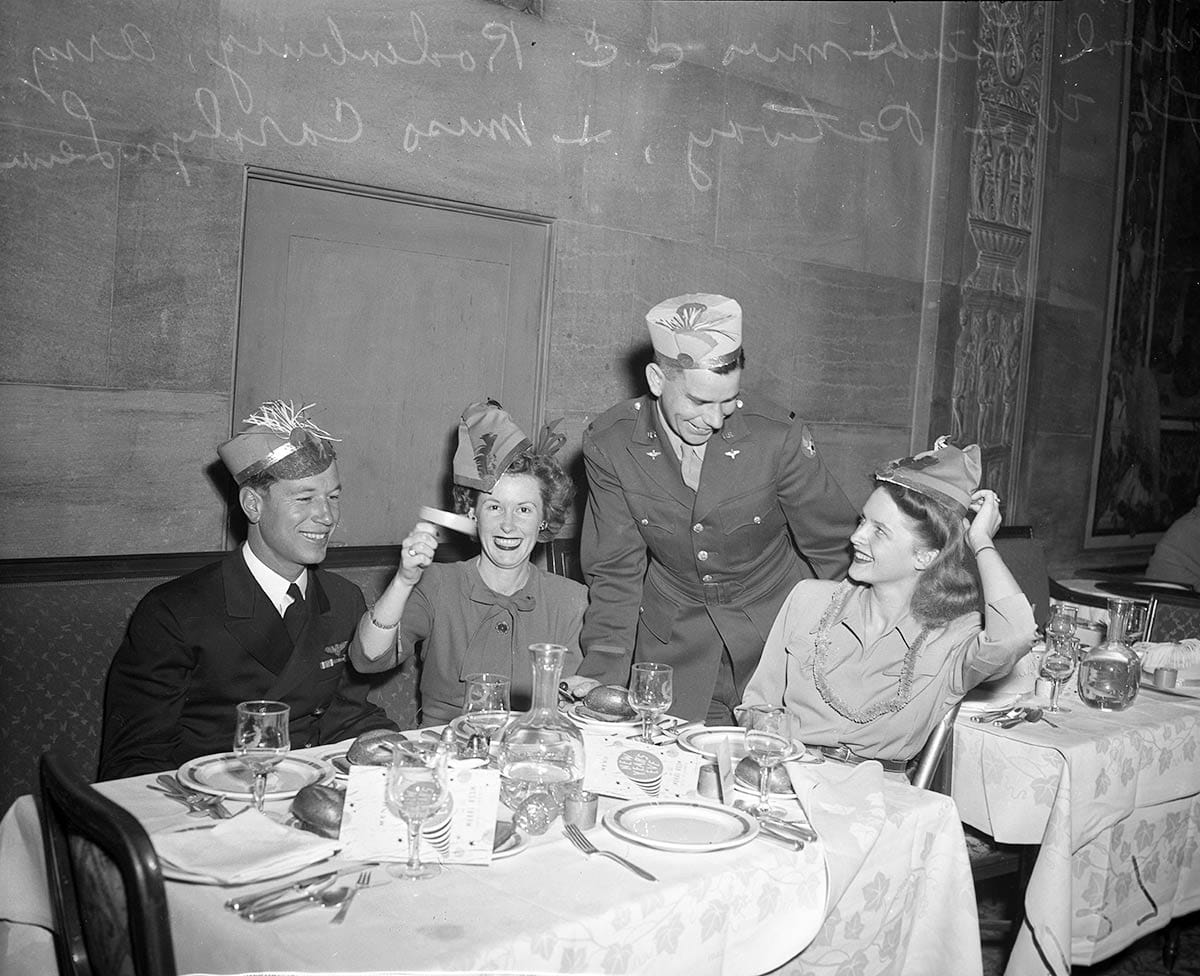
A San Francisco Examiner photographer found a happy foursome at the St. Francis Hotel:
Despite rationing and shortages, there was no lack of alcohol to be found and San Francisco was burgeoning with war workers and military personnel able to buy it. A quarter could get a small glass of wine while it was “two bucks for vari-colored concoctions with a fancy wallop.” (That would be $37.50 in 2025 money, so the wallop better have been extra fancy.)
A sober but cheerful crowd gathered at the Pepsi-Cola Center at Market and Mason streets:
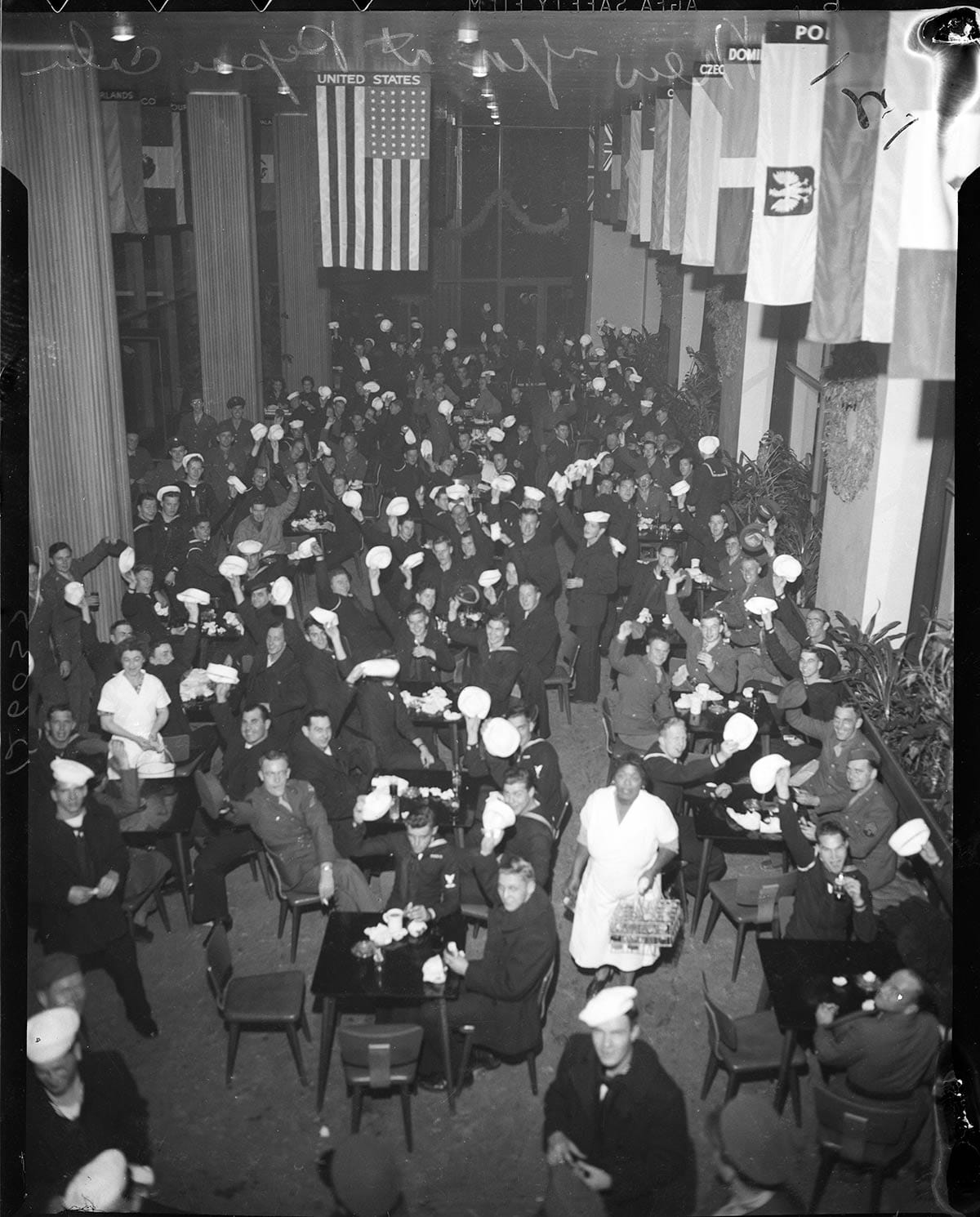
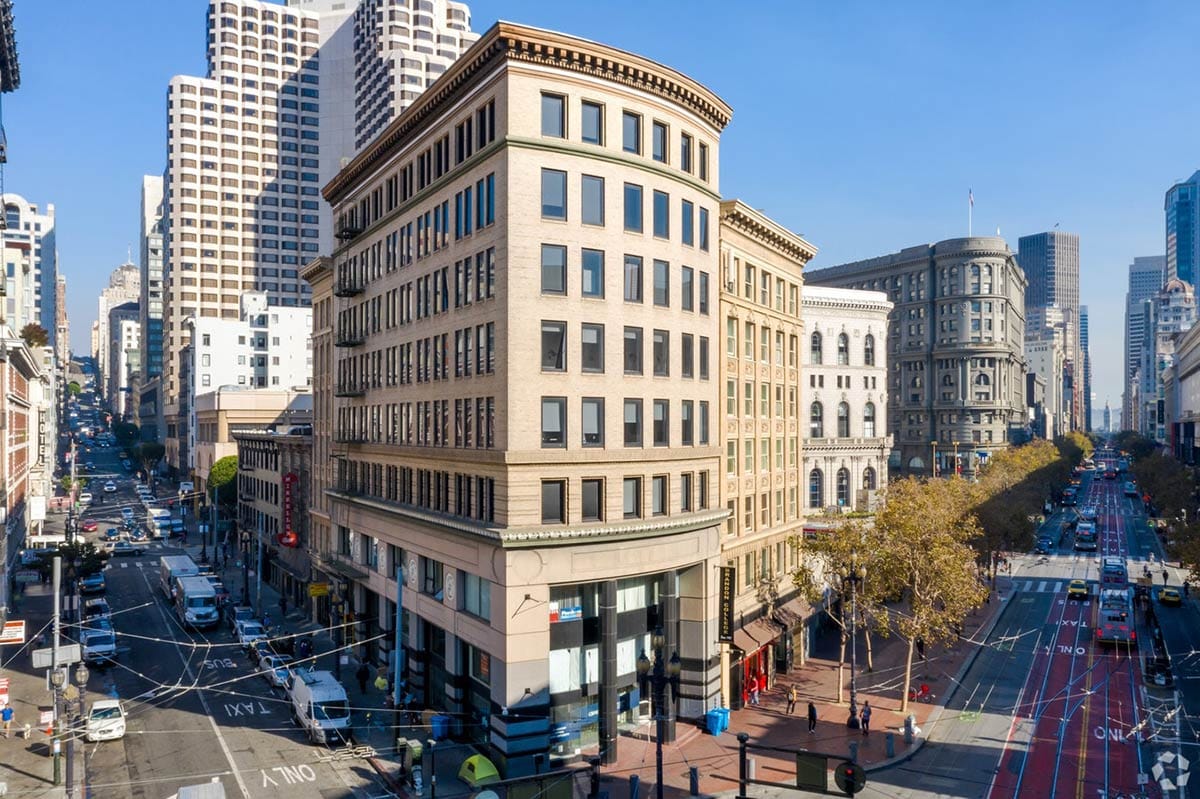
In March of that year the soda company had transformed a 1908 bank building into a hospitality center for those serving in the military. Over the next three years, in a lobby hanging with the flags of the Allied nations, volunteers served almost five million hot dogs and hamburgers and innumerable gallons of free Pepsi-Cola.
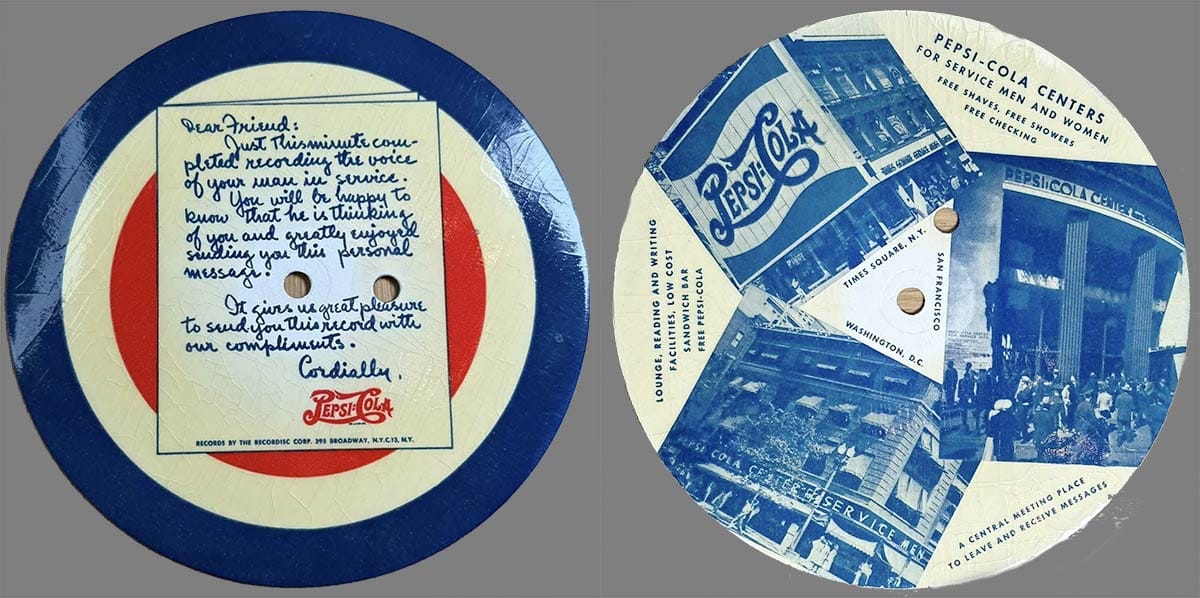
There were also Pepsi-Cola Centers established in New York City (Broadway and 47th Street) and Washington, D.C. to serve U.S. military and Allied nations personnel (in uniform) stationed in or passing through those cities.
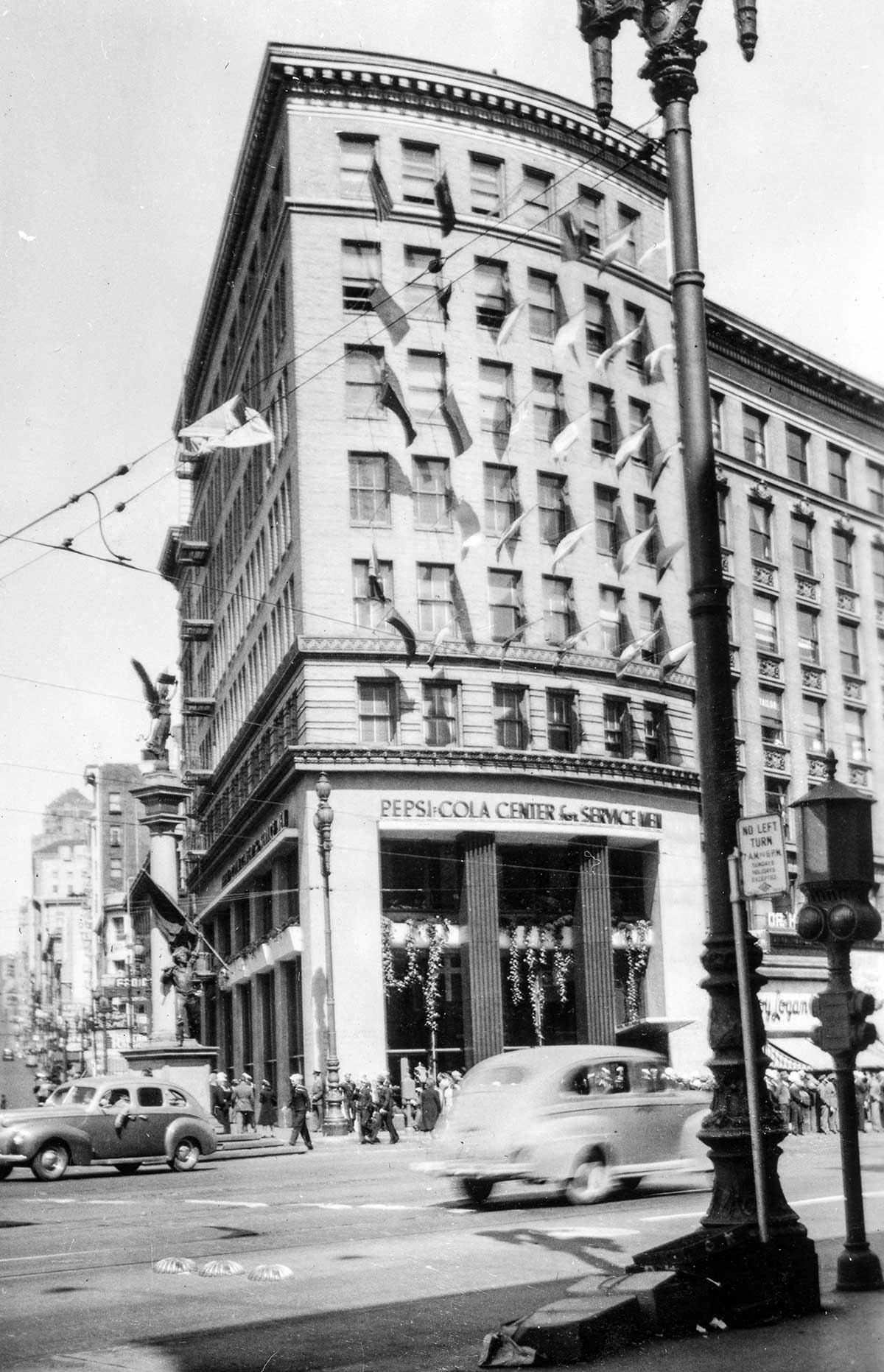
Each of the Pepsi-Cola Centers offered refreshments, writing paper, reading material, games, and sundry necessities like razors. As they were open to all members of the Allied Forces, there were interpreters on site to assist non-English speakers. People could leave messages, cash checks, socialize, or just chill.
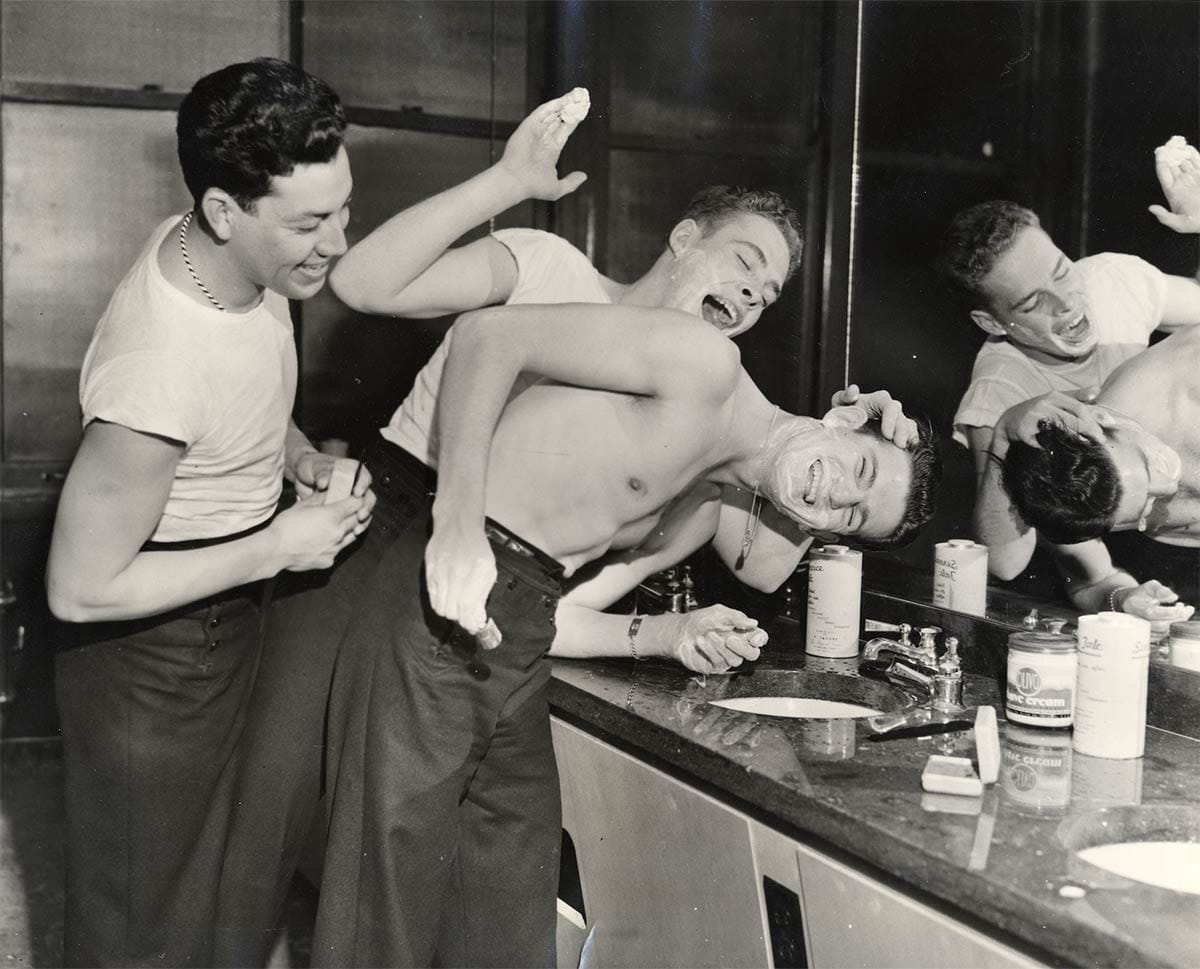
Women working in San Francisco’s hospitality and travel businesses assisted with travel connections and steering GIs to military-approved entertainment options in the city. There were lifelong friendships and not a few marriages made from the millions of interactions between volunteers and service personnel at Pepsi-Cola Centers.
In San Francisco, the American Legion ran upper levels of the building as dormitories and an entire floor was reserved just for women in uniform.
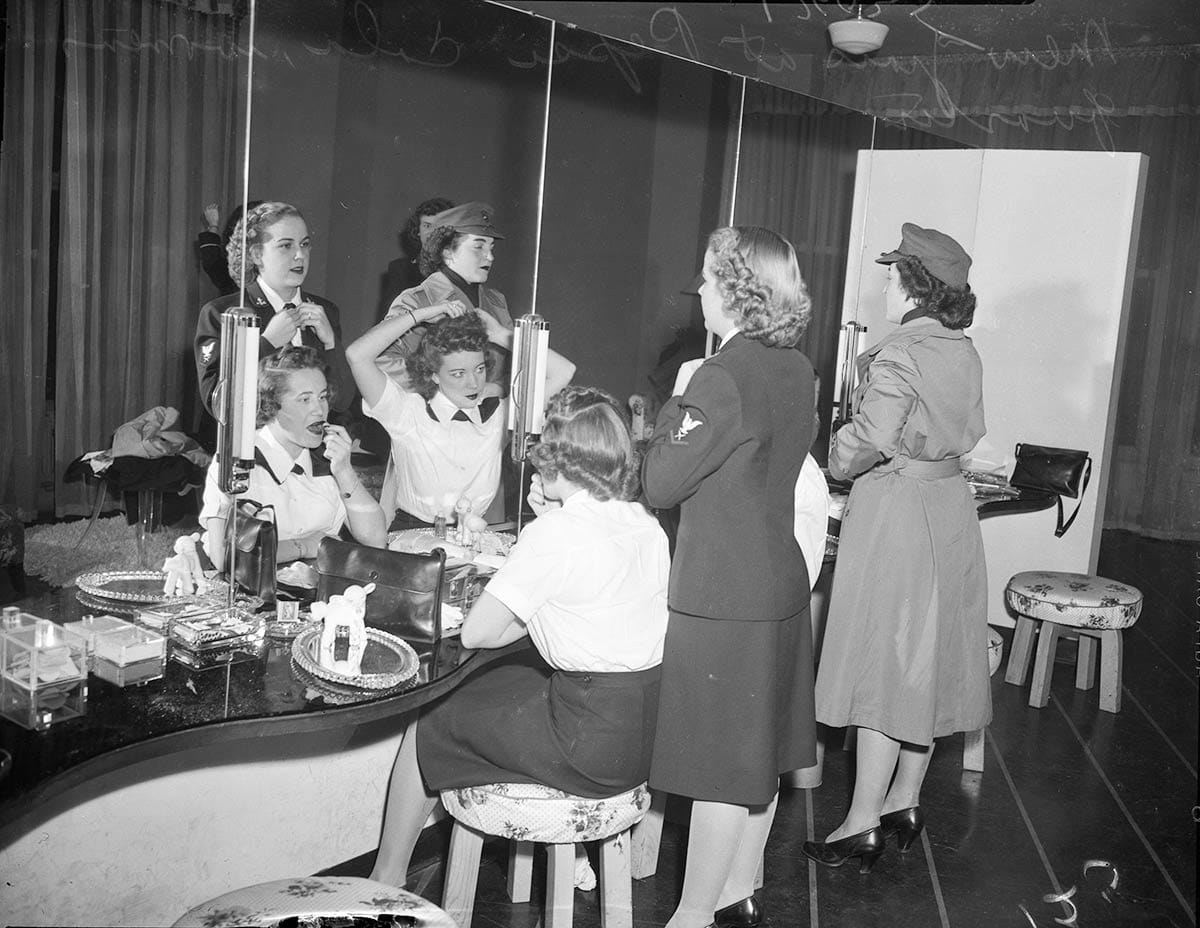
The WACS, WAVES, SPARS, Women’s Marine Reserve Corps, and Army and Navy nurses had two lounges for their use, one named for Eleanor Roosevelt and the other for Madam Chiang Kai-shek (Soong Mei-ling, First Lady of the Republic of China). Eleanor’s lounge had a blue color scheme, while the Chiang Kai-shek room was designed in Chinese reds and blacks.
A thirty-foot-long powder table had complimentary cosmetics. Below are some WAVES preparing on New Year’s Eve 1943 for a night “ashore”:
On February 26, 1946, with the war over and the lessening of military personnel passing through town, the Pepsi-Cola Center closed. A reported 11 million men and women had used its services during the three years it was open.
The building still stands, addressed as 944 Market Street at the northeast corner of Mason Street. A housing nonprofit and a software company are occupants. There is plenty of space to lease where once, in 1943, WACs primped to hit the town.
Woody Beer and Coffee Fund
We are off to a good start in 2026. I have two coffee dates with readers this week so I can spend down some of the riches donated to the Woody Beer and Coffee Fund, LLC. (Let us say that LLC stands for Limited LaBounty Conviviality, which means I am good for at most two drinks before I take a nap.)
Great thanks to Butch B., John A., Steve C., Jason S., and Ted B. (all amazing F.O.W.s in good standing) for their donations to limited LaBounty conviviality. 😎
When are you free?
Sources
Hazel Holly, “Girls in U.S. Uniforms Will Have Own Recreation Quarters,” San Francisco Examiner, February 26, 1943, pg. 17.
“S.F. Has One of Her Gayest New Year’s Eves in Years,” San Francisco Chronicle, January 1, 1944, pg. 1.
“S.F. Greeting to New Year Slightly Sober,” San Francisco Examiner, January 1, 1944, pg. 1.