
School’s In
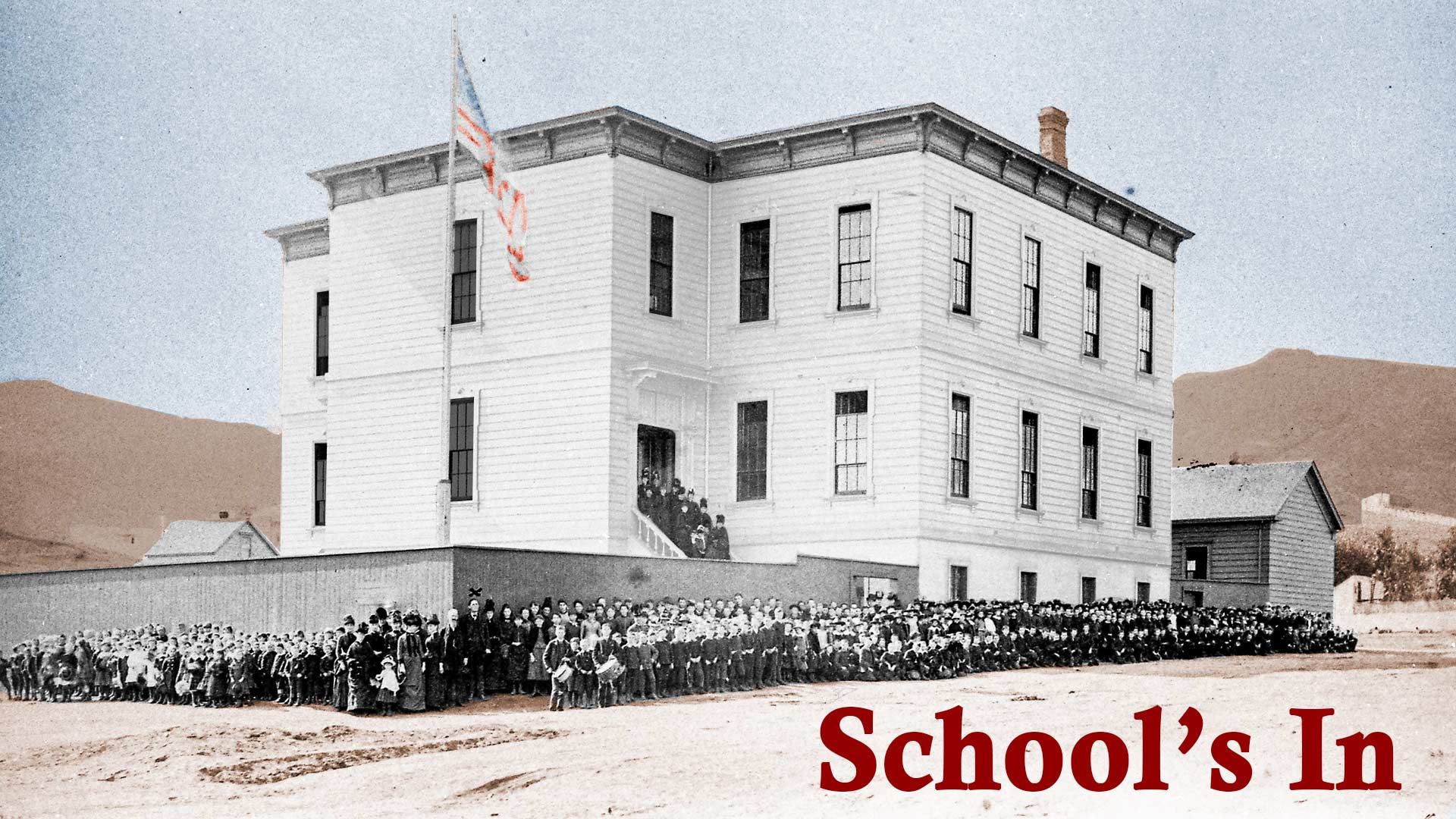
San Francisco’s Noe Valley had some schoolhouse growing pains in the 19th century.

San Francisco’s Noe Valley has a reputation as stroller land, at least it did.
Young upwardly mobile couples might meet and court in North Beach or the Mission District, but once they get to serious family-making time they look for a place in walking distance to upper 24th Street, Martha’s coffee, and the valley’s excellent public schools.
At least that’s how it was from the 1980s to the 2010s. In the 2020s, the price of a Noe Valley house…well, let’s say lot rather than house, because many Noe Valley buyers want to tear down cute cottages to erect gray multi-story, big-window, spiky-lamped, gyms-in-the-basement showplaces, and…
Where was I?
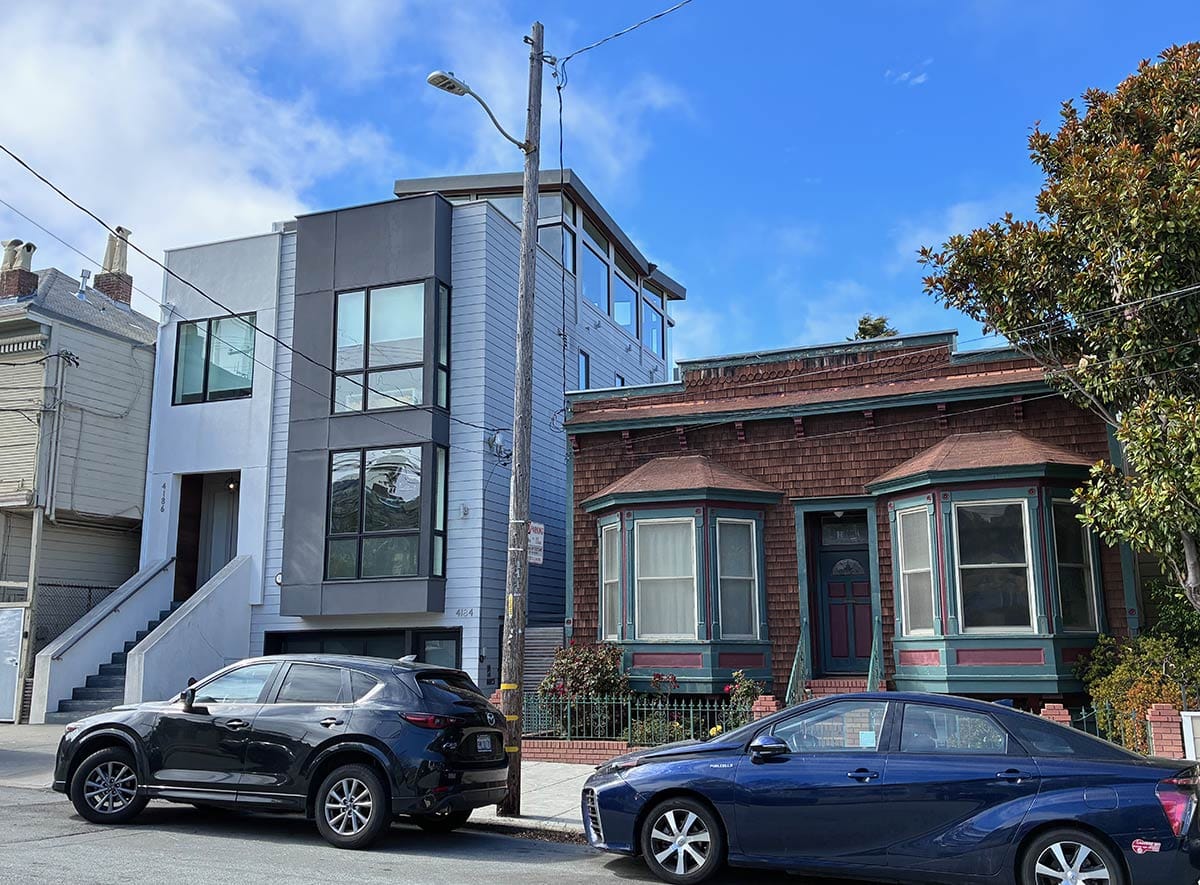
Oh yes, perhaps there are fewer young parents moving into the neighborhood because of price, but Noe Valley has always had a family vibe.
Laid out on the old Mexican rancho of José de Jesús Noé in the early 1850s as “Horner’s Addition,” the valley was divvied up into cottage-sized parcels by multiple homestead associations and real estate capitalists in the 1860s.
The first Noe Valley children had a difficult time getting to school. In 1864, Fairmount School was established as a mixed ungraded school near the corner of San Jose Road (Avenue) and 30th Street. Starting in 1871, older students of higher grades could take long hikes to the grammar school on Valencia Street between 22nd and 23nd streets.
Both were alongside railroad tracks.
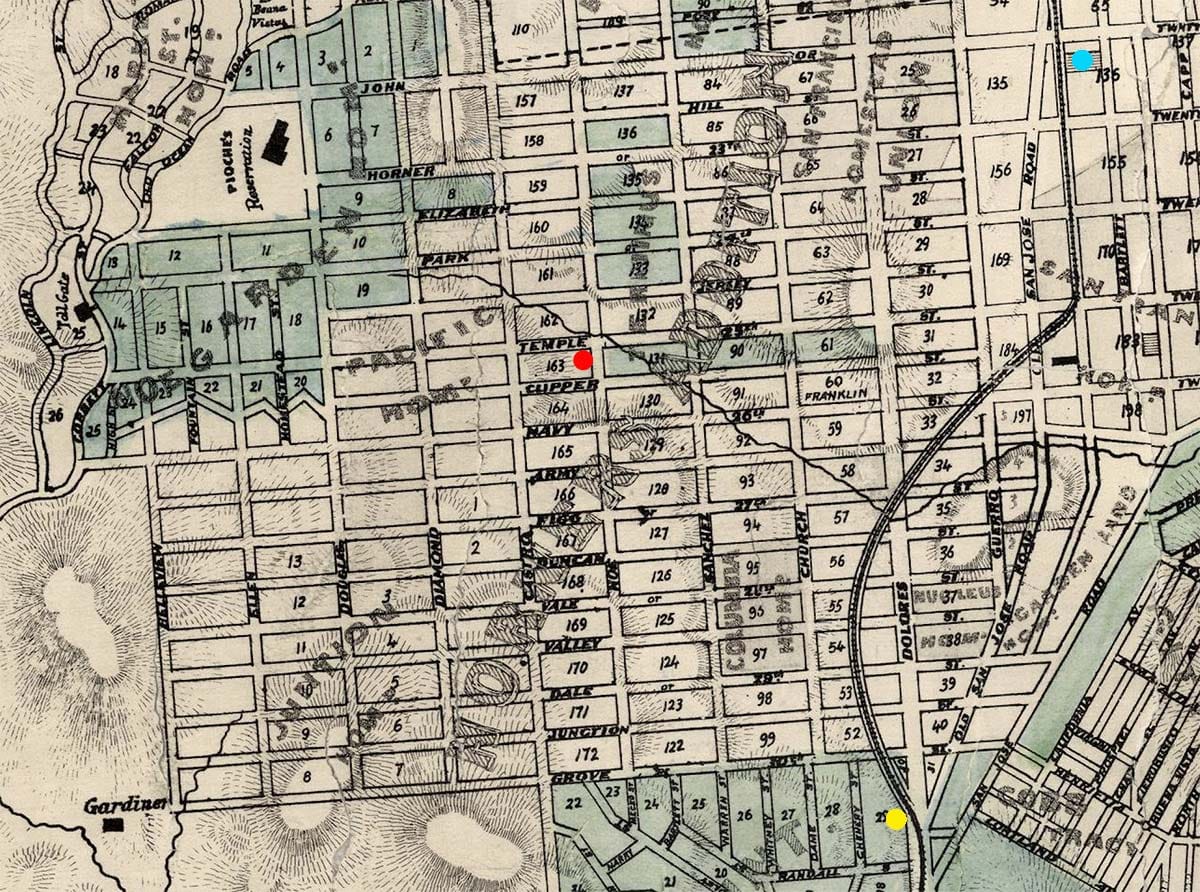
And the long hike to school was not easy. In the 1870s, Noe Valley-ites filed a petition with the Board of Supervisors to remove a big hill, “an impassable barrier,” which left them “shut out from the world” where 24th Street was mapped, but not graded, between Chattanooga, Dolores, and Fair Oaks streets.
So it was that many children in Noe Valley and neighborhoods to the south and west didn’t bother with school at all.
A writer for an 1860s San Francisco directory bemoaned how many children were “growing up in ignorance and wasting the precious days of their youth” and urged that it was “vital to the future interests of society that ample funds be provided for the establishment and support of free schools, […] mainly to the erection of school buildings.”
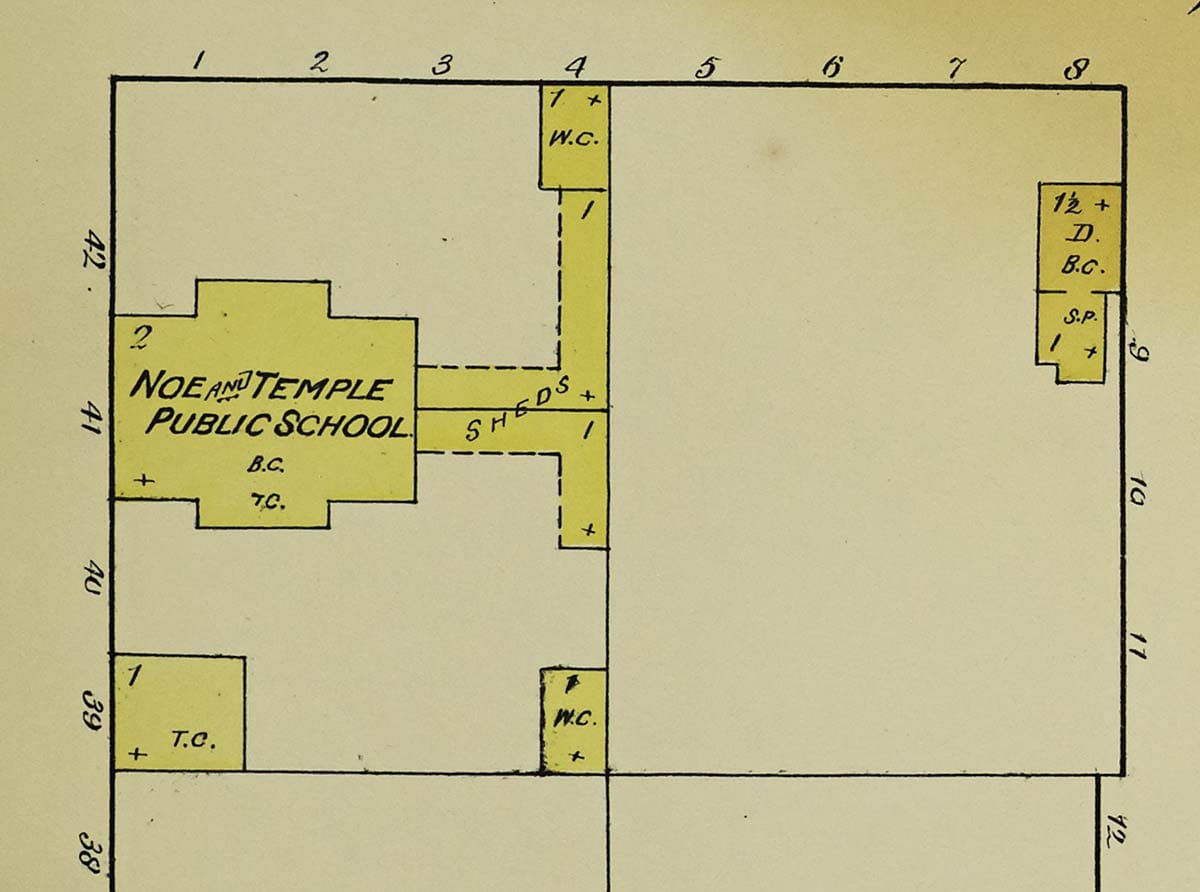
Ten years after that exhortation, on July 21, 1874, the Board of Education passed a resolution to advertise for bids for a schoolhouse in Noe Valley on the corner of Noe Street and 25th Street, which was then named Temple Street.
Schools could be built fast back then. Seven months later, on February 11, 1875, the first class of children was welcomed to the Noe and Temple School.
Not that all problems were solved.
In 1884 parents complained that the numerous creeks of the neighborhood overflowed in winter and smaller students had no way to cross them to get to school. A make-do suggestion to the Board of Education was “to furnish boards to place across the creeks,” which could “be collected after the rain and saved for next year.”
Planks can only do so much. In 1887, a grand jury determined the Noe and Temple School was “poisoned by a cesspool, which has not been cleansed for the last three years. The stench arising therefrom is sickening. Diphtheria and sickness is here evidently contracted…” The other closest school, Fairmount, was also found to have a stinking cesspool unconnected to any sewer.
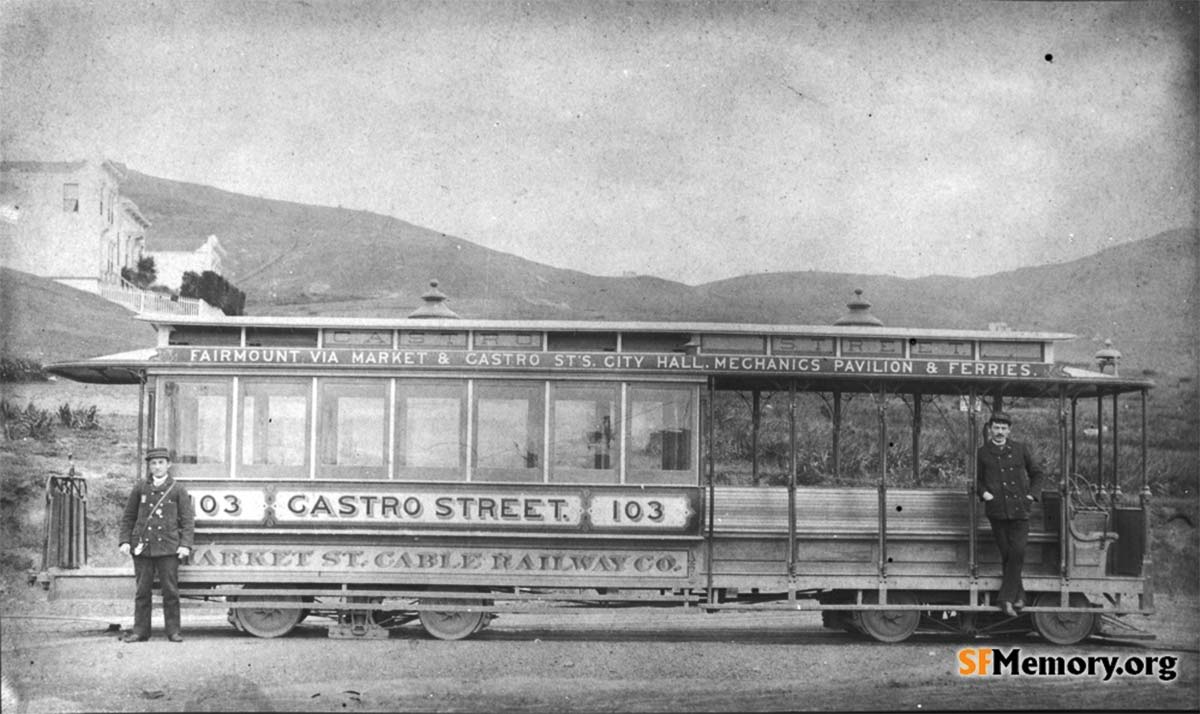
These sewage dramas occurred at the same time Noe Valley was experiencing a population boom. New transit lines, including a cable car line which ran from Market Street and terminated at Castro and 26th Streets, had made Noe Valley seem less of a hinterland. Houses and families had followed.
Despite a second story and four new classrooms added to the Noe and Temple School in 1881, parents complained to the Board of Education of overcrowding in 1884. Some classrooms had 46 kids packed in.
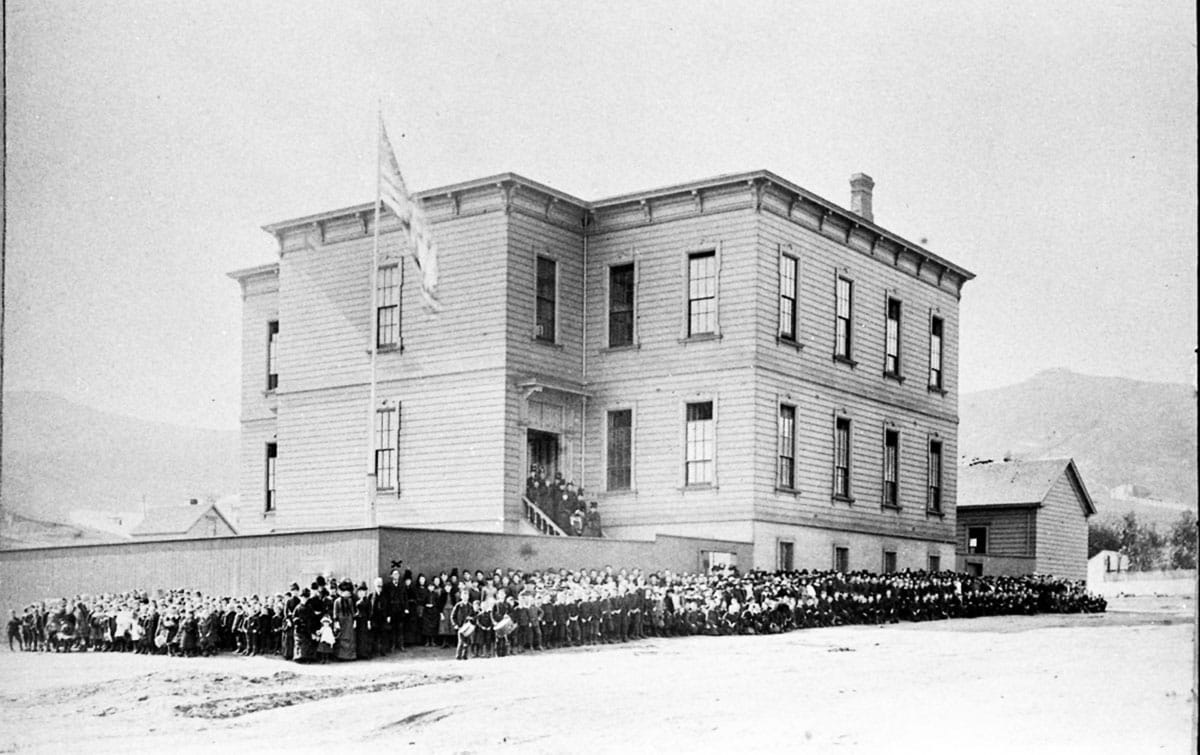
In the 1890s, another floor was added to the Noe and Temple school, which was renamed James Lick Grammar School, but the children kept coming. Older students stayed at the now-three-stories-over-basement wood frame building, but the primary grades started being parceled out to nearby rented properties.
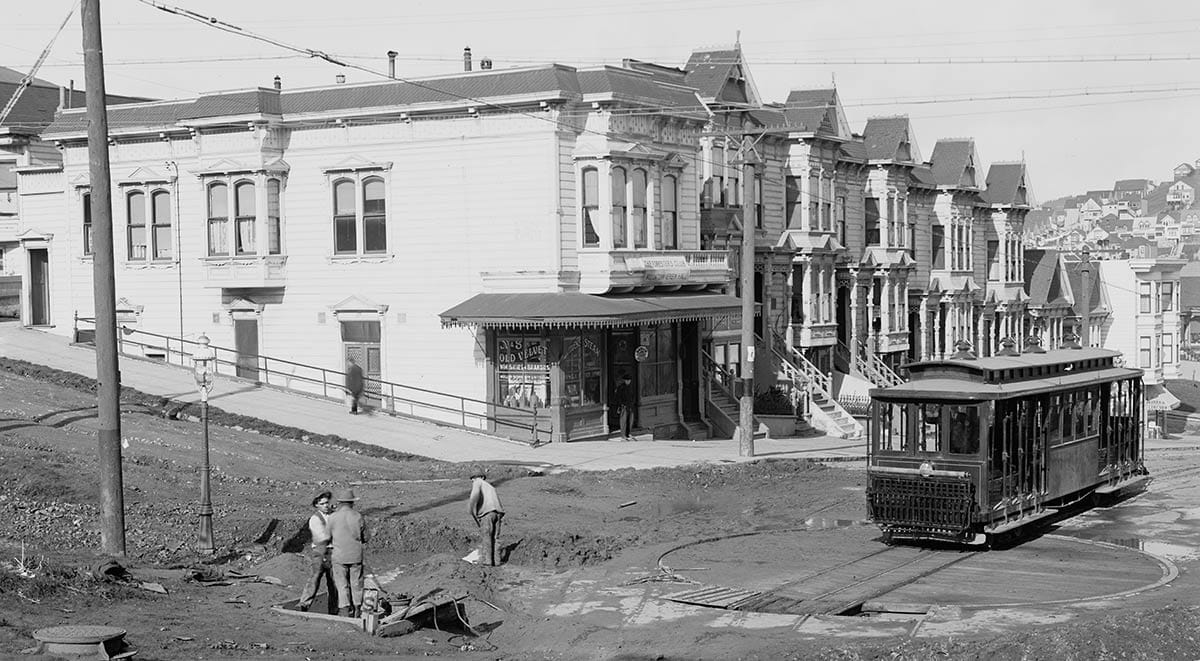
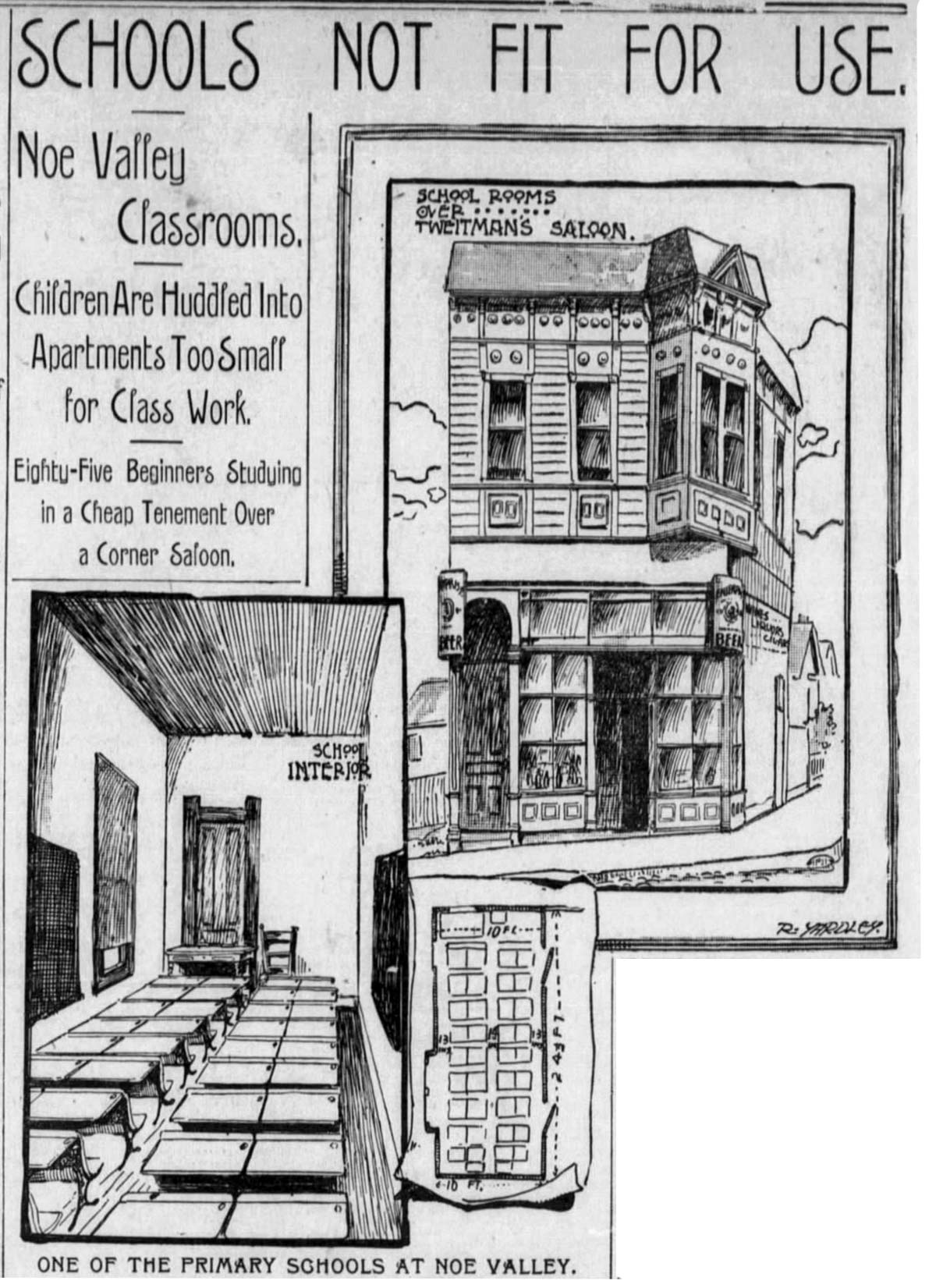
In 1898, a San Francisco Examiner reporter investigated where “the corrupt majority of the Board of Education” were housing the eight classes of Noe Valley primary grades. Visiting the rented schoolroom spaces—some in apartments over a liquor store—the newspaper claimed the cubic air available to each student was a fraction of what the worst tenements in overcrowded Chinatown offered.
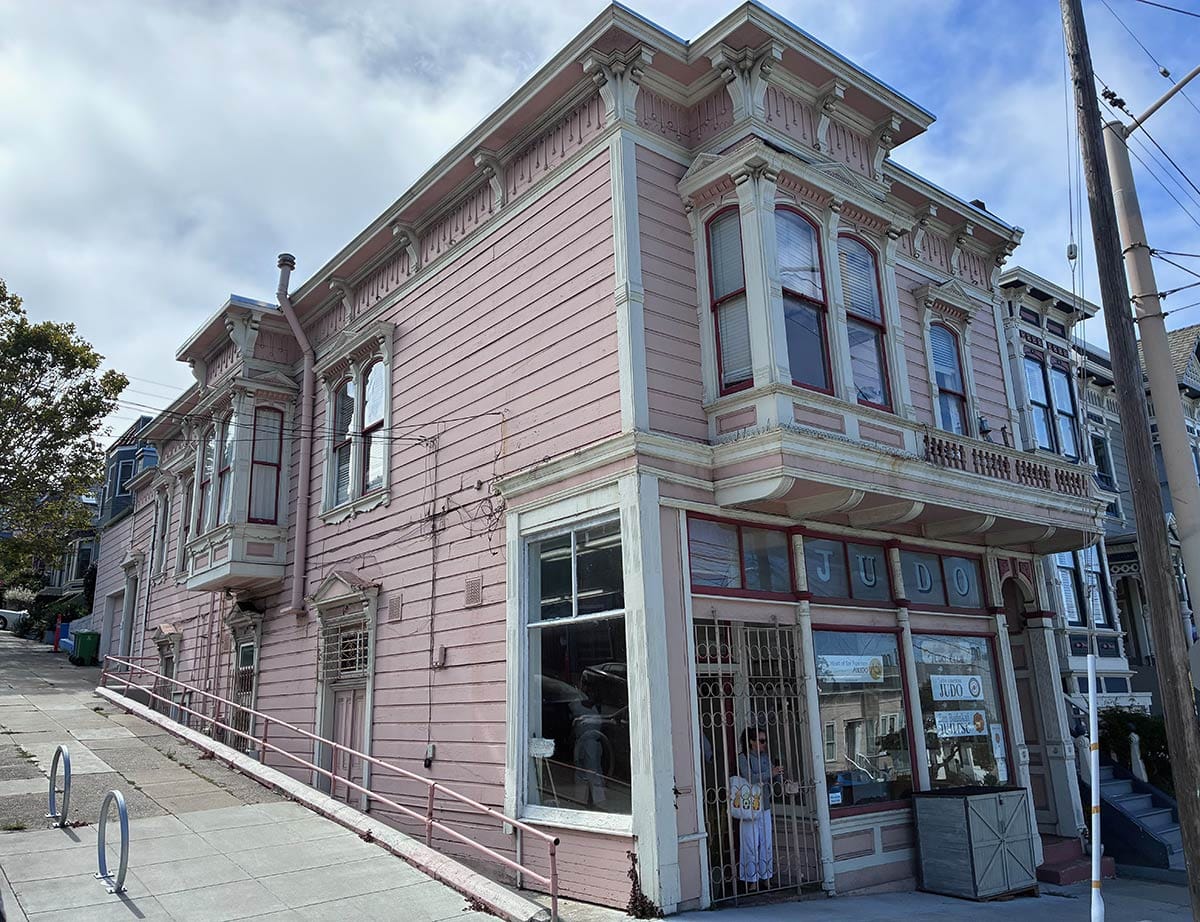
The judo/akido studio at 1622 Castro Street was once one of these ad hoc school facilities. One hundred students filled three classrooms in a 15-by-35-foot space half-under the street.
After false starts, scandals, and more grand jury investigations, a dedicated Noe Valley Primary School was finally constructed and opened at 24th and Douglass streets on January 11, 1904.
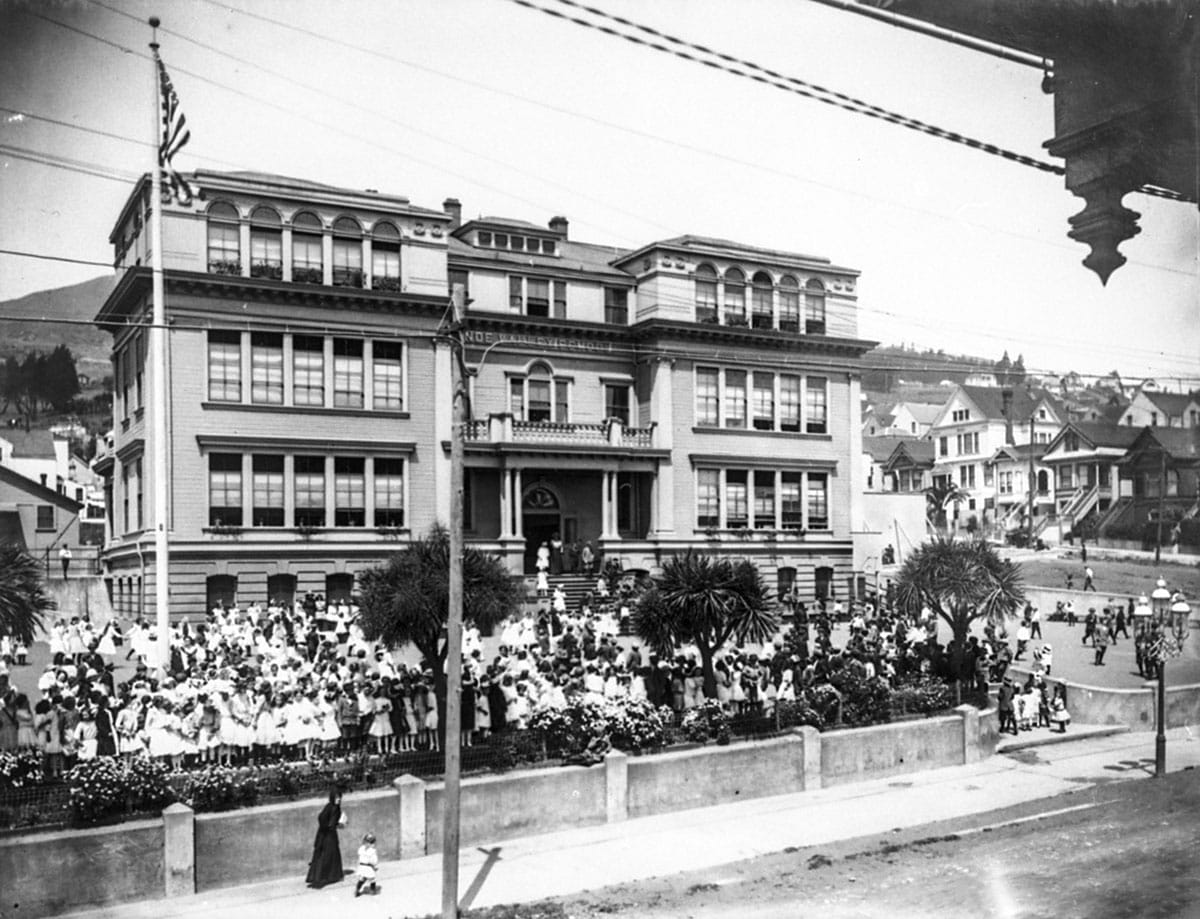
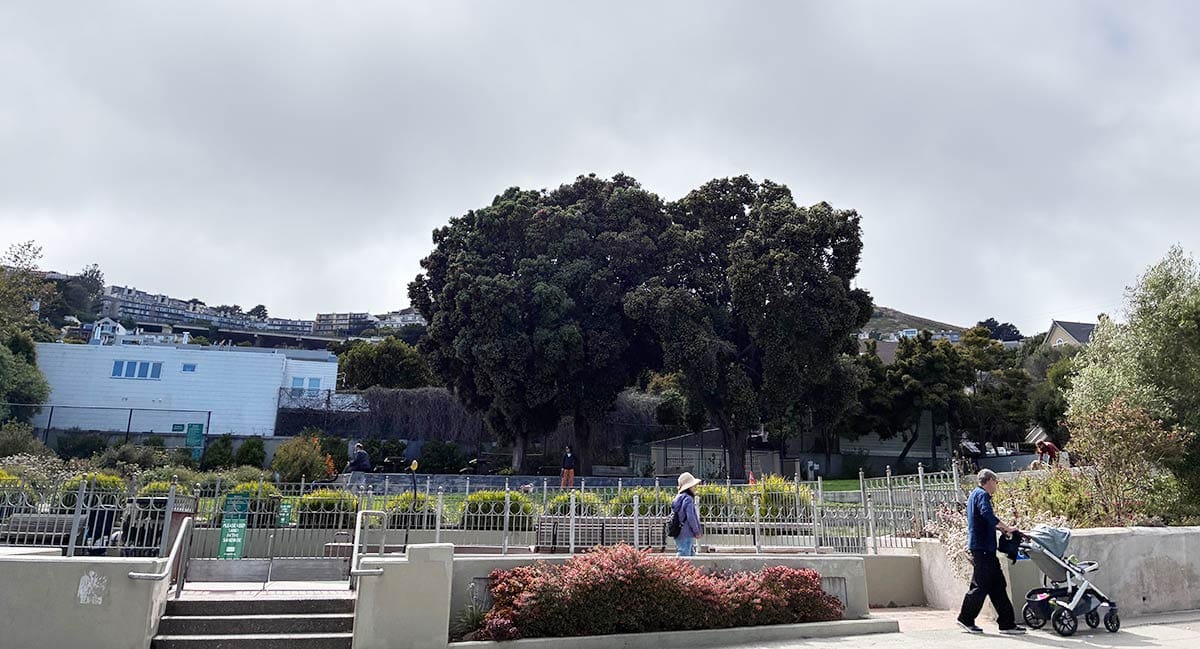
The people kept coming, especially after the great dislocation following the 1906 earthquake and fire. Streets were carved higher and higher up the hills. Empty Noe Valley lots filled with new homes and new families with kids.
In 1908, yet another new primary school was established. Later named the Kate Kennedy School (today a site used as the Mission Education Center), some familiar complaints arose just after the school opened at Noe and 30th street. A resident carrying a map of the nearby cowsheds scolded the Board of Education at one of their meetings for locating the new school in “a hollow in which sewage and drainage of the district flow unchecked.”
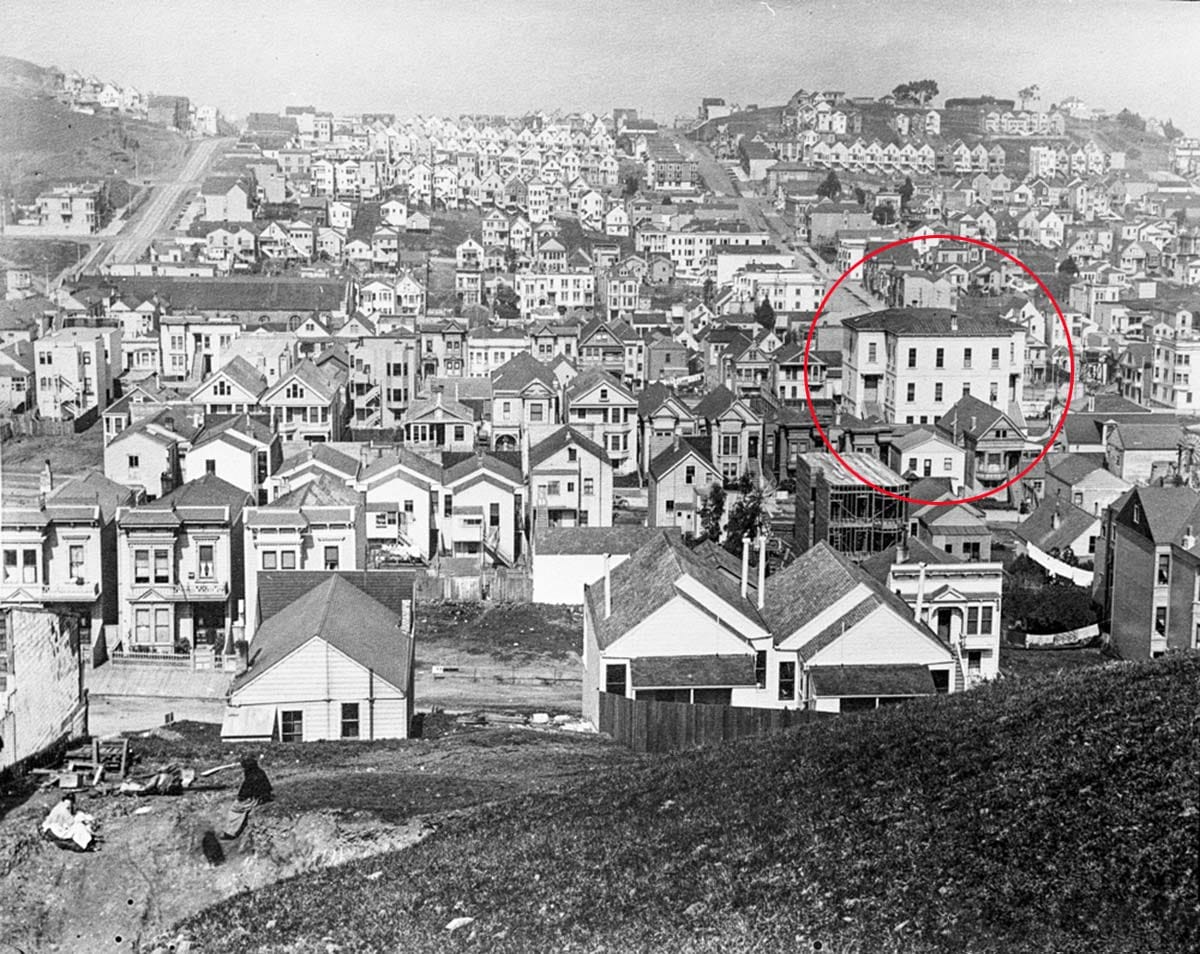
Everything shifted in the mid 1920s. A modern school for the lower grades, Alvarado Elementary School, was constructed and opened on Douglass Street between 22nd and 23rd streets.
James Lick School, Noe Valley’s original edifice of education added onto three times, was determined to be a firetrap and demolished, its students moved to the 20-year-old Noe Valley School at 24th and Douglass. Overflow shacks were required to hold everyone before the current James Lick Middle School was constructed in 1932.
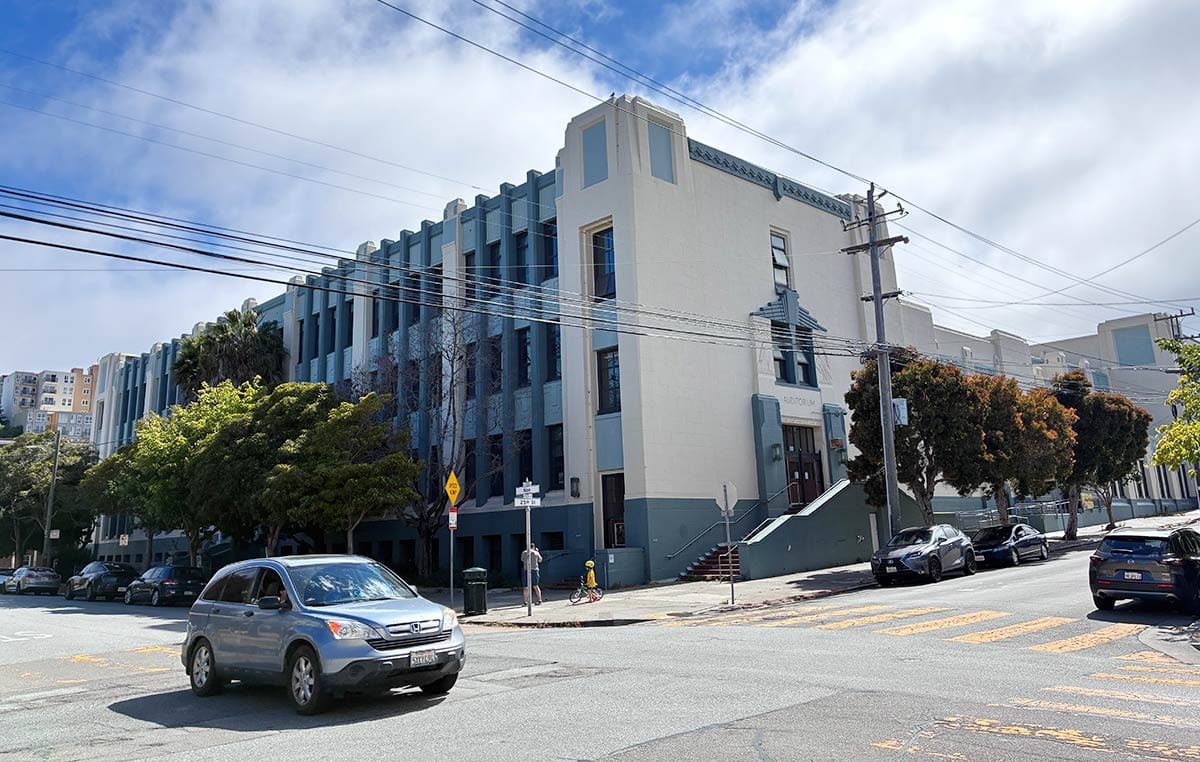
San Francisco’s public school population is decreasing, but the kids still want to go to Noe Valley, or at least their parents want them there.
Alvarado was the third most requested elementary school for incoming parents in the past year, with 22 requests for every open seat.
Woody Beer and Coffee Fund
Don't get me wrong, I like eating, but I really enjoy drinking: coffee, smoothies, good beer, almost-too-hot tea... liquids are great. Will you join me for some sipping and conversation? Nice people have already paid for your beverage through the Woody Beer and Coffee (and Other Beverages) Fund.
Let me know when you are free!
Sources
Henry G. Langley, San Francisco Directory for the Year Commencing October, 1864, pg. 18
“Board of Education,” Daily Alta California, July 22, 1874, pg. 1.
“Brevities,” Daily Alta California, February 11, 1875, pg. 1.
“The Land of Noe,” San Francisco Examiner, April 5, 1878, pg. 3.
“Overflowed Creeks, San Francisco Call, February 17, 1884, pg. 8.
“Report of the Grand Jury,” Daily Alta California, January 1, 1887, pg. 1.
“The Educators,” San Francisco Chronicle, October 4, 1888, pg. 8.
“School Matters,” San Francisco Call, October 29, 1891, pg. 7.
“Schools Not Fit for Use,” San Francisco Examiner, August 7, 1898, pg. 32.
“Vacation Time Now at an End,” San Francisco Call, January 11, 1904, pg. 12.
“Shifting of School Grades Works Inconvenience,” San Francisco Examiner, February 8, 1905, pg. 4.
“Mothers Applaud Sanitation Work,” San Francisco Examiner, March 5, 1908, pg. 7.