
Grab Bag #46
San Francisco history grab bag with kissing, blessings, dancing, and star-gazing.

Because of [gestures around at the world], I’m in the mood for a Grab Bag of good-feeling history stuff.
Can we have one week without landslides, fires, earthquakes, intolerance, or prejudice? Can we have people dancing in front of City Hall?


Sure, we can! Well, at least the Friends of Woody can. The rest of you have to make do with the dancing-folk photo and then wait until next week, when I might write about the great San Francisco frog-plague of 1908 or something else bad.
Or you can join the Friends and hop on the Dr. Woody Goodvibes bus to read this and every Grab Bag, all the time. Your choice. :)
OK, Friendsies, let us get started by heading back to 1888...
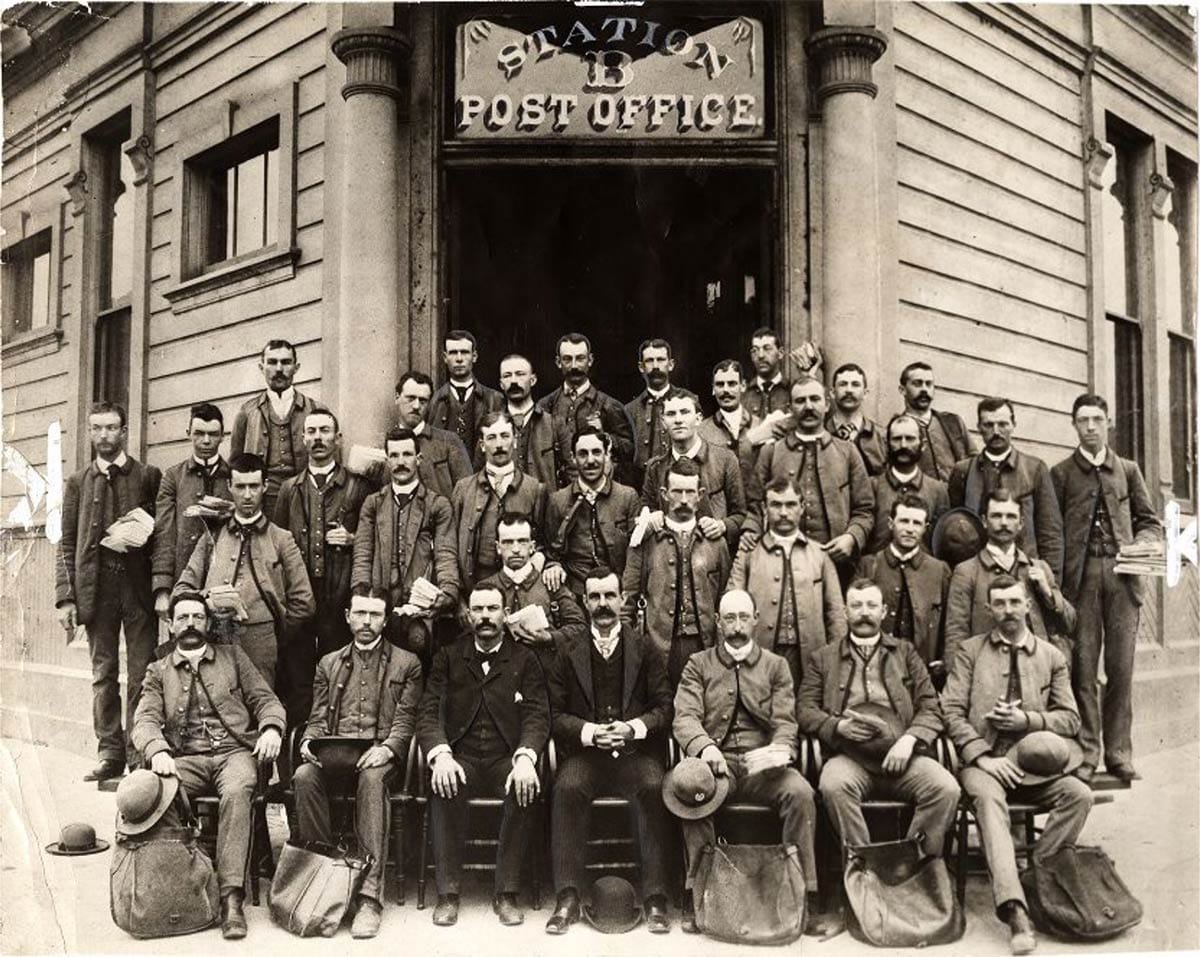
The Buddies at Station B
In 1942, Isadore C. Gross shared this 1888 photo of his old crew at the US Postal Service’s Station B. The San Francisco News reprinted it.
The main post office was then at the northwest corner of Washington and Battery streets. You could pick up your general delivery mail there between 7:30 a.m. and 11:00 p.m. daily except for Sunday, on which they were open from 1-2 in the afternoon. The stamp desk opened at 8:00 a.m.
Back then, you could also avail yourself of free mail delivery within the city proper. If you got your letter to the post office, a carrier would get it to your recipient in one of 93 city districts.
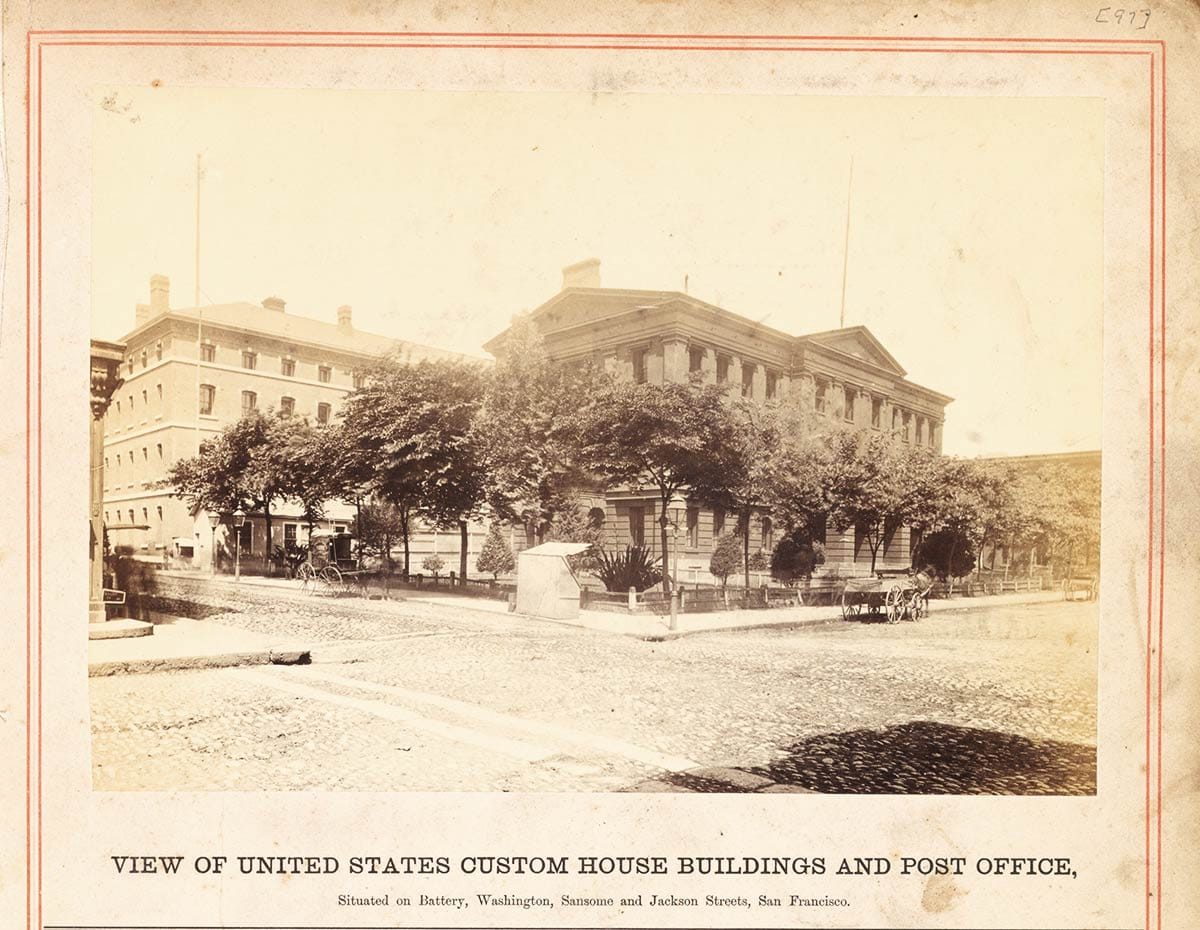
Sounds pretty good, but at the time of the photo, there were just four branches of the post office in the city: Station A was at 1305 Polk Street, Station B at Mission and 8th Street, Station C at Mission and 20th Street, and Station D at the foot of Market near the Ferry Building.
There were 404 mailboxes spread throughout the city for your letter in 1888, if you could get yourself a stamp. Beginning in 1896, there was even a very large moving mailbox.
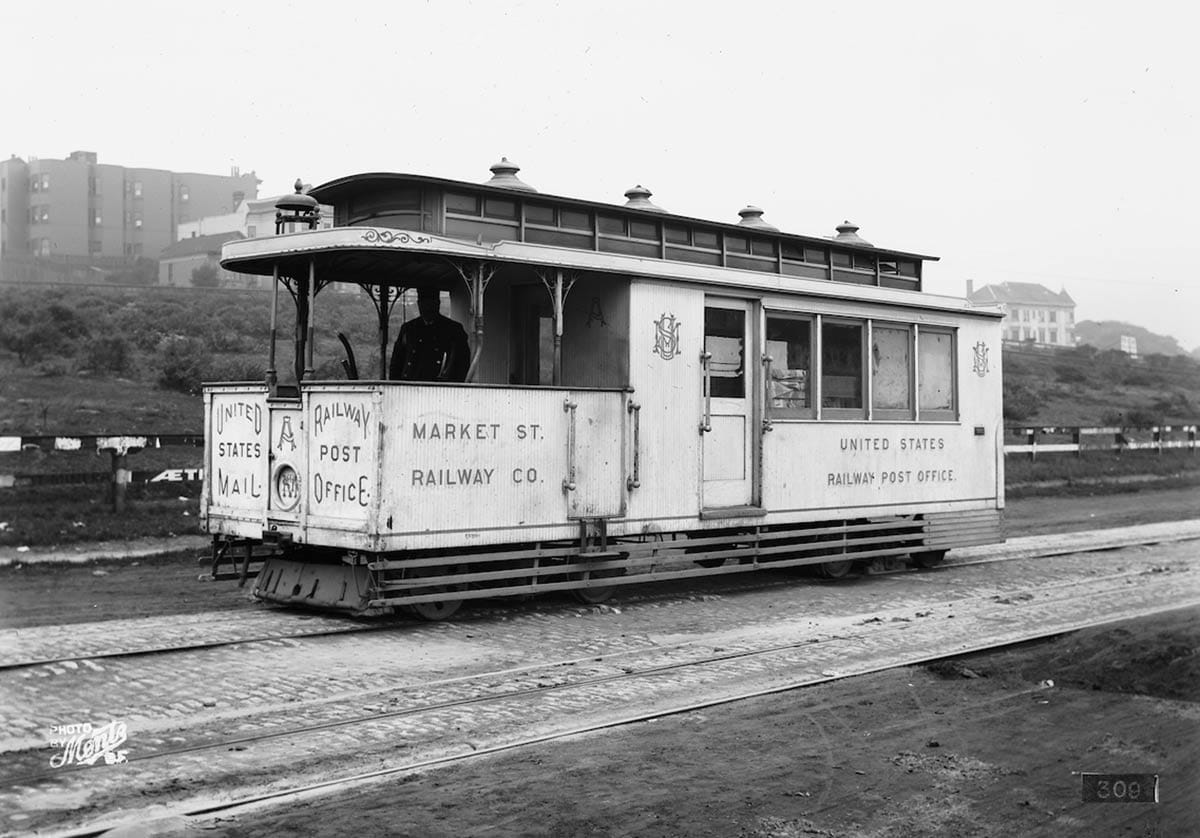
The Market Street/United Railroads company ran special cable cars, and then electric streetcars, for the United States Postal Service on Market Street and beyond.
You flagged down the car to drop your letter in a slot on the side. A clerk onboard would cancel and sort your missive en route to the post office at the Ferry Building.
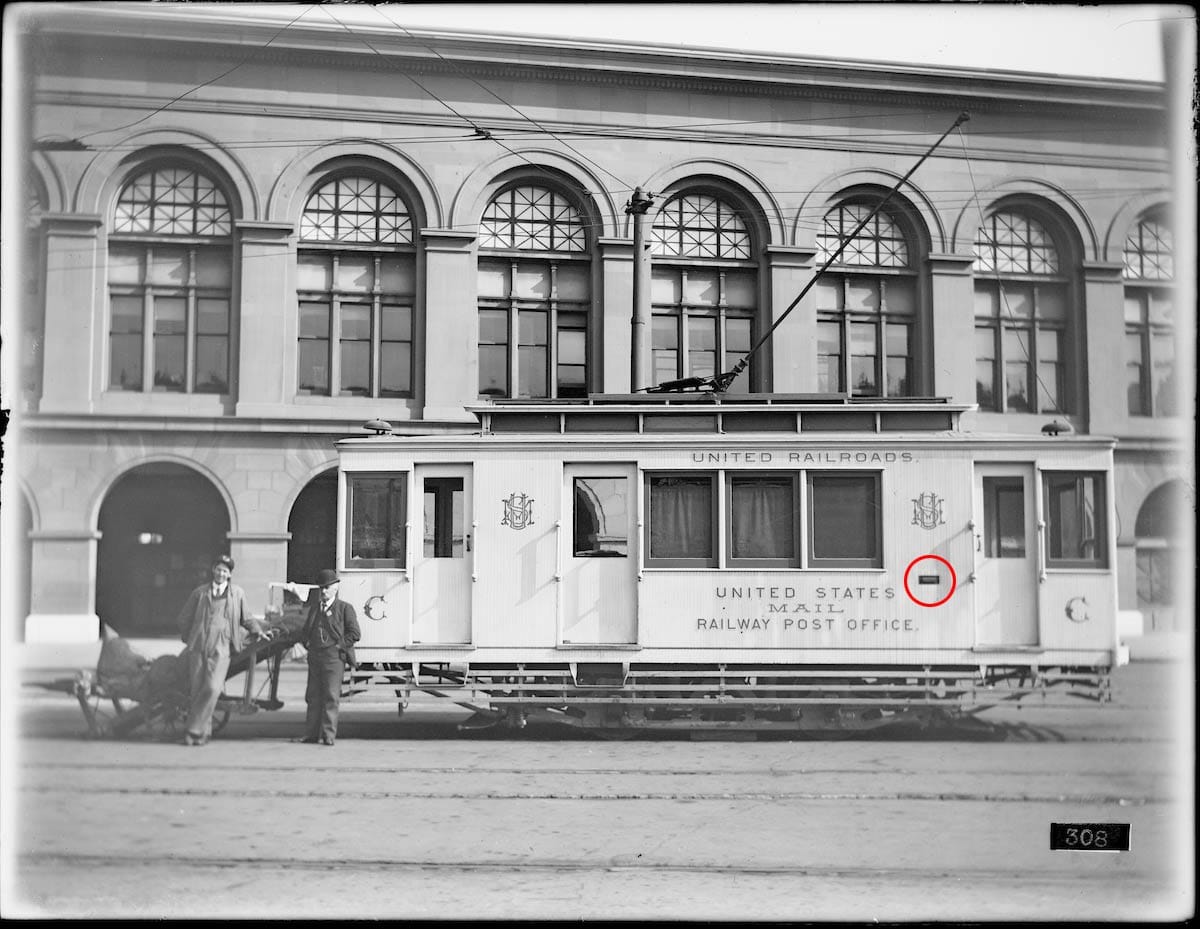
Back to Station B... in 1942 Mr. Gross counted himself the last alive of his group from the photo. He informed the News he would toast his departed comrades at a one-man banquet.
Hmmm… maybe this is not as heart-warming as I had intended. Let’s move on to folks kissing.
Kiss-N-Ride
The Municipal Railway tried all sorts of nutty marketing campaigns to combat the rise of the personal automobile in the 1950s.
This month, in 1957, the agency unveiled “Kiss-N-Ride,” encouraging housewives to drive their husbands to convenient bus stops for their commute to work (a goodbye kiss was apparently mandatory).
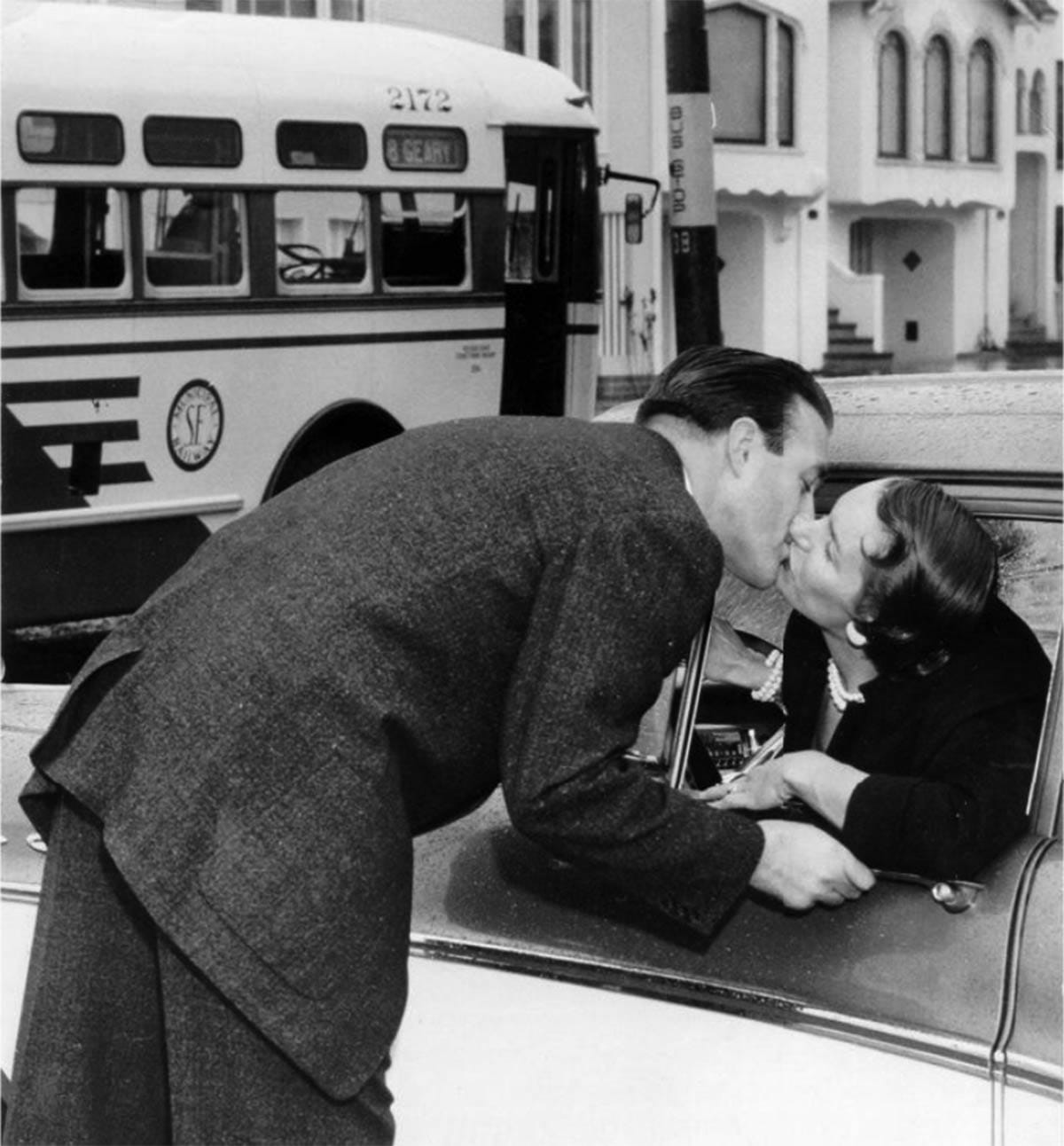
Olympic swimming star Ann Curtis Cuneo was roped in to demonstrate by dropping her husband off at 45th Avenue and Cabrillo Street so he could get on the 38-Geary—although it looks like he’s gonna miss that bus because of all that smooching.
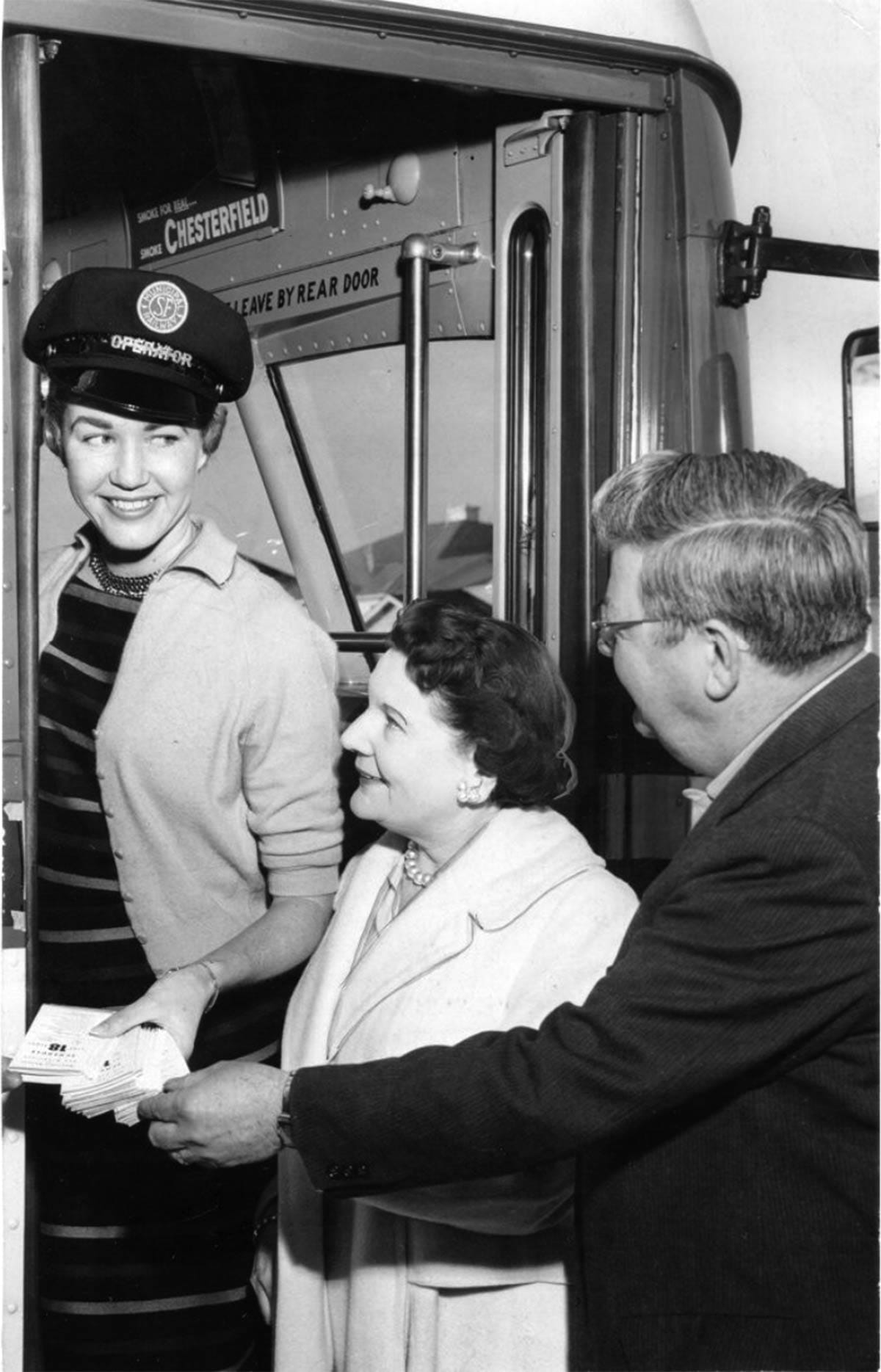
The same month, Muni sent Miss Marge Peiffer to stand at St. Francis Circle—where Sloat Boulevard, West Portal Avenue, Junipero Serra Boulevard, and Portola Drive all meet—to hand out printed bus schedules as “Miss Timetable” and promote the 18-Sloat bus.
Hmmm again… maybe kissing-housewives and timetable-models are too retrograde for the nice-history Grab Bag week?
Maybe there is an updated idea we might try here? Can we combat the forces of Uber and Waymo with beefcake Bart-riders and drag-queen Muni ambassadors?
Just pitching ideas.
Let’s move on to some feel-good trash history…
Blessing of the Trash Cans
San Francisco is always trying to figure out its trash problem, and no doubt you have heard of the city’s recent quasi-scandal to spend more than $400,000 to design new street corner trash cans with $19,000 prototypes.
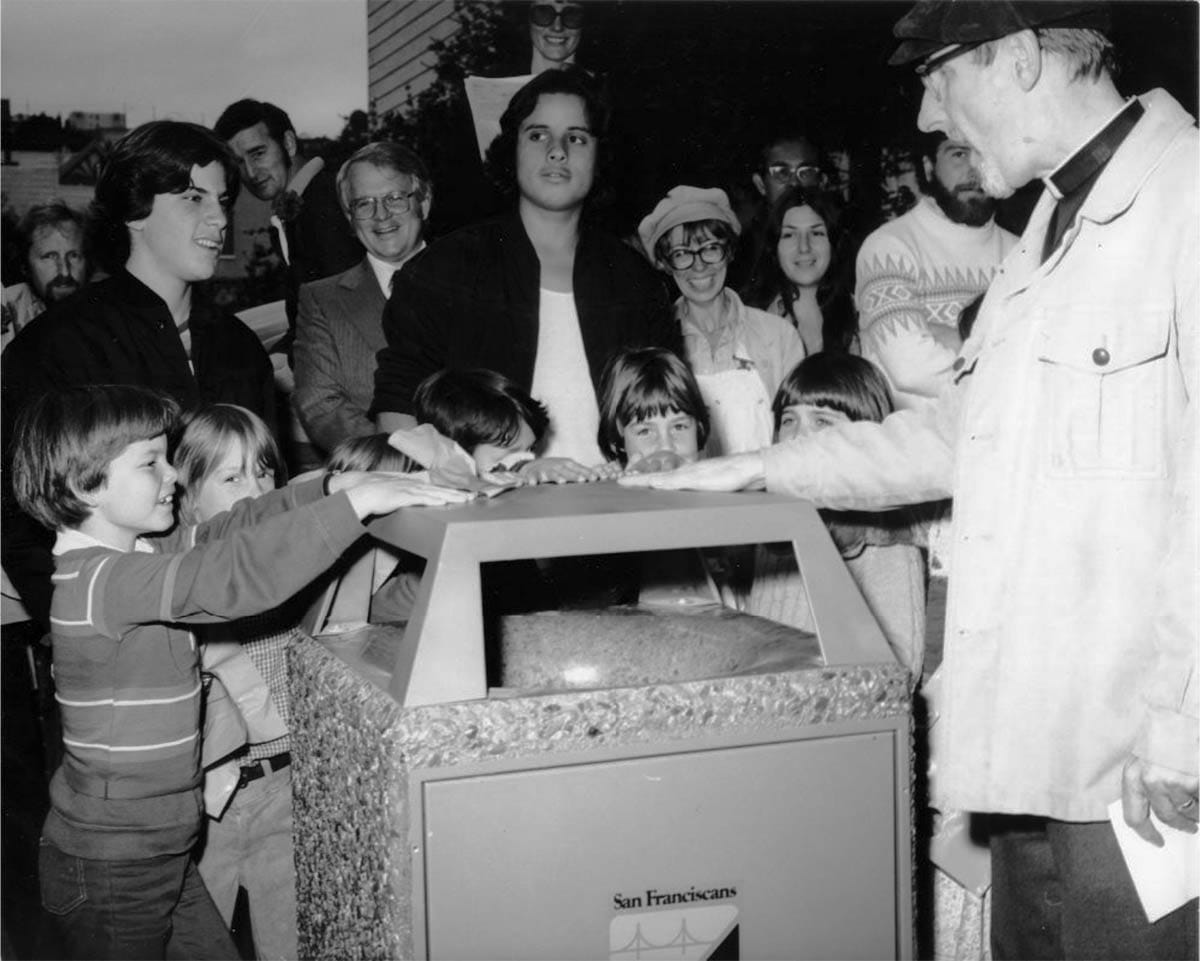
On March 29, 1978, Noe Valley’s 24th Street threw a party for a new 900-pound, vandal-proof trash receptacle installed beside the parking lot between Castro and Noe streets.
Celebrity attendees included Sir Beaky Penrose, the “litter-ary” pot-bellied pig, and Reverend Carl Smith from Noe Valley Ministry, who gave the new monstro-can a blessing:
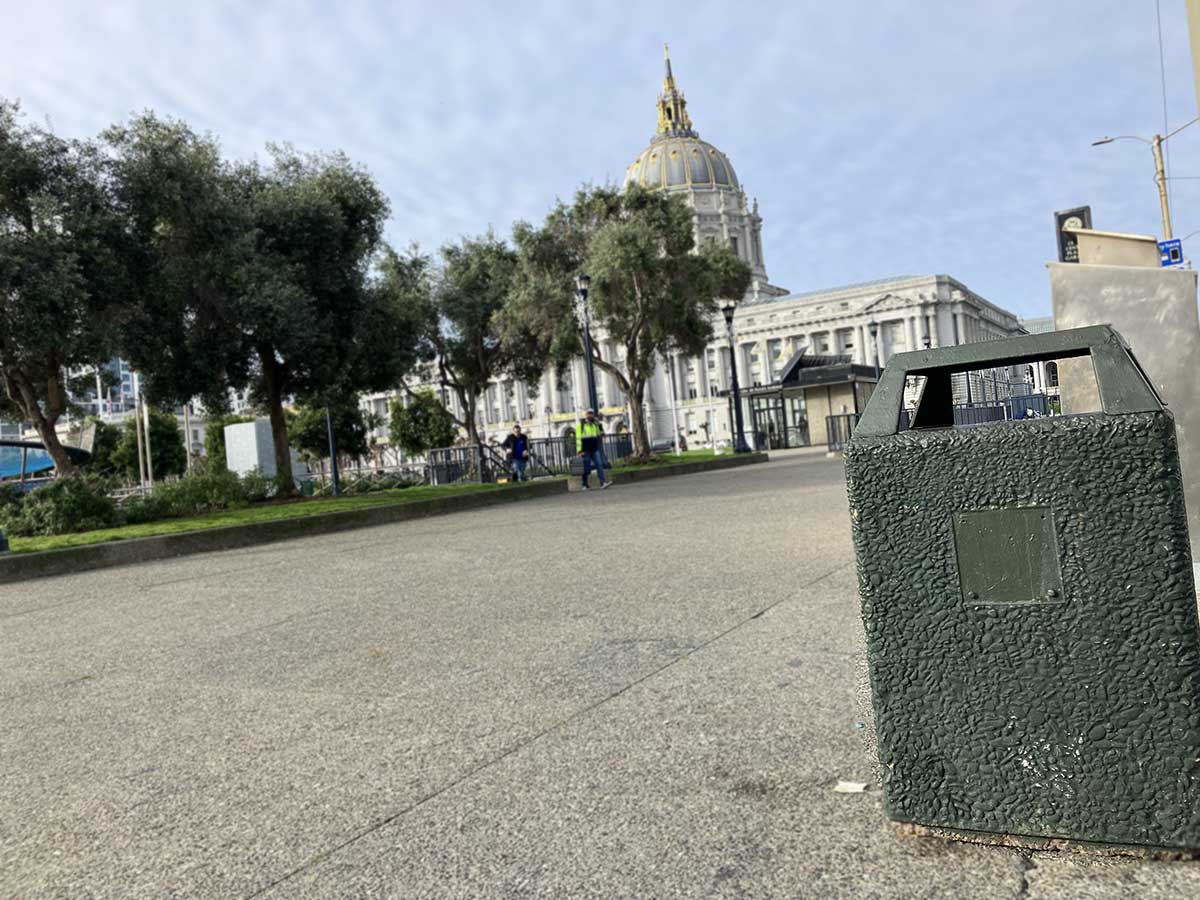
The pebbly-concrete icons of my young adulthood are still in use all over the city, but instead of their original 1970s-brown color, they are painted an inoffensive green. They are truly unmovable, although the metal access doors sometimes get warped and broken.
When you walk all over the city you can make up some strange scavenger-hunt games for yourself. Occasionally I stumble upon a 1970s can in its old brown state. Let me know if you see one!
Oh, and the 1978 cost for one of those cans? $187.44
Written in the Stars

I have a thing about getting up in towers and domes. I’m the urban version of a peak-bagger, I guess. Long on my list has been Galileo High School’s observatory.
Not many high schools are built with an astronomical observatory. The idea came from a Natural History club founded at Galileo High in the early 1920s, one so successful that it sprouted affiliate organizations dedicated to physics, chemistry, and other sciences at high schools around the world.
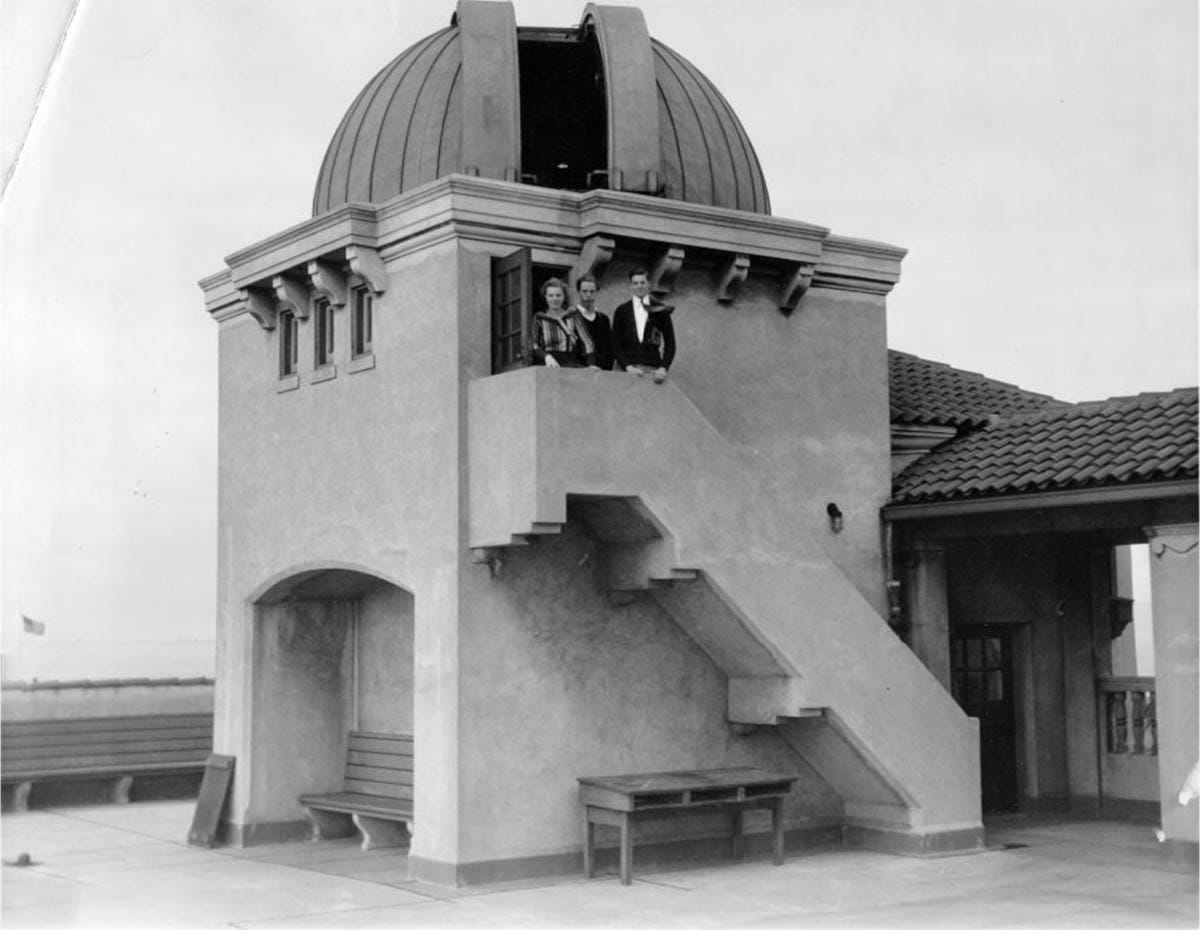
An observatory, so appropriate for a high school named after Galileo Galilei, was constructed on the east addition of the school in the mid 1920s. After a fund-raising campaign by the students, a 5 ½ inch refractor telescope was purchased and first used inside the 21-foot revolving dome in 1929. By 1935, a smaller reflecting telescope was added and observations were regularly sent along to researchers at Harvard and Yale.
Enthusiasm dropped for sky-watching during World War II and the astronomy class was discontinued in the late 1940s for lack of interest. Student access to the observatory ended in the 1990s, in part because the observatory stairs were not compliant with the America with Disabilities Act.
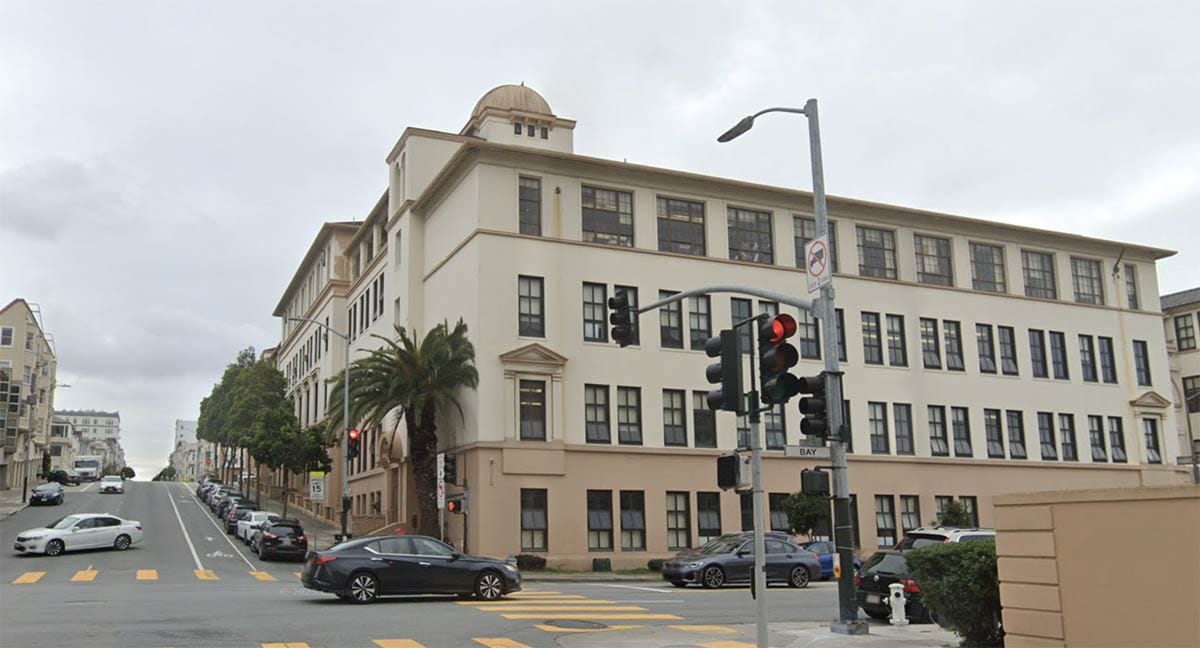
Now, economics and history teacher Daniel Lynch is trying to rally the school’s alumni and staff to restore Galileo’s observatory. He has plans for a modern telescope which could be tied into the school website. Computer Science teacher Danny Tan is assisting.
It is all very D.I.Y. Mr. Lynch is attempting to reopen the dome doors by applying vinegary solutions upon the long-rusted mechanisms.
I’m ready to help when the official campaign launches, Mr. Lynch. Maybe give me a preview visit?
Good bye Facebook
I deleted my Facebook account this week because… well, all the reasons. The “service” had definitely stopped being useful or fun for me a long time ago and I kept it mostly as a convenience for distant cousins to contact me.
In the end, one of the last good things about Facebook were the groups, which could get very nerdy and specific.
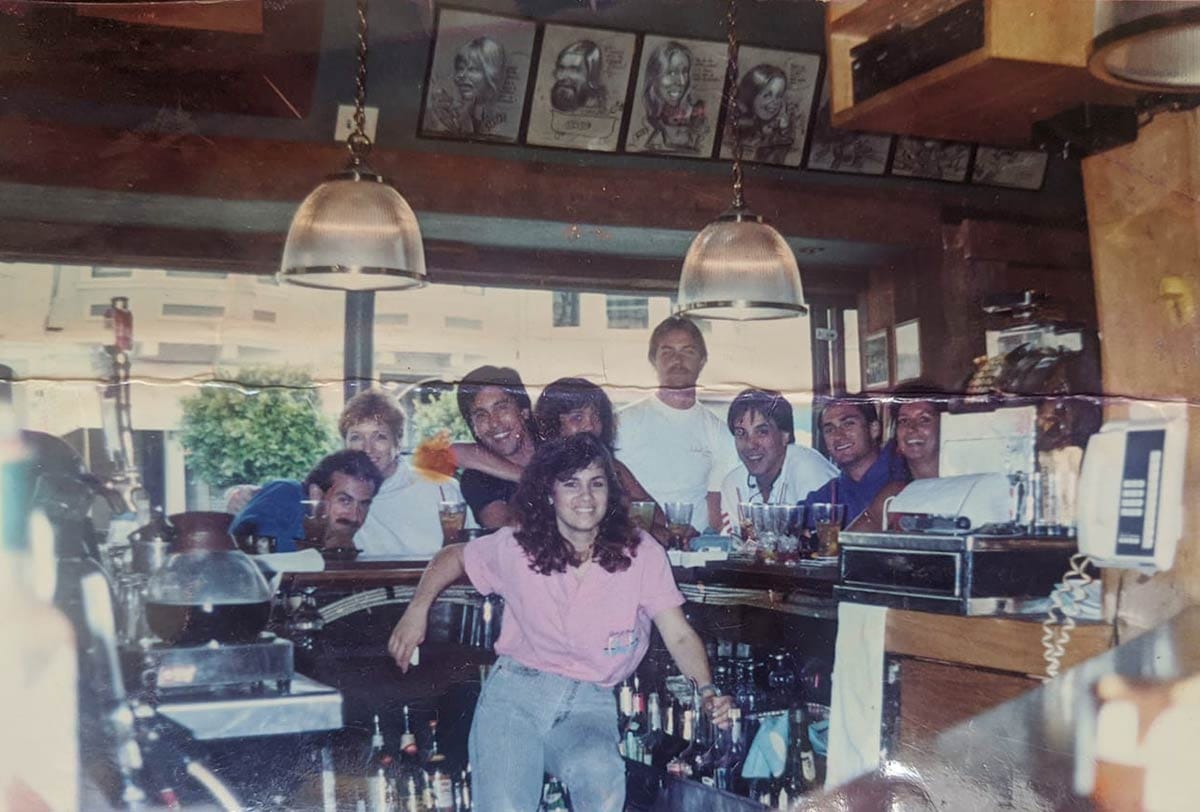
As an example, there is an active group for people who worked, patronized, and remembered the Pierce Street Annex bar at 3138 Fillmore Street in Cow Hollow’s “Bermuda Triangle.”
Meredith Godfrey puts up short videos, old photos are shared, people recount when A’s pitcher Dave Stewart would drop in, etc. It’s a space to remember those who have passed on and a place to swap memories.
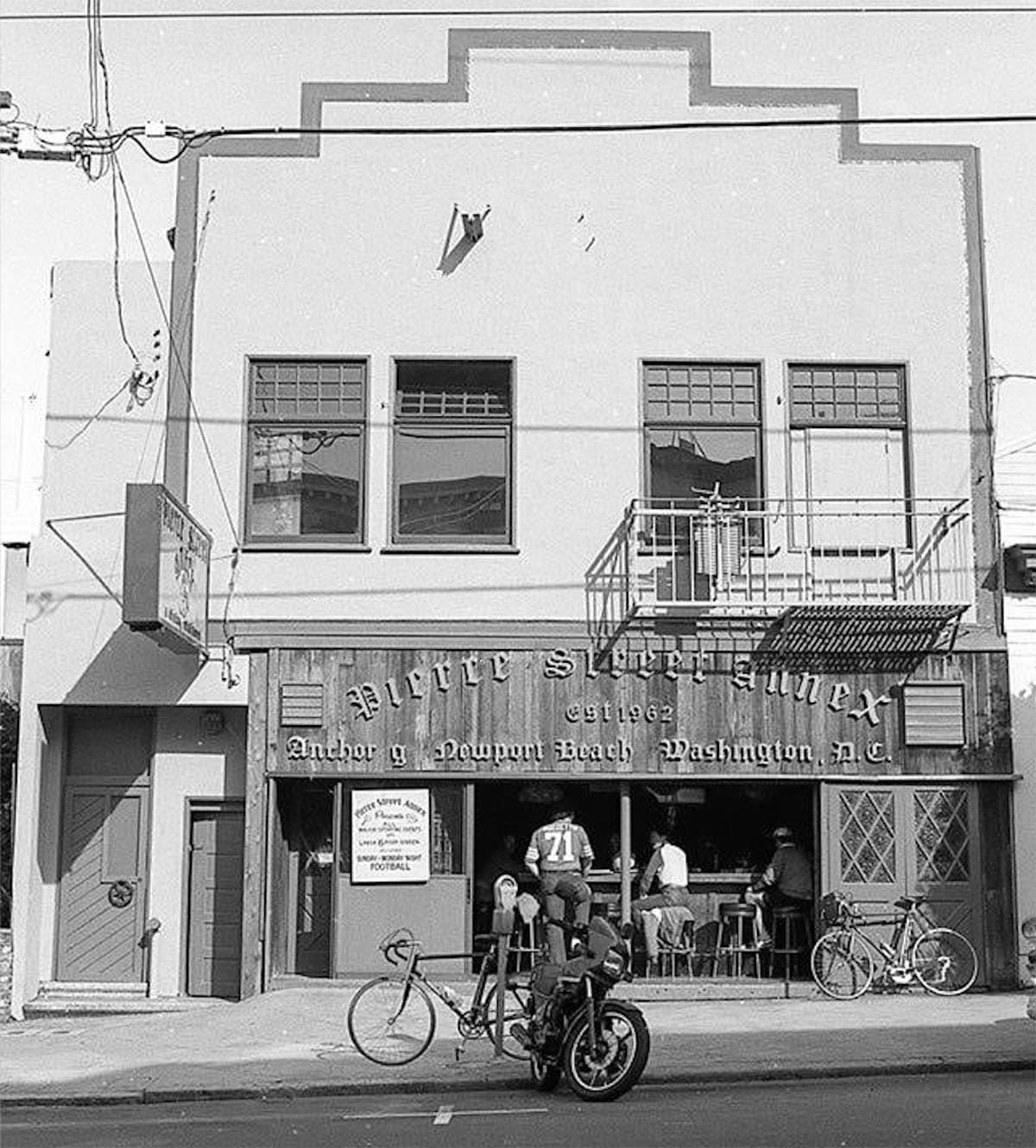
I very, very briefly filled in as the Sunday night DJ at the Pierce Street in 1985. Rich Lanier and I were under-aged patrons of the bar. When I was hired, I worried the management would discover I was just 19 through some code in my social security number. (They did not.)
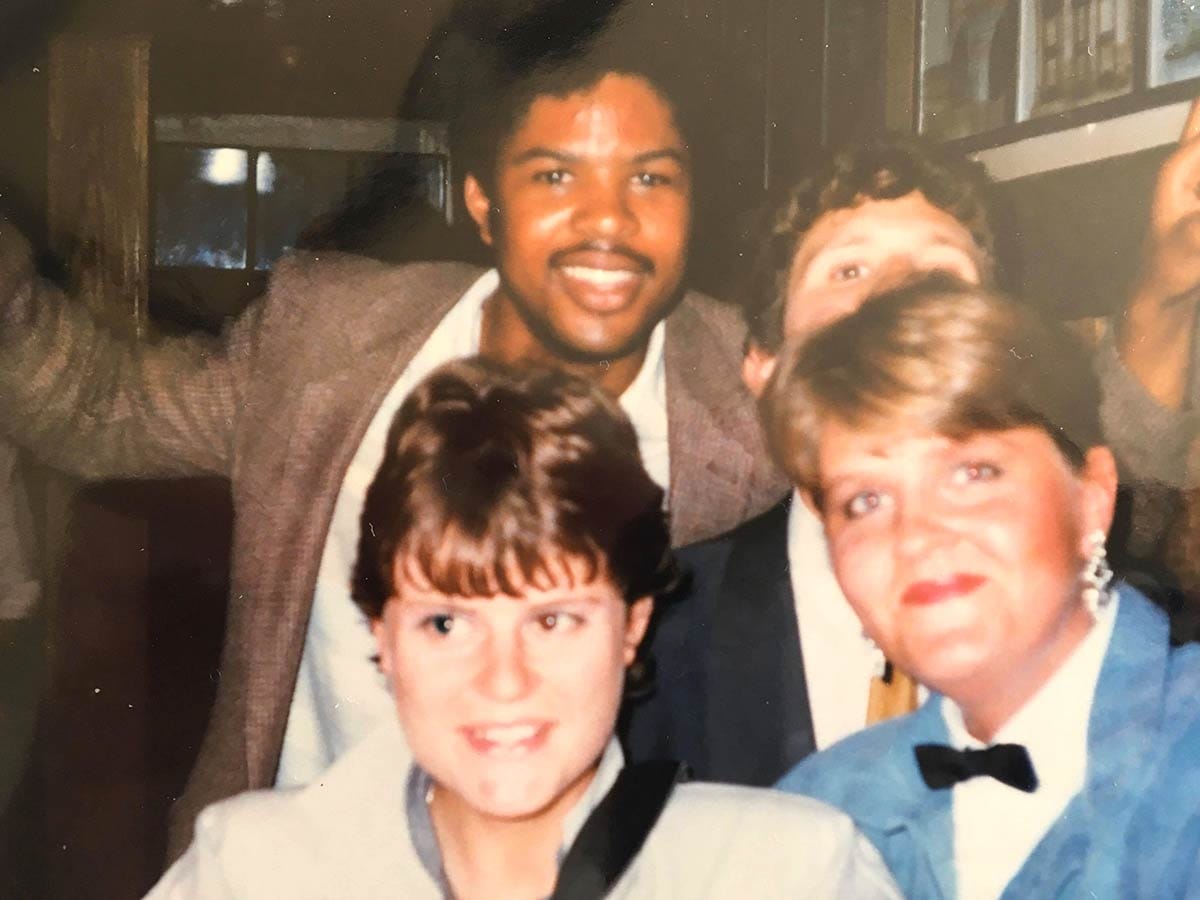
I favored funk, old Motown, and what I thought was edgier New Wave. The regular DJ solemnly gave me a tip before my first night that has always stuck with me: “If it feels sort of dead and nothing is working, put on ‘Caribbean Queen’ by Billy Ocean.”
I thought he was joking. But then after midnight on one cold Sunday night, I let Billy spin and everyone still in the bar—young, old, black and white—hit the dance floor. Two young women tipped me at the end and gave me their phone numbers.
Forty years ago this year... sheesh.
We started this week dancing, so let’s go out dancing:
Caribbean Queen by Billy Ocean
Woody Beer and Coffee Fund
Great thanks to Paul J. (F.O.W.), Dennis O. (F.O.W.), and Angus M. (F.O.W.), who all kicked into the beverage fund and offered some great ideas for future San Francisco Stories.
When are you free to join me for a beer or coffee?
Sources
“Wanted—by Galileo—One Telescope!” San Francisco Examiner, May 1, 1927, pg. 38.
“School Open Observatory,” San Francisco Examiner, May 26, 1929, pg. 19.
“P.T. to Visit Galileo High Observatory,” San Francisco Examiner, November 10, 1935, pg. 41.
“Look for Timetables on Sloat Bus Today,” San Francisco Examiner, February 4, 1957, pg. 4.
“Star Plugs Muni ‘Kiss-N-Ride’ Plan,” San Francisco Examiner, February 8, 1957, pg. 30.
“Friends’ Can. Can You?” Noe Valley Voice, April 1978, pg. 1.
Sharon Yong, “Restoring Galileo’s Observatory,” Galileo Press, November 15, 2024.