
Hanging on Russian Hill
San Francisco's first legal execution took place on December 10, 1852.
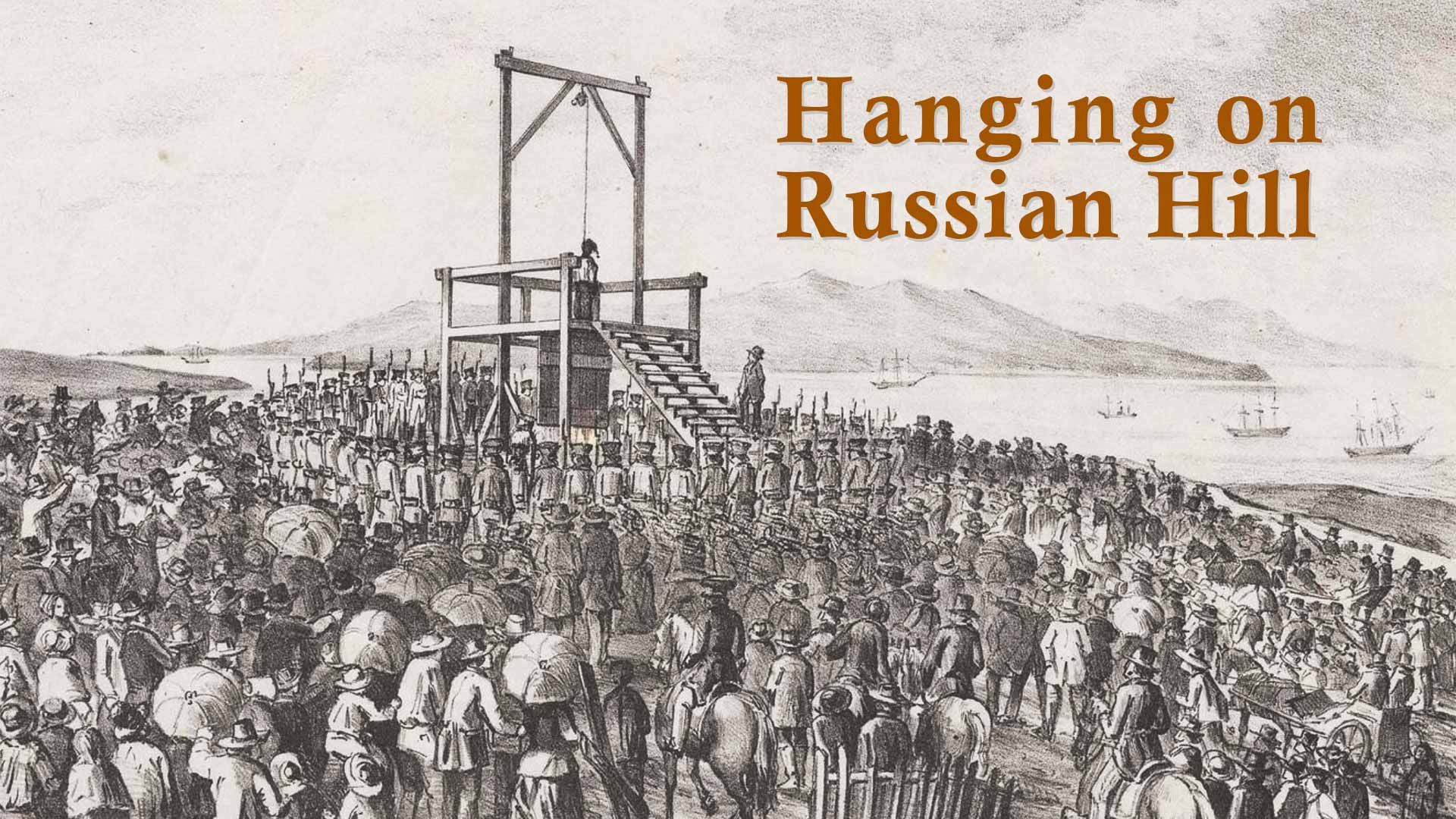
Through a drizzly December morning in 1852 they climbed. Men, women, children. Most walked up the muddy paths, but some cantered around the edges on horses. Dogs trotted along amongst the crowd.
The gallows had been completed the night before, the location a third choice. The Broadway jail, still under construction, was determined too small. Then neighbors protested at the idea of using Washington Square. So the workmen carried their scaffolding, tools, and rope to the top of Russian Hill.
There had been hangings in San Francisco. Four men had been strung up just the summer before. But they were sentenced and executed by a committee of vigilantes. (Another Vigilance Committee would arise five years later.)
This would be San Francisco’s first legal execution. Despite repugnance from some quarters, city officials desired it take place in a highly public spot.
The peak overlooked the growing boomtown and was visible “from every point of the city.” And the hill was, after all, named for the dead: a handful of Russian sailors interred there before the Gold Rush.
Death in Pleasant Valley
José Forner y Brugada was originally from Valencia, Spain. He lived for a time in Cuba before traveling to San Francisco and finding a job as a cook and baker of pies at the Jackson House hotel on Montgomery and California streets.
On the afternoon of September 13, 1852, the baker was walking through the sand-hillocks south of Market Street. The 49ers had given two relatively open areas of the dunes the names of Happy Valley (closer to Market Street) and Pleasant Valley (up against the rise of Rincon Hill).
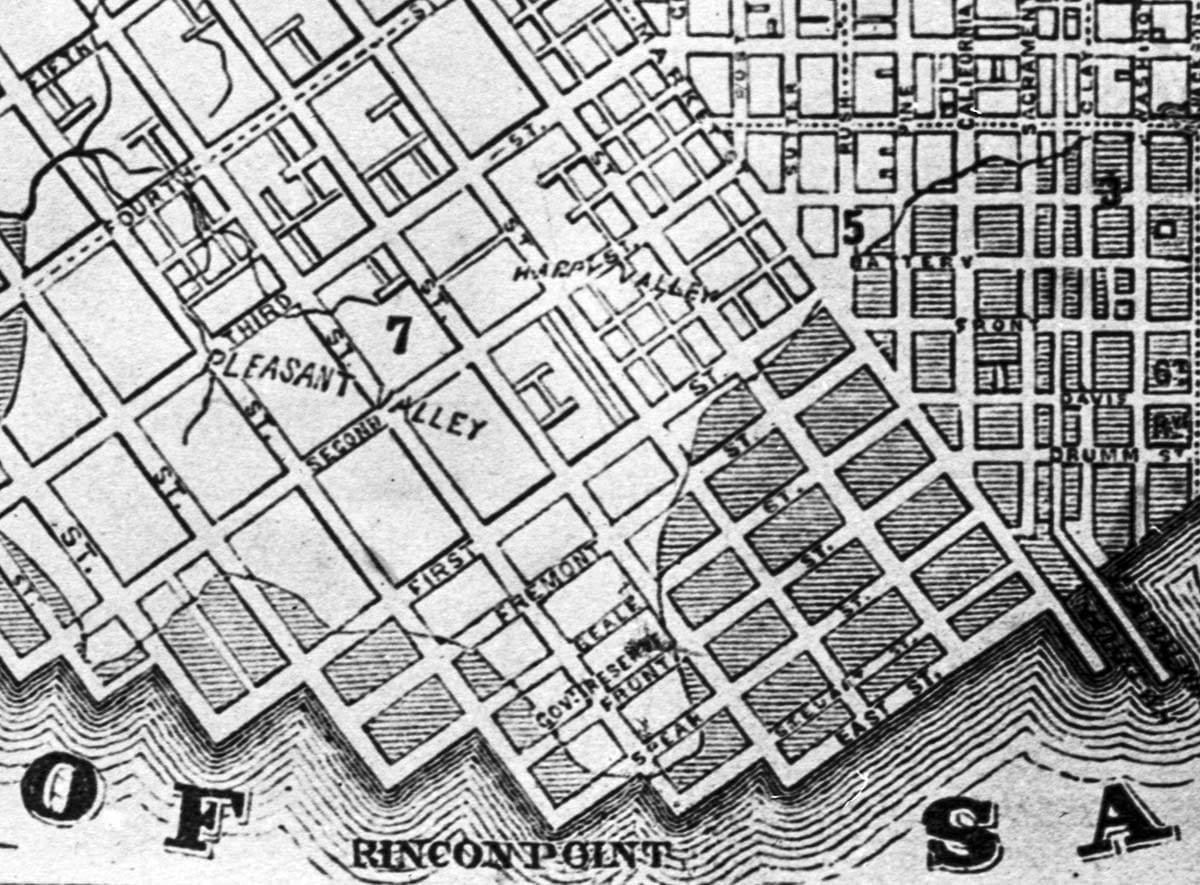
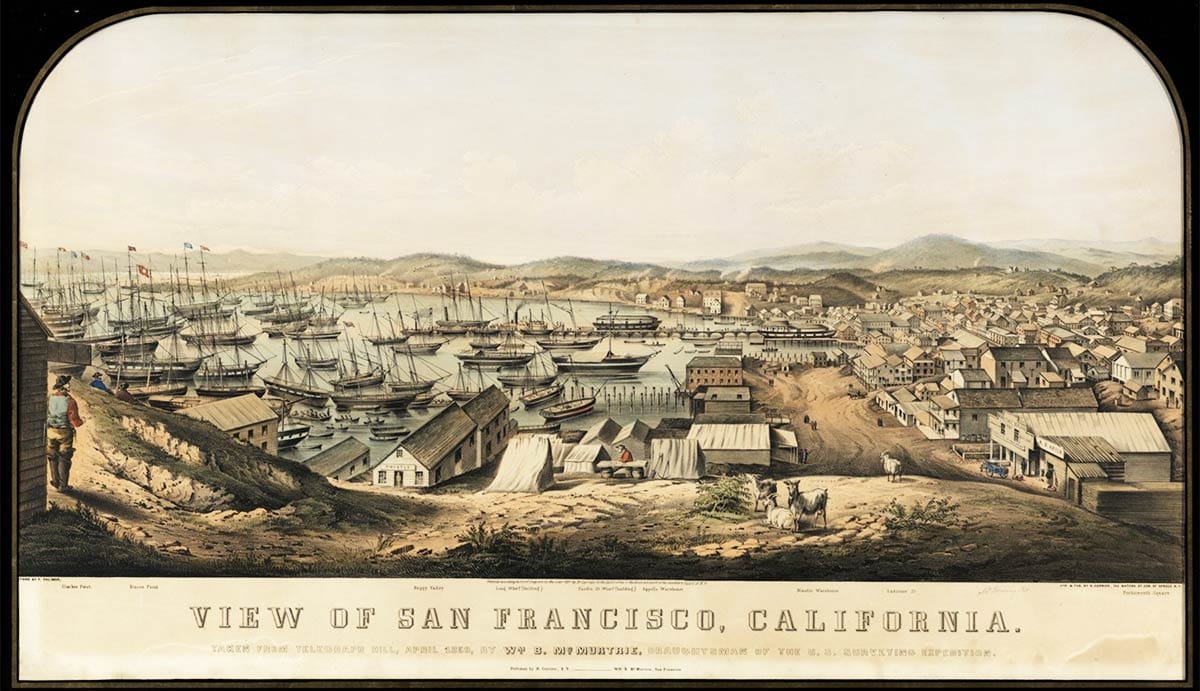
In the 1850s, steam shovels and small locomotives were already flattening the hills and filling in the hollows to make South of Market a mostly pancaked landscape.
It was while watching one of these hill-razing operations near 1st Street that Forner ran into the man he would kill.
José Atari Rodriguez worked as a charcoal burner near Mission Dolores. After enjoying his day off at Señor Pena’s Nuevo Mundo Hotel (and bar) on Montgomery Street near Jackson Street, Rodriguez was walking back to his coal-pit job when he came across Forner.
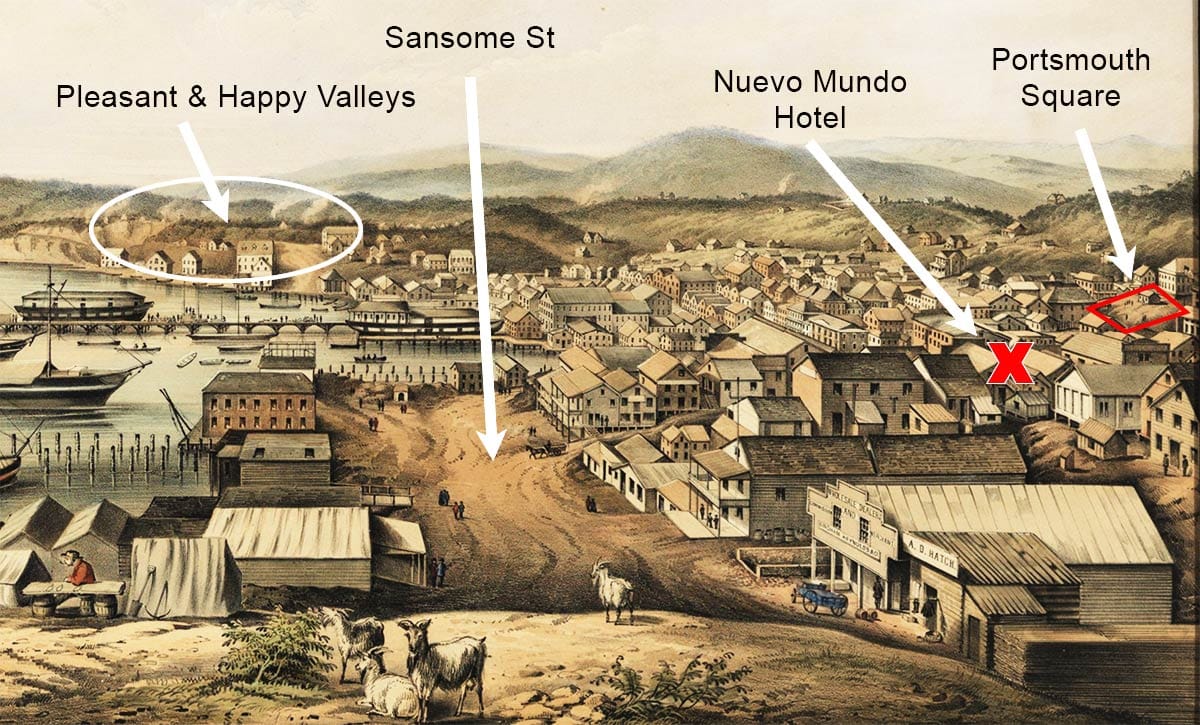
In Forner’s account, he declined an offer of getting a drink with Rodriguez and retreated to a hollow to relieve himself. To do so, he removed his knife and his sash. While Forner was engaged in a compromising position due to this call of nature, Rodriguez appeared, took up Forner’s eight-inch knife, and demanded the baker’s money.
Forner said he tried to run, slipped, and Rodriguez stabbed him in the calf. Then the assailant apparently decided to bail on the whole idea, dropped the knife, and retreated up the slope of the hollow.
That’s what Forner said.
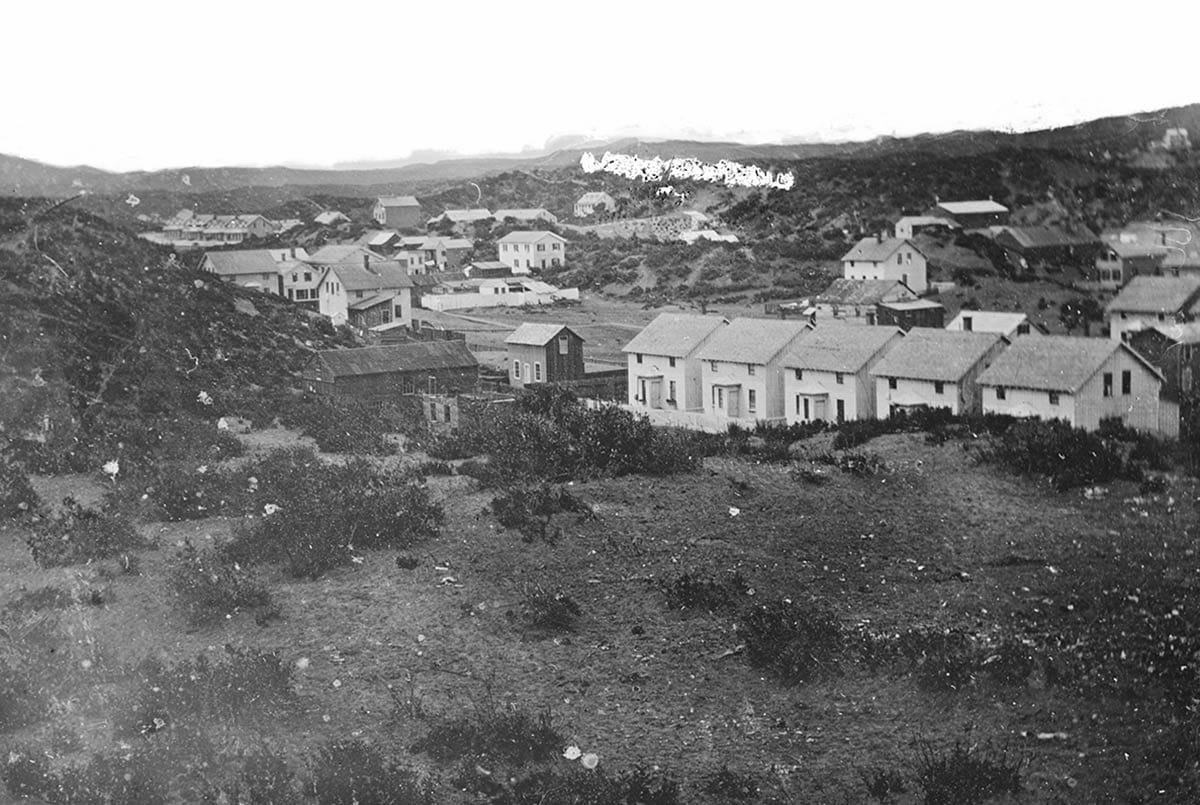
John J. Burke didn’t see any of that. He told a jury what he did see: a screaming Rodriguez running down a hill with Forner in pursuit. The frightened man in front tripped on a bush and fell on his face. Before he could rise, Forner caught up and stabbed him in the back multiple times.
Burke said he picked up a stick of wood and ran over, yelling at Forner to stop.
“He never ceased stabbing him until I got within ten feet of him.”
Burke took a swing at Forner with his club and chased him back up the hill. The two were in a wary stand-off when other witnesses closed in and assisted in taking Forner into custody.
Coroner Nathaniel Gray counted 11 stab wounds when he examined Rodriguez’s body.
No Attempt at Concealment
In 1852, ethnic conflicts and violence roiled the California mining districts. At Willow Bar, Chileans fought Chinese over a claim and rolled a large boulder through their camp. Whites drove away several hundred Spanish-Americans from a settlement after flogging purported thieves and vowing to “drive away every Mexican or Chilean they could find” in Calavaras and Tuolumne counties.
The Placer Herald called Forner an “unlucky greaser” likely to be the first legally sentenced to death in San Francisco history. The Nevada City Journal asserted that Forner’s crime “well illustrat[ed] the fiendish ferocity that seems latent in the blood of the Spanish race.”
San Francisco was somewhat more less susceptible to the general xenophobia and racism running across California.
But no one doubted the baker’s guilt.
Forner said he acted in self-defense and that Rodriguez had robbed him, but chasing a man down from behind is not a defensive act, and it was Forner, not Rodriguez, who was found with hundreds of dollars on his person.
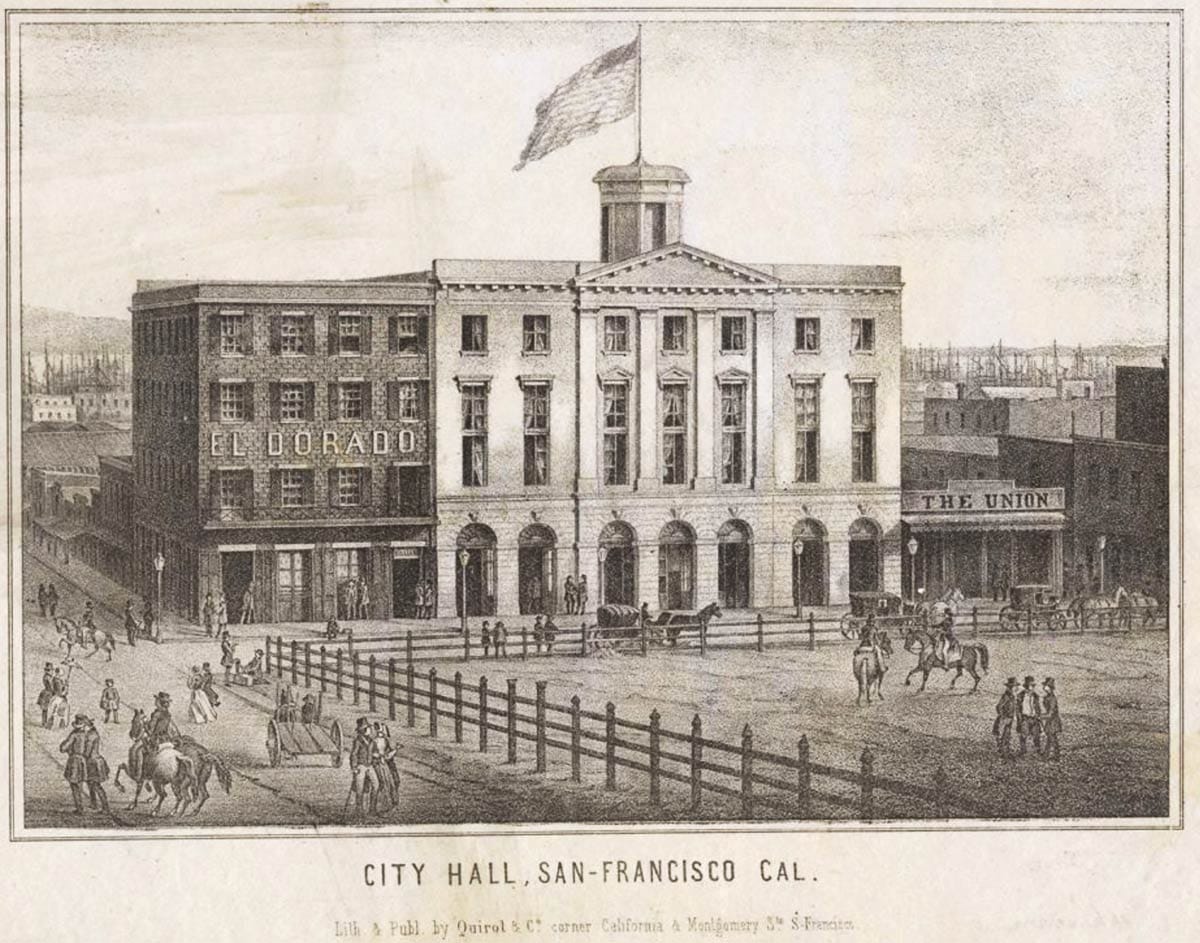
Rodriguez’s boss said he had just paid the dead charcoal-burner close to $300 in wages. Forner had around $300 on his person when arrested. He claimed he recently enjoyed a winning streak at the El Dorado gambling house on Portsmouth Square.
Maybe it was a simple robbery gone wrong. Maybe there was more to the story. The brazenness of the killing shocked and puzzled the Alta, who over the course of the trial spelled the accused’s name as Forni. “There is something inexplicable about this case which needs unraveling.”
Either way, multiple people saw what Forner had done to Rodriguez and Rodriguez was dead.
On September 21, a grand jury indicted the baker for murder. On October 14, a jury of his peers, after two hours of consideration, found him guilty. On October 18, the courtroom was packed for the sentencing by district court judge Delos Lake.
The judge declared there was no shadow of doubt as to Forner’s guilt and told him so:
“The deed was committed in open day, with no attempt at concealment. You were first seen in hot pursuit of your victim, with a drawn dagger in your hand, he fleeing before you, uttering piercing and heart-rending cries of fear and distress. He falls to the ground, and while prostrate and helpless, you plunge the dagger eleven times into his body, inflicting eleven wounds, nearly all of them mortal.”
The judge ruled the prisoner was to be taken to a place of execution on December 10 between the hours of one and three p.m. and be hanged by the neck until dead.
“And may God have mercy on his soul.”
An Orderly and Quiet Manner
Thousands marched up the hill on the drizzly December morning, but in the end, the squeamish received some consideration.
The gallows were lifted in the morning and moved 100 yards west below the rise of the peak and beyond the view of sensitive San Franciscans below in town.
Sheriff John C. Hays received help to manage the day. The Marion Rifles volunteer militia came first, their green and black uniforms growing darker in the light rain. The Marions cleared a pathway and a square around the gallows’ scaffolding to keep the crowd back. The First California Guards followed, marching with a cab drawn by four black horses.
Inside was a composed José Forner with the sheriff. While in jail, the prisoner had reportedly tried to commit suicide using a bone from one of his meals, but on this fateful day Forner’s demeanor was calm.
“He mounted the scaffold with a bold step and without any assistance,” noted a reporter, “exhibiting not the least fear or trepidation.”
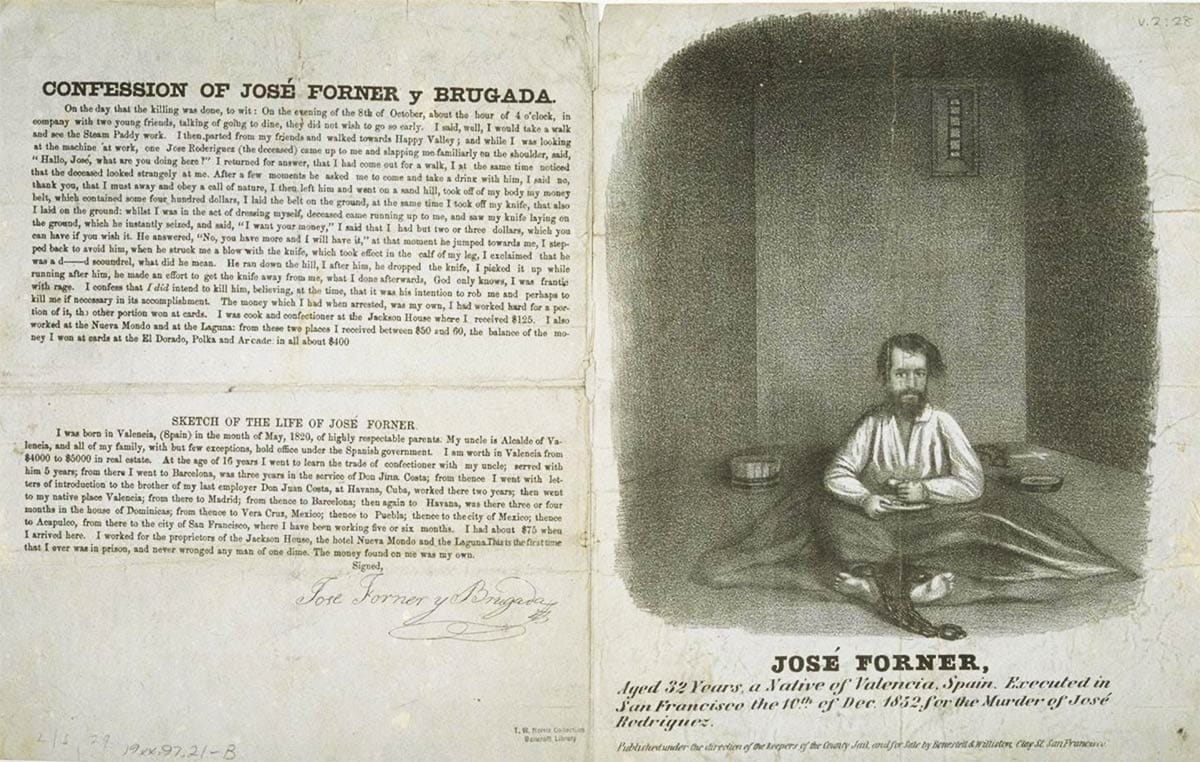
After the reading of the death warrant, Forner was asked if he had any last words for the estimated three thousand people who had gathered to see him hang. The doomed man spoke briefly, justifying the killing as dealing with “an assassin” who tried to rob him.
“You have come to see an innocent man die. […] No doubt those that tried me acted justly, according to the testimony. They could not have known the truth. The Americans are good people; they have ever treated me well and kindly; I thank them for it. I have nothing but love and kindly feelings for all. Farewell, people of San Francisco! World, farewell!”
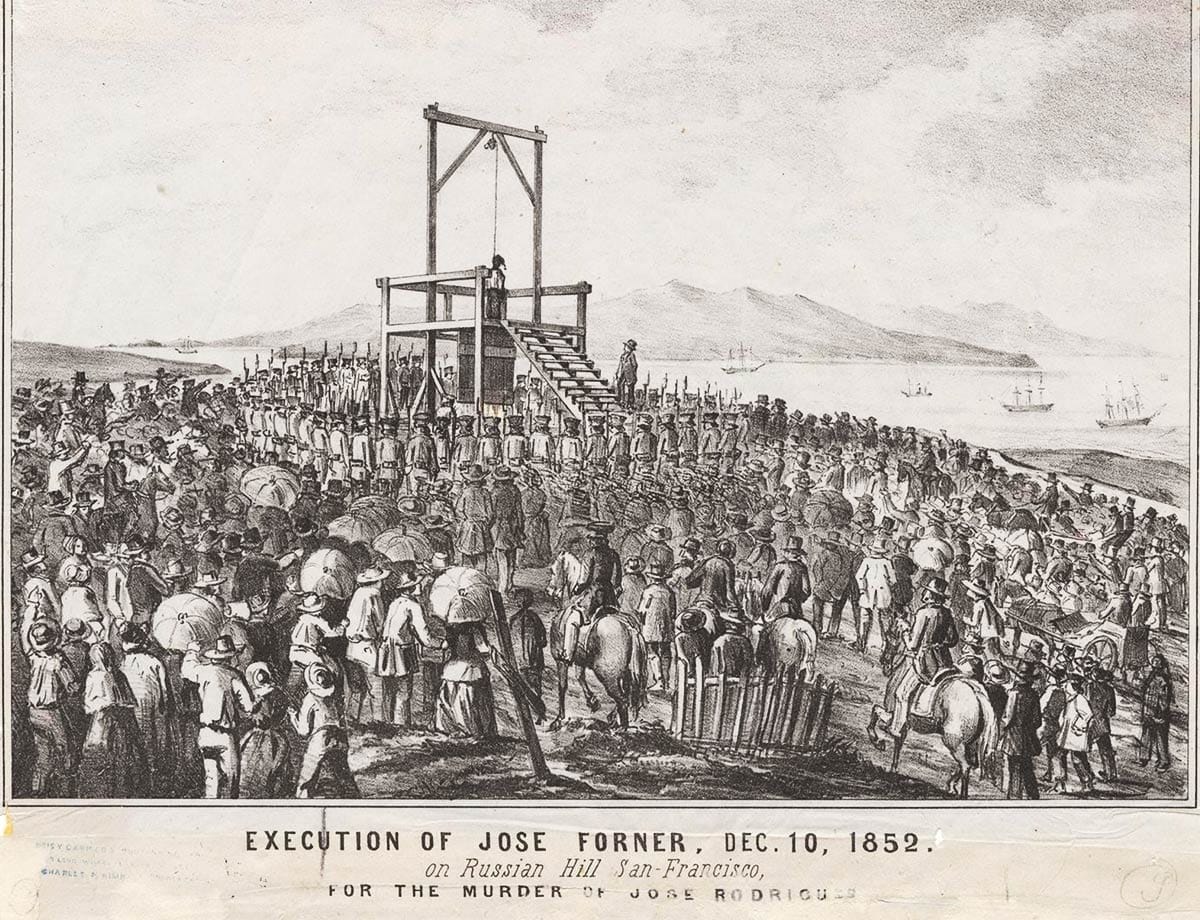
It happened at exactly half-past one o’clock. The noosed and hooded figure dropped and José Forner y Brugada “paid the last debt of nature.”
The Alta reporter admitted some perverse sympathy for the killer, but he tried to be professional.
“The sentence was carried out in an orderly and quiet manner, and with nothing to trouble or interrupt the proceedings. The military and the officers deserve credit for the manner in which they did their duty on this solemn occasion. May our criminal records never be stained again with the history of such a dark and bloody transaction.”
Woody Beer and Coffee Fund
There are no guarantees that we will see the great John Law (F.O.W.) or his Doggie Diner heads when we have our drink together, but this is a magical city and anything can happen.
Thanks to Erika L., Jeff B. (F.O.W.), Tom H., and Todd W. (F.O.W.) for their donations to the Woody Beer and Coffee Fund. I am a bit behind in my calendaring this week, but we will get our meetings scheduled, because I am thirsty.
You other folks: are you free to meet me sometime? Your drink is paid for.
Sources
“A Foul Murder,” Daily Alta California, September 14, 1852, pg. 2.
“The Late Murder,” Daily Alta California, September 15, 1852, pg. 2.
The Weekly Placer Herald (Auburn, CA), September 18, 1852, pg. 2, col. 3.
“San Joaquin News,” Daily Alta California Supplemental, September 20, 1852, pg. 1.
“Law Report,” Daily Alta California, October 15, 1852, pg. 2.
“Local Matters,” Daily Alta California, October 19, 1852, pg. 2.
“San Francisco, Oct. 19, 1852,” The Journal (Nevada City, CA), October 22, 1853, pg. 2, col. 3.
“Local Matters,” Daily Alta California, December 3, 1852, pg. 2.