
Ropewalk
Some angled buildings on 3rd Street in San Francisco's Dogpatch are clues to an unusual industrial past.

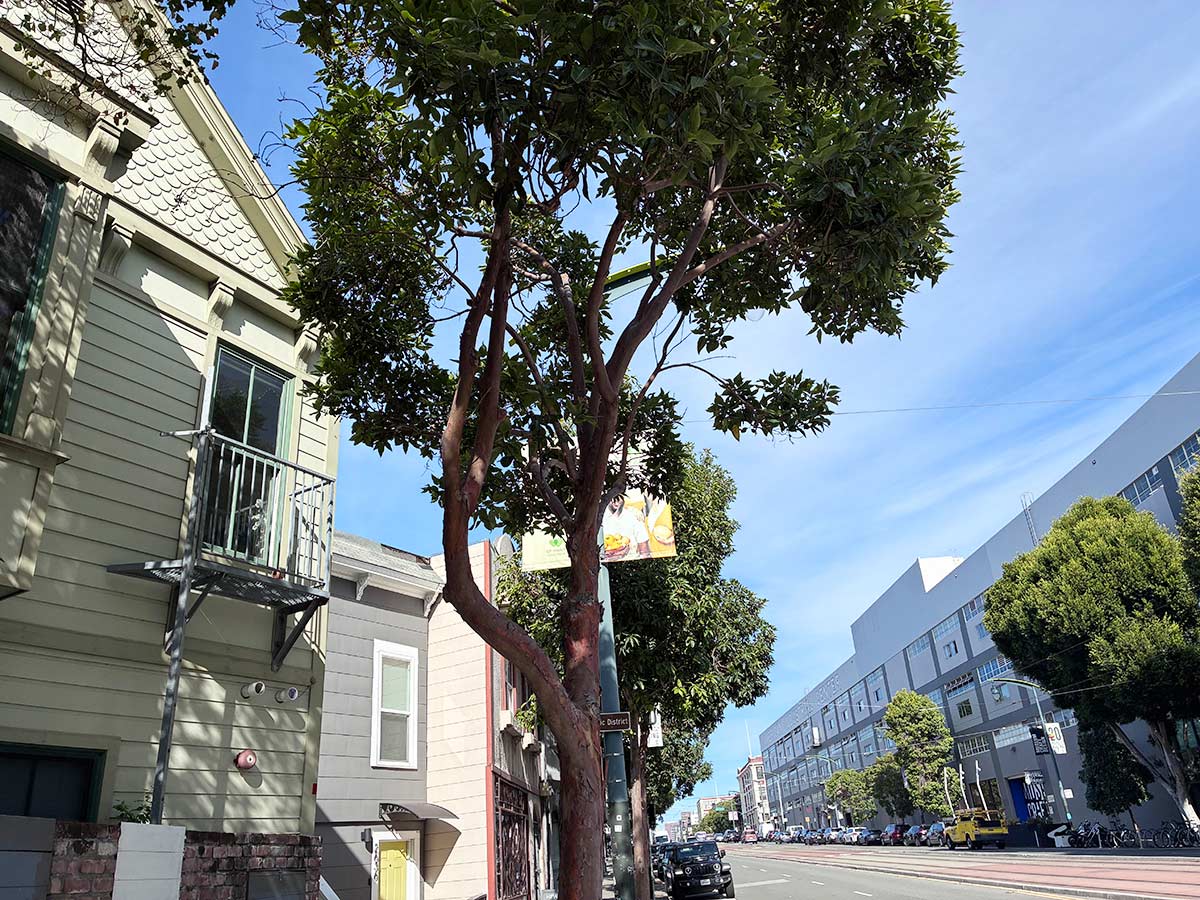
I enjoy the alleys, odd-shaped buildings, and strange street patterns that reflect missing parts of San Francisco’s history, the urban fossil reliefs of old railroad right-of-ways, land grants, or former shorelines.
One of San Francisco’s lesser-known palimpsests is on 3rd Street between 22nd and 23rd streets, where a row of older buildings sits at an angle to the road, holding a border line for a now-vanished and unusual landmark that once ran from the base of Potrero Hill into the bay.
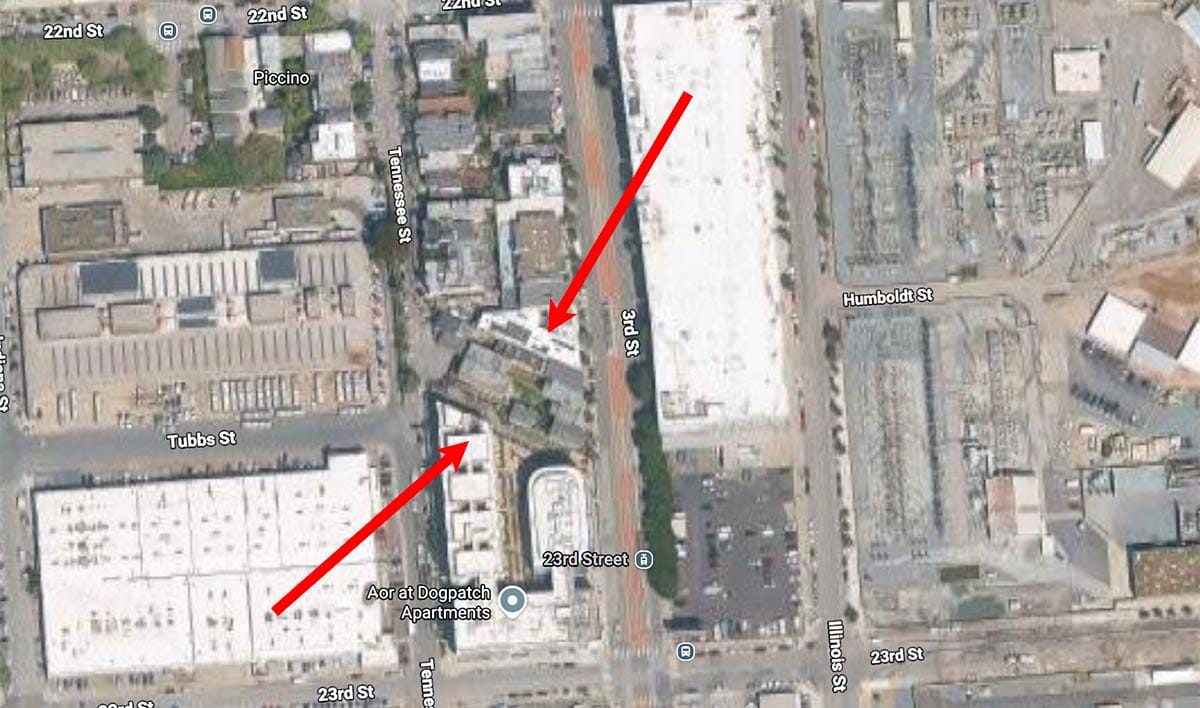
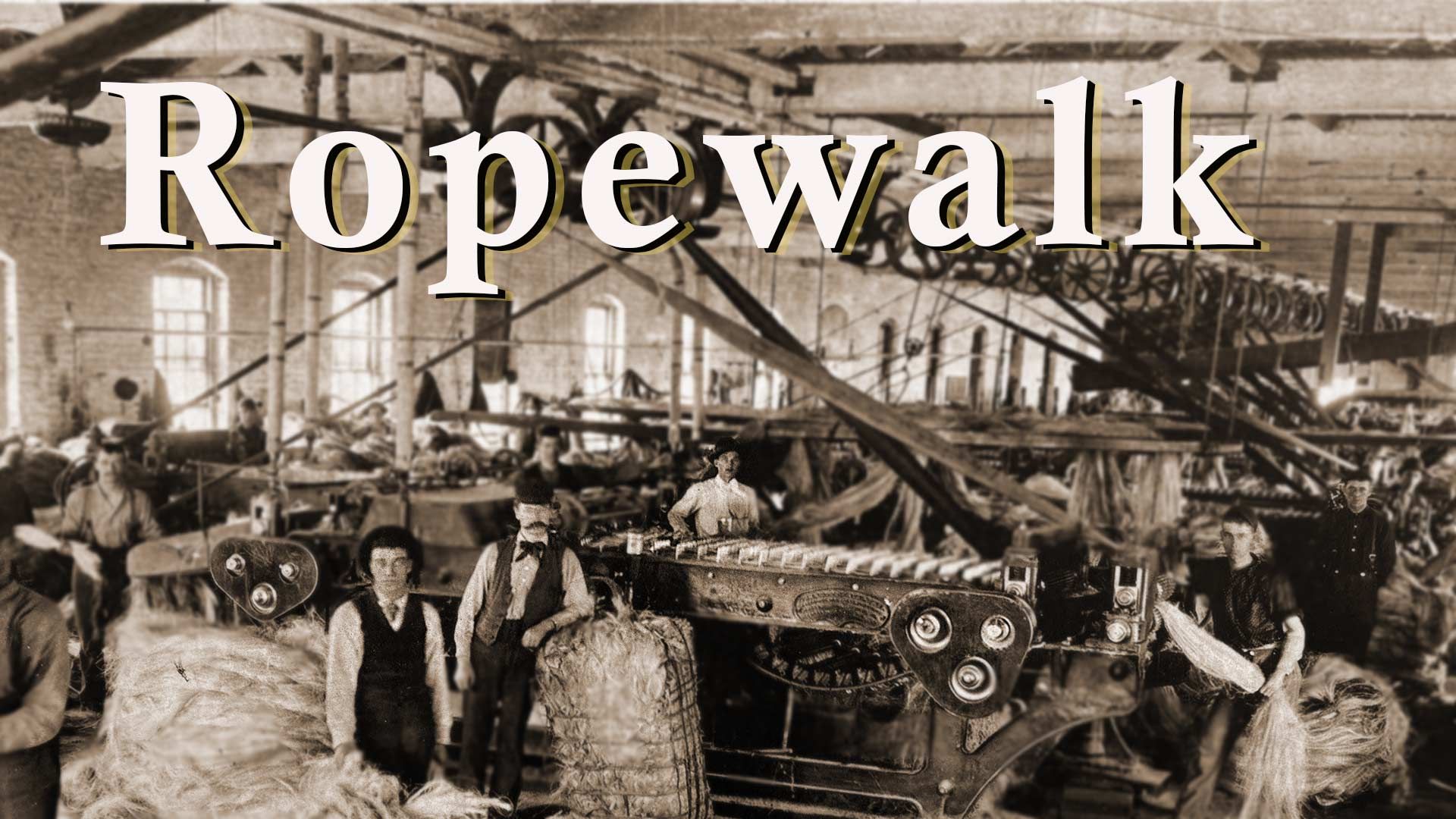
For more than 100 years the angled row stood in line with the great Tubbs Cordage ropewalk, one of San Francisco’s earliest and most unusual industrial buildings.
We don’t think much about rope in the 21st century, but in the days of sailing ships it was an essential component of life, commerce, and empire. Whether carrying passengers, whalers, fishermen, troops, trade goods, or cannons, sea-going vessels needed lines, halyards, forestays, shrouds, ratlines, marlines, houselines, cables, and numerous other types of cords and ropes for rigging, hoisting, cargo lashing, anchoring, towing, and more.
Alfred L. Tubbs came to California in 1850 representing a Boston wholesaler with two ships full of general merchandise. After quickly selling his entire cargo, the 22-year-old agent decided to stay in Gold Rush San Francisco and strike out on his own. He entered into a partnership with sea captain William Folger to open a chandlery (ship supplier) on Pacific Street just off the downtown docks.
Folger & Tubbs did a great business. The sea was in practical terms the only way in and out of San Francisco and sailing ships need supplies, including lots of rope. The partners soon expanded into commissioning whaling expeditions and consignment shipping.
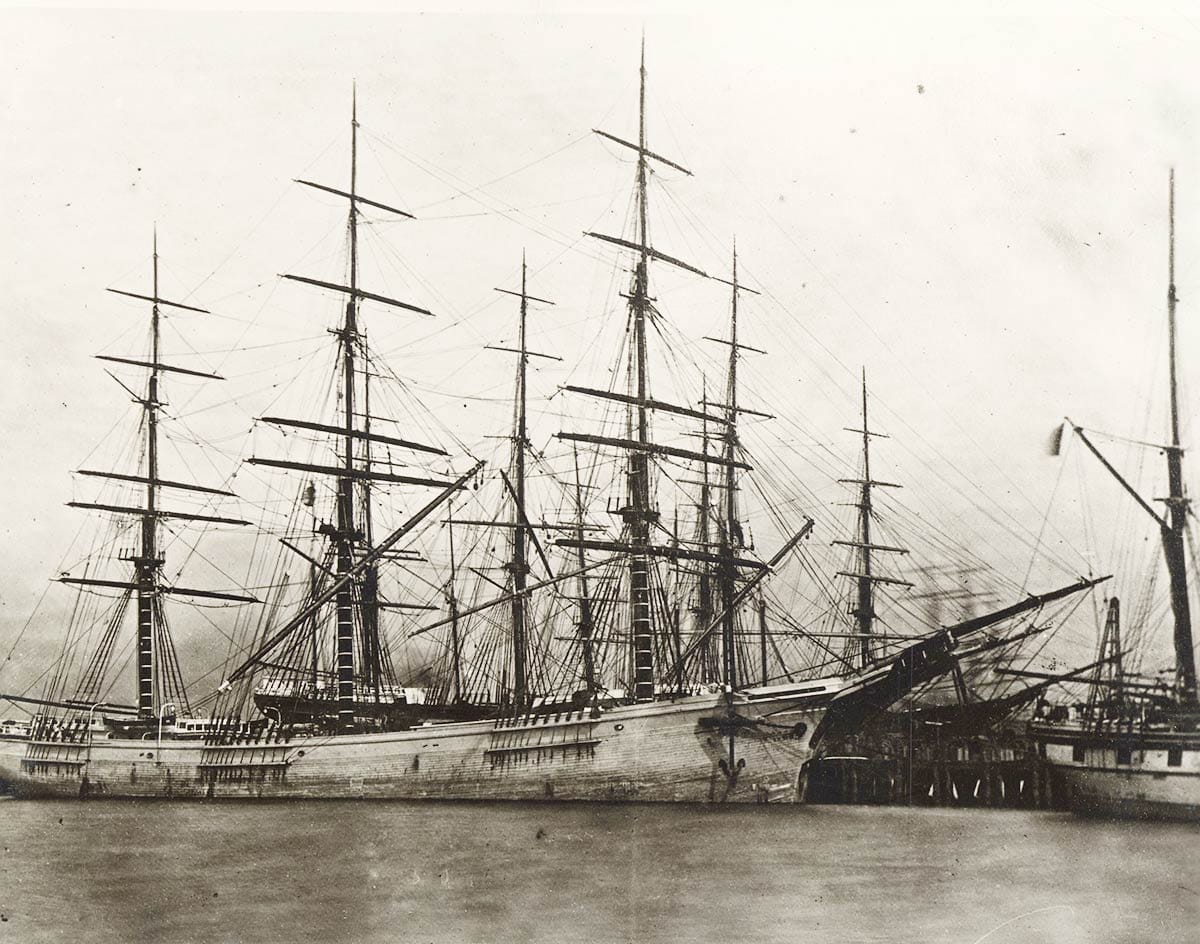
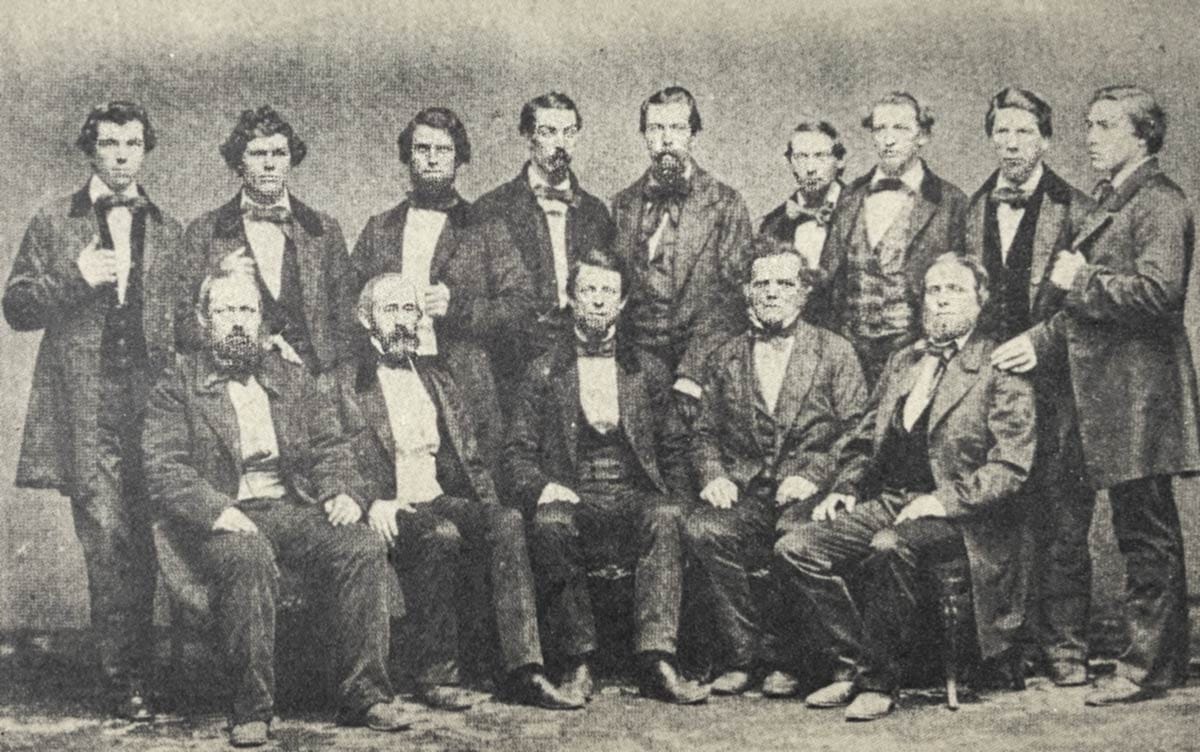
In 1853, Alfred’s older sibling, Hiram, came west and the two brothers bought out Folger to form Tubbs & Company. The company office stayed downtown on what is today the 600 block of Front Street, but the brothers soon jumped into a business venture which required a great deal more land: a rope mill.
The opportunity was obvious. While rope was an essential good for a seaport like San Francisco, it took months to get shipments from manufacturers across the Pacific Ocean or on the East Coast. When the rope did arrive, the quality could be subpar. A local factory, the first on the West Coast, could make a killing.
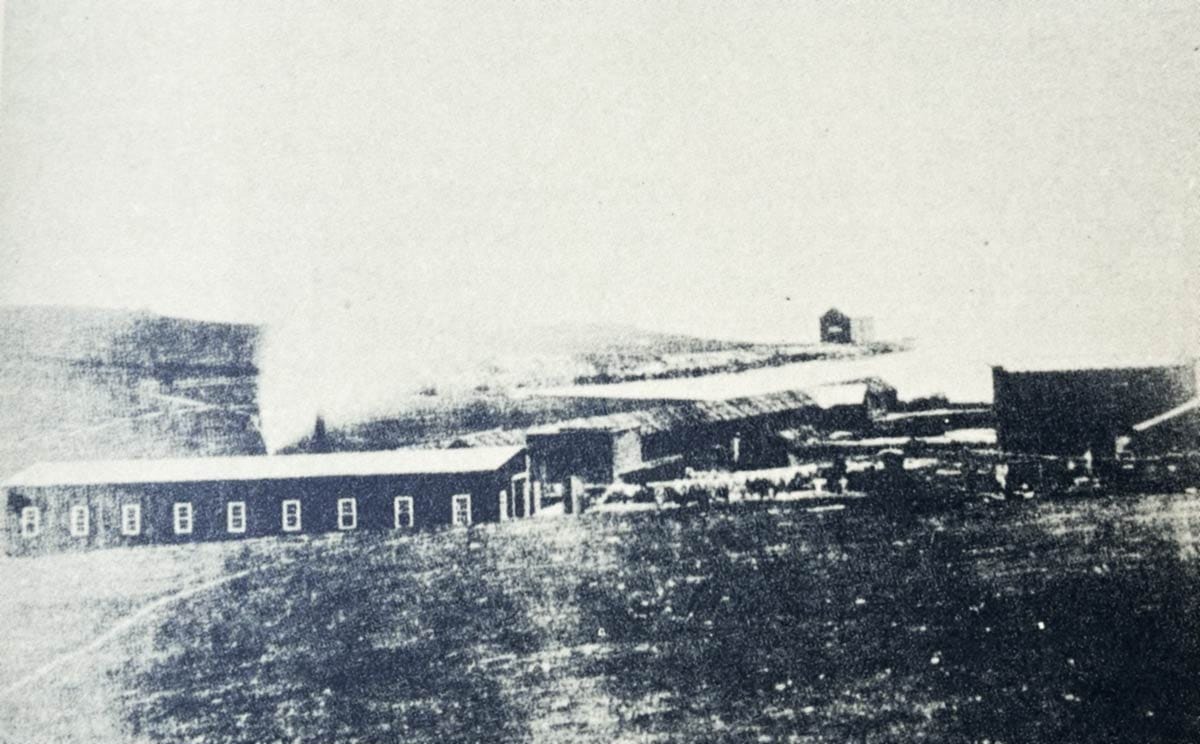
In 1855, Hiram traveled to New England to secure both specialized machinery and skilled artisans, while Alfred supervised construction of the wooden buildings that would make up the Tubbs Cordage complex.
Land was acquired on remote Potrero Point south of Mission Bay. (Read more about this now-vanished bay and the Long Bridge, which was constructed a decade after the establishment of the Tubbs factory.)
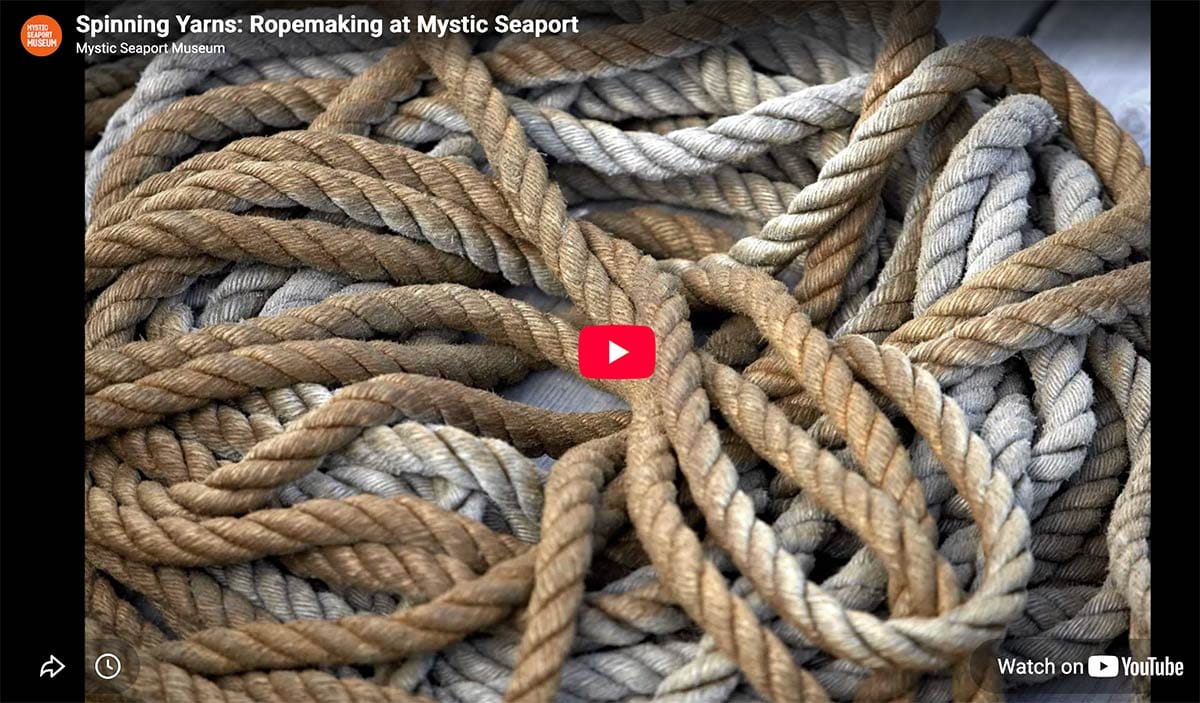
The manufacture of rope was a particularly horizontal process in which bales of fiber—cotton, hemp, sisal, or abaca—were stretched out hundreds of yards to be cleaned, oiled, spread, spun, braided, and spooled. Fibers were twisted into short “slivers,” slivers into yarns, yarns into strands, then strands into rope. Long troughs were used to saturate ropes with tar and huge spindles rolled cordage as thick as 14-inches-in-circumference into coils.
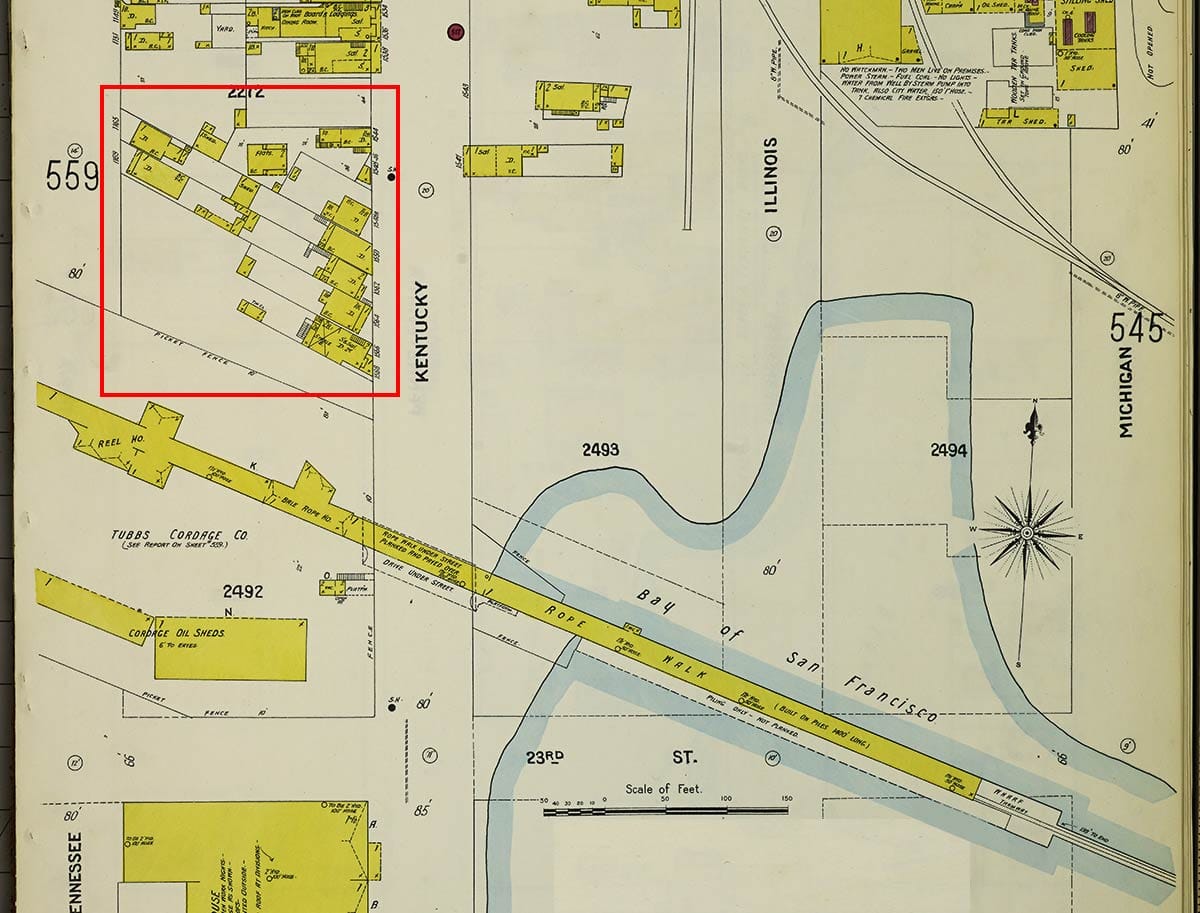
Rope workers definitely got their steps. The Tubbs ropewalk building was 35-feet-wide and 1,000-feet-long and shows up on early maps of San Francisco as a prominent landmark and pioneering industry of the Central Waterfront.


In 1872, the Tubbs company constructed a more substantial factory of brick supported by iron girders and topped by a tile roof. The ropewalk, a third of mile long, connected directly to a wharf on the bay.
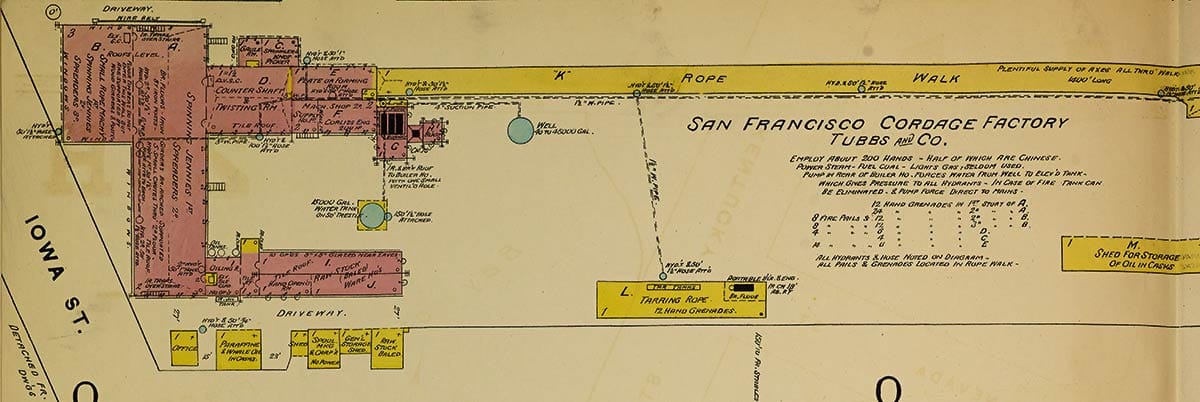
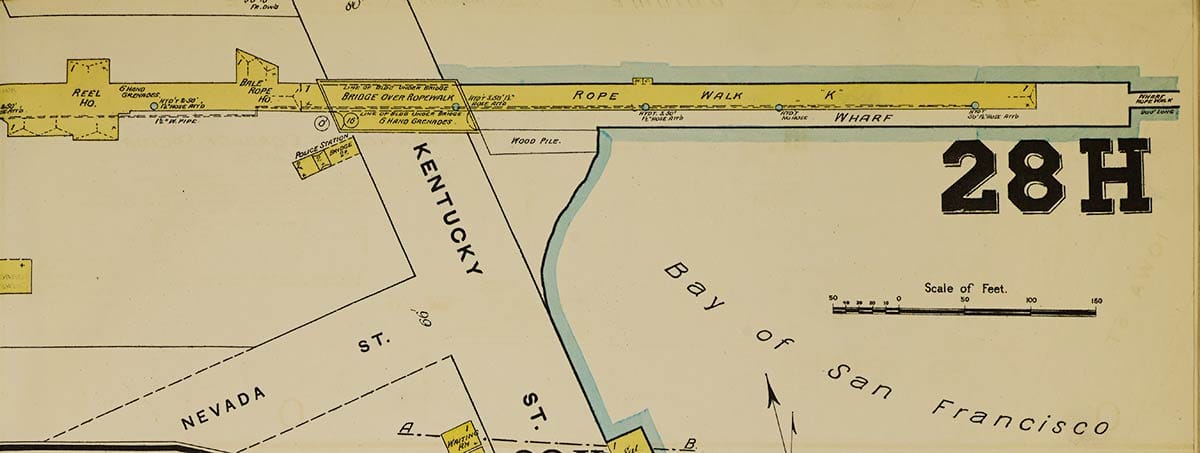
The Age of Steam meant less cordage was needed for shipping, but for the Tubbs Company the ripening of California’s agricultural potential—think hay and wheat baling—took up the slack. (A cordage joke there…)
The Tubbs brothers died within six months of each other in the late 1890s, but the company went on. The brothers had already bought a second rope-mill in Portland in 1892, and the Tubbs heirs opened a third in Seattle in 1904.
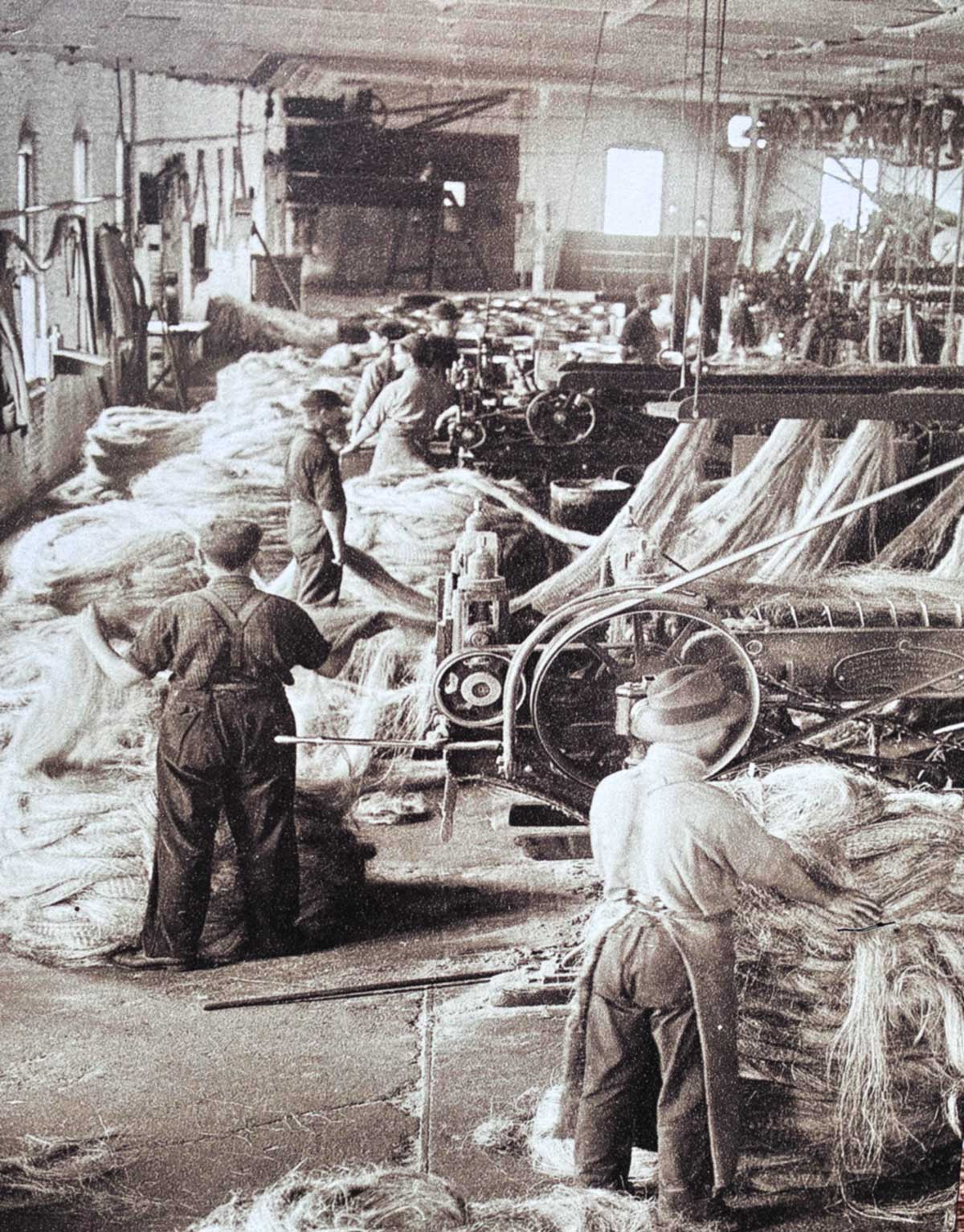
While damaged during the April 18, 1906 earthquake, the Tubbs complex was repaired quickly and back in business by July of that year. The mill had 300 employees supplying Tubbs rope as drilling cable for the early 20th century’s petroleum boom.
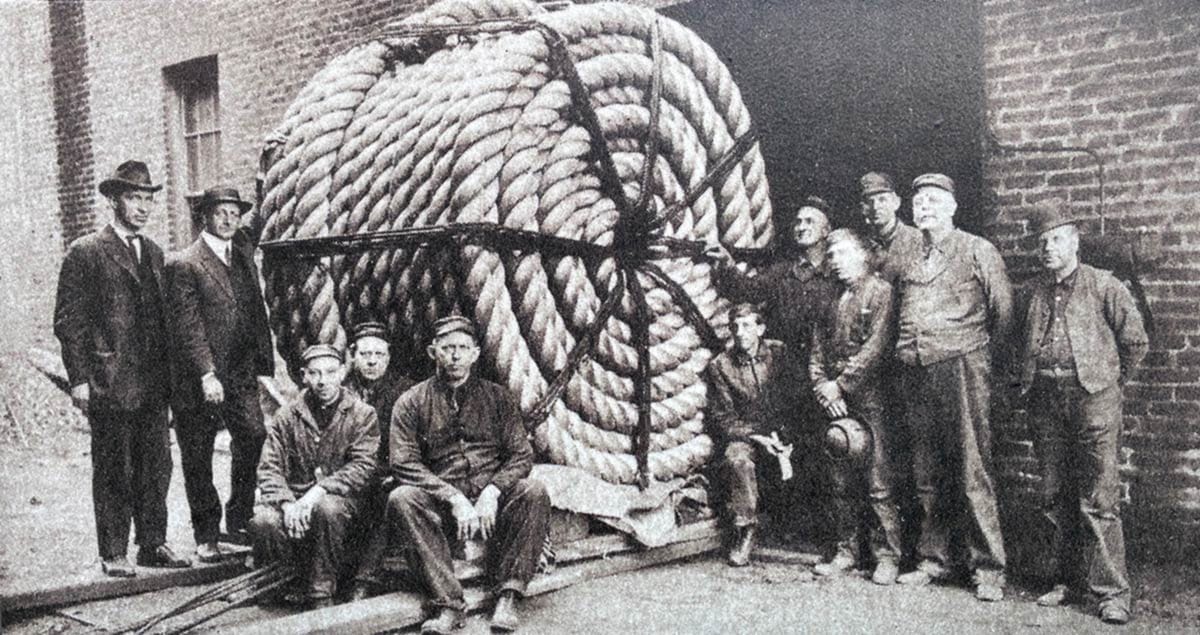
By the 1920s, Tubbs had an operation in the Philippines and had opened new markets in South America.
While technological advances eliminated the need for a 1,500-foot-long building and the once-adjacent shoreline disappeared under fill for new industry, the company retained part of the old ropewalk building west of 3rd Street, partly, it admitted, out of sentimental reasons.
Just after World War II, Tubbs merged with a Southern California firm and shifted much of its operations to Orange, California. The company headquarters remained in downtown San Francisco, but the Potrero plant made less and less sense financially.
One hundred and six years of rope-making history at 3rd and 23rd streets ended in 1962. The company sold the 12-acre plot in 1964 and some of it was bought by the city for bus storage.
In 2026, there are still parked Muni buses, but shiny developments are now transforming the once-gritty Dogpatch neighborhood. Between one of the new hip and expensive projects and the Hells Angels’ clubhouse (head-spinning times we live in), a great job has been done by Fletcher Studio to recognize local history.
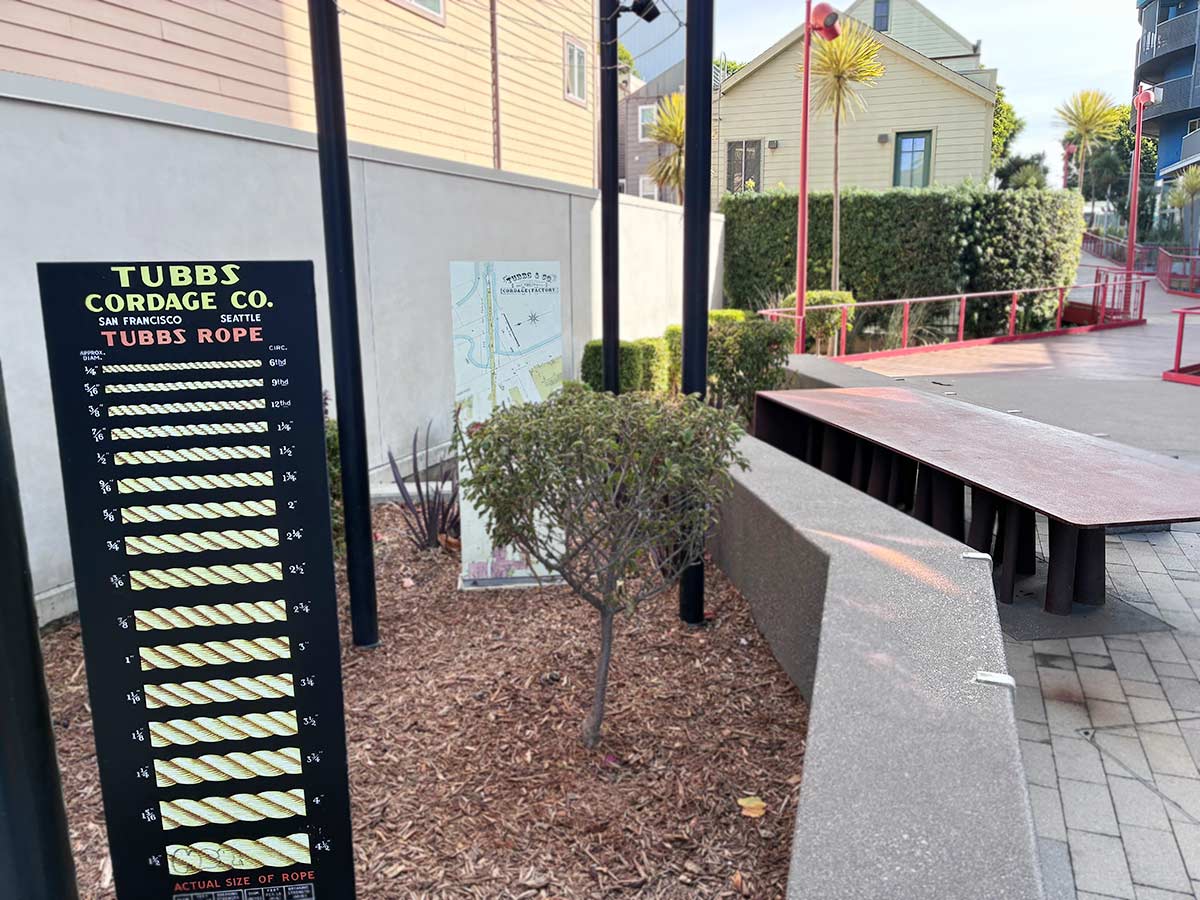
The angled line of the old ropewalk property is used as an alley between 3rd and Tennessee streets and has interpretative photos and signage on the Tubbs rope-making legacy.
Tubbs folded up as a business in 1986, but another touchstone of the company history and the old ropewalk still remains, albeit five miles away from Dogpatch.
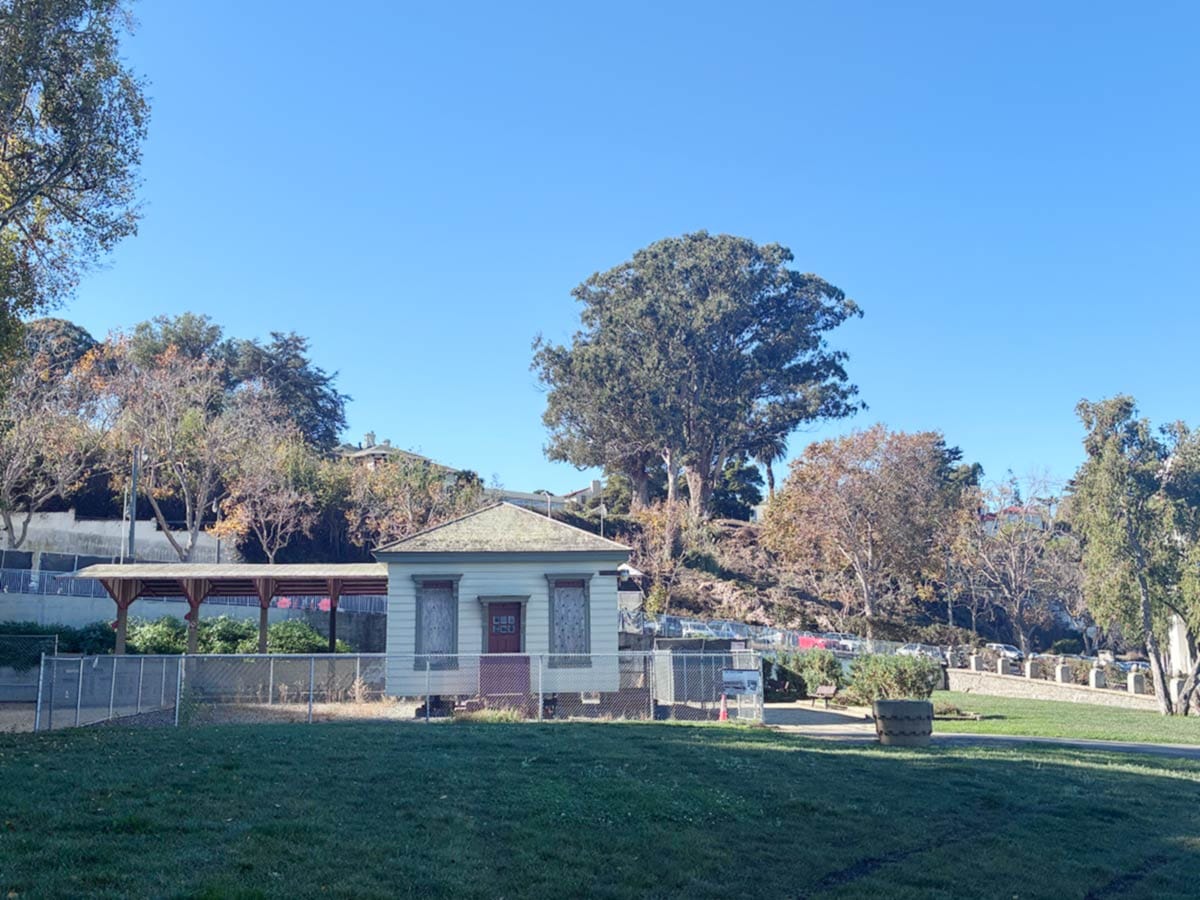
Before the 1960s clearance of the Tubbs Cordage complex, the company gifted a small 19th century administration building to the San Francisco Maritime National Park beside Fisherman’s Wharf.
While the Hyde Street pier awaits reconstruction, the cute little supervisor building is stored at Aquatic Park next to the bocce courts.
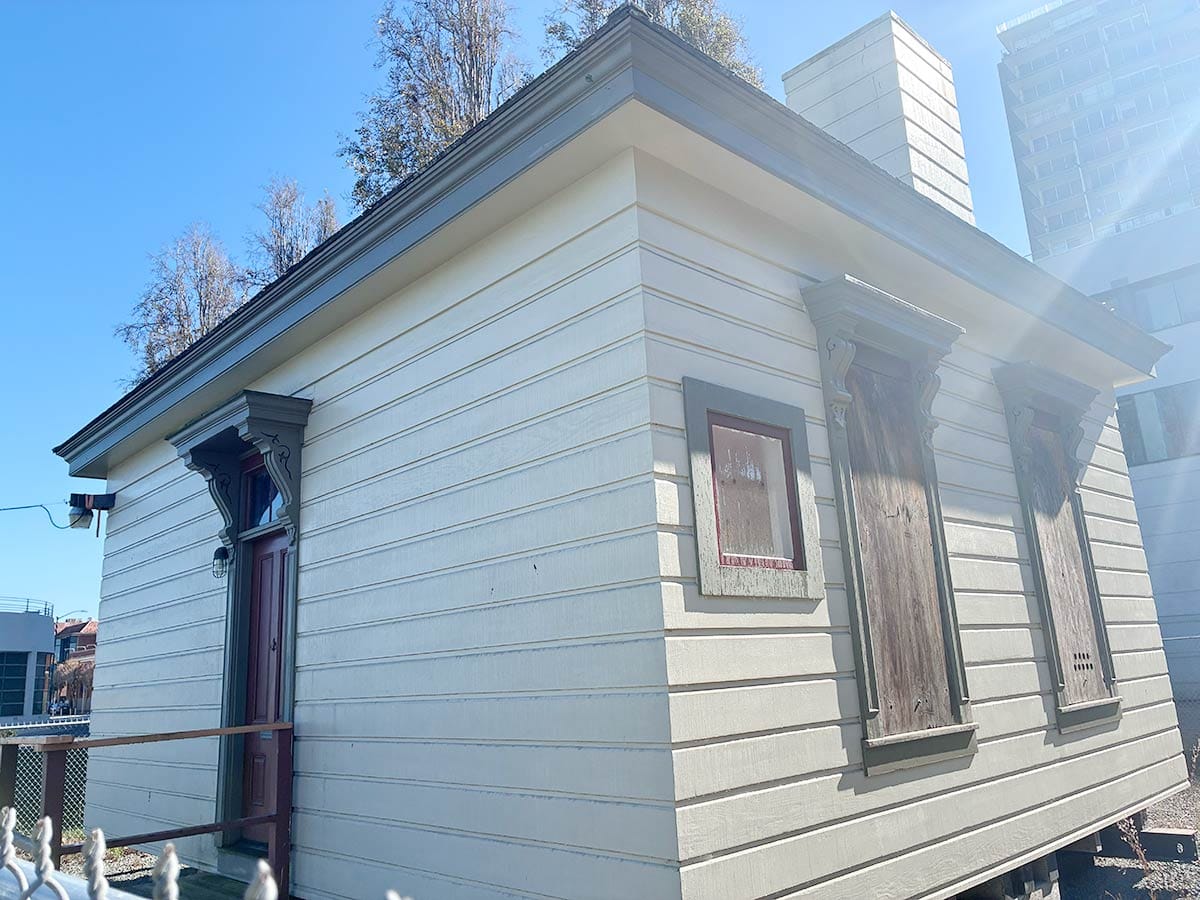
I’d like to say it is roped off while it awaits restoration, but in 2026 we use chain-link fencing...
Woody Beer and Coffee Fund
Donations have slowed down to the Woody Beer and Coffee Fund, but no worries: we have quite a reserve to draw from so you and I can have a drink together. It can be coffee, beer, kombucha (still haven't had one), mint julep, acacia smoothie, biodynamic wine, biostagnant wine, whatever you want... just let me know when you are free and we will do this thing, right?
Sources
David Warren Ryder, Men of Rope (San Francisco: Historical Publications, 1954)
Maria Teresa Colayco, California’s Master Ropemakers (Manila, Philippines: Manila Cordage Co., 1978)
“Park’s New Office,” San Francisco Chronicle, February 27, 1964, pg. 4.
“Tanforan Topped New Deals,” San Francisco Examiner, April 5, 1964.
Donald K. White, “It’s the End of the Rope for Tubbs Cordage Co.,” San Francisco Chronicle, December 12, 1986, pg. 44.