
Last Call at The Gables
In 1972, Eve Connett called it quits at her Ocean Beach bar.

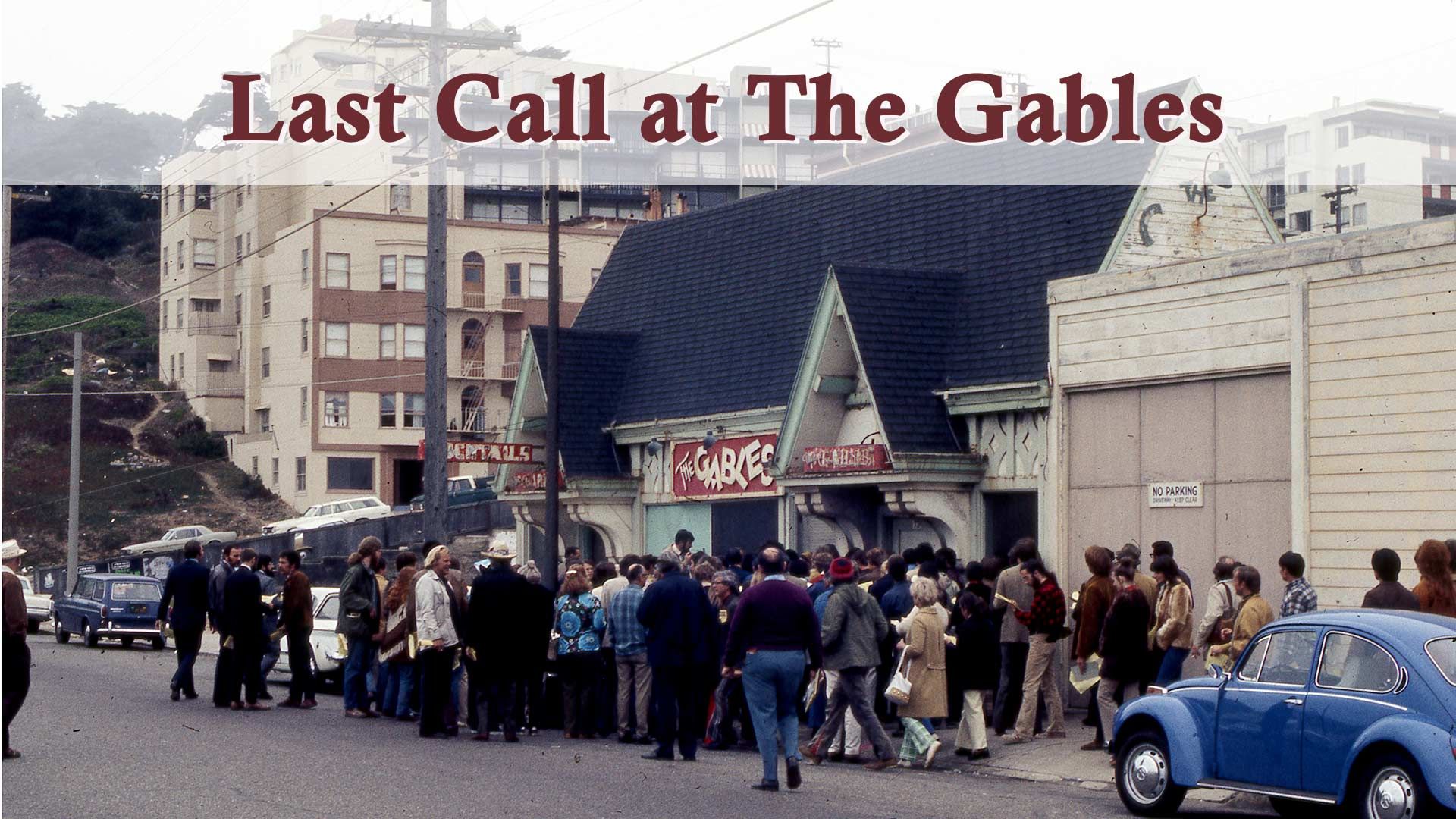
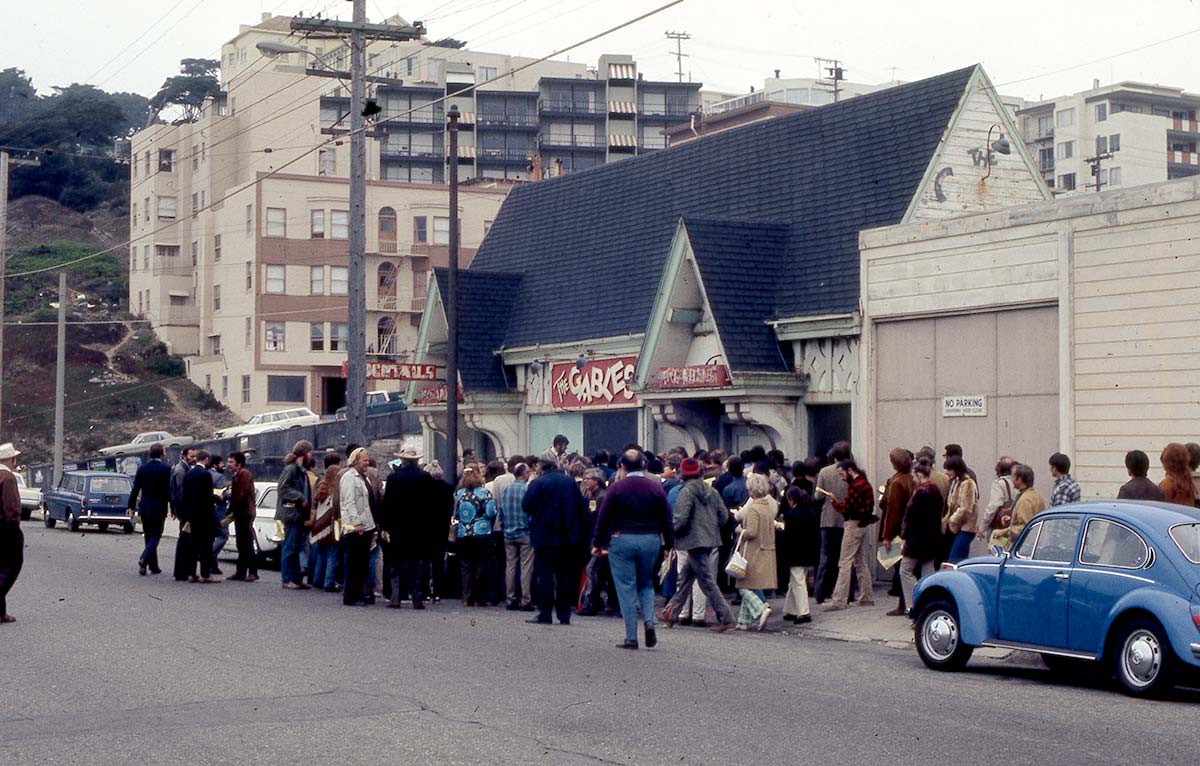
The crowd formed early on La Playa: young, old, suited, skirted, blue-jeaned, side-burned, comb-overed, nostalgic, curious. The mass spilled into the roadway, but there was little traffic. Playland across the street was closing soon and forever.
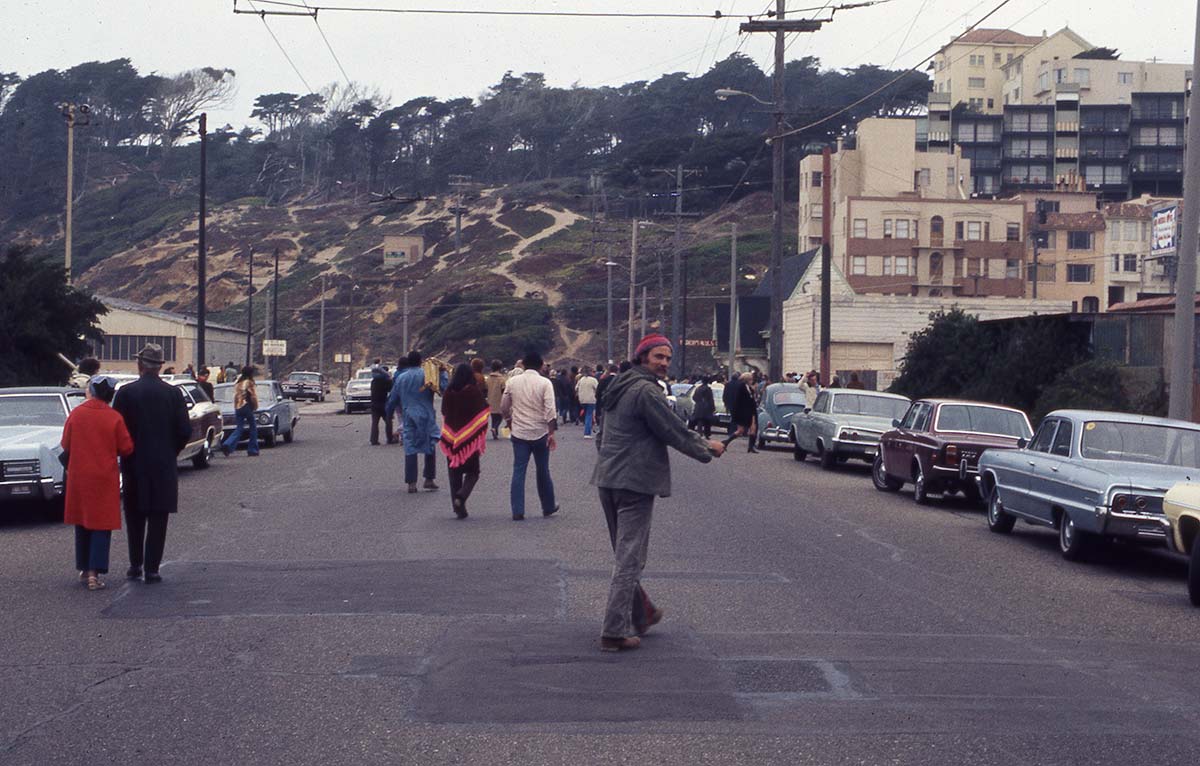
The sky was overcast. The south door of The Gables opened and the crowd narrowed to a line to get inside. Eva Connett had called it quits and most everything was up for grabs in the old beach bar.
Round One
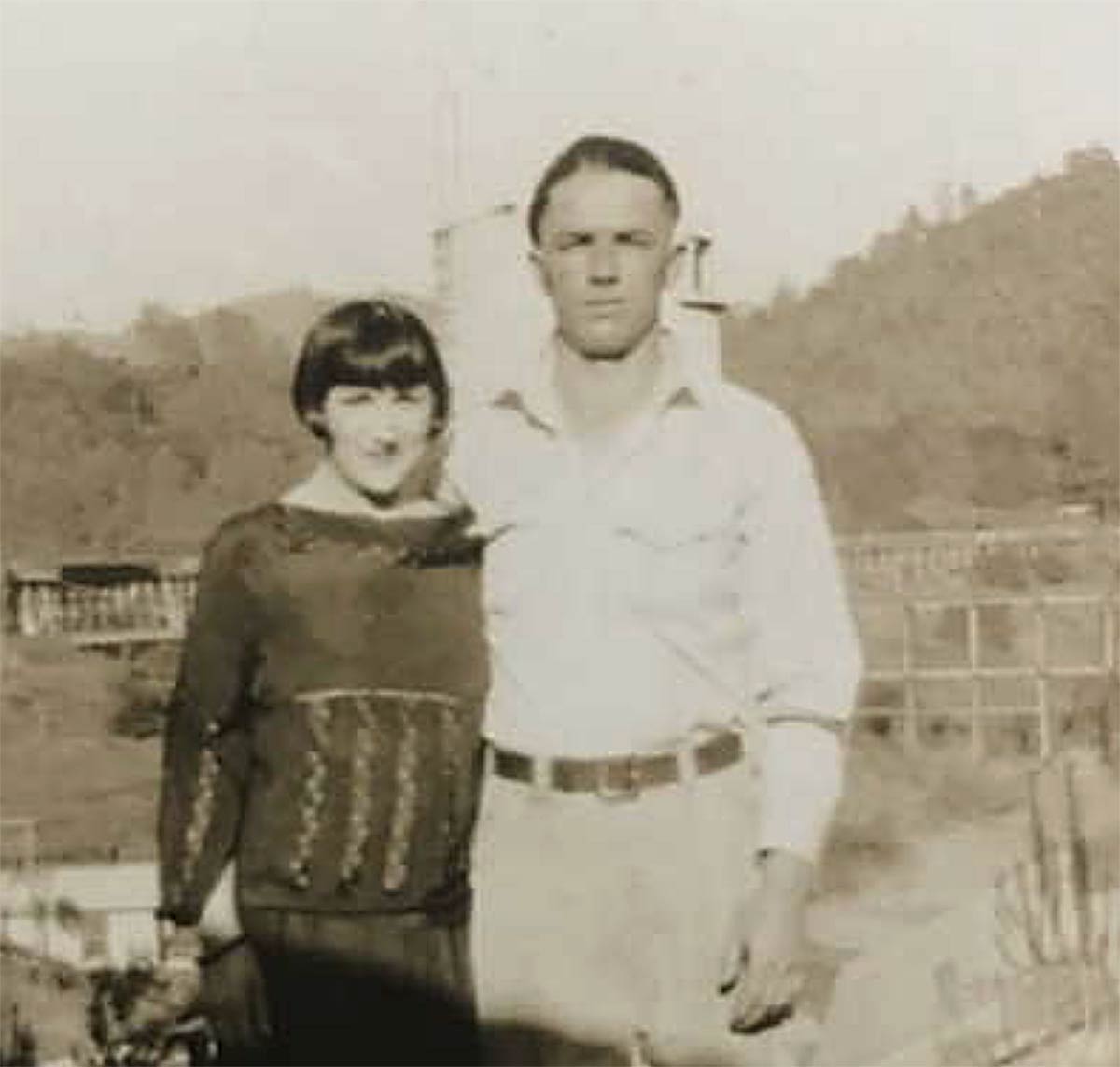
At least three times Eva gave marriage a shot. As 17-year-old Eva Oliver from Los Gatos, she gave her vows to Ralph Dallas, a teamster, in 1918. After the couple had seven years together and two boys, Alvin and Jack, Ralph died in a collision between an auto and a streetcar at Bosworth and Mission Streets.
Eva put Alvin and Jack in the Fred Finch Orphanage in Oakland while she got her life together. She found a place in San Francisco’s Richmond District and started waitressing.
The M&M
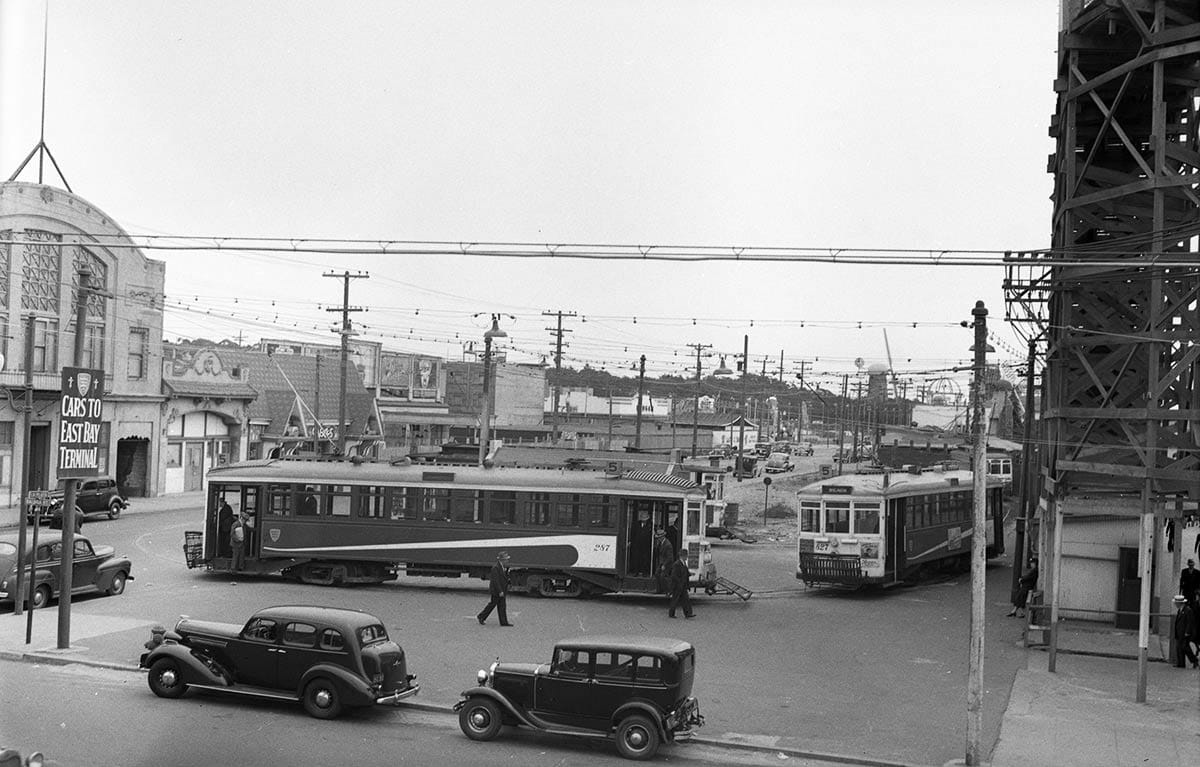
The #5 bus could get you to the auction in 1972. Before the buses, the line was streetcars, with the terminus loop on the southwest corner of La Playa and Balboa, just across the street from The Gables. Before the streetcars, the loop site was the depot for the Park and Ocean (P&O) Railroad.
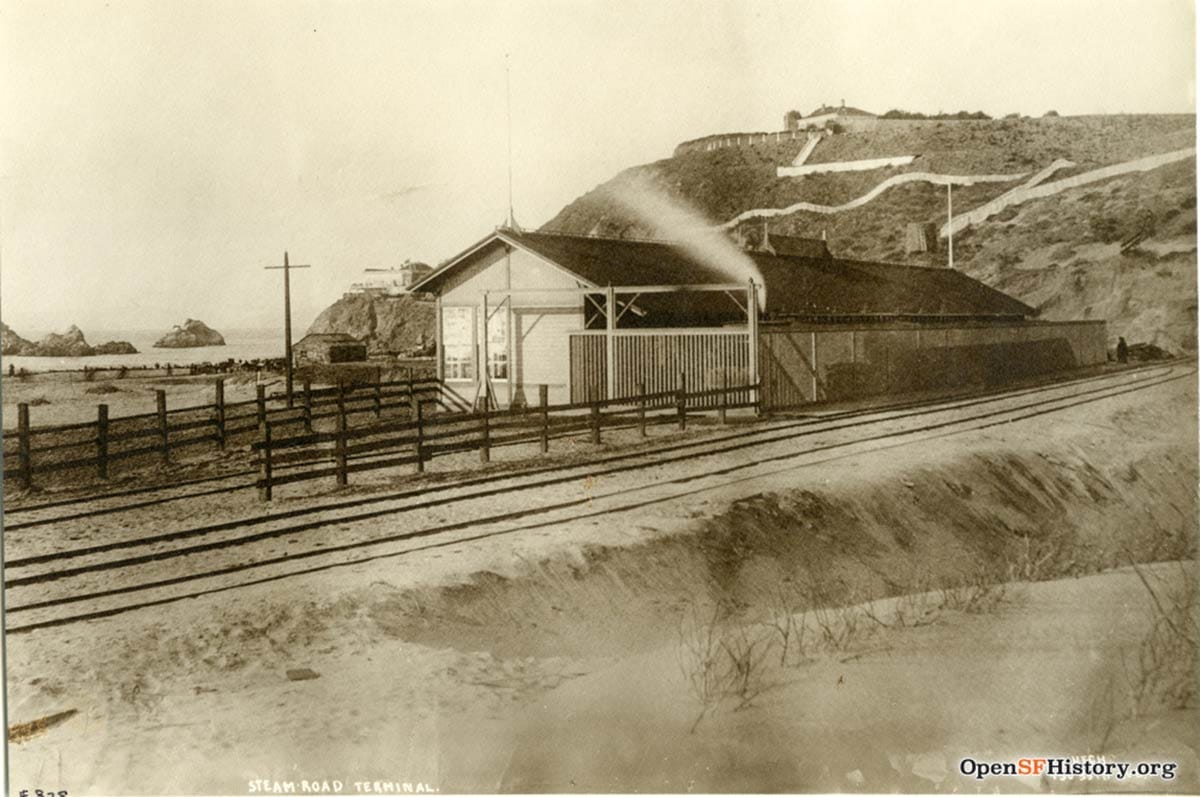
The train line inaugurated rail service to Ocean Beach in 1883. Leaving Haight and Stanyan streets with passengers in open cars behind, the steam engines chugged along the southern edge of Golden Gate Park when the Sunset District was a landscape of cold sand dunes. Just short of the beach, the line curved north through the park to a long depot shed at what was then called 49th Avenue and B street.
Each weekender stepping off the P&O and each passenger waiting to return to the Haight represented an opportunity to earn a nickel or dime. Shooting galleries, bowling alleys, peanut stands, and bars sprung up around the depot. An ambitious attempt at an East Coast style beach-side resort venue—the Ocean Beach Pavilion—rose a block away with high expectations of ritzy party-goers. It never found its clientele because foggy Ocean Beach would never be the Hamptons.
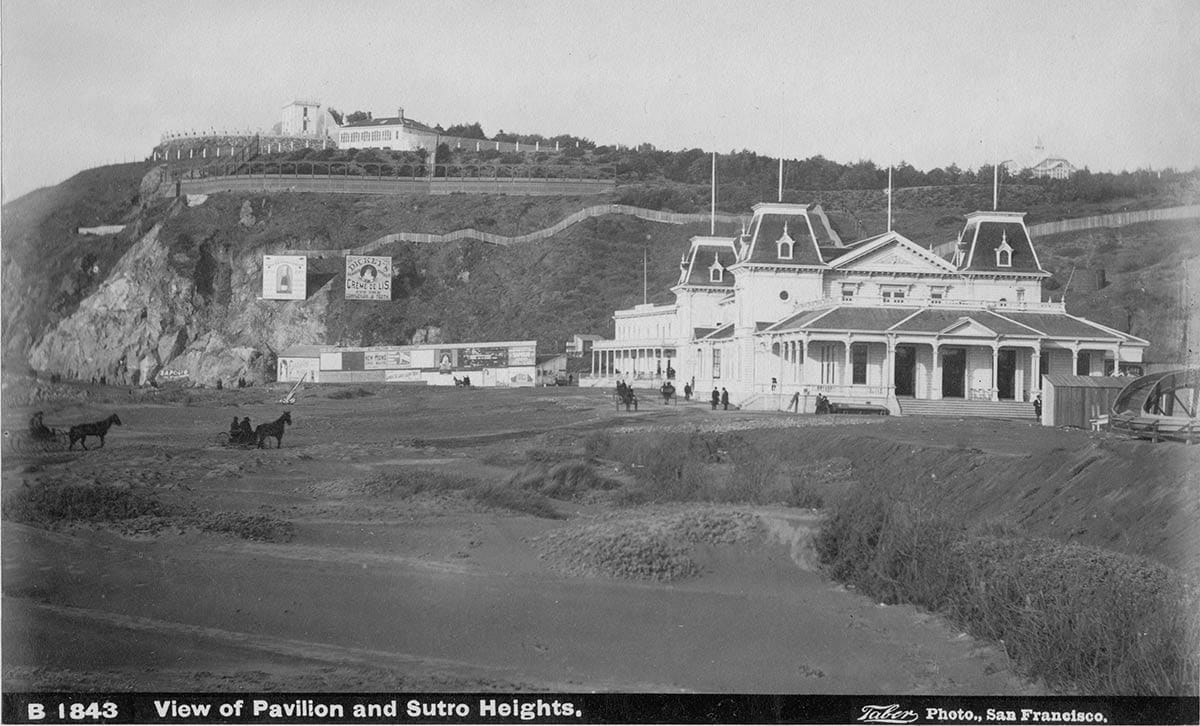
Adolph Sutro rebuilt the Cliff House up the road as a grand chalet in 1894 and opened Sutro Baths in the cove beside it in 1896. The P&O line modernized to electric streetcars in 1898. Around the depot, however, little would change until the 1910s.
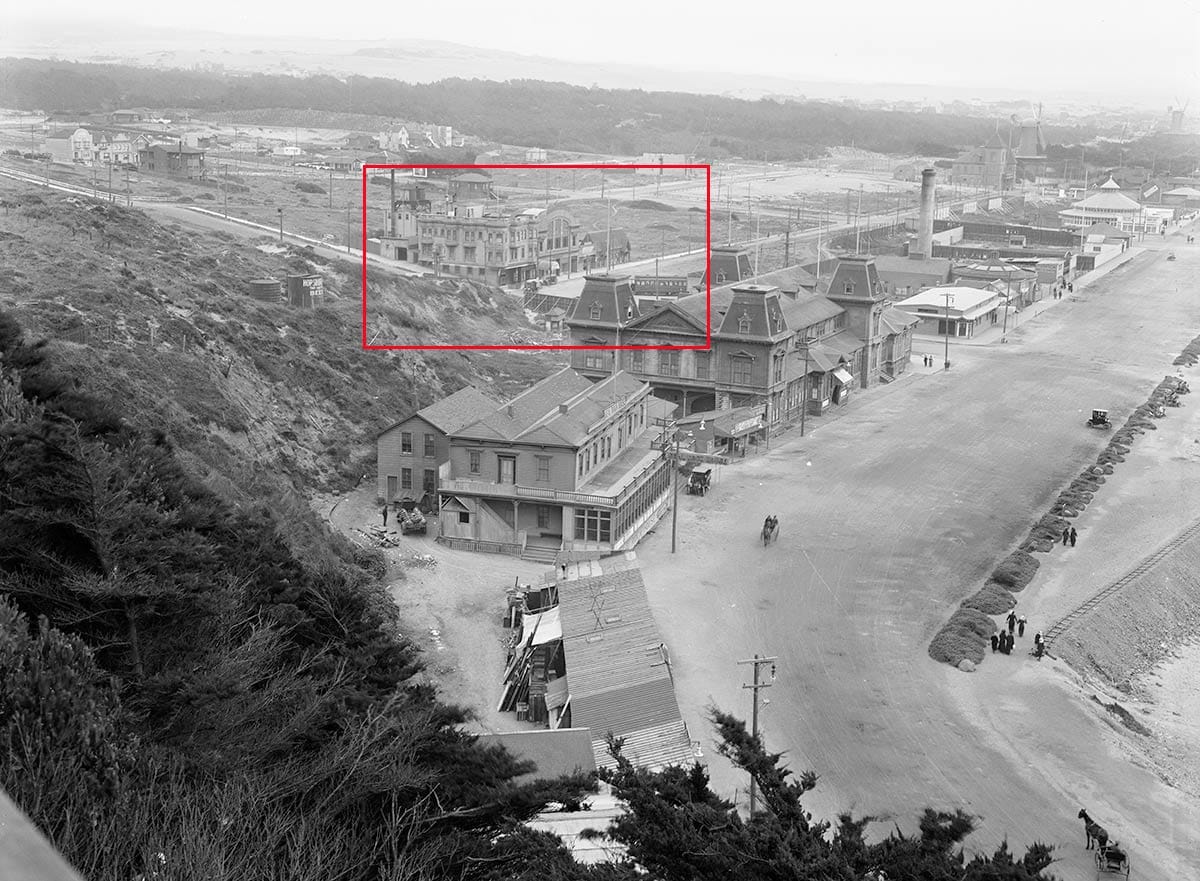
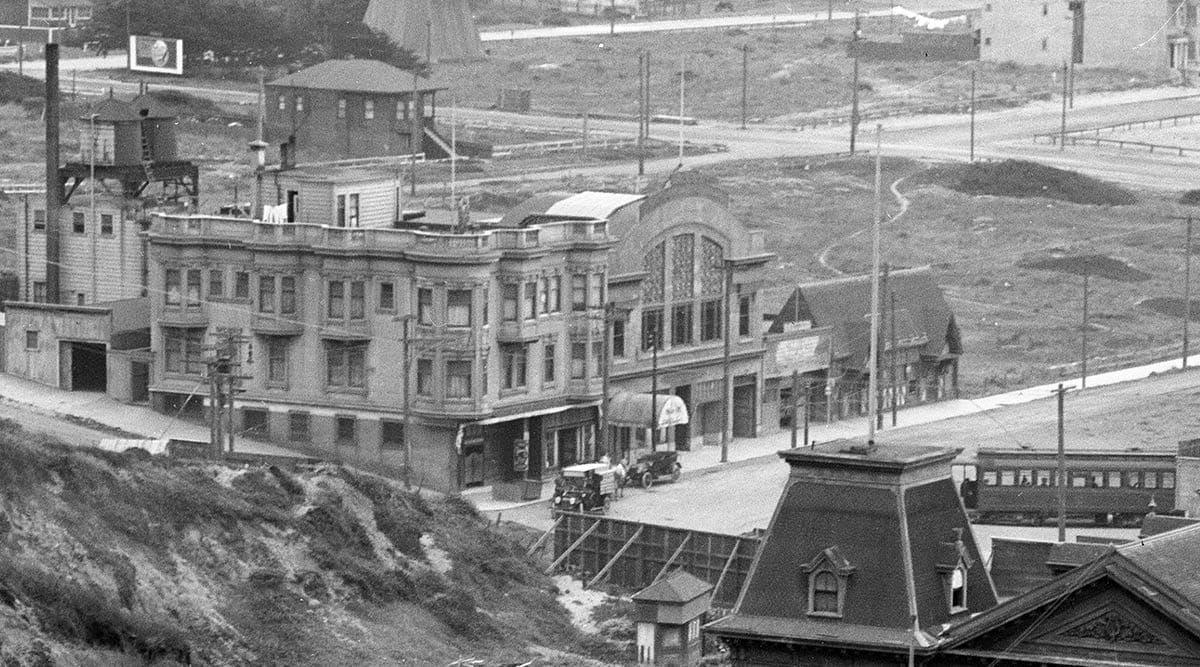
People had begun to buy automobiles and looked for fun places to drive them. People schemed to make Ocean Beach one of those fun places. A carousel installed at Cabrillo Street and the Great Highway spawned smaller concessions nearby.
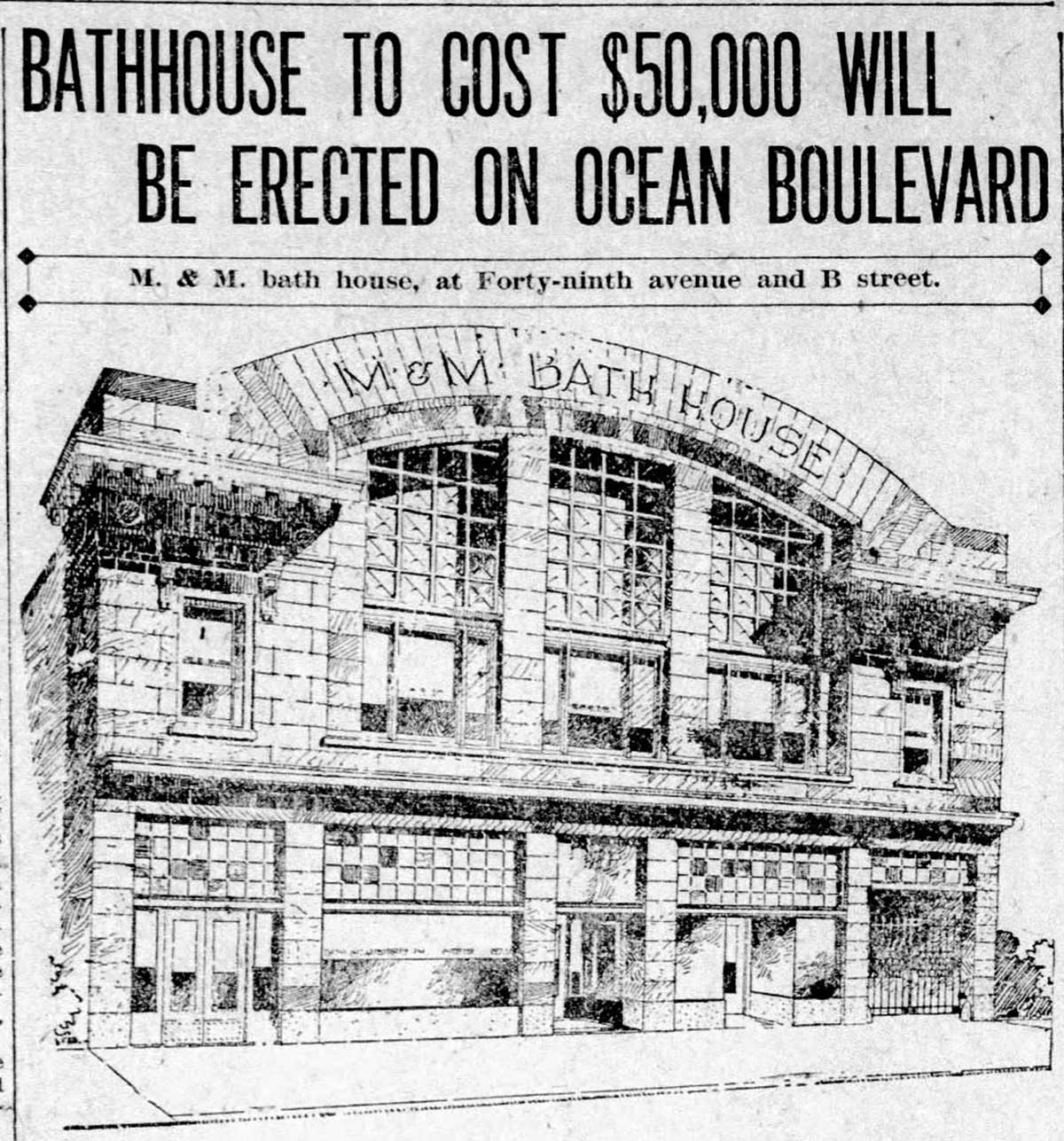
On the depot block, Charles Mitchell and Joseph McArdle built a bathhouse in 1910 adjoining their lodging house on the southeast corner of La Playa and Balboa. The M&M baths used salt water straight from the Pacific.
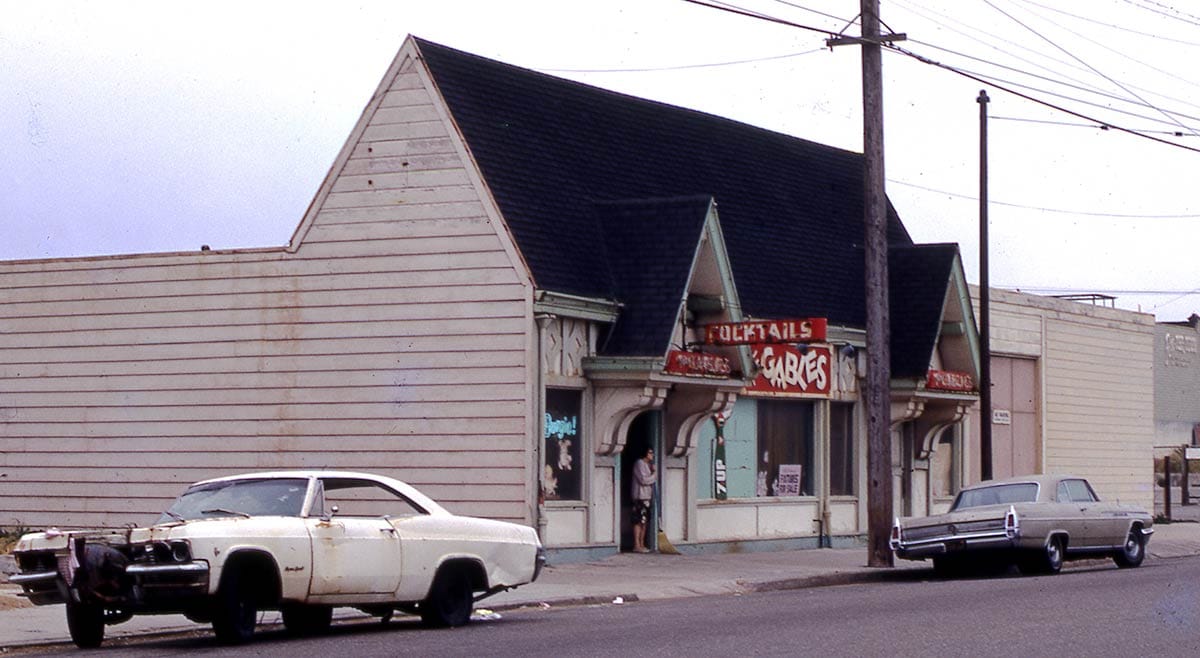
A couple of lots to the south, a storybook saloon with a steep roof and two cross-gabled entrances was opened by Charles Jackson and Hans J. Hansen. They likely had Alpinic ambitions to capture all the M&M’s spill-over business.
But the M&M failed as a bathhouse fairly quickly and switched to occasional use as a training gym for boxers.
Round Two
In 1928, Eva Dallas tried again. She married Maurel A. Siemon and moved with him and her two boys to Pomona to open a malt shop. The malt shop didn’t work out and soon the marriage didn’t either.
In the early 1930s she found herself back in San Francisco waitressing again.
In the summer of 1934, her boys were staying with Eva’s aunt in Los Gatos. Alvin, 15, and Jack, 13, were showing off for neighborhood kids one afternoon shooting tins cans with a .22 caliber rifle. Isabel Selby, 11 years old, trying drawn to grab one of the shiny spent cartridges, jumped in front of Jack just as he took a shot,
It was an accident. The girl died from her head wound that night. The parents didn’t press charges.
The Gang’s All Here
The Prohibition Era made running a bar essentially illegal (unless you just served soft drinks), but it wasn’t as if people didn’t try throughout the 1920s.
A series of “resorts” set up and closed down on the 700 block of La Playa: the Loop Bar, Pat’s Tent, and The Sheik. The Sheik was raided almost monthly by the Volstead men. One night when the agents busted in the Sheik’s piano player broke into “The Gang’s All Here” and the crowd sung along.
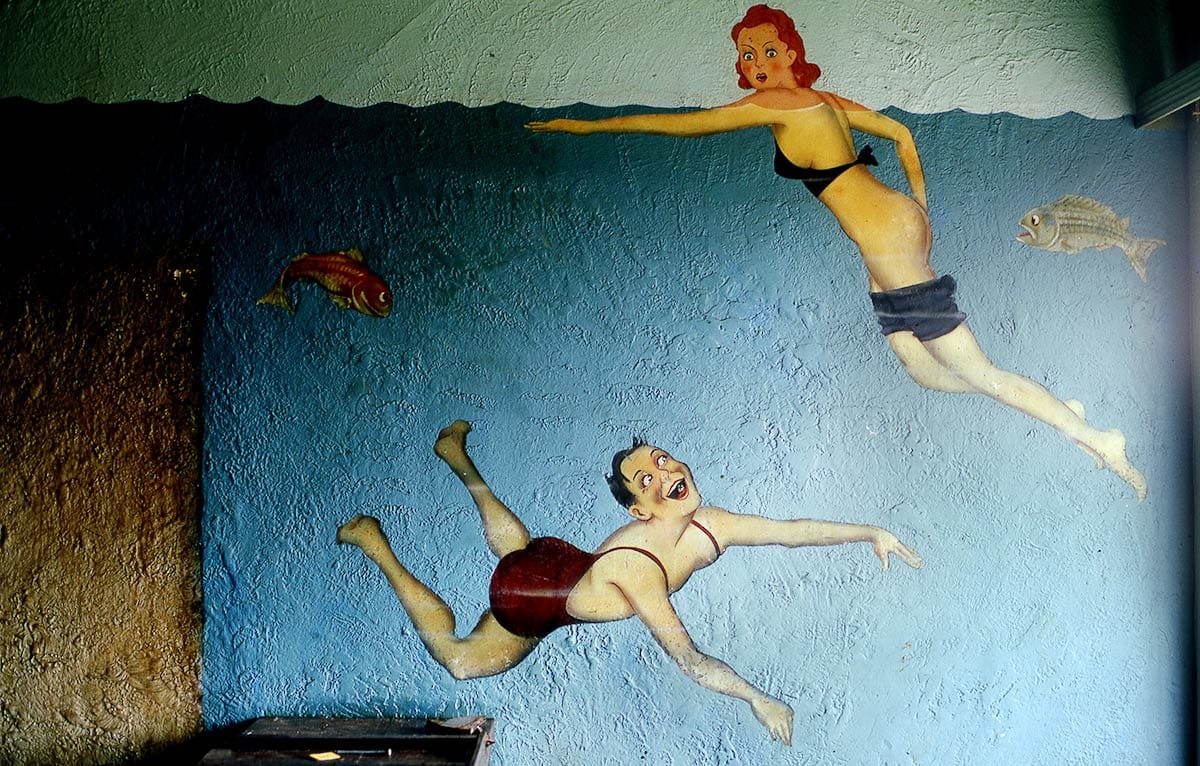
It might have been in this era that the cheeky mural of a redheaded bombshell losing her suit above a leering swimmer was painted inside the gabled bar.
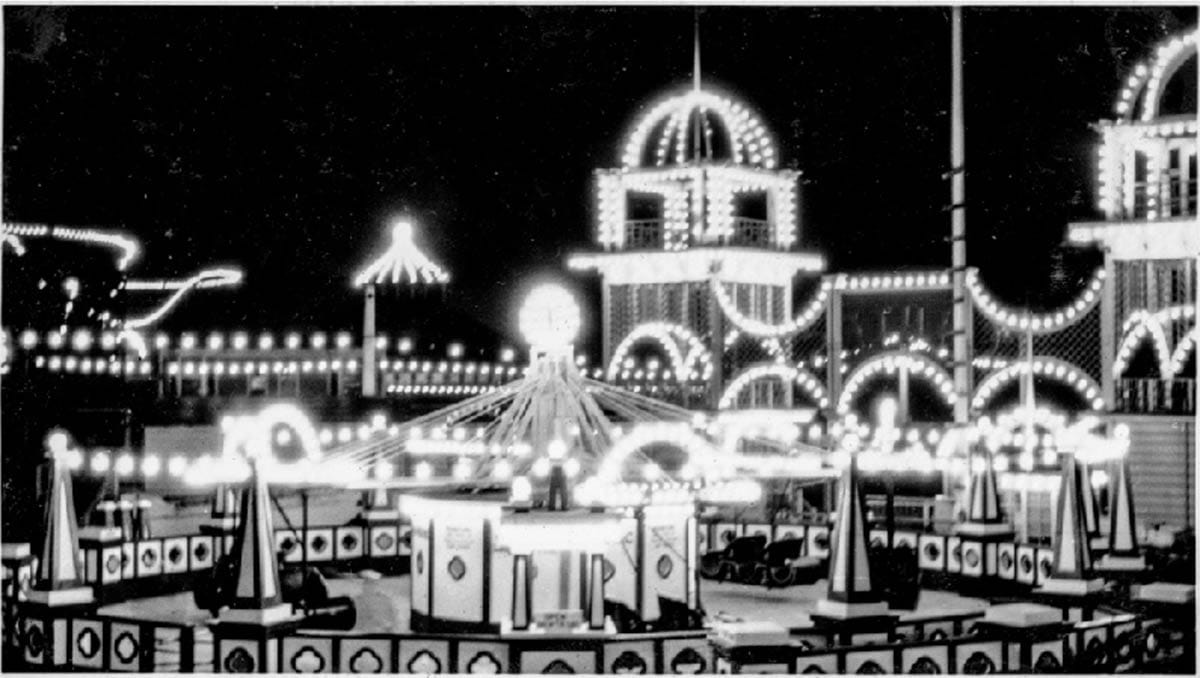
While bathhouses failed and bars struggled through raids, a Coney Island of the West flowered across the street. The framing of the “Chutes” water ride checkerboarded sunsets while the arcs of the Big Dipper roller coaster snaked across views to the south.
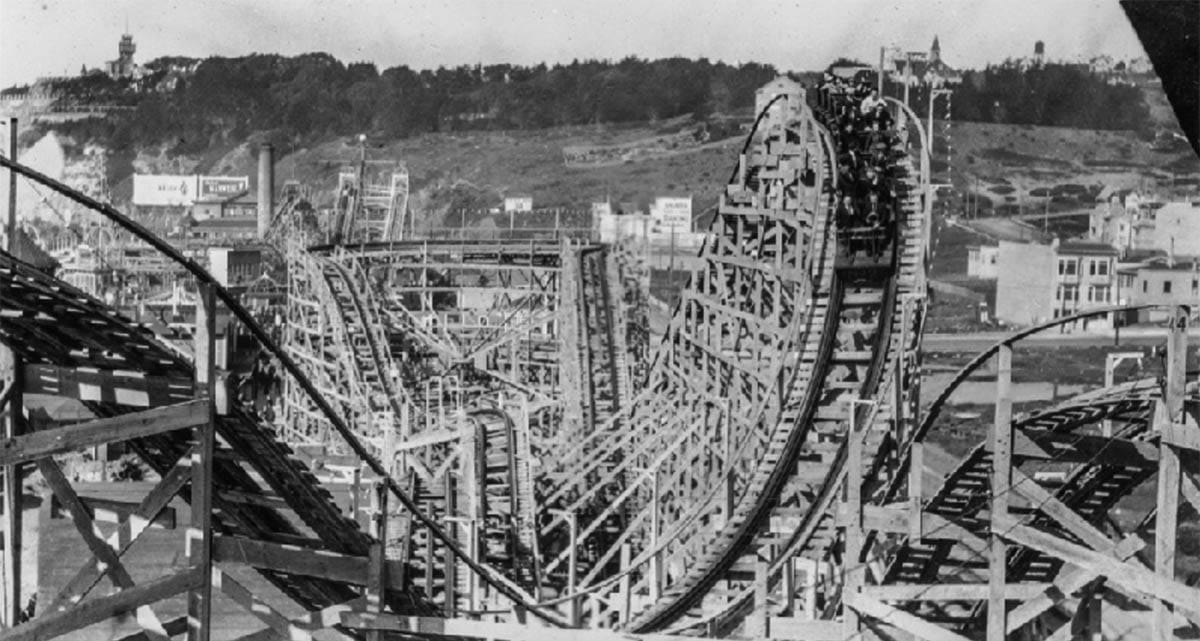
Strings of bulbs glowed diffusely each night along the cornices of the waffle stands and the roof of the Fun House. Squeals from couples hitting the Chutes pond in their boats, barks from boys out on the town, and calliope music all mixed with the sounds of the surf and the foghorns.
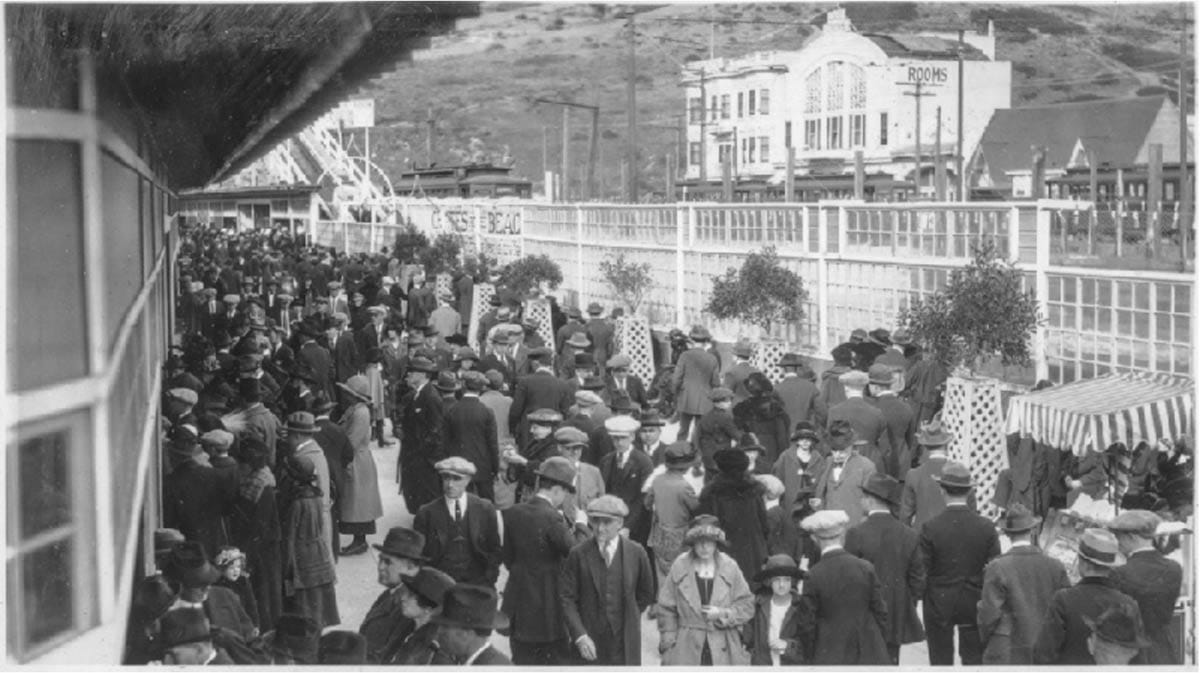
The Whitney Brothers, George and Leo, began gobbling up the various Chutes concessions, buying out smaller operators until they had control of most of the two blocks from the cliff to the park, the Great Highway to 48th Avenue. They would rebrand it all Whitney’s Playland at the Beach.
The brothers also bought the old M&M bath house and the gabled saloon next door. Prohibition’s end gave the liquor business new life in the 1930s. The Whitneys found a couple of lessees for the saloon and gave it a new, but natural, name: The Gables.
Round Three
In the late 1930s Eva’s boys became adults and started looking for work. Eva started looking too, maybe not just for work.
In September 1937, Eva Siemon, nee Eva Dallas, nee Eva Oliver, tried again by marrying Calvin Connett . It was probably after repairs from a 1938 roof fire at The Gables that the Connetts took over the lease. How different could a bar be than a malt shop in Pomona, Eva may have thought... although that venture with her last husband didn’t go so well…
Calvin Connett was out of the picture by the time World War II broke out. Her last marriage was her shortest, but Eva held on to the Connett name for the rest of her life. For most of it, she held onto The Gables, too.
Both Alvin and Jack joined up to serve. The war was almost over when Jack was killed at the Battle of the Bulge in 1945. Eva wouldn’t be able to have services for her son until 1948, when Jack’s body was returned from one of the temporary cemeteries in Europe.
Alvin survived the war, supported his mother as co-partner of The Gables, on paper, if not in practice, and started a family.
The Last Fun-Tier
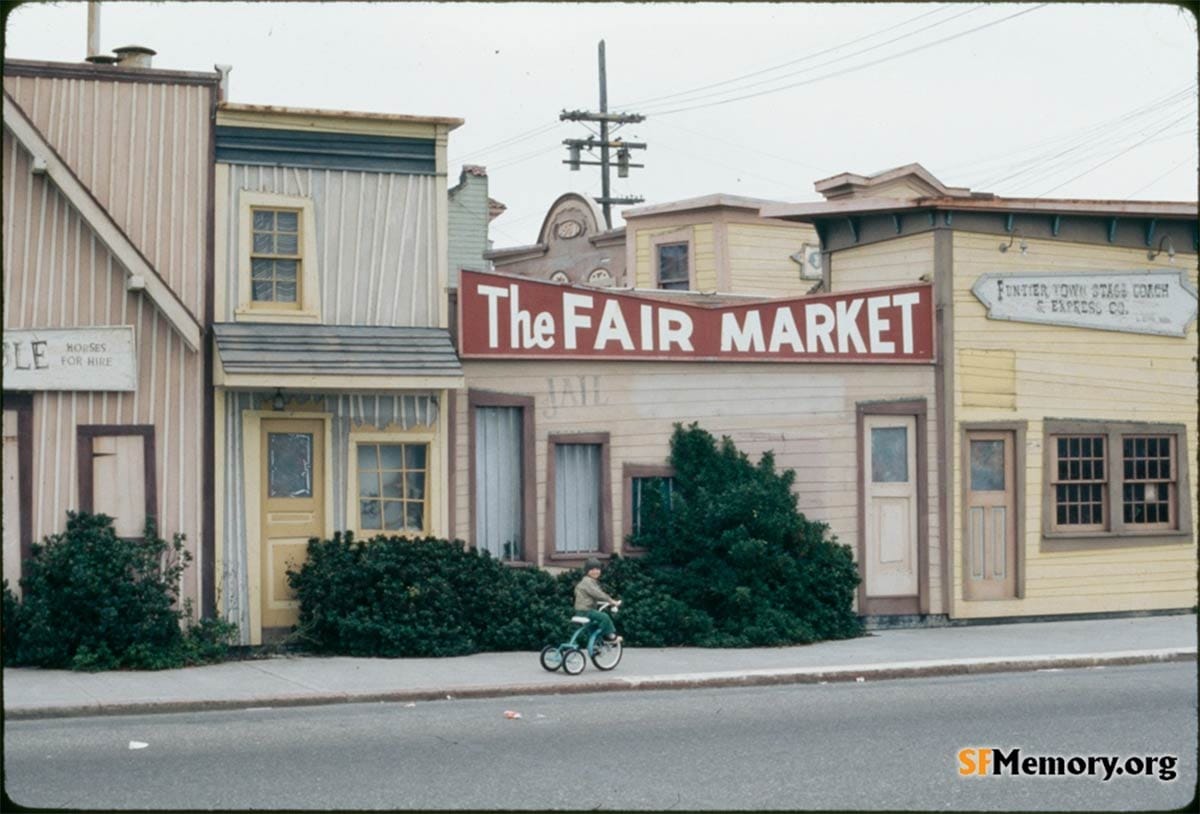
In the 1950s the Whitneys tried to capitalize on the Wild West mania sweeping the country by creating a cowboy kid zone called Fun-Tier Town at the corner of La Playa and Cabrillo street.
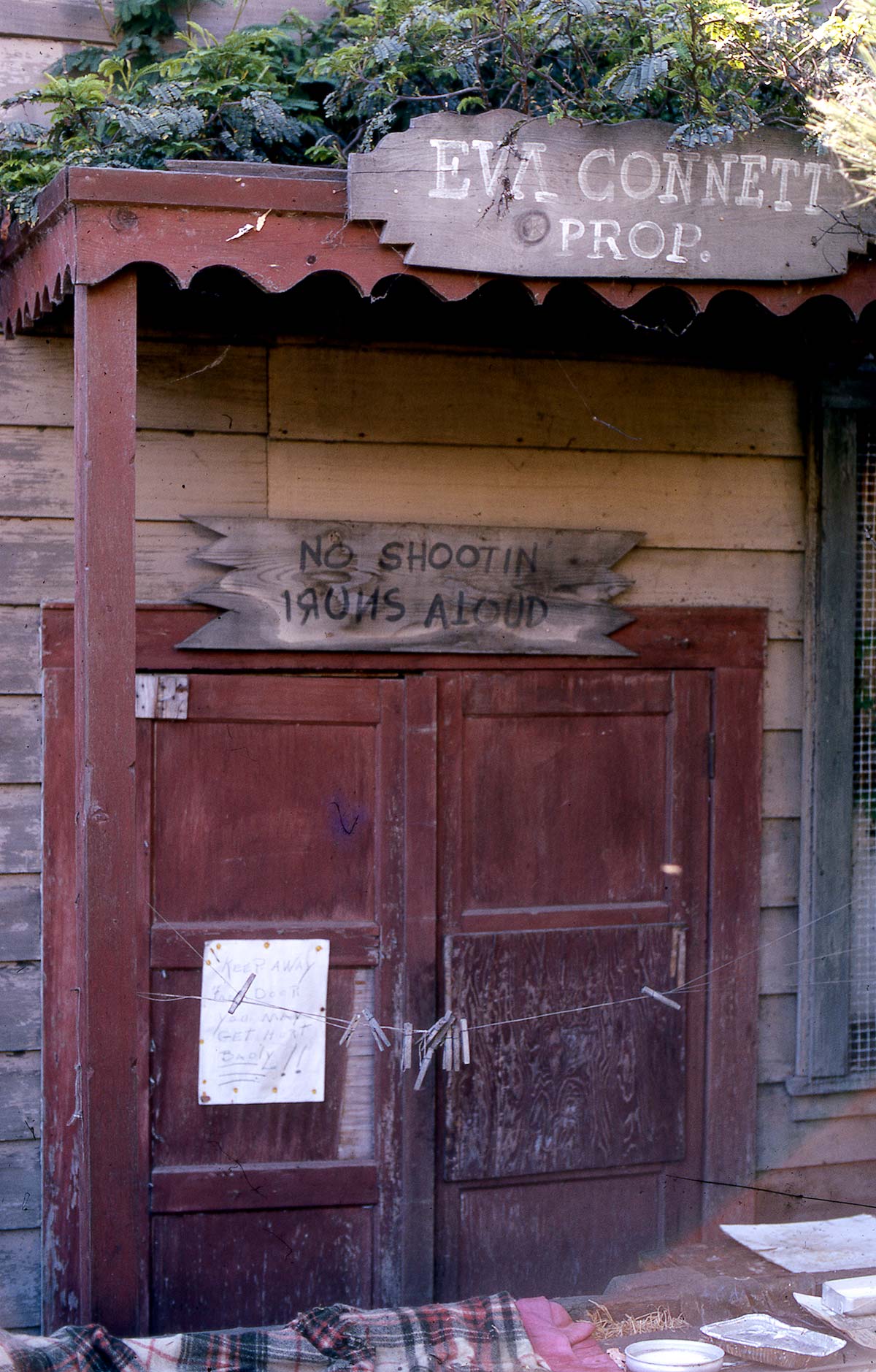
While the front of The Gables still looked like a Swiss inn on the slopes of the Matterhorn, the bar’s back door received some crude Gunsmoke-style signage to spruce up the path of a Fun-Tier Town kiddie ride. In addition to “Eva Connett, Prop.,” parents seeking an adult beverage were warned “No shootin’ iruns aloud” inside The Gables.
In 1958, a fire broke out in the old bathhouse building, which the Whitneys were using as a warehouse. Eva was living between the Gables and the former M&M in a small apartment made out of one of the 1920s beach-resort-era bars. She evacuated with armfuls of coats and dresses as the fire fighters fought to save the block from going up.
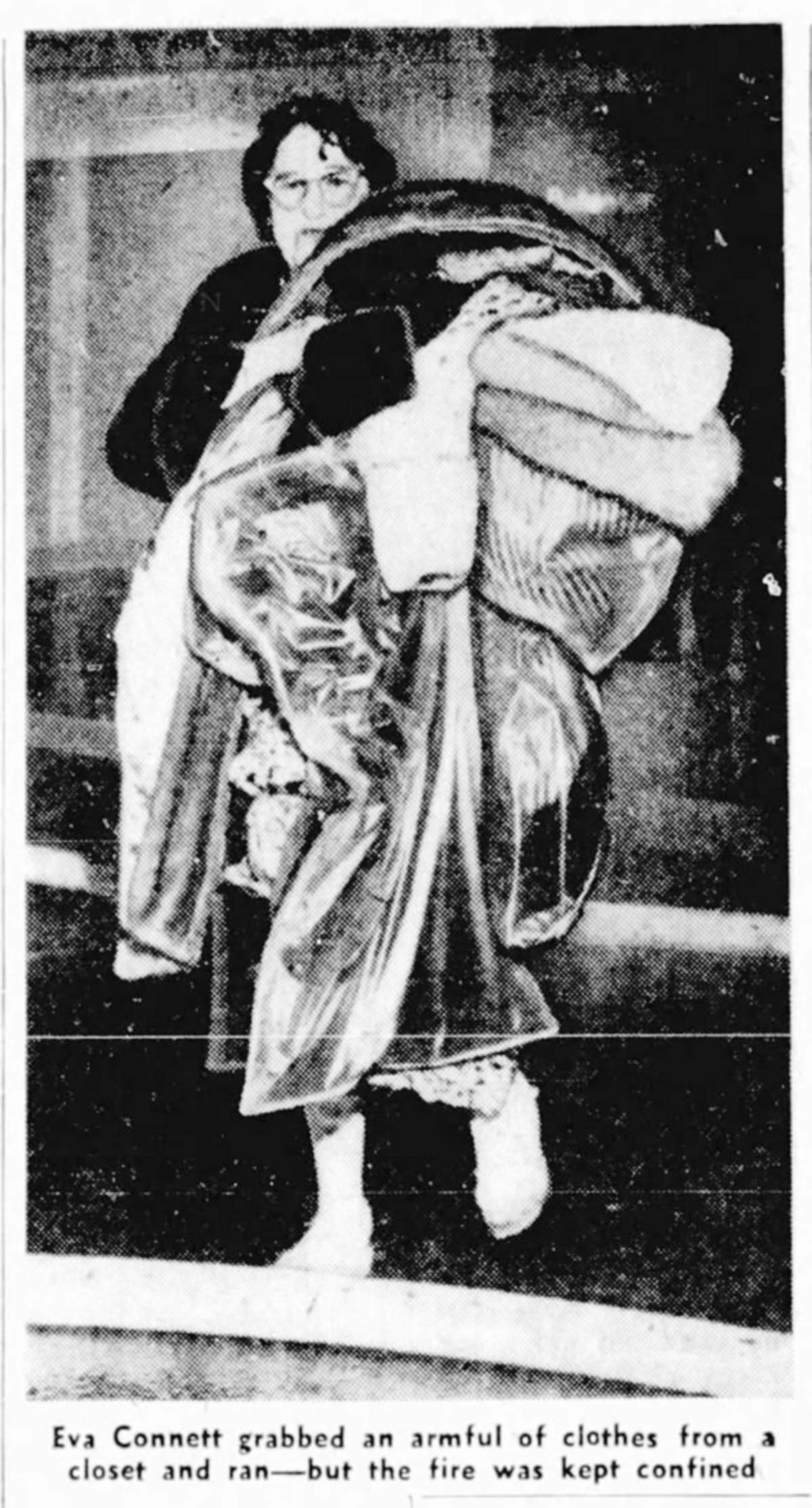
The Gables survived and Eva moved her coats and the rest of her belongings to a motel on Sloat Boulevard.
Gone to Seed
Maintenance at Playland fell off, along with its reputation, as the world seemed to flip over in the 1960s. In an era of protests, fires, assassinations, and riots, worried parents warned their children to stay away from the beach.
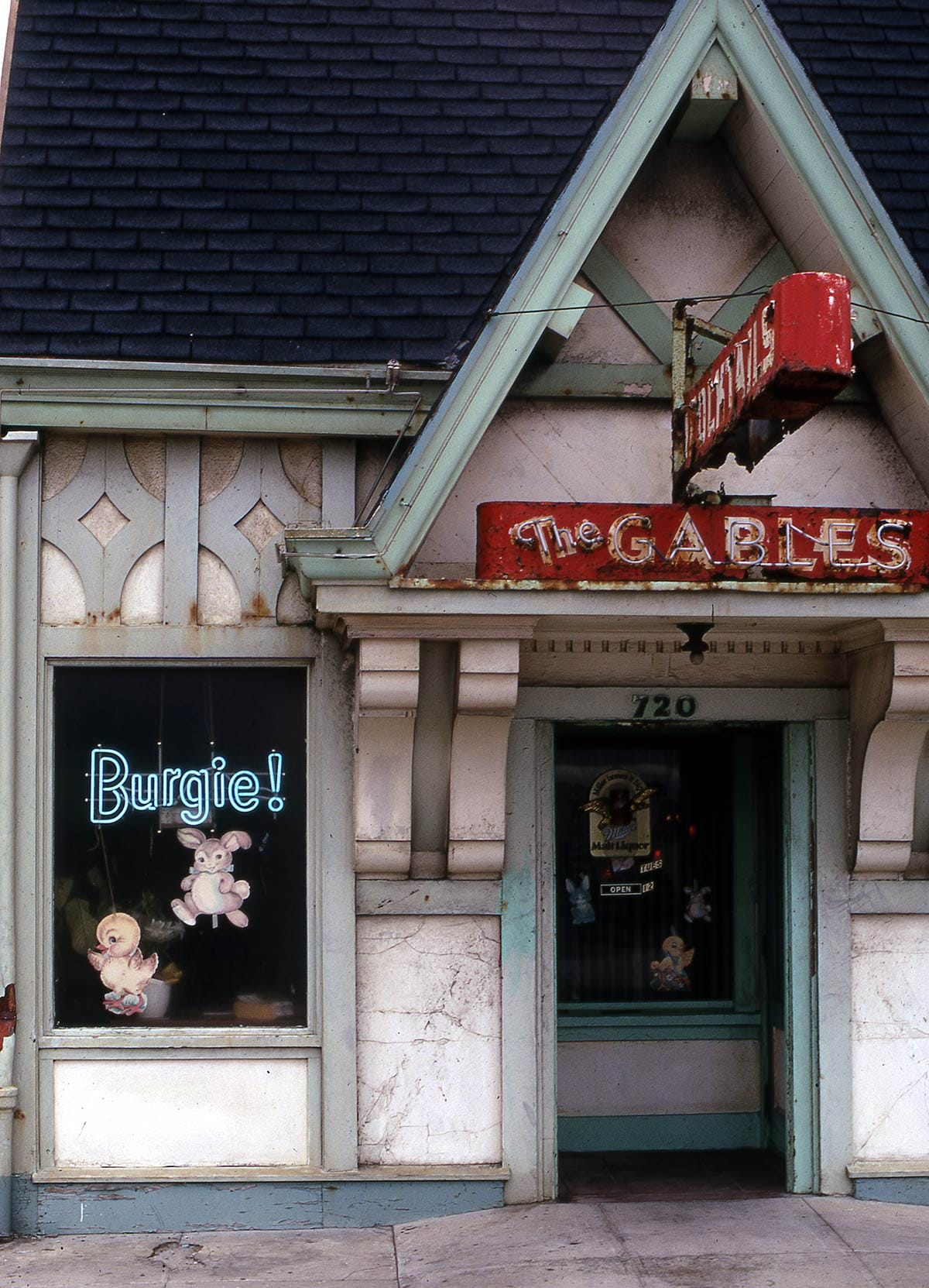
Patrick Cunneen remembered these years as his drinking days and he also remembered The Gables as an out-of-the-way somewhat seedy joint popular with cops. But despite all the law enforcement lined up at the bar, Cunneen noted “out-of-the-way places also seemed not to look closely at your I.D.”
Eva Connett was known as hard-nosed and she had to be to run herd on a tough crowd of regulars. The robbery attempts, brawls, and break-ins that plagued the area in the late 1960s pushed her to keep the front door locked at night and only admit her regulars inside.
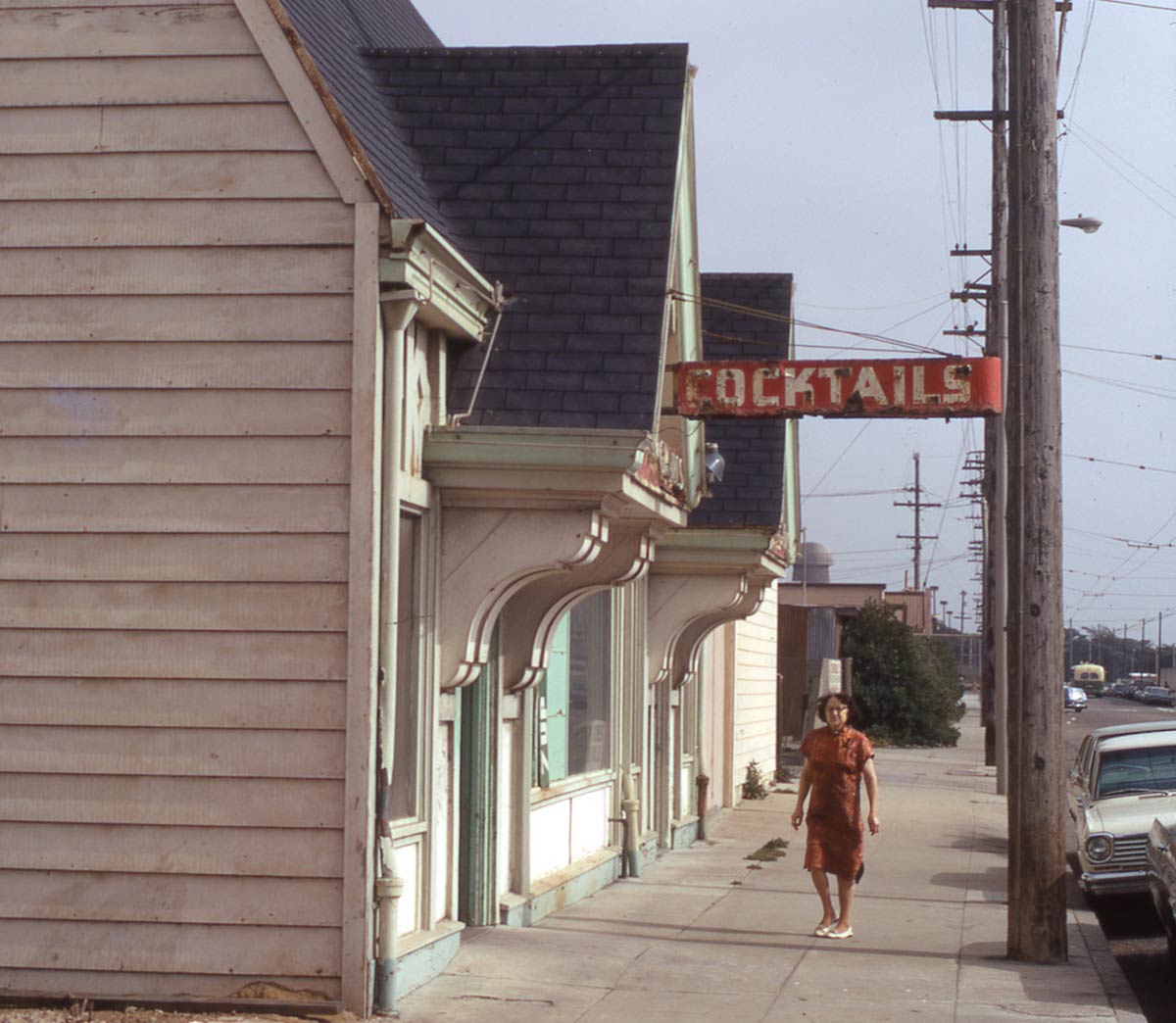
The Whitneys sold out in 1972. Playland would have its last hurrah on Labor Day weekend and start being demolished right after. Eva didn’t see the point of waiting. The Gables was already a lonely island on the 700 block of La Playa.
The last of the last calls was two o’clock a.m. on Monday, May 1, 1972.
Last Call
Eva sold her liquor license to a new hotel group downtown. Her son Alvin had risen to the rank of colonel in the Army and promised once things were wrapped up on La Playa he’d fly her out to his new assignment in Indonesia for a few weeks of deserved vacation.
After 34 years running The Gables, what would Eva Connett, who would pass away in 1987, do with her time?
“Have fun with my five great-grandchildren,” she said.
I know a lot of collectors, especially of Ocean Beach material, but have never seen anything from The Gables auction. Perhaps it was all fixtures, glassware, napkins, beer signs…maybe a cigarette machine: all as nondescript as the building that now stands where The Gables once was.
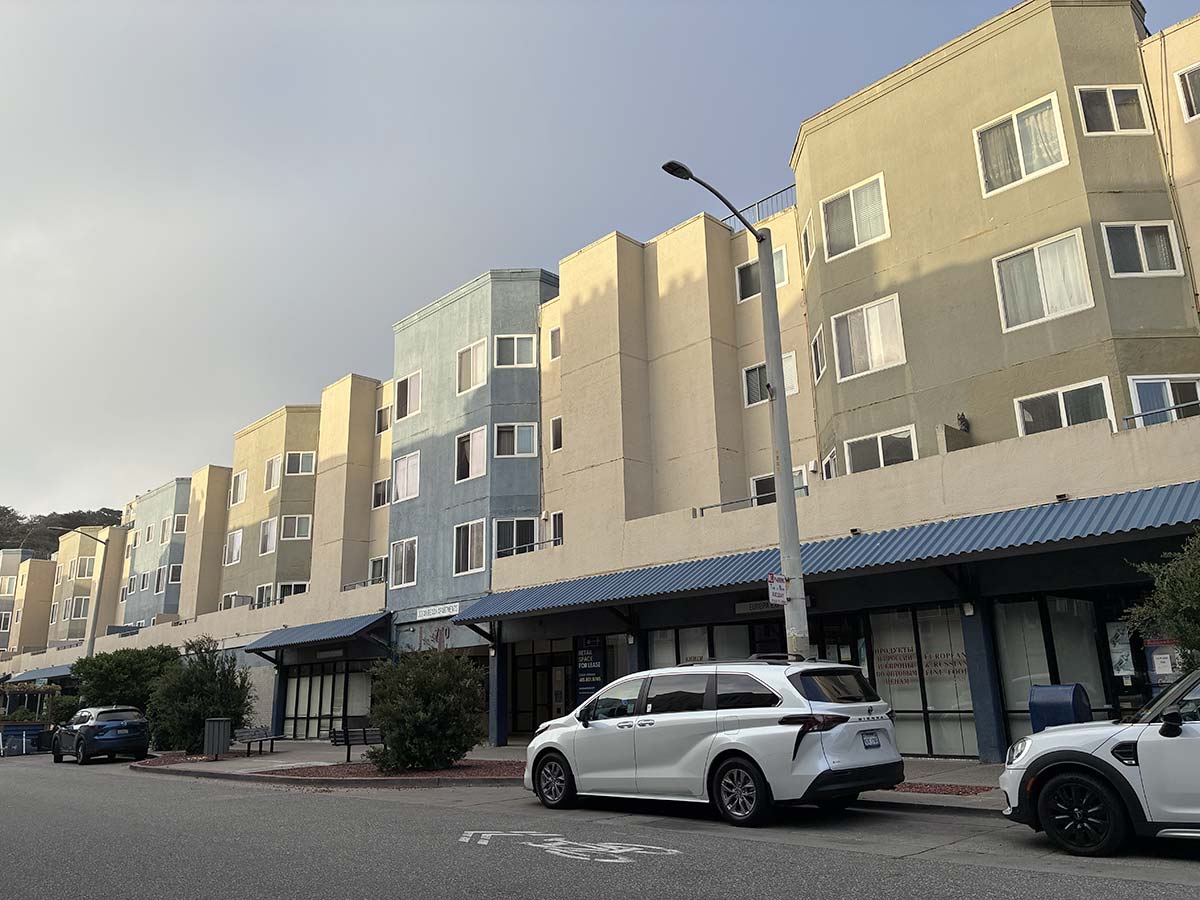
Whatever went at the auction, I like to imagine that the woman who put almost half her life into that bar kept the backdoor sign: “Eva Connett, Prop.”
Woody Beer and Coffee Fund

Allow me to buy you a beer or coffee and we can talk over the throuple we are in with the beautiful city of San Francisco. Good people have already paid for the round. (And you can pay for a future person, if you would like.)
When are you free?
Sources
“Bathhouse to Cost $50,000 Will Be Erected on Ocean Boulevard,” San Francisco Bulletin, March 5, 1910, pg. 19.
“Revelers Sing as Drys Raid Cafe, Jail One,” San Francisco Examiner, October 11, 1923, pg. 12.
“Singer Greets Agents with New Dry Song,” San Francisco Chronicle, October 11, 1923, pg. 2.
“Legal Notice,” Oakland Tribune, January 11, 1926, pg. 16.
“Fire at Playland,” San Francisco Chronicle, December 27, 1958, pg. 1.
Jack Rosenbaum, “Our Man on the Town,” San Francisco Examiner, May 2, 1972, pg. 31.