
Rallying for the Rosary
In 1961, a lot of people said a lot of Hail Marys in Golden Gate Park's Polo Fields.
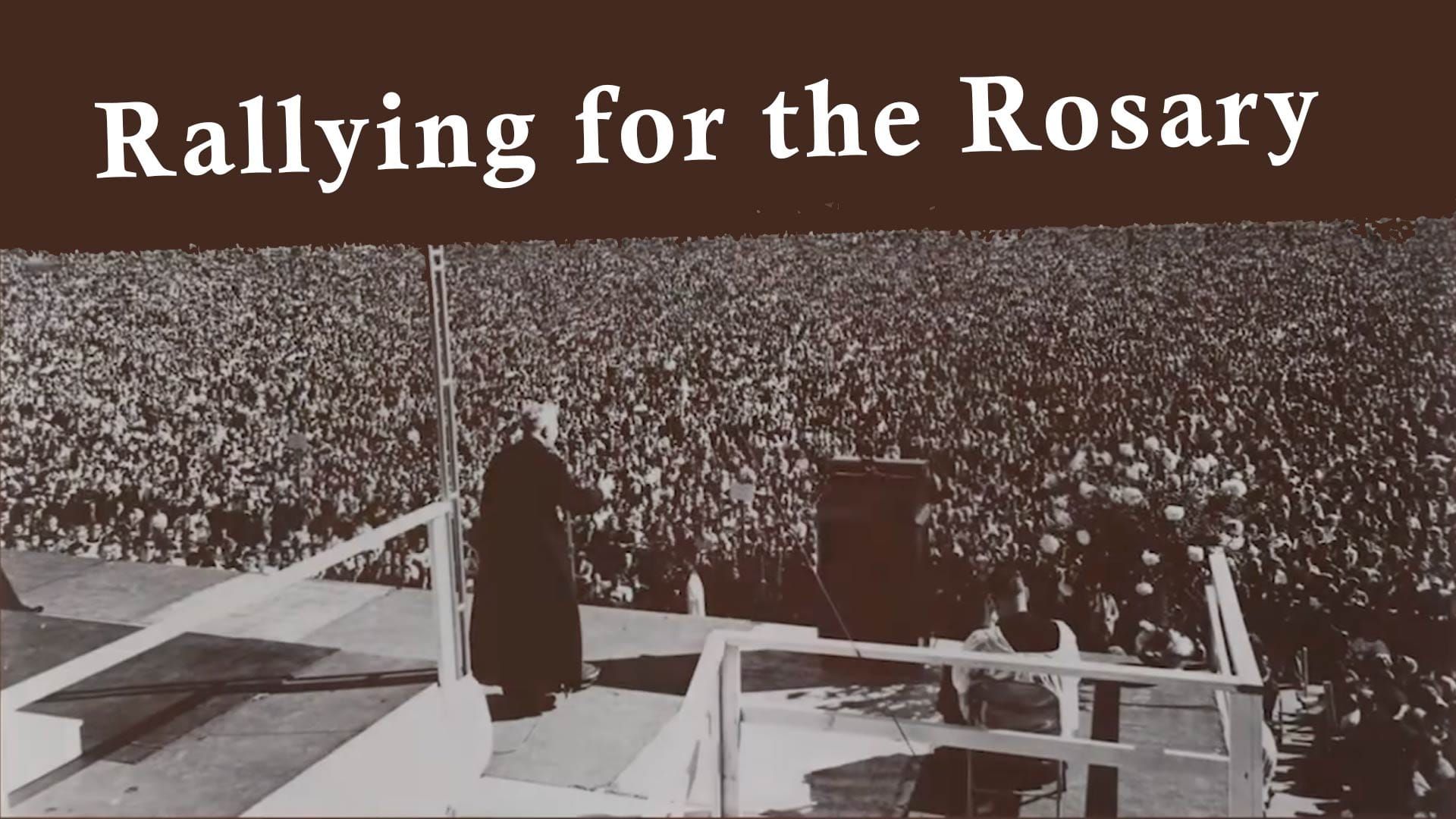
Tens of thousands, perhaps hundreds of thousands, jammed Golden Gate Park’s Polo Fields on a beautiful October day. The “shoulder-to-shoulder horde” came from all over the Bay Area and beyond.
It wasn’t the Hardly Strictly Bluegrass music festival last weekend. It was Saturday, October 7, 1961, and the masses poured in not for dancing or banjo-picking but to pray together.
The Family Rosary Crusade had come to town and the rock star of the Roman Catholic world, priest Patrick Peyton, was the headliner.
Reverend Patrick Peyton, C.S.C. was 52 years old and had been on his crusade for two decades with about a thousand similar events under his belt in October 1961. In many ways he was to mid-century Catholics what Billy Graham was to Protestant and Evangelical Christians, a charismatic, barn-storming, media-savvy must-see who drew huge crowds.
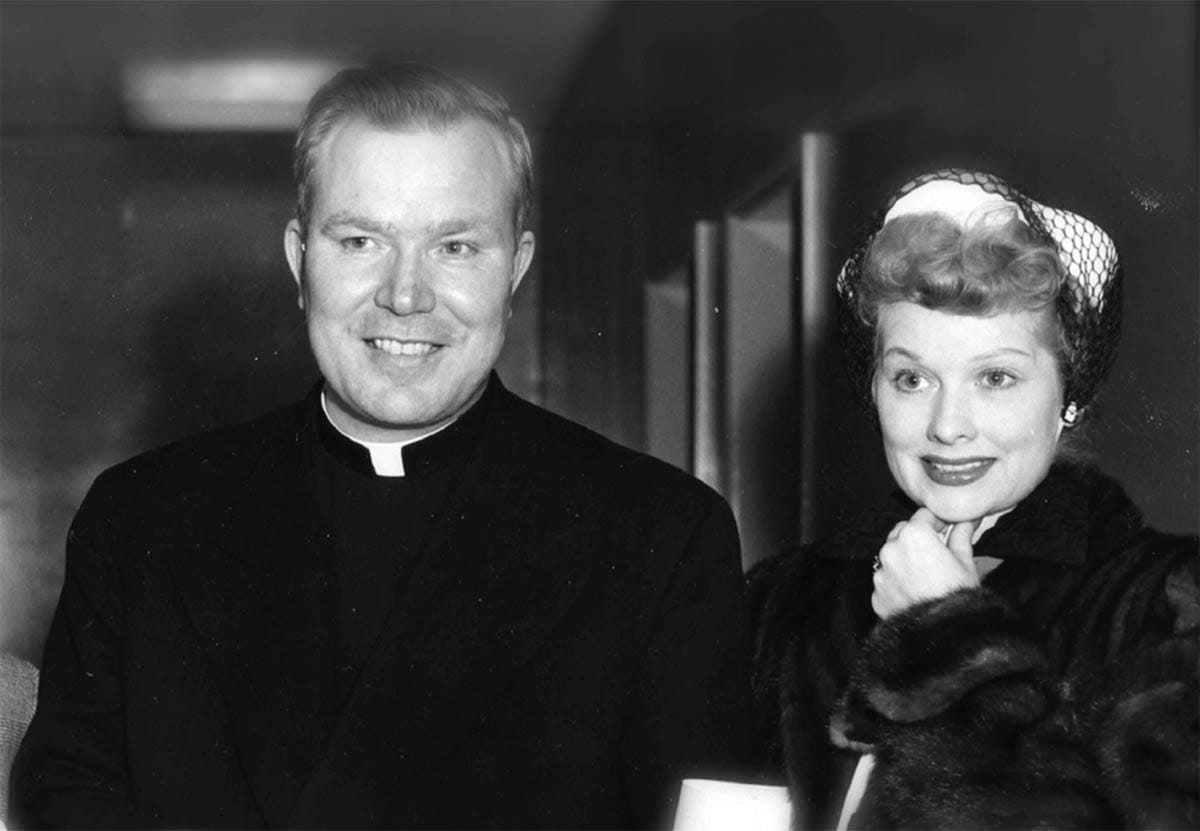
He was handsome with a fluting Irish accent; enthusiastic, but with an air of cheerful humility; a priest sent from central casting for a Boy’s Club movie. You could see him teaching boxing to street urchins while fellow priest Bing Crosby broke into Too-Ra-Loo-Ra-Loo-Ral.
Peyton actually worked with Crosby, and Lucille Ball, Grace Kelly, James Dean (!), and other celebrities. His Family Theater Productions’ rosary-themed radio and television shows popularized the saying “The family that prays together, stays together.”
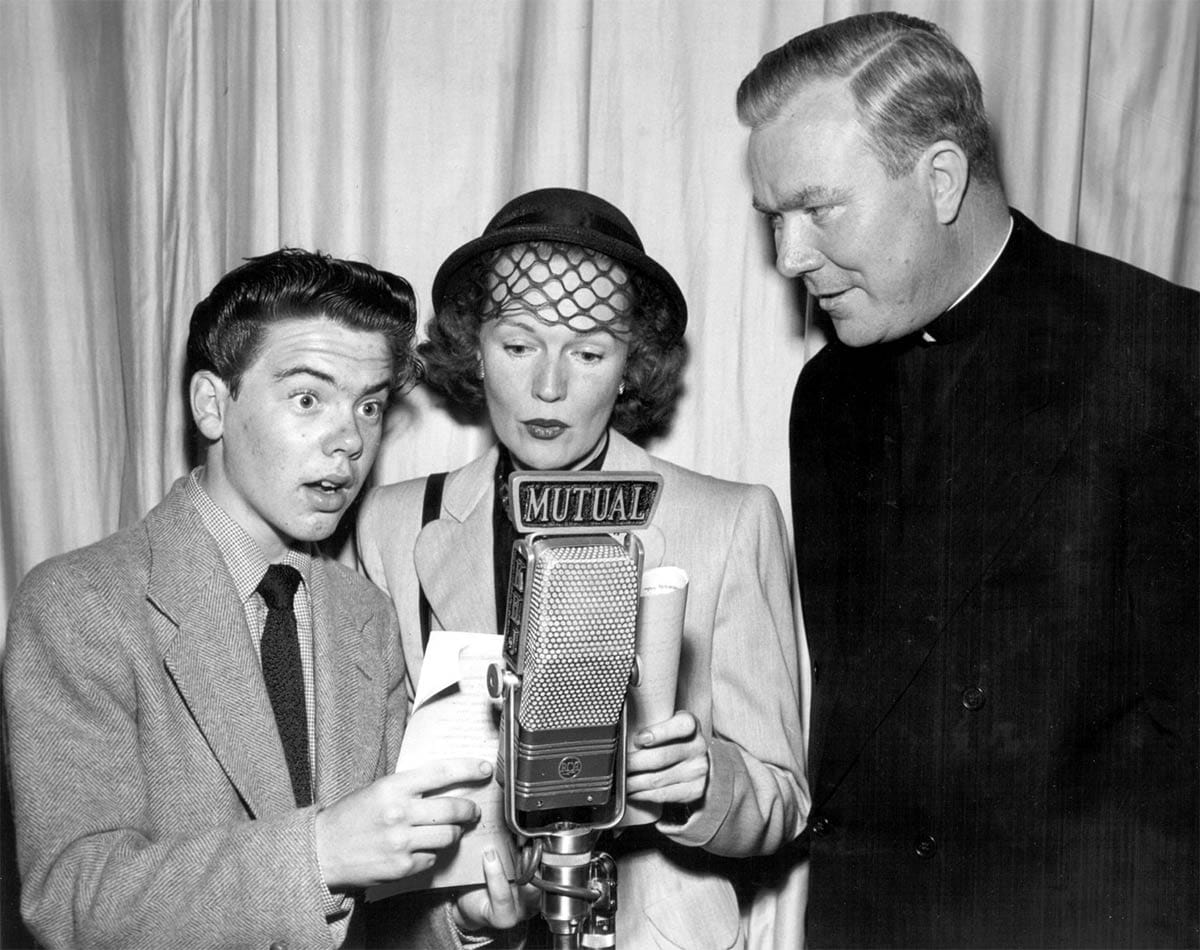
By 1961, the priest had spoken at Rosary Crusade rallies to seven million people in more than 30 countries.
Secretly, a lot of the funding for his tours came from the Central Intelligence Agency. The agency saw the Family Rosary Crusade as a helpful bulwark against Communism in South American countries. Pope Paul VI would put the kibosh on Peyton taking any more CIA money in 1965.
But the priest probably didn’t need the CIA in California. The week of the planned San Francisco rally he told a reporter that an army of 60,000 volunteers were canvassing Catholics in the 13 Bay Area counties and were shooting for half a million attendees at the Polo Fields.
Getting pledges to pray daily were what Peyton said he cared most about, not the crowds. Saying the rosary would bring love into households and stop divorces, he believed. If the pledges and rallies converted a few Jewish and Protestant spouses to the Catholic faith, that was OK too.
The skies were clear and blue and the sun warm on October 7. People began showing up a little after dawn. Every parking space was taken in Golden Gate Park, in the Richmond District, in the Sunset District. On some roads, double-parking and even triple-parking were tolerated. Worshipers started arriving from all around the Bay Area on more than 600 chartered buses.
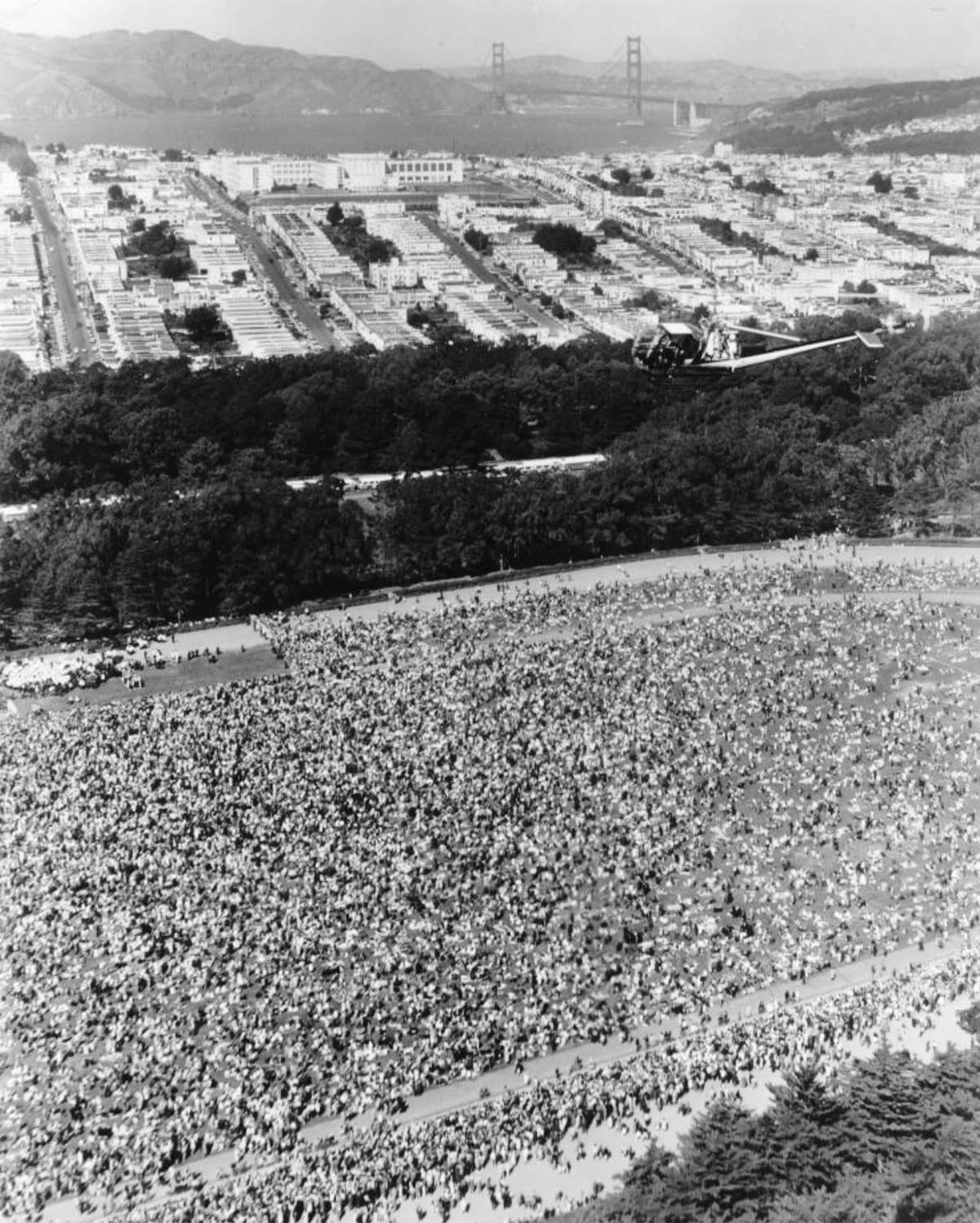
Peyton flew in from the Ferry Building by helicopter with bishops, the mayor, the California governor, and the local member of congress. The copter first touched down in the shallow end of Spreckels Lake, but since it was determined that Father Peyton was, after all, just a man, and could not walk on water, the pilot lifted the bird slightly and landed on the surrounding pathway.
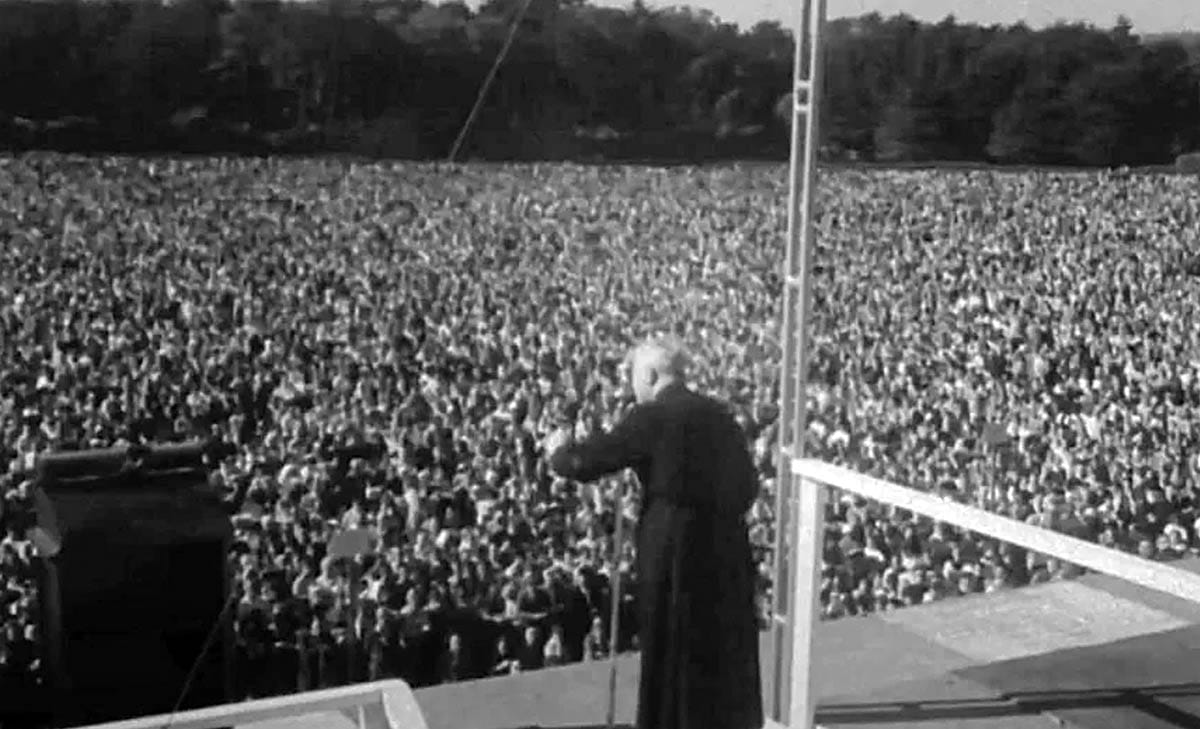
A phalanx of police, fire, and sheriff department employees escorted the retinue to the Polo Fields stage where an altar had been set up. When Peyton walked on with a wave, a multitude roared.
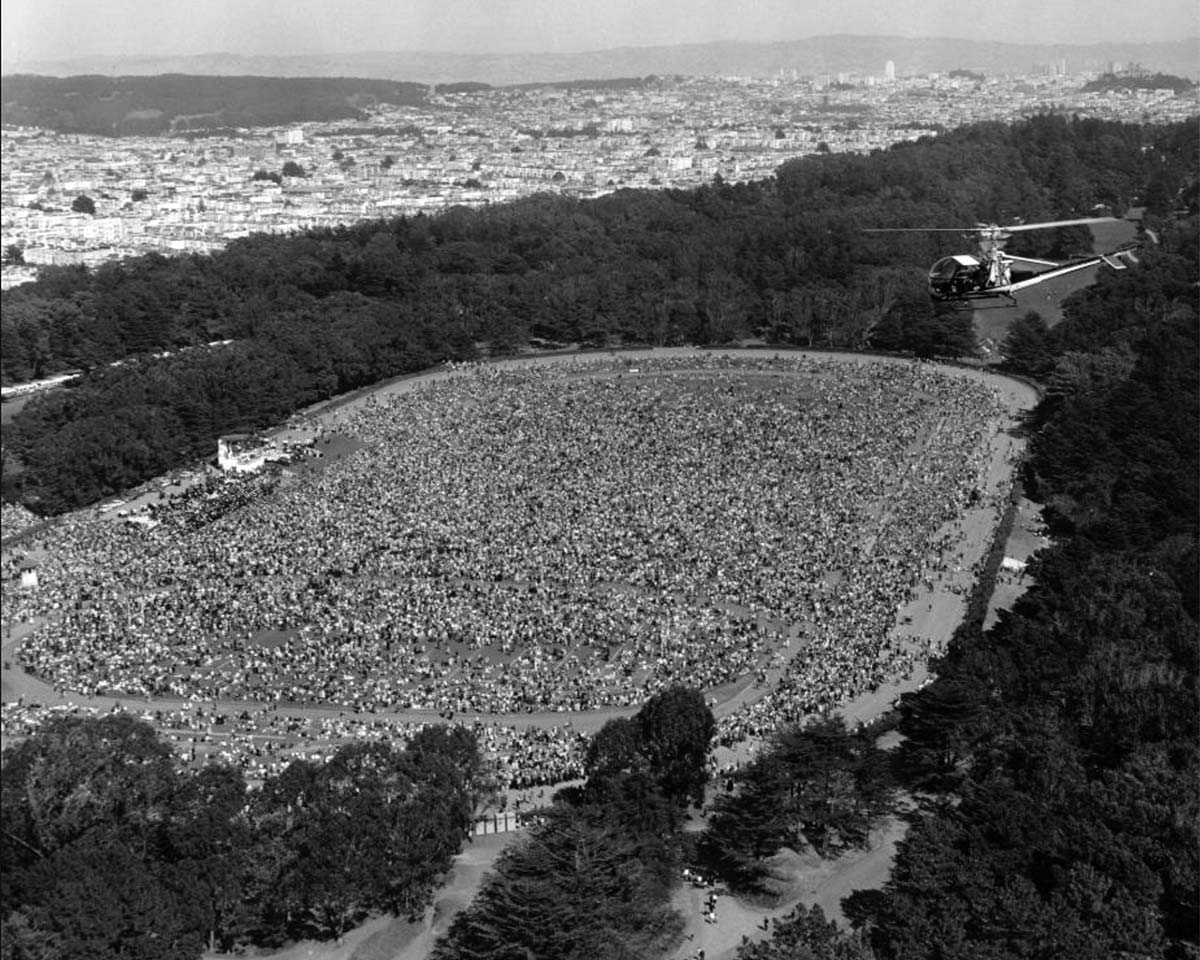
By the start of services at 1:00 p.m., Deputy Police Chief Al Nelder estimated 500,000 people were in the park—the biggest crowd in San Francisco history and equal to the entire population of Cincinnati, Ohio. The newspapers dutifully went with that guess, which was, perhaps coincidentally, the one Father Peyton predicted.
It probably wasn’t half a million. The Outside Lands music festival had a reported 75,000 attendees a day in 2026. Organizers of the free Hardly Strictly Bluegrass festival thought they had 60,000 last weekend and temporarily closed the entry gates because “the park was at capacity.” Both of those events take place over multiple stages and meadows.
If some volunteer could do a little math and calculate how many two-to-three-foot-body-space circles would fit inside the Polo Fields I doubt they would hit 100,000.
But, still, it was a lot of people. Worshipers were asked not to kneel so as to save space on the field.
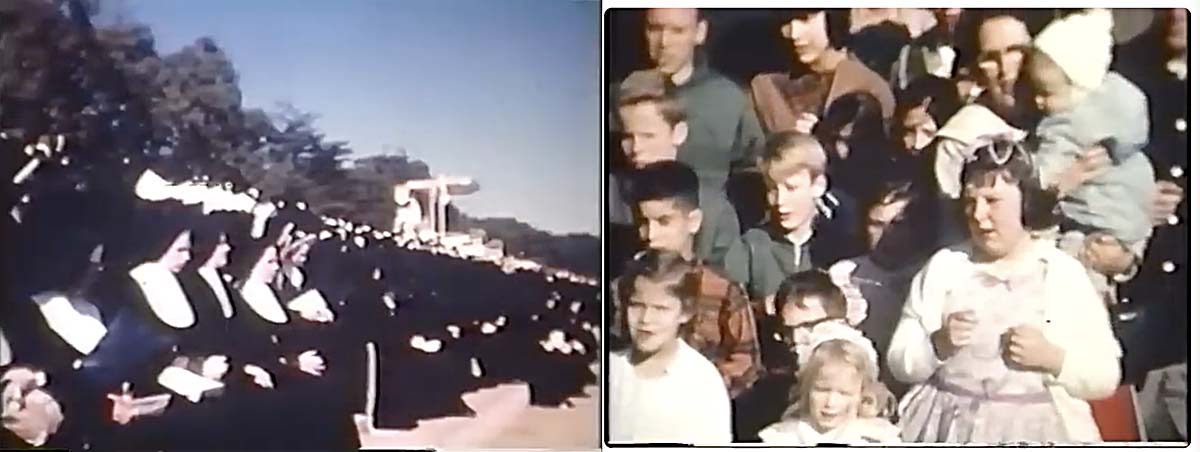
I can confirm as a former kid from Star of the Sea parish in the Richmond District that The Five Glorious Mysteries of the Rosary take a while to get through. The cycle has the Apostles Creed, six Our Fathers, six Glory Bes, more than fifty Hail Marys, and there are even optional prayers you can toss in.
Five Bay Area families, one a family of nine, were given the privilege to recite the five mysteries. The scripture focuses on Jesus Christ’s resurrection, his ascension into heaven, his apostles receiving the spirit of the Holy Ghost, his mother Mary’s entry into heaven, and her formal enshrinement as the Blessed Virgin Mary.
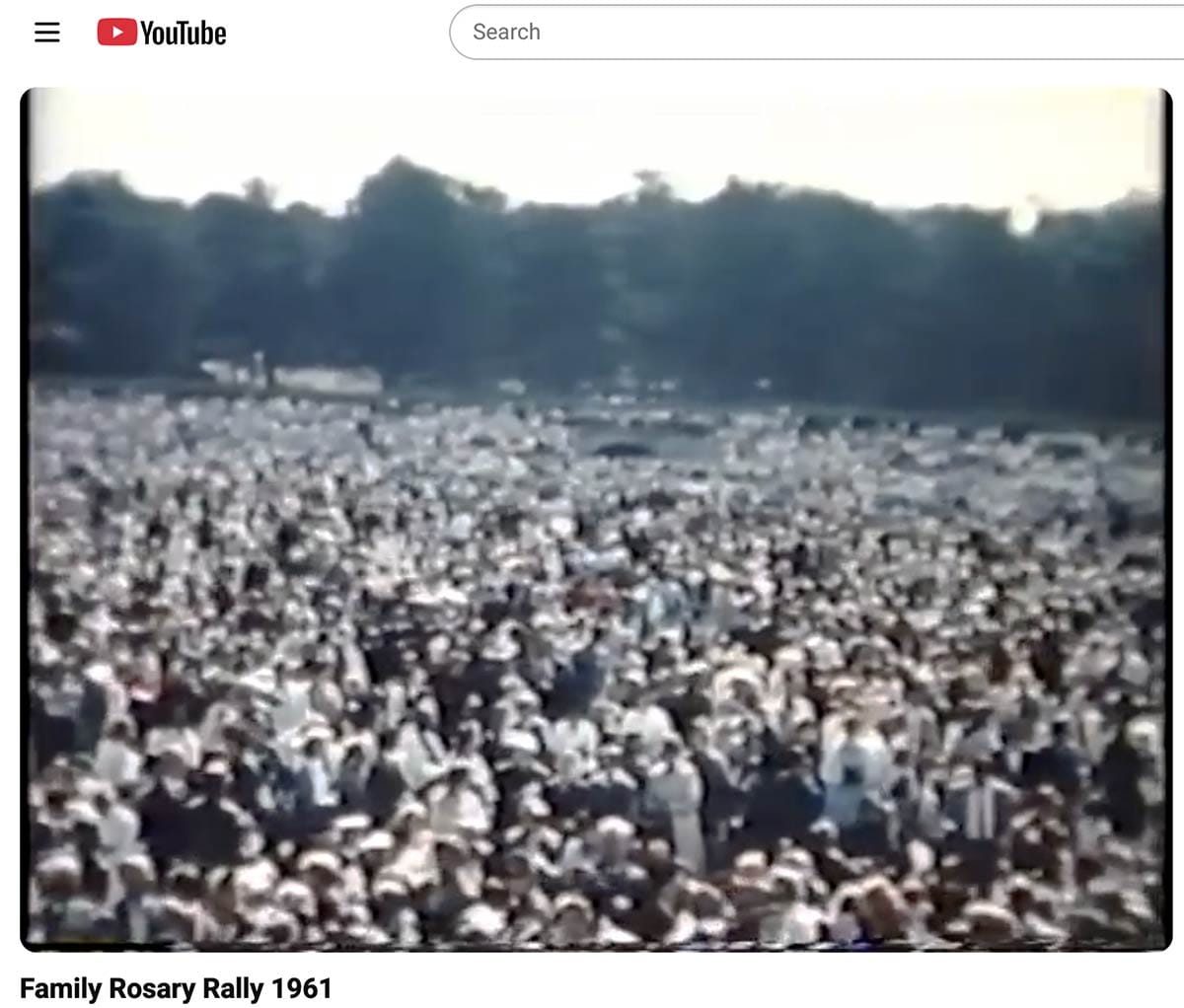
The Polo Fields thousands filled the pauses in-between with “a tidal roar” of responsive Hail Marys that supposedly could be heard three miles away.
God was feeling “great love and faith,” Peyton said during his own address, “from the bodies and souls of the great, noble people of this Bay Area.”
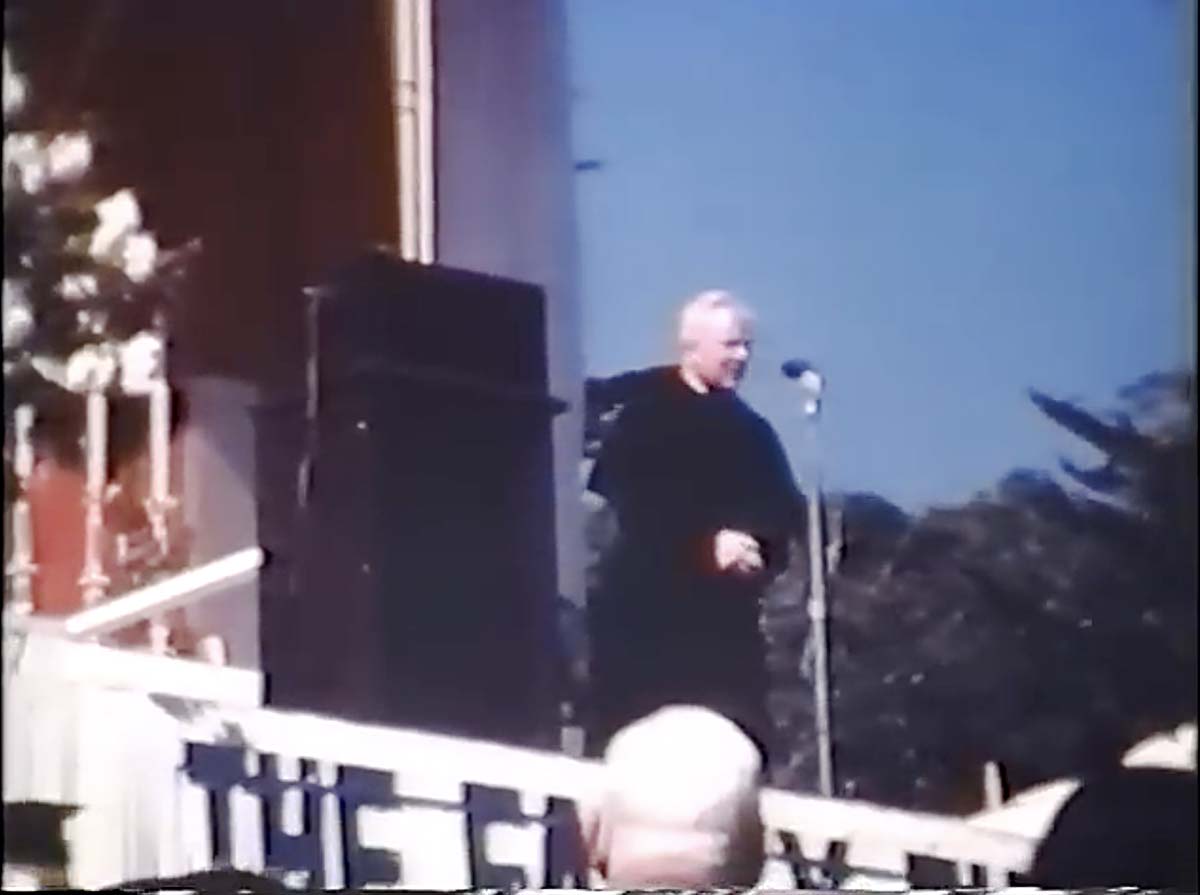
It was considered the largest crowd ever to attend the Rosary Service in the United States and the largest service Father Peyton’s assistant had seen in his ten years of work. Auxiliary Bishop Hugh A. Donohue called it “the greatest religious gathering ever to take place in the United States.”
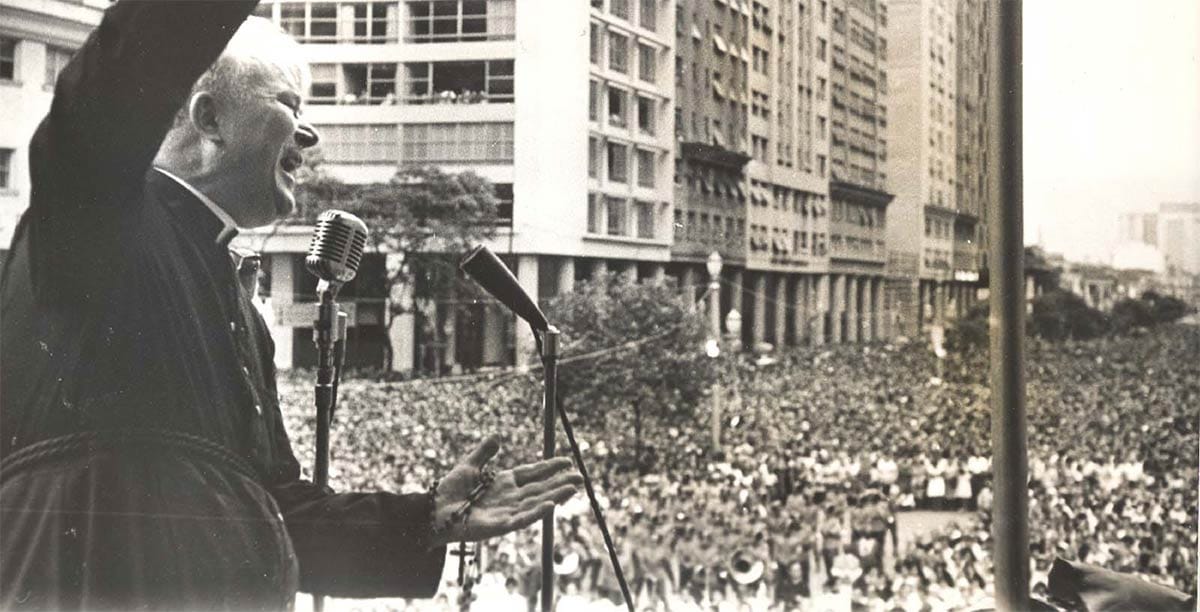
Peyton would get even bigger crowds. An estimated 2 million people showed up for a rally in Brazil, where Peyton’s work was credited with building support for a coup by US-backed generals months later.
San Francisco still holds the record for the largest rosary rally in the United States. Outside of some heat prostration, one broken leg, and a few bee stings (a boy got frisky with a stick and poked a hive), everyone made it home OK on that Saturday in 1961. Most of them likely went to mass the next day.
Peyton was emotional afterward.
“If my love could speak, it would be everything… That field—a sea of love—[was] a sign that God will certainly spare our earth.”
Polo Fields crowds may not be the best barometer, be they the rosary rally, the Human Be-In, or the Metallica concert in 2017, but, wonderously, the earth is holding on.
Woody Beer and Coffee Fund
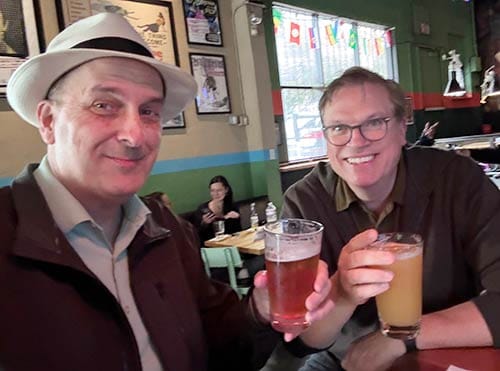
Great thanks to David F. (F.O.W.) who this week contributed to the non-interest-bearing but always interesting Woody Beverage Rally Fund. People like David chip in a few bucks, which puts the pressure on me to arrange a date to buy someone a drink or two. You could be that someone!
We could swap Catholic School war stories or we can talk about Communism or old ferry boats or whether lavender lattes represent all that’s wrong with the 2020s. Your choice. Just let me know when you are free.
Sources
Michael Harris, “Rosary Rally Hopes Rising,” San Francisco Chronicle, October 4, 1961, pg. 3.
“500,000 Jam Stadium In Family Prayer Rites,” San Francisco Chronicle, October 8, 1961, pg. 1.
“Polo Fields: Picnic Air in Crowd,” San Francisco Chronicle, October 8, 1961, pg. 15.
William L. Mackey, “500,000 Worship at Rosary,” San Francisco Examiner, October 8, 1961, pg. 1.
“Half a Million People—State’s Largest Crowd,” Vallejo Times-Herald, October 8, 1961, pg. 1.
Meg Hunter-Kilmer, The CIA and the Rosary Priest: Venerable Patrick Peyton, CSC (Church Life Journal, January 27, 2023)