
The End of Empire
Eulogy for a San Francisco Neighborhood Theatre.

My friend Al H.has a folder.
In it, he puts obituaries and funeral cards and death notices of people he knew. Once a year, on the anniversary of his own mother’s death, he reads through the folder and gives a little thought to each relative, colleague, and neighbor inside.
On a far more trivial level, I keep my own mental folder of San Francisco movie theatres. In the 1970s I learned the city as a kid by taking Muni buses around town with my friend Gabriel G. (F.O.W.).
By seeing movies at the Parkside or the Royal or the Metro, I’d experience what the neighborhoods around Taraval, Polk, or Union streets were like. Half of a century later, those theatres are gone, but I’m still here, riffling through my mind-folder whenever I walk those streets.
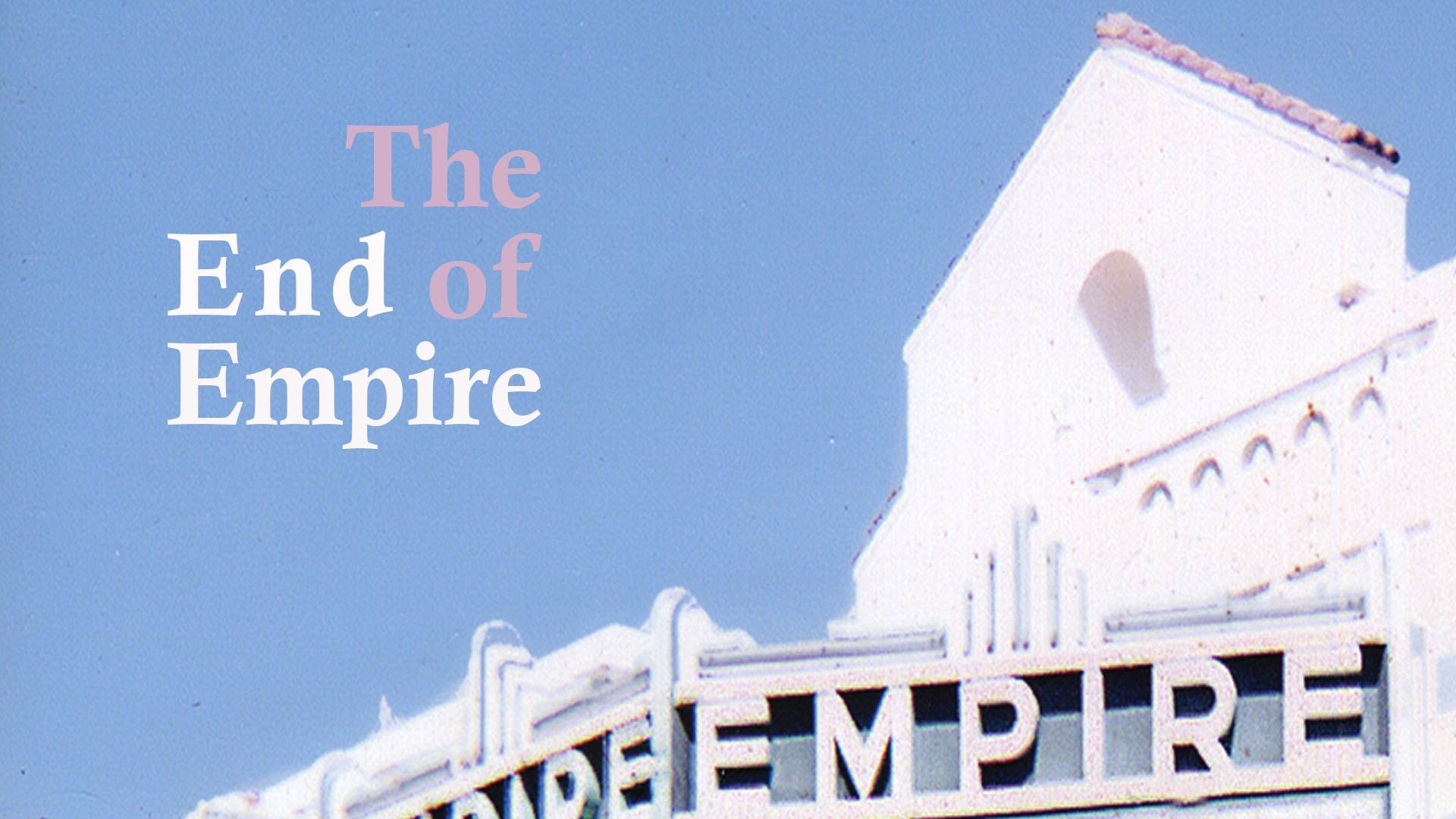
I’ve been bad about adding the old Empire Theatre, later named CinéArts, to the file. Although it closed with the pandemic, some part of me hoped the building might be discovered by some excited buyer who would see how perfect West Portal Avenue was for a revived theater experience.
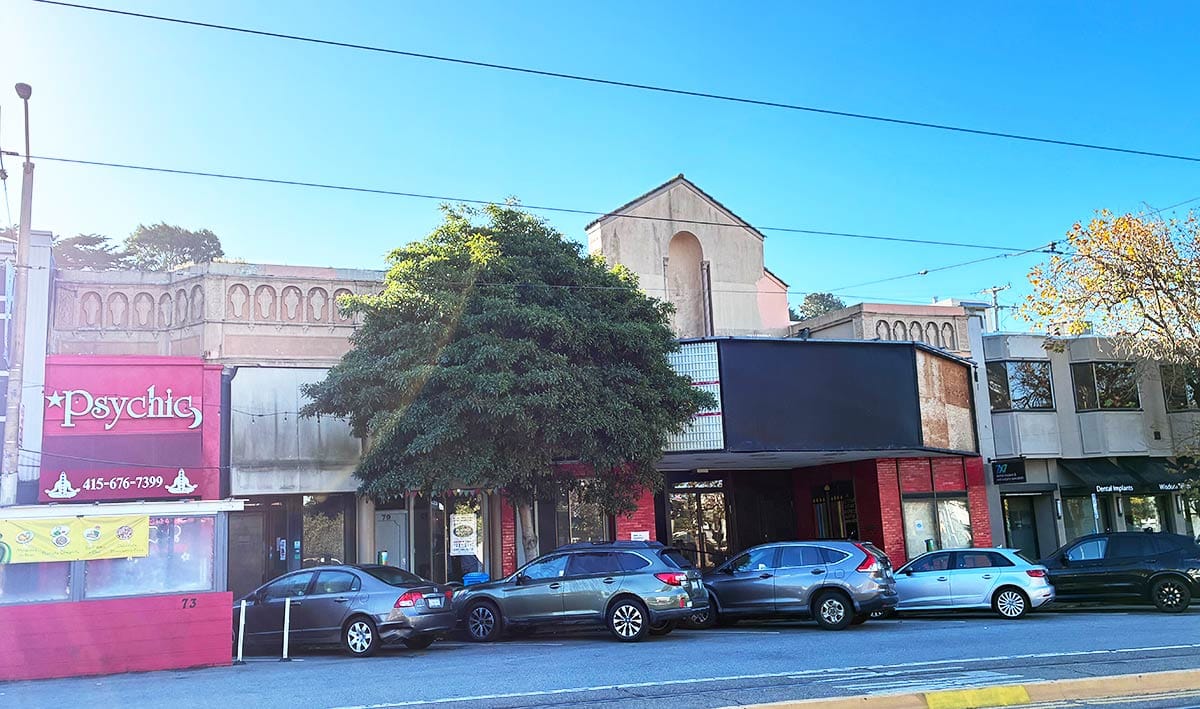
But it looks like it’s time.
Portal to Other Worlds
In anticipation of the opening of Muni’s Twin Peaks streetcar tunnel, the windy-road neighborhoods of St. Francis Wood, Forest Hill, and West Portal were carved out of eucalyptus forests and laid down over artichoke fields in the 1910s.
These suburban-style developments each carried deed covenants. Some of these restrictions protected landscape design, required single-family housing, and, in the days before strict zoning, promised buyers their neighbor couldn’t construct a slaughterhouse or factory next door. Other restrictions held up the extreme racist attitudes of the time and barred ownership or occupancy by people of Asian or African descent.
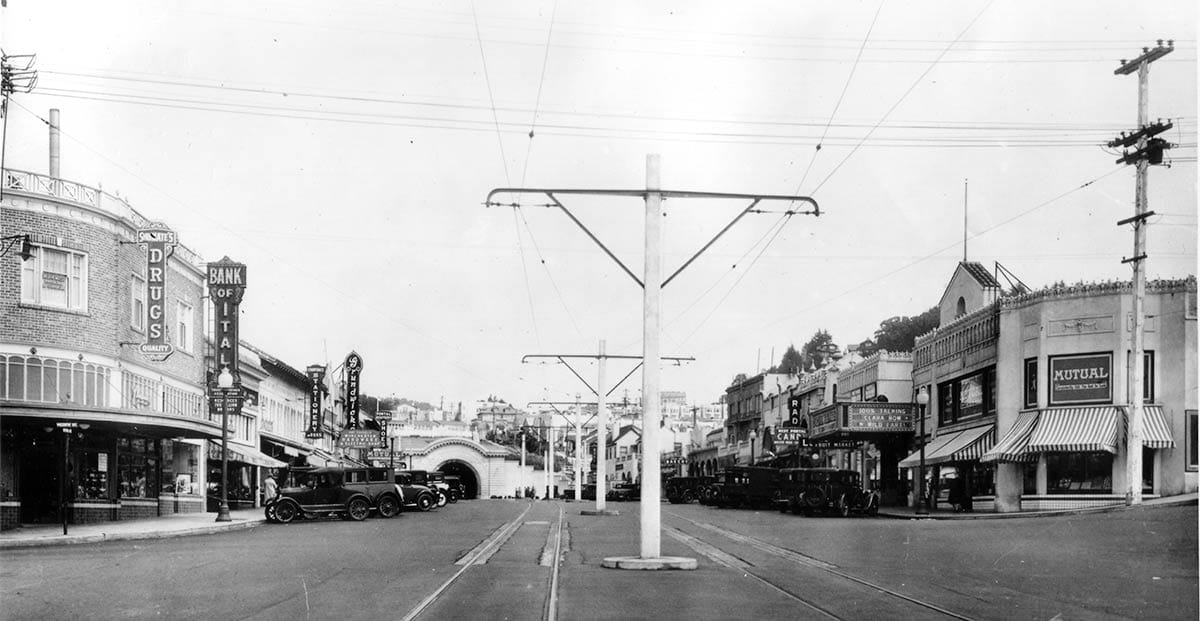
With businesses and multi-unit buildings banned in the “residence parks,” West Portal Avenue was created as a service boulevard of banks, small shops, groceries, and restaurants, often with apartments installed between or above the stores.
In the 1920s, a city neighborhood wasn’t truly on the map unless it had a movie theatre. Eight years after the first streetcar ran through the Twin Peaks Tunnel, West Portal Avenue finally got one.
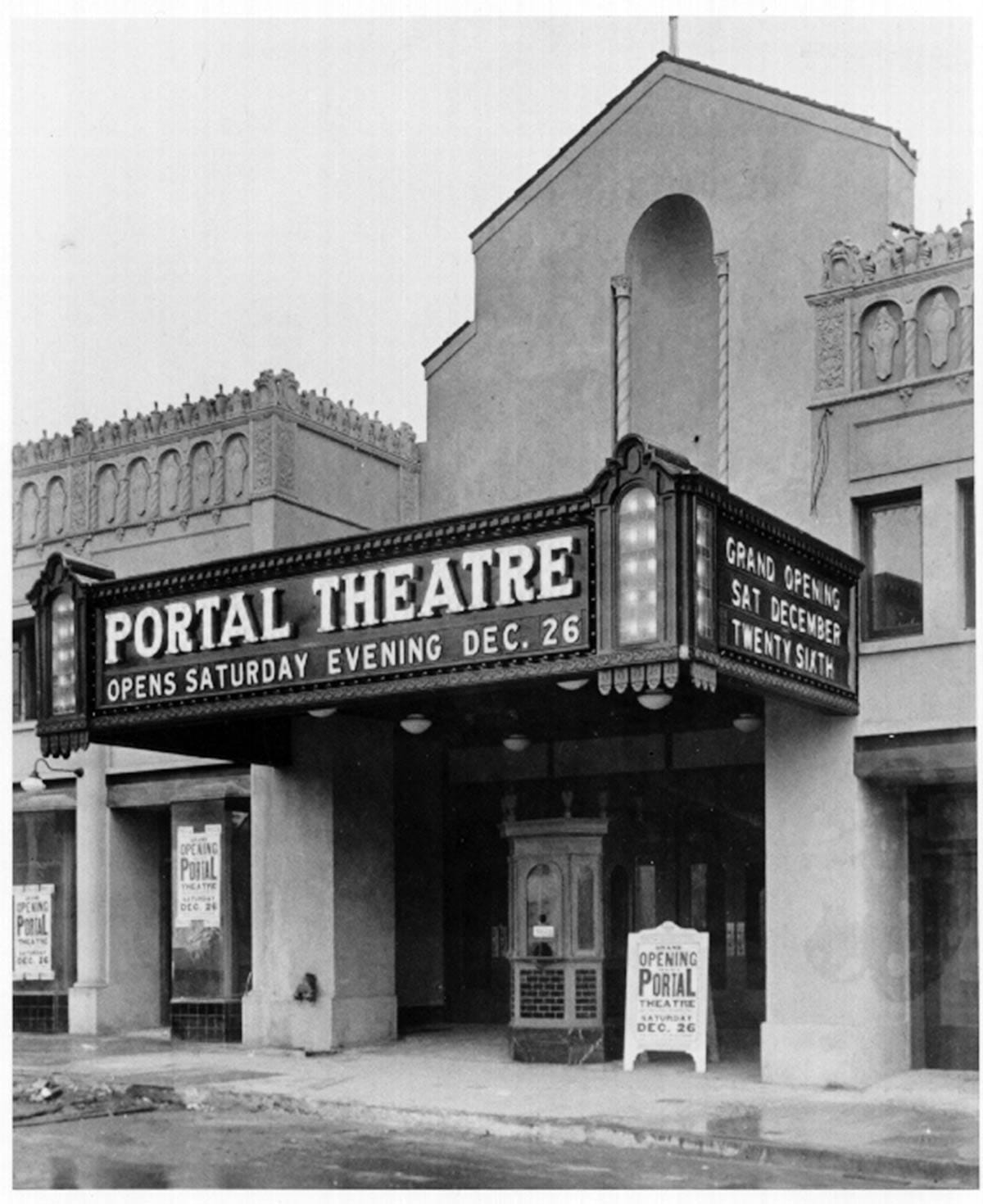
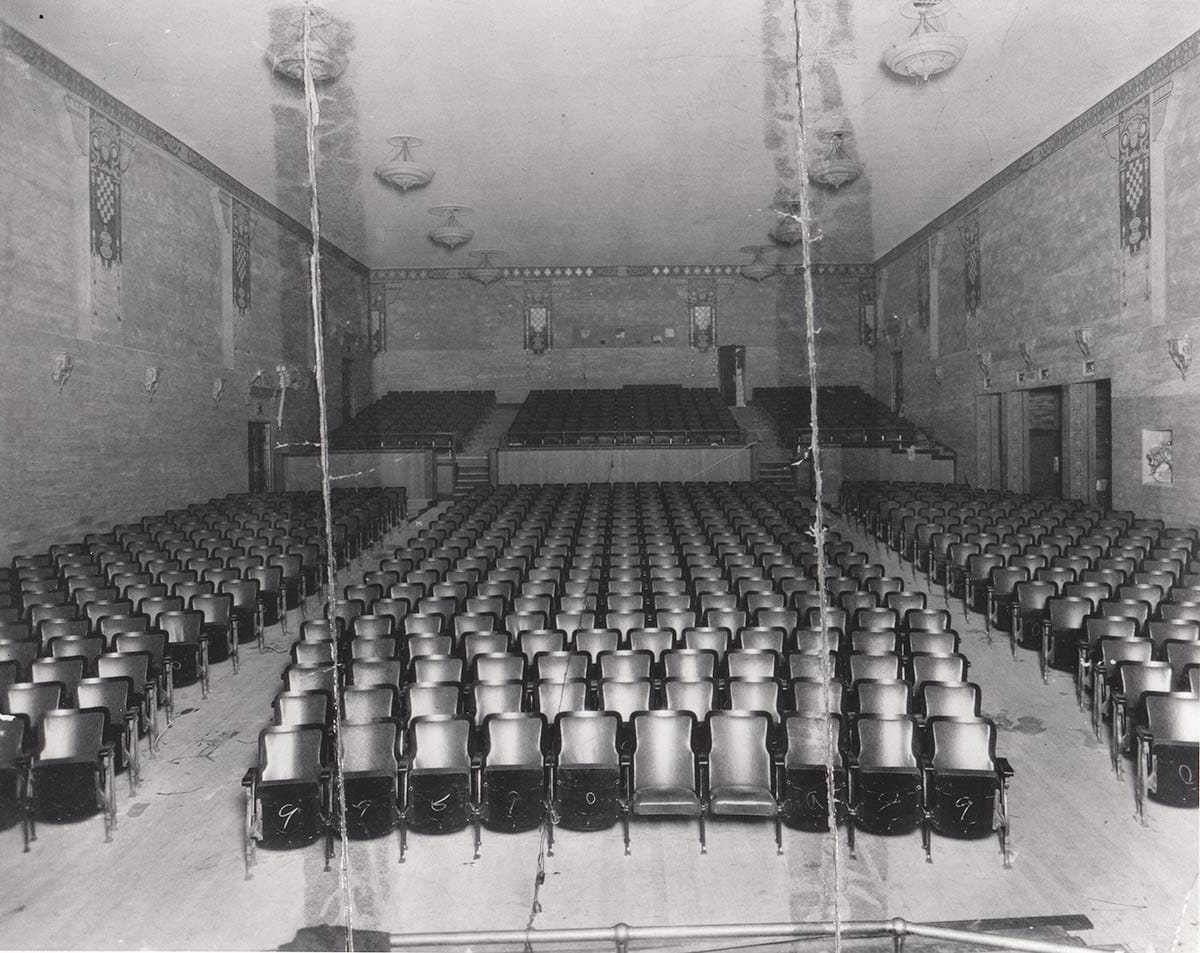
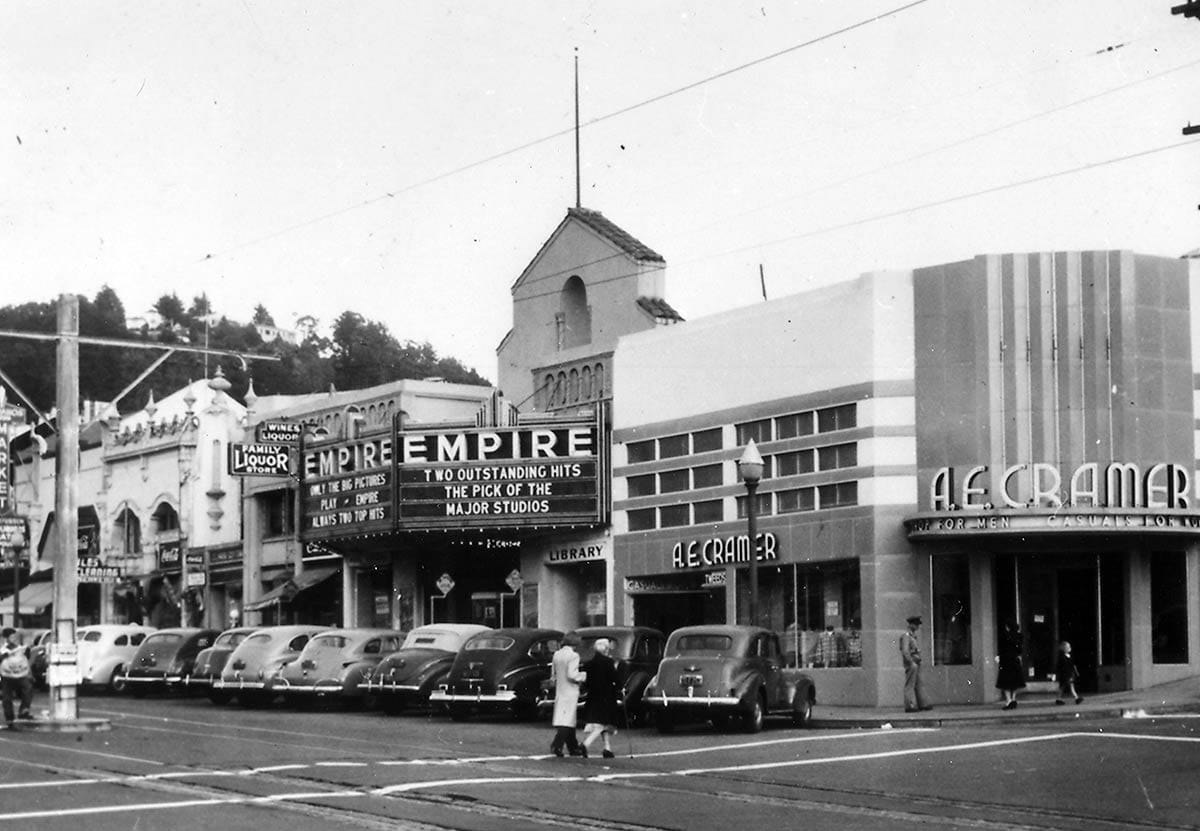
The Portal Theatre opened its doors the day after Christmas in 1925. It wasn’t a movie palace, an over-the-top fantasy of gilding and undulating balcony levels like the soon-to-arrive Castro Theatre or the Fox Theatre downtown. Serving a neighborhood audience, the Portal was a fairly simple box with a wooden floor, banks of standard seats, and some light heraldic-themed decorative elements.
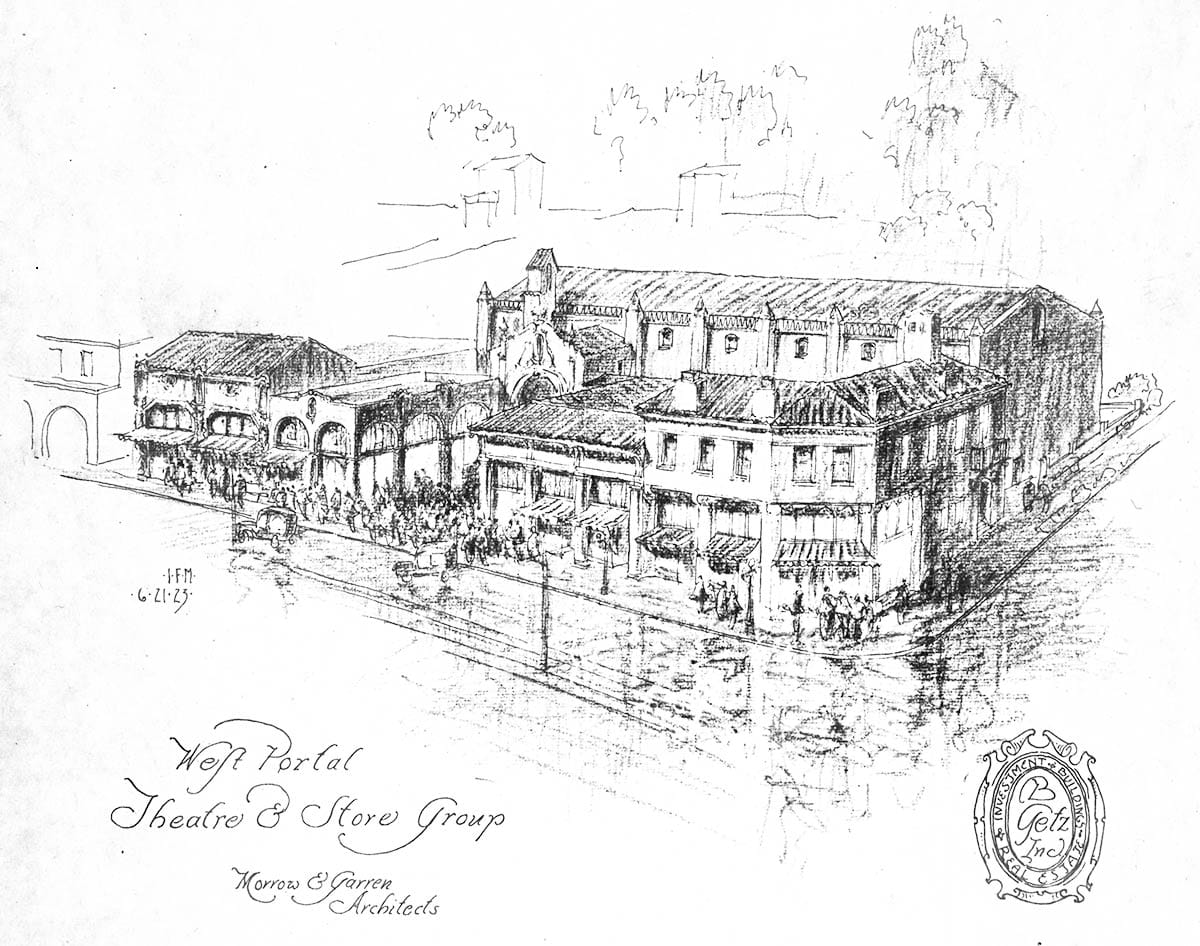
Outside, it was a little more interesting. Architect Irving Morrow of the firm Morrow & Garren originally designed a more open entry courtyard for the theatre and adjoining business block to the corner of Vicente Street.
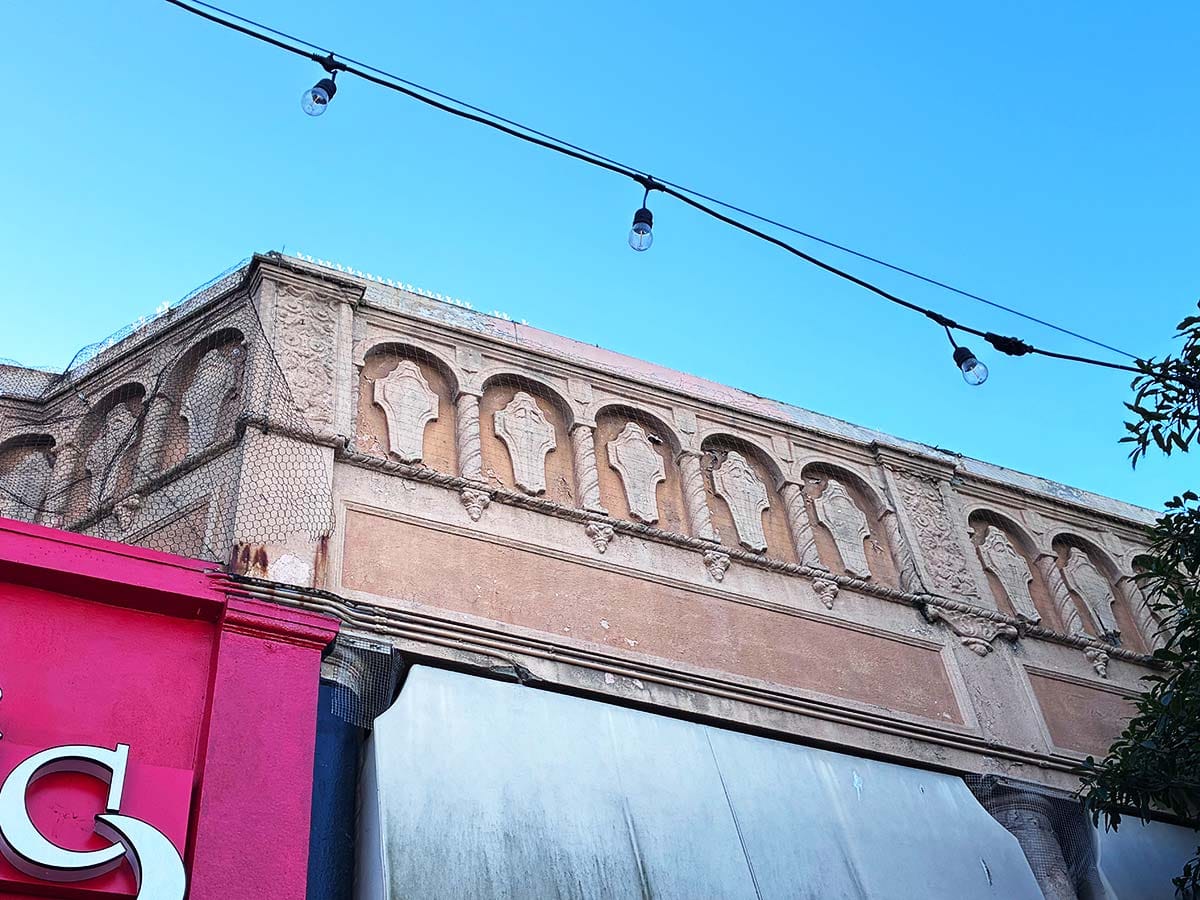
The courtyard was cut, but the Portal retained a stepped-back Moorish-style façade with elaborate friezes along the cornice line. Some of those moldings have survived decades of remodels and weather.
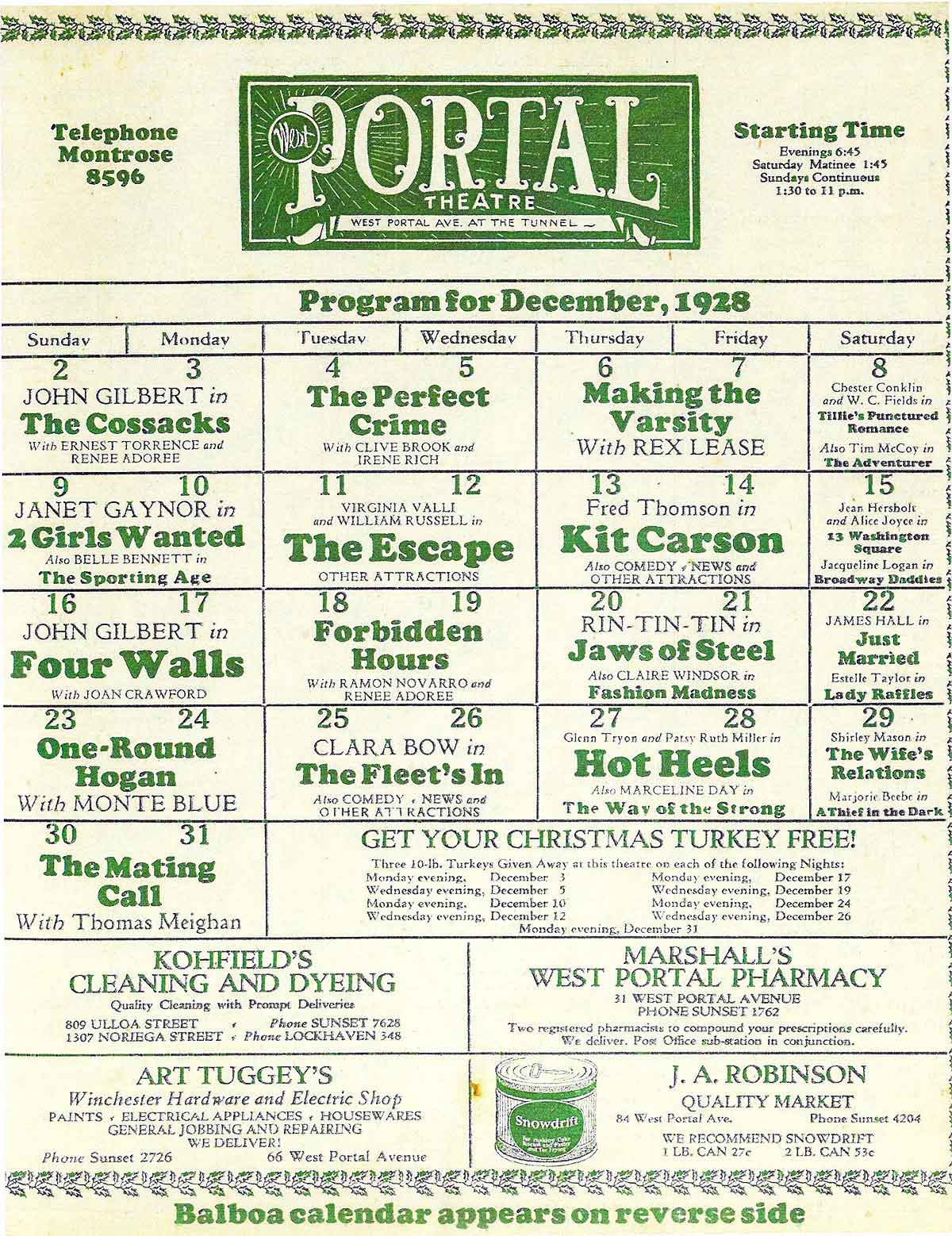
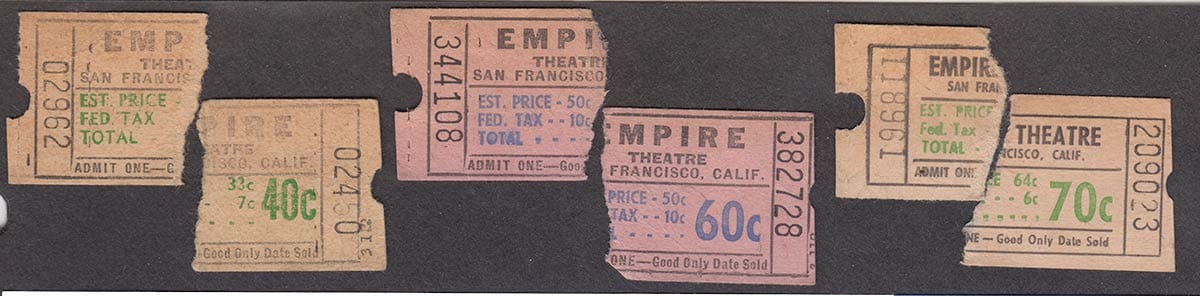
A look at a Portal Theatre calendar from 1928 gives an idea of how frequently the offering changed. In the days before television, before channel-surfing, and long before streaming, neighborhood theatres were a primary form of entertainment any night of the week and, at the Empire, all day on Sundays from 1:30 to 11:00 pm.
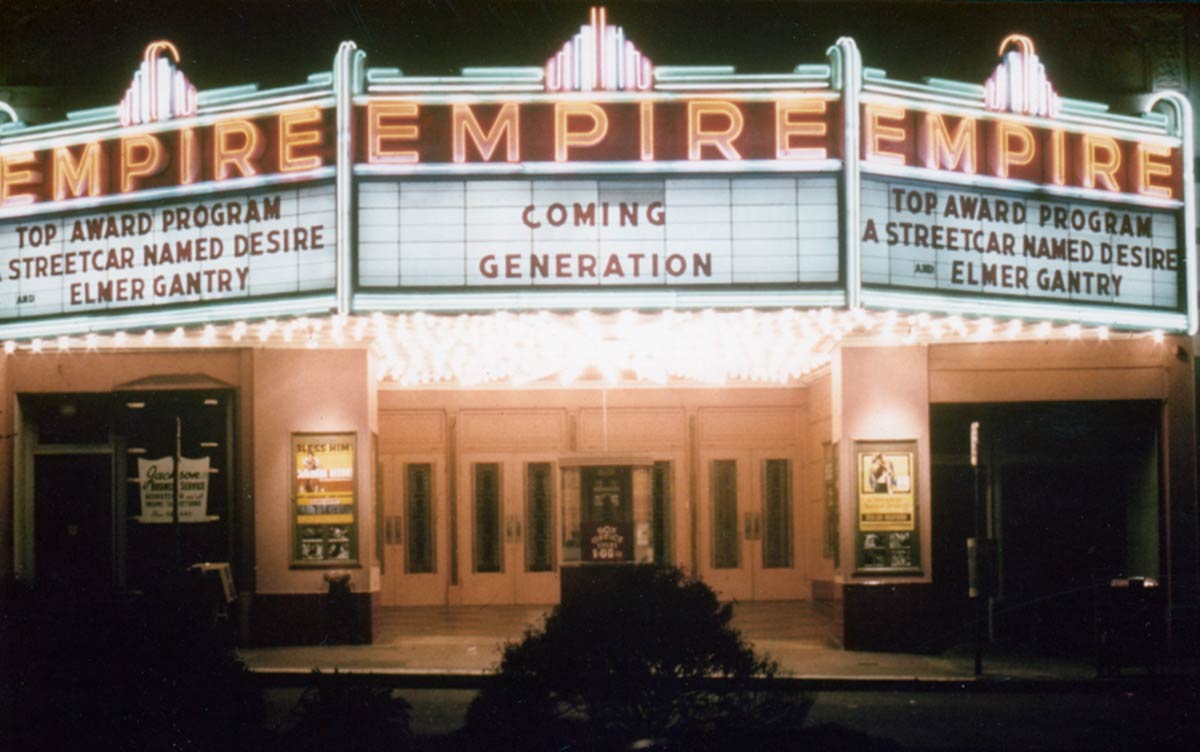
Movies have always been a celebration of technology and theatres long depended on appearing modern, up-to-date, and even cutting-edge. As local competition increased with new venues like the impressive El Rey Theatre on Ocean Avenue (opened 1931), the Portal spruced itself up with a rebranding as the Empire in October 1936.
A larger streamlined marquee lit up foggy nights on West Portal Avenue.
The interior was given lavish stenciled murals evoking some mythical Arcadian past. There were light Roman and Greek references with small classical temples, Tuscan pine trees, and winged horses.
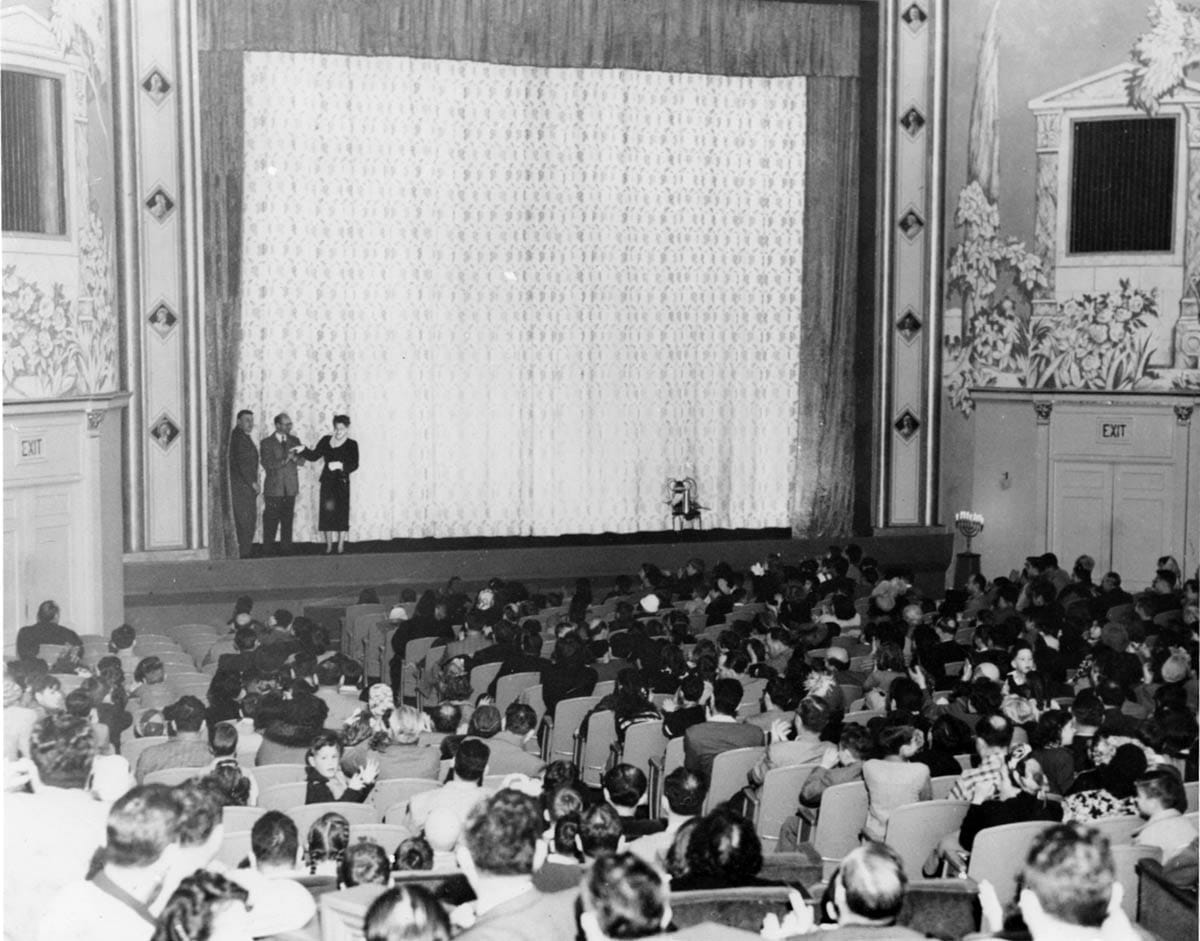
The mid-century scene at the Empire was much as it was at other neighborhood theatres: lots of kids, promotional dishware give-away nights, synergy and cross-promotions with other businesses on the street.
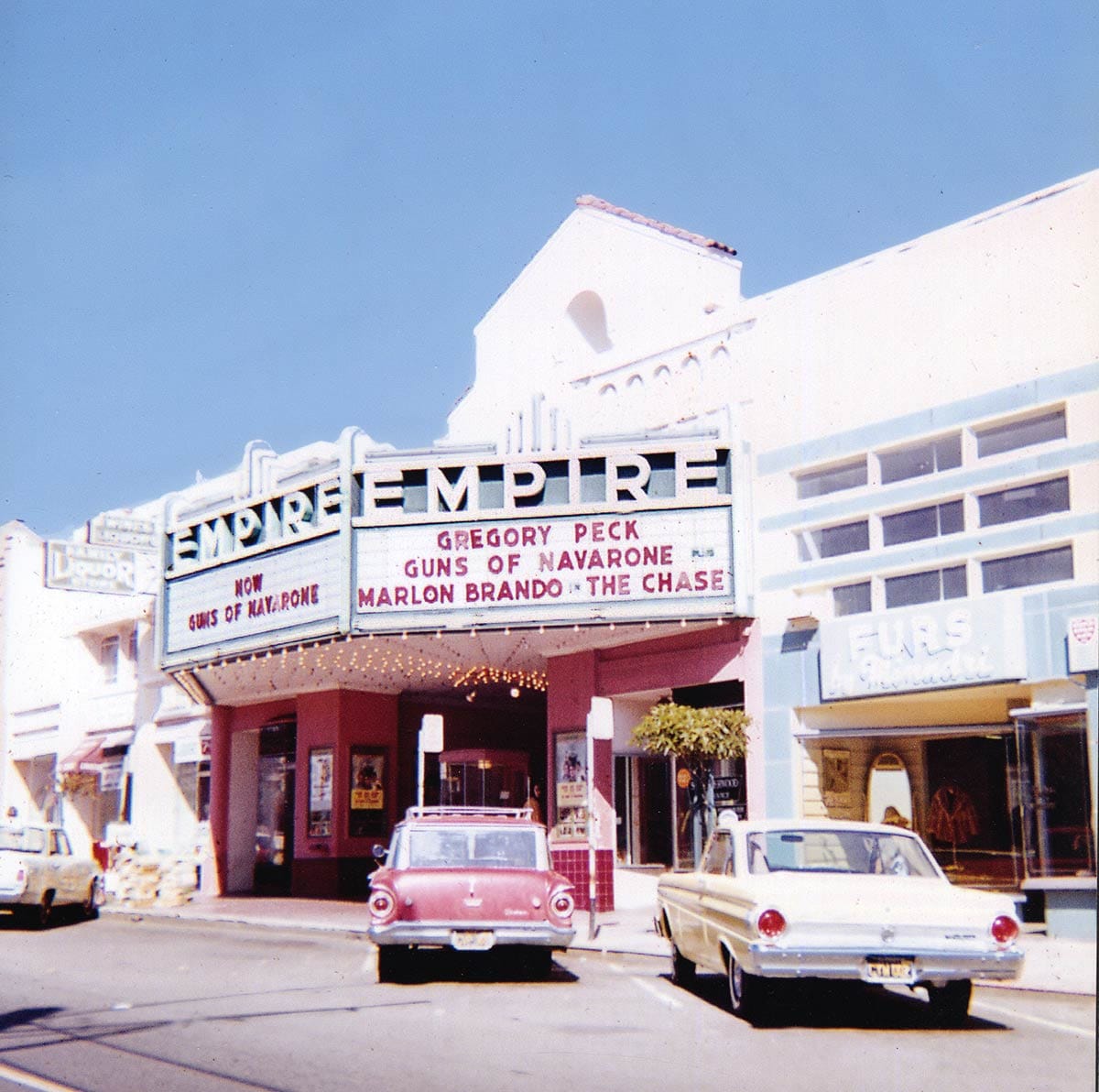
It was a hyper-local era in which people knew each other, worked together, attended the same churches and clubs: all the good and bad things about somewhat insular small-town life, but centered on one big-city avenue.
In some ways, that feeling has lasted into the 21st Century on West Portal Avenue. It is still the town square for neighbors, a tight channel of bars, cafes, restaurants, right there on the Muni lines, right there outside the schools and the branch library.
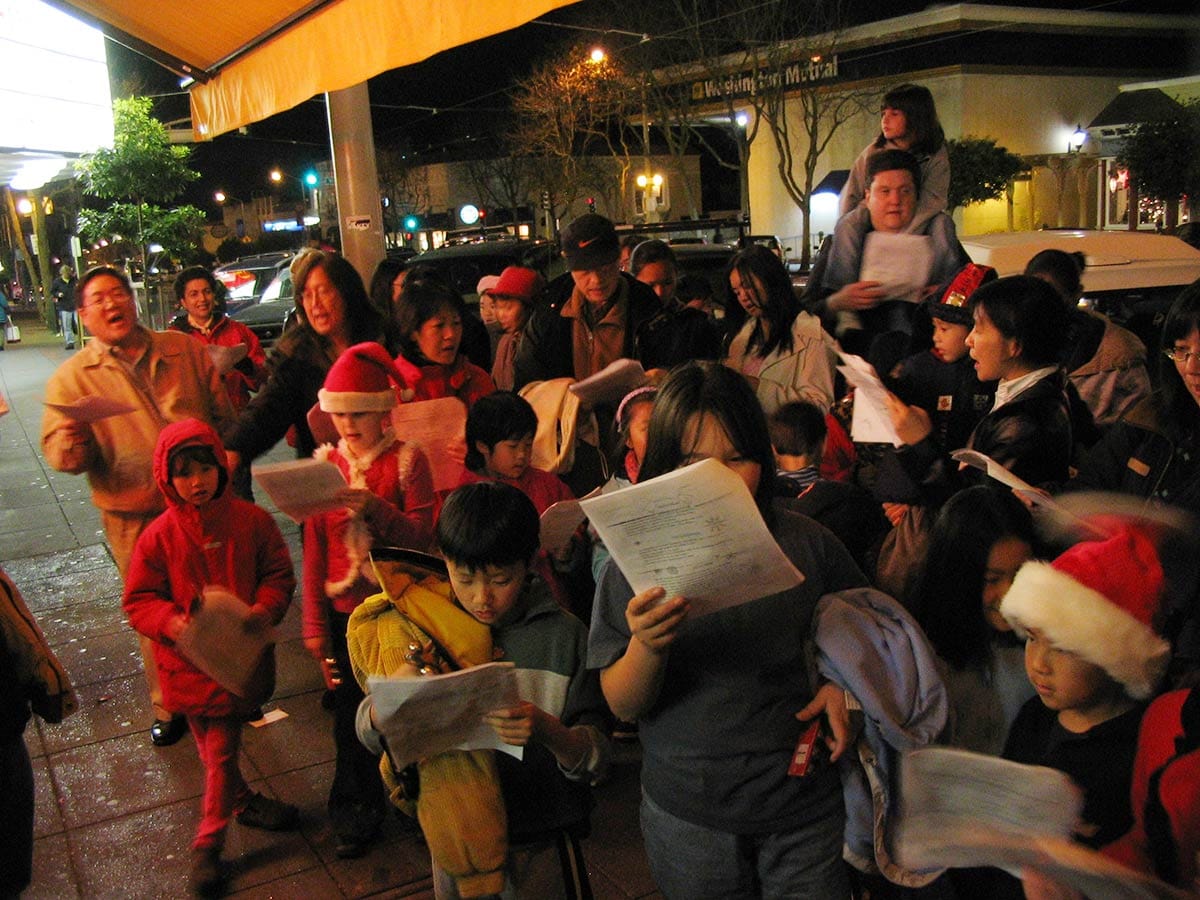
Here is my daughter and her classmates caroling to the merchants on the block in December 2004, because, well, just because...
In 1974, the Empire succumbed to the multi-screening trend and was chopped into a triplex. This was a common practice of the time for old theatres. Multiple movies with staggered show times could get more people inside on a typical day and keep the money-making popcorn-popper a-churning.
The Empire main theater was still a comfortable space until the end, but the two smaller rooms carved out of the old upper back section were narrow coal-chutes with the screens off-center.
Other people may have done better research, but for me, it was an anxious game of chance to discover if my movie was in theatres 2 or 3, knowing if it was, I’d have a stiff neck sitting 90 minutes with my head at an angle.
But it was still great.
I’m happy that in the 2000s my daughter had a version of my experience growing up in the city. We lived in the Parkside and she could walk home or grab the L-Taraval from West Portal School. Deciding to see a movie at the Empire, which by then had been bought and changed its name to CinéArts, could be a decision made 15 minutes ahead of a show time.
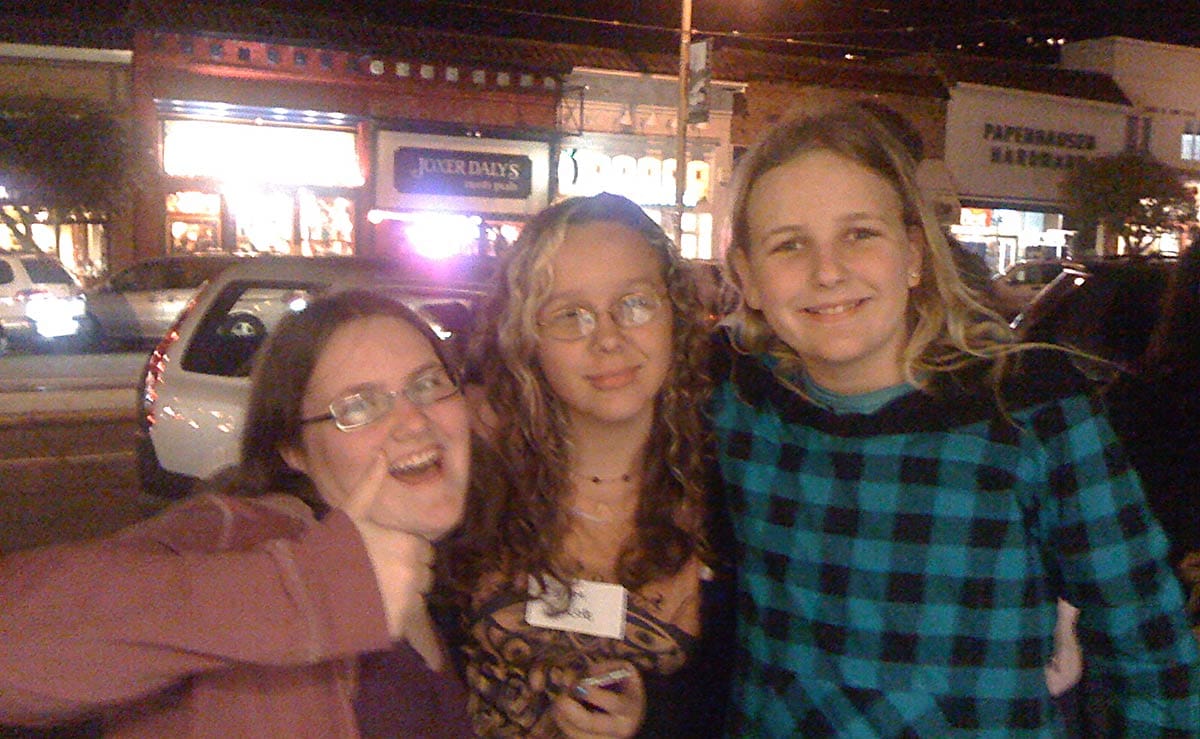
Dinner before or after was available right on the block. Browsing at Bookshop West Portal across the street had to be part of the evening or afternoon as well.
The bookshop is still doing well and, overall, the street is thriving. Primarily built out over the 1920s, the three blocks have mostly held together stylistically for a century. Few neighborhoods in San Francisco have the village feel of West Portal. Upscale and even trendy cafes and restaurants are mixing with the long-standing strollers-and-seniors vibes.
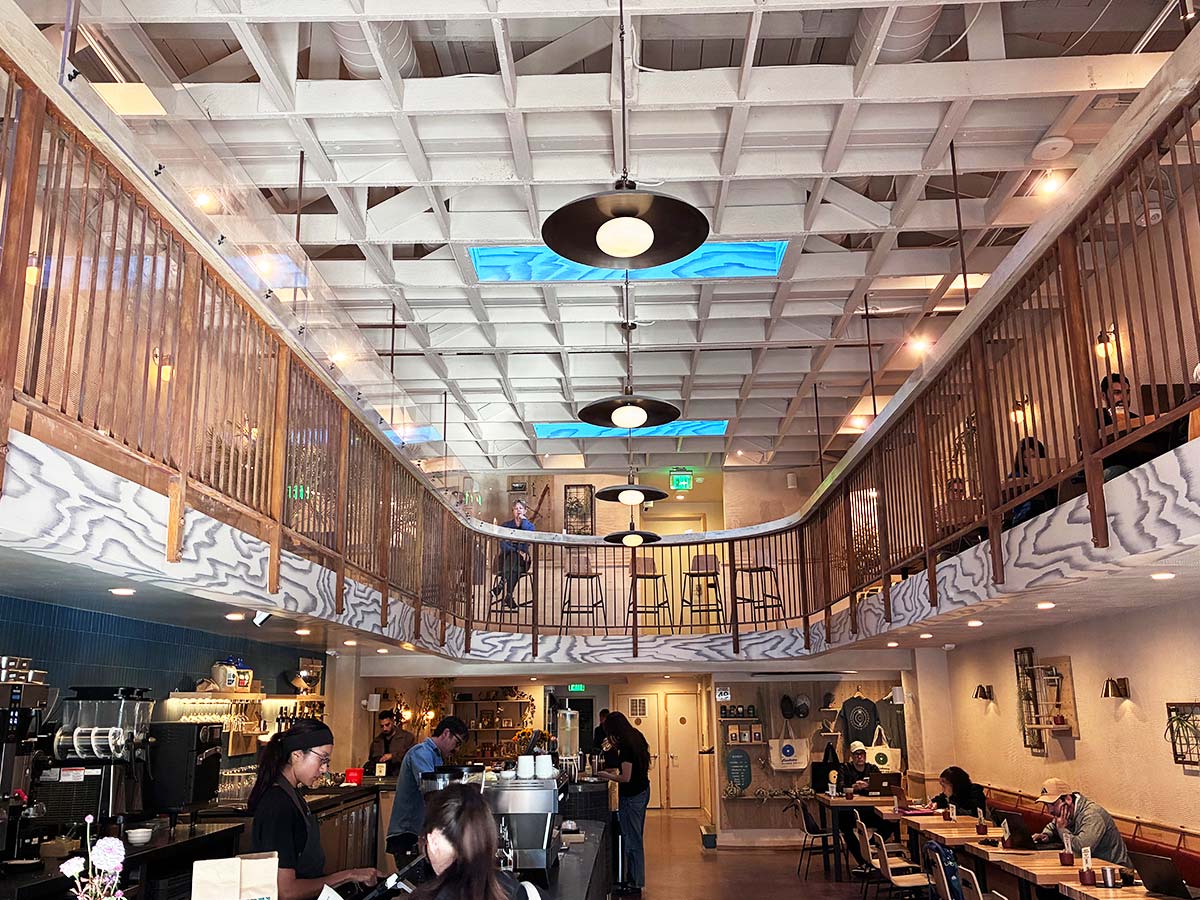
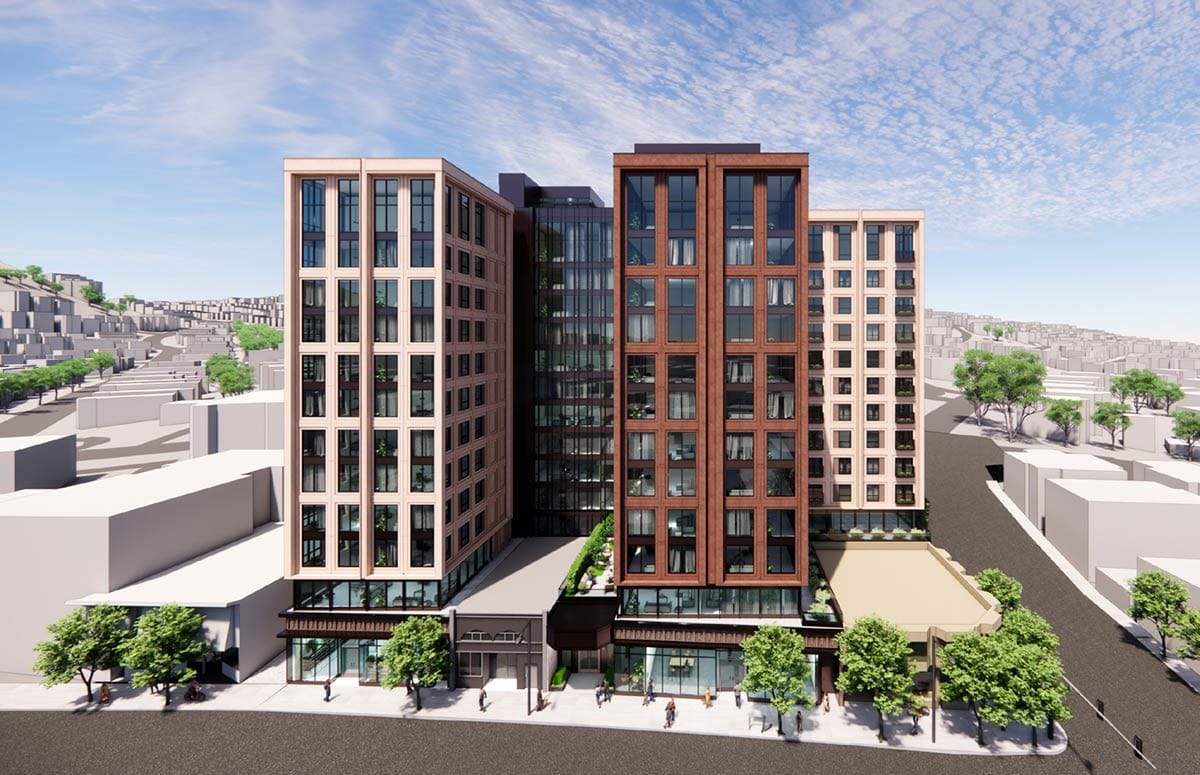
But all that, plus being on the metro line, has made the theatre property an attractive target after the city’s recent upzoning. A very large, very tall (for the area) condo building is now planned:
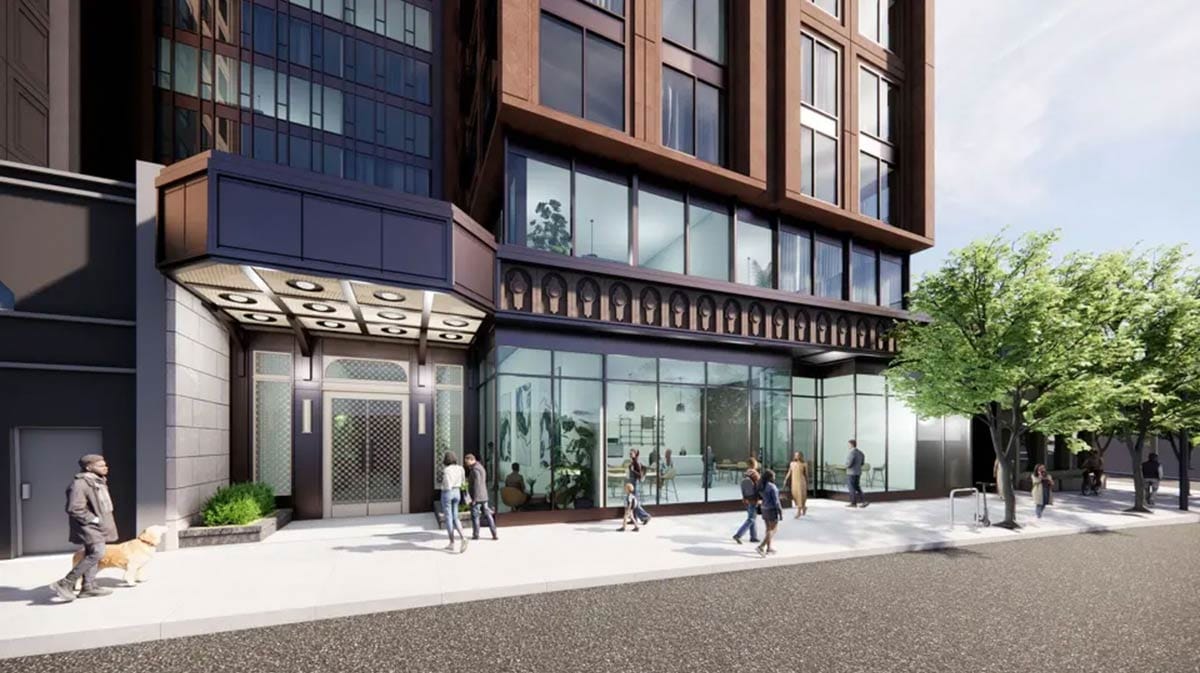
Movie-making isn’t dead, but movie theatres have long been on life-support.
I am one of the most privileged citizens of San Francisco with two operating within walking distance of my house, the 4 Star and the Balboa. The former does a lot of special programming with concerts, film appreciation events, and occasional talkers like me doing history shows; the Bal sticks mostly to showing you what’s good right now.
Join me for a show sometime? We need to keep these treasures alive and out of the obit folder.
Woody Beer and Coffee Fund
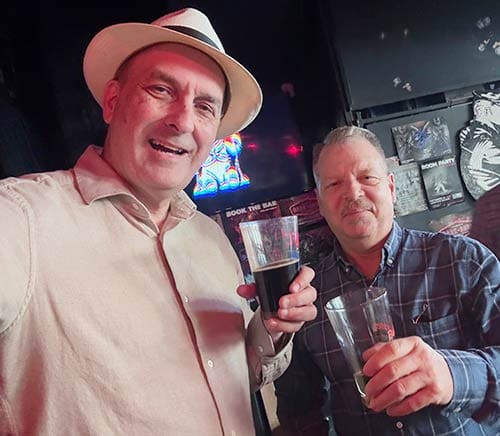
There are nicer things than meeting up with someone for conversation over coffee or a beer.
But not many.
That is why so many generous people have contributed to the Woody Beer and Coffee Fund: to get me out buying beverages for folks so we can chat. Your drink is paid for! Just let me know when you are free and we will get it on the calendar.