
The State Belt
The little railroad that once ran on San Francisco's waterfront.
More than 35 years ago, I was doing a temp job with Frisco, my brother-in-law, in a waterfront warehouse.
Some importer-exporter’s sacks of bee pollen had been infested with beetles. The pollen had been fumigated, but there was the matter of the beetle carcasses to deal with before the yellow fluffy balls could be packed into medicinal white plastic bottles and sold for five bucks an ounce at hippie health-food stores.
Our boss rigged up a sifter—essentially a wooden frame of chicken-wire with handles. For a couple of weeks Frisco and I poured burlap bags of pollen onto the wire screen and shook the fuzz into clean plastic bags while listening to KFOG. Dave Morey’s “Ten at Ten” show was the highlight of our mornings.
The screen didn’t catch many beetle bodies.
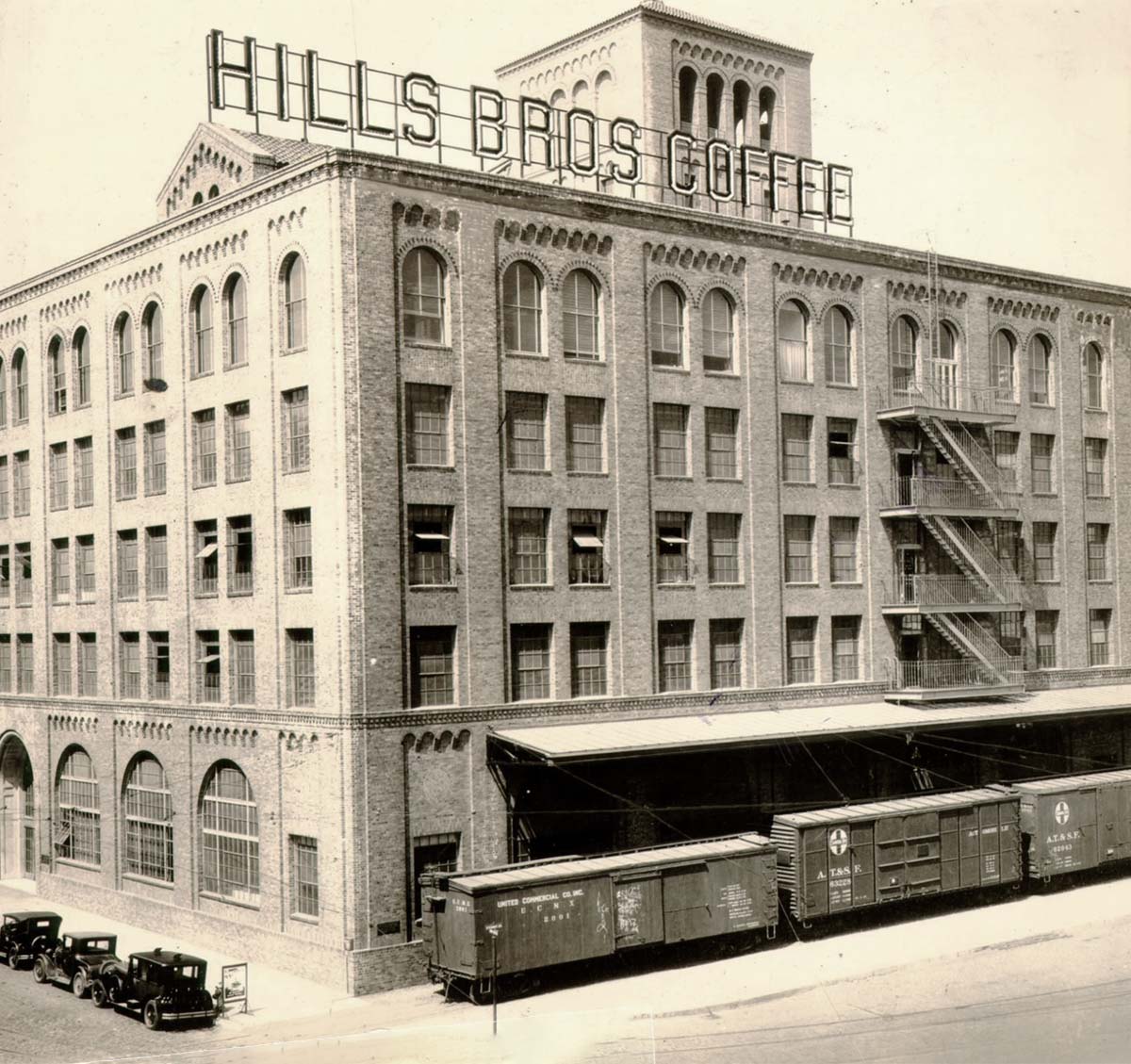
But the building was cool. Brick, it had enormous doors along a railroad track siding. In the street, encased in old heavy paving stones, you could still see old rails here and there.
Temp jobs, like travel, can broaden a person. From the bee-pollen gig I acquired a general suspicion of healthcare supplements and an interest in old warehouses.
Choo-Choo
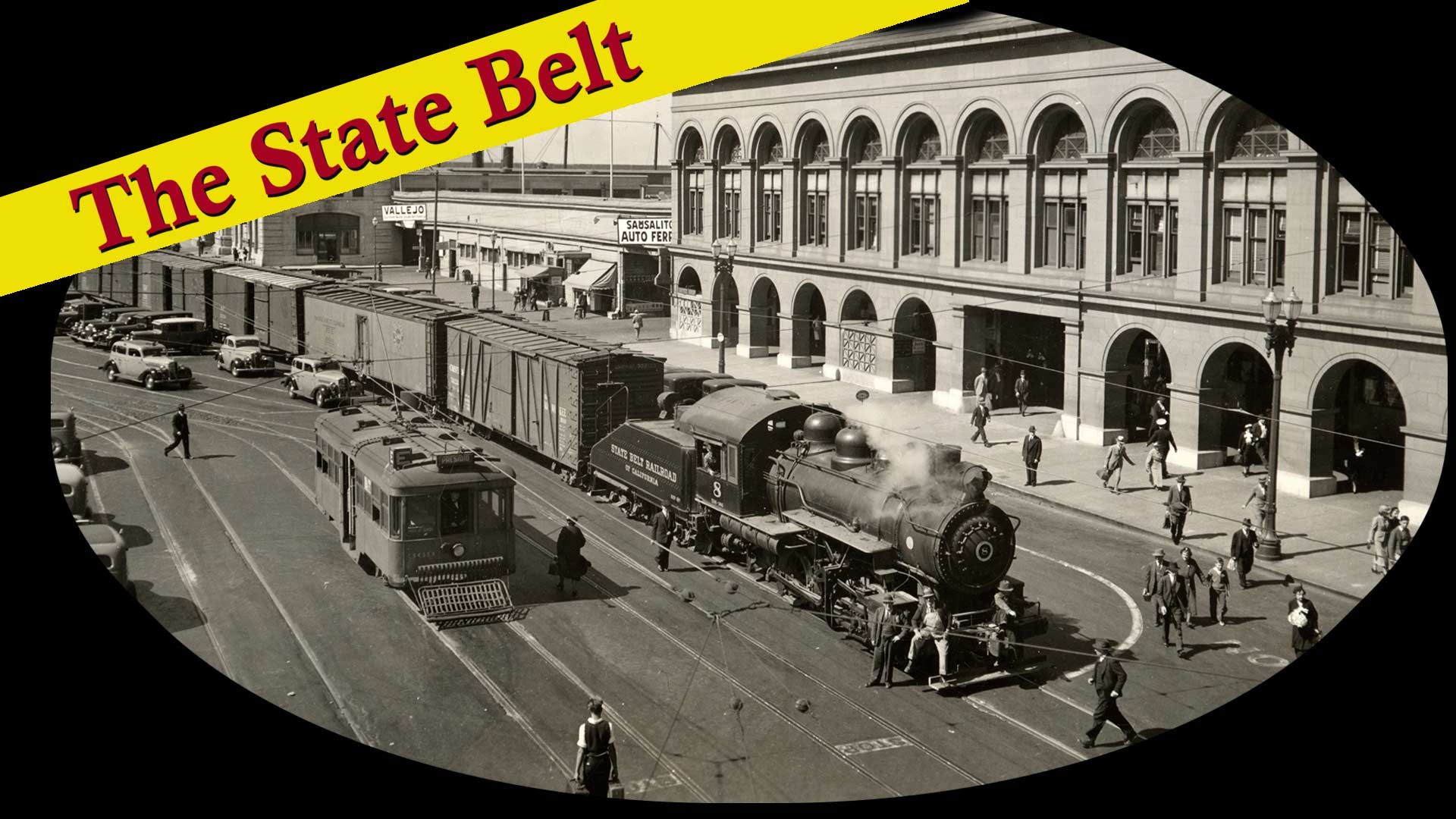
The warehouse siding once connected to a three-mile waterfront railroad line, the State Belt of California.
In its glory years the little train ran from the Presidio to the southern waterfront, carrying everything from coal to coffee to men headed off to war.
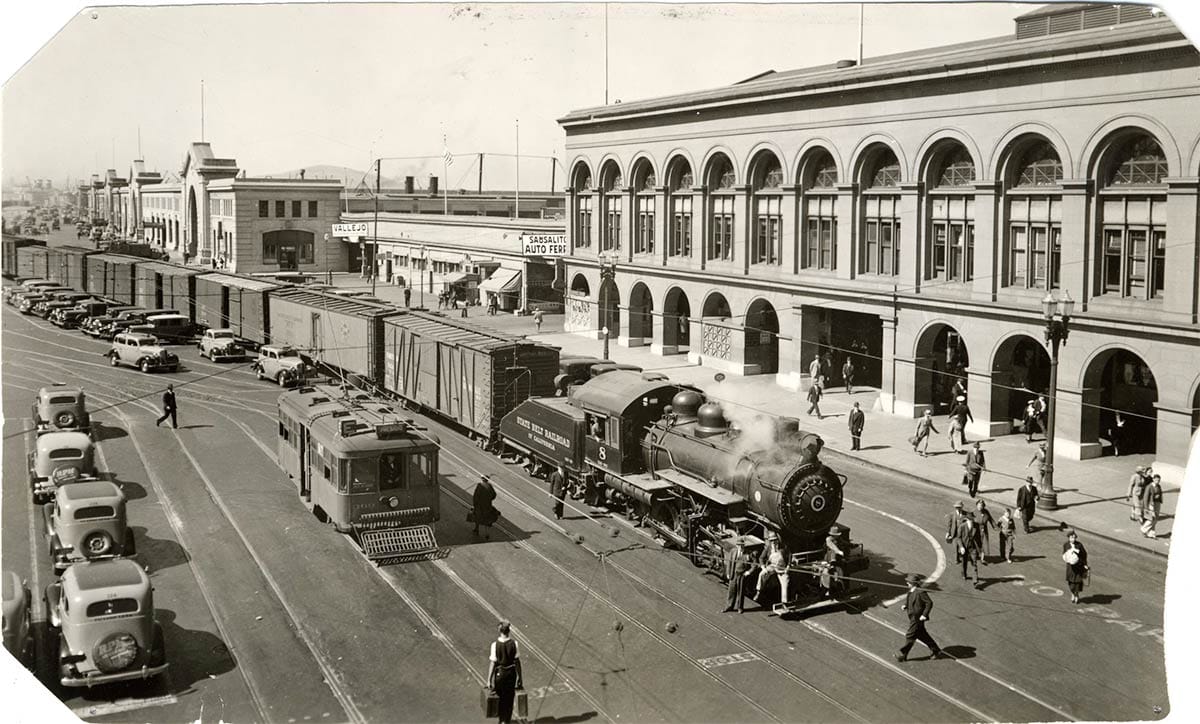
Back when the city had a true working port, the state-run short line offered the essential service of moving rail cars from ships at piers to rail yards or to company warehouses along San Francisco’s waterfront where the contents were processed, prepared, and/or disseminated.
The State of California owned and managed operations of San Francisco’s port from the 1860s until 1969, when the city’s Port Commission was created. While plans to have a port railroad dated back to the early 1870s, it wasn’t until the 1890s and the construction of a proper seawall that the state got its little line going.
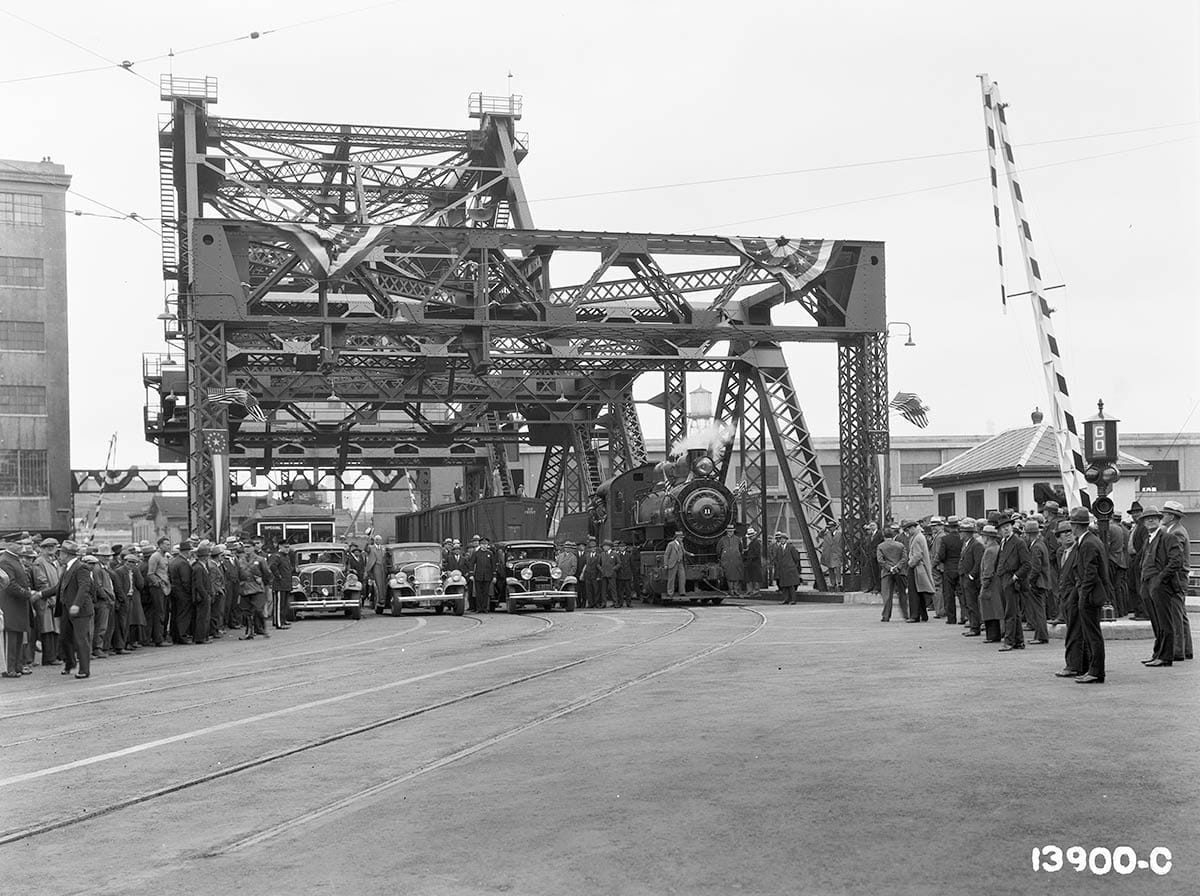
Rail cars barged or ferried over from the East Bay or Marin hooked up to one of the State Belt’s little engines at a pier and the basic job was to chug the cars to the big-trunk rail lines, storage yards, or warehouses.
The State Board of Harbor Commissioners weren’t so much into making money off the line—its existence was an important benefit to pier renters and to facilitate commerce. In the early days moves would cost companies 50 to 75 cents per car per move.
The State Belt smoked along a busy waterfront shared by electric streetcars, trucks, taxi-cabs, workers, and commuters headed to and from ferry boats.
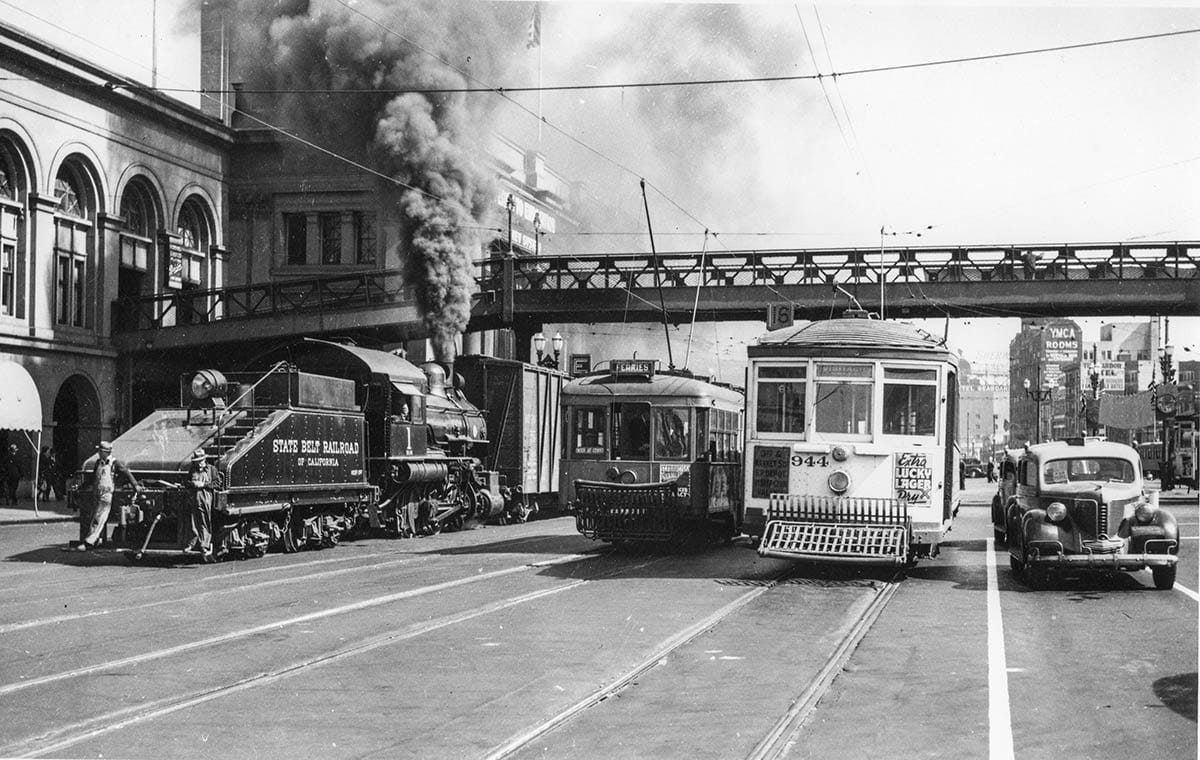
After the 1906 San Francisco earthquake and fire, the line was extended and rebuilt with heavier rail and its coal-fired engines shifted to oil. The State Belt handled move than 50,000 car movements a year during the city’s reconstruction era.
While the locomotives of the little “fetch-and-carry-line” would travel more than 70,000 miles a year, they would never be more than five miles from their roundhouse.
The State Belt’s former roundhouse, machine shop, and parts shed still stands as a very strange office building at the intersection of Sansome and Chestnut streets and the Embarcadero across from Piers 27 and 29.
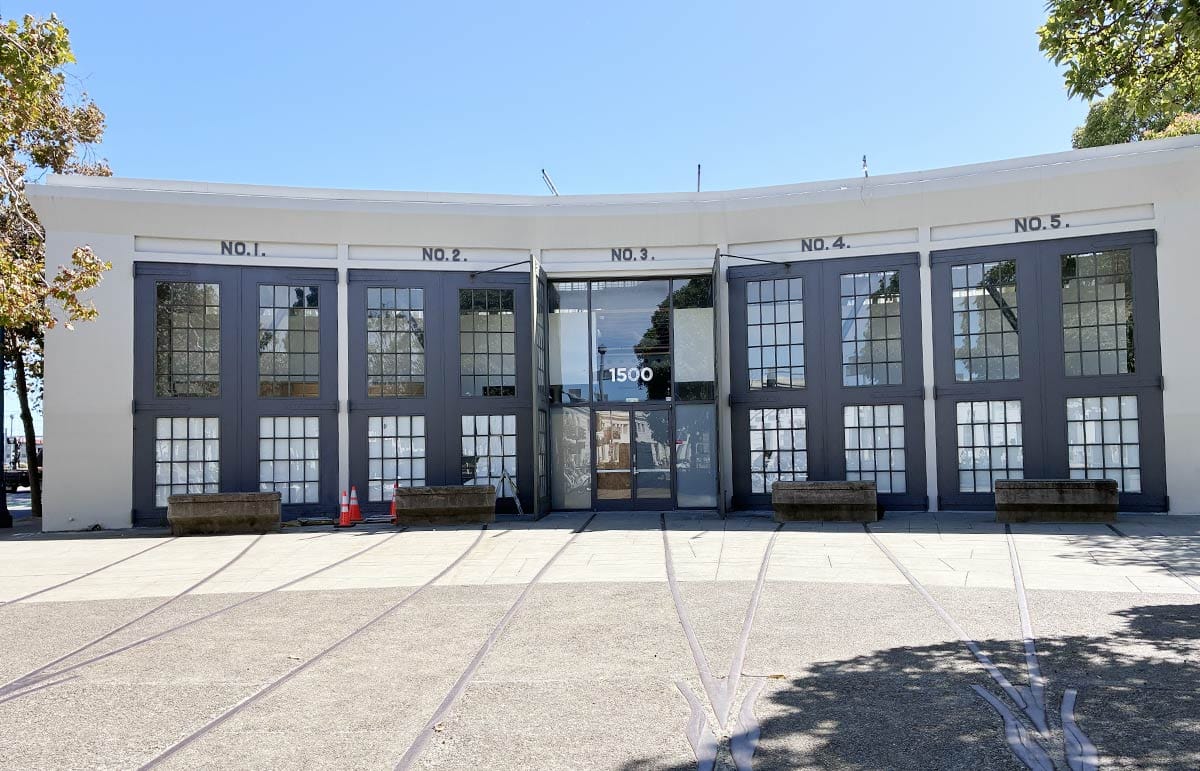
Unlike a true roundhouse, the facility never had a turntable. Setting the tracks at eight degrees on an angular lot was enough to give the little engines room to get in and out of storage.
In the 1910s, the State Belt line was extended north to Fort Mason to access the U.S. Army’s embarkation and transport docks and to help with construction (and demolition) of San Francisco’s 1915 Panama-Pacific International Exposition in today’s Marina District.
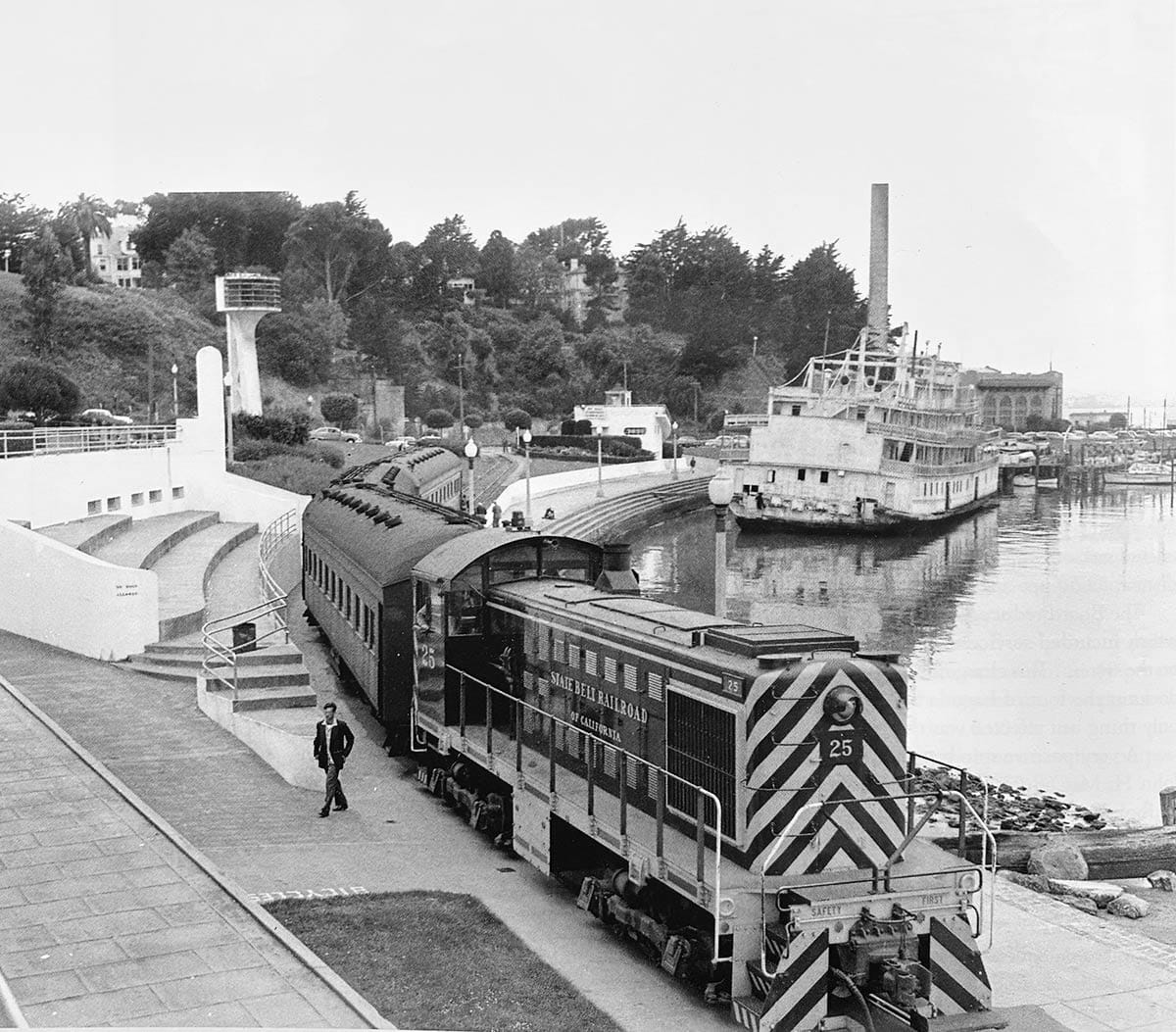
The extension required a trestle constructed across the cove in front of today’s Aquatic Park and a tunnel dug through Black Point.
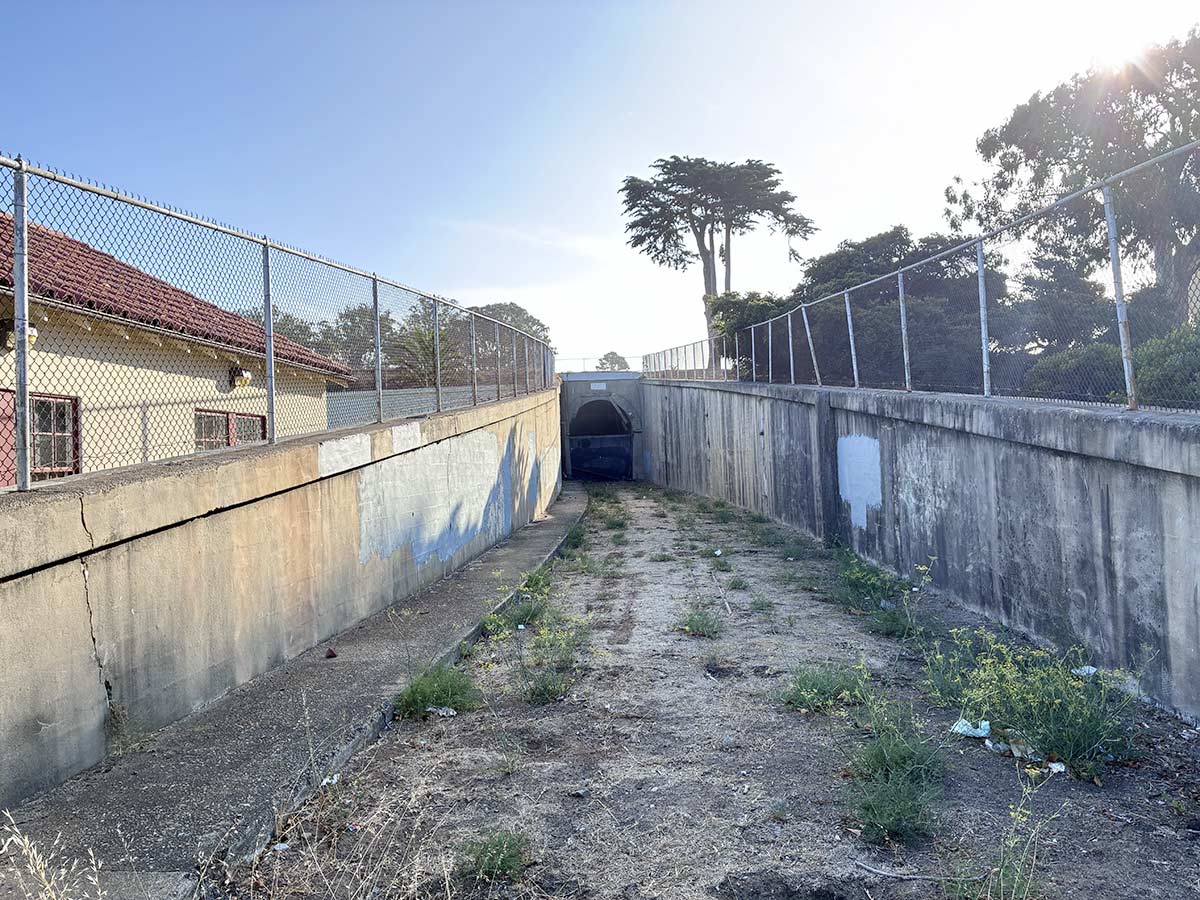
During World War I, the line was extended to the Presidio. Troop trains arriving on the transcontinental lines at Townsend Street (where Caltrain is today) could be delivered to the Presidio via the State Belt in just 20 minutes.
(During the 1976 Bicentennial my class visited the “Freedom Train” parked on those same Presidio tracks next to Crissy Field.)
Unlike with the Old Main Line I wrote last year, there are likely many San Franciscans who remember trains running around the Embarcadero, Fisherman’s Wharf, and the Central Waterfront.
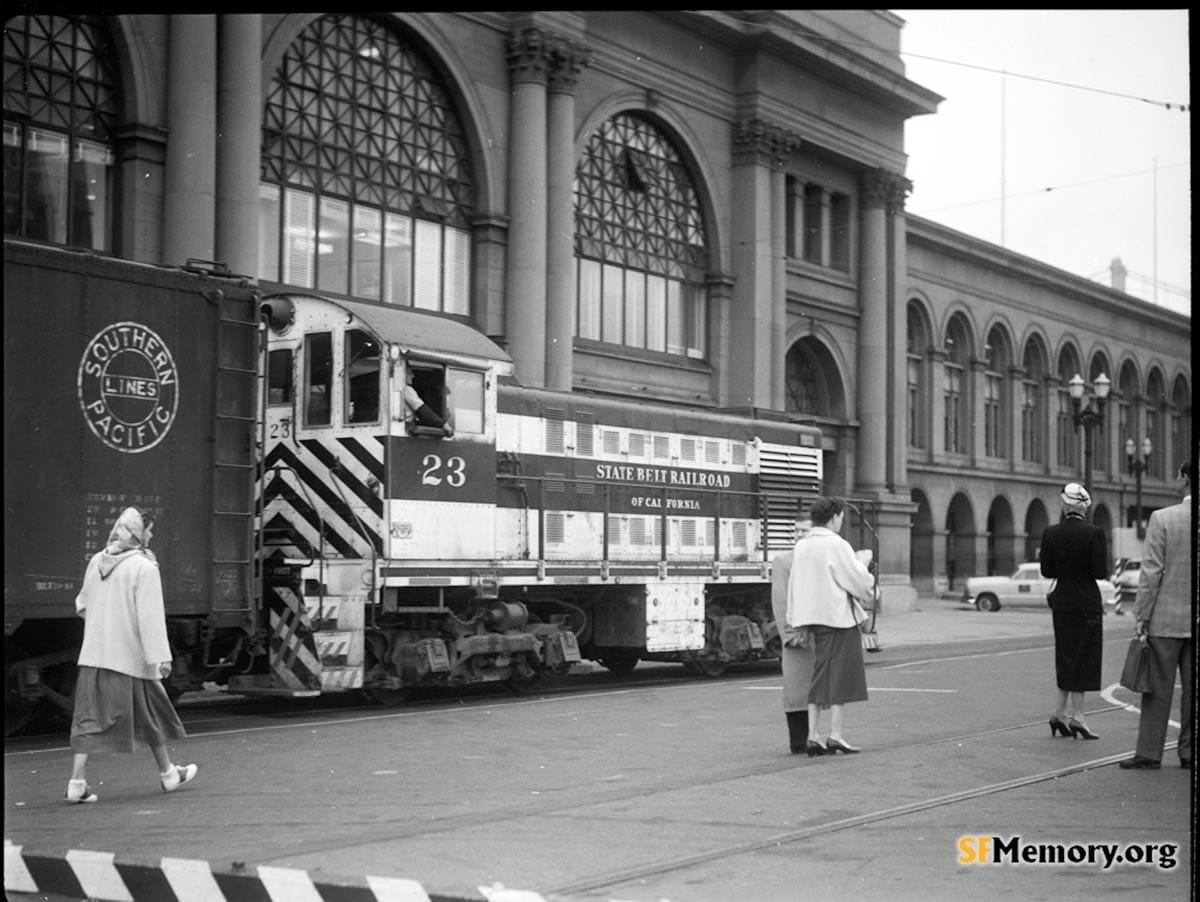
The rise of containerization and the fall of San Francisco’s status as a working port to places like Oakland greatly diminished the State Belt’s usefulness after World War II, but there were still runs made into the early 21st century.
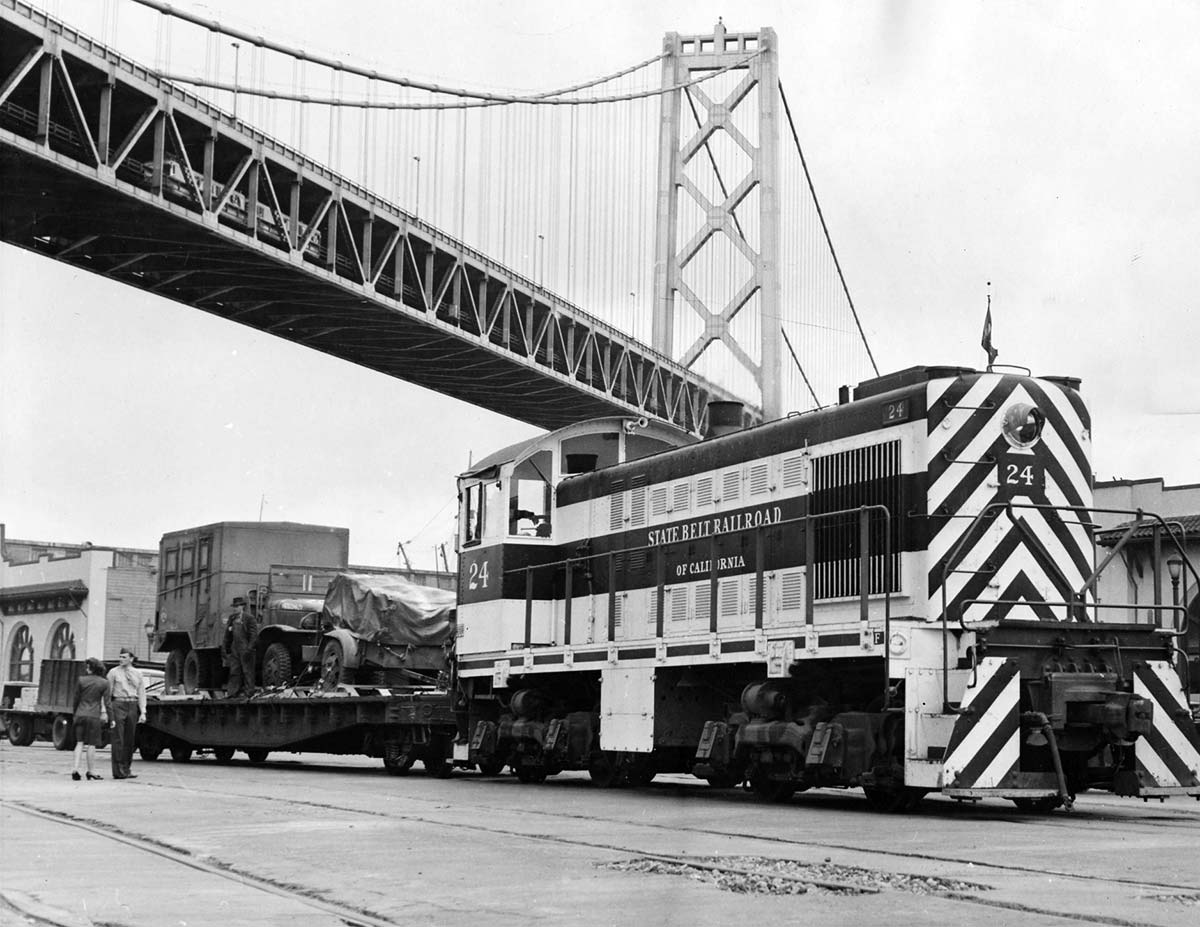
In 1973, the port signed a lease with a private operator to handle what decreasing rail car moves were needed on the waterfront. Traffic fell to almost nothing when the city undertook a massive renewal of the Embarcadero in the 1990s and pulled up a lot of the State Belt tracks for the rails of the popular F-line of historic streetcars to Fisherman’s Wharf.
(There have been dreams to extend the F-line through the old State Belt Tunnel from Aquatic Park to Fort Mason. I hear in the meantime a light-show-art-installation is in the works at the western mouth? Someone may know more.)
In addition to the tunnel, the roundhouse, the artifact right-of-ways, the orphaned spur rails and the obsolete warehouse sidings which intrigued me in my bee-pollen days, the last and best reminders of the State Belt stand south of Pier 90.
At India Basin, former State Belt engines can be seen through the fence along Cargo Way.
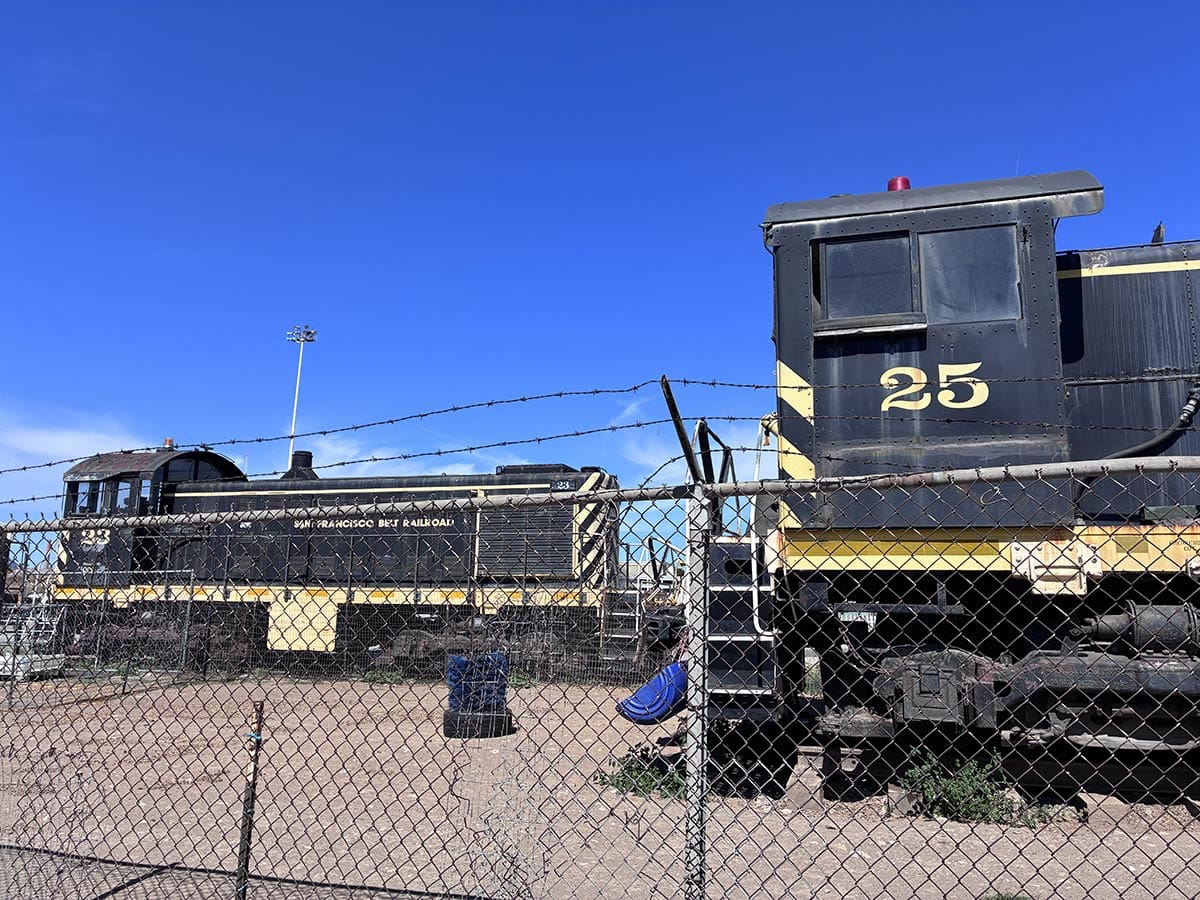
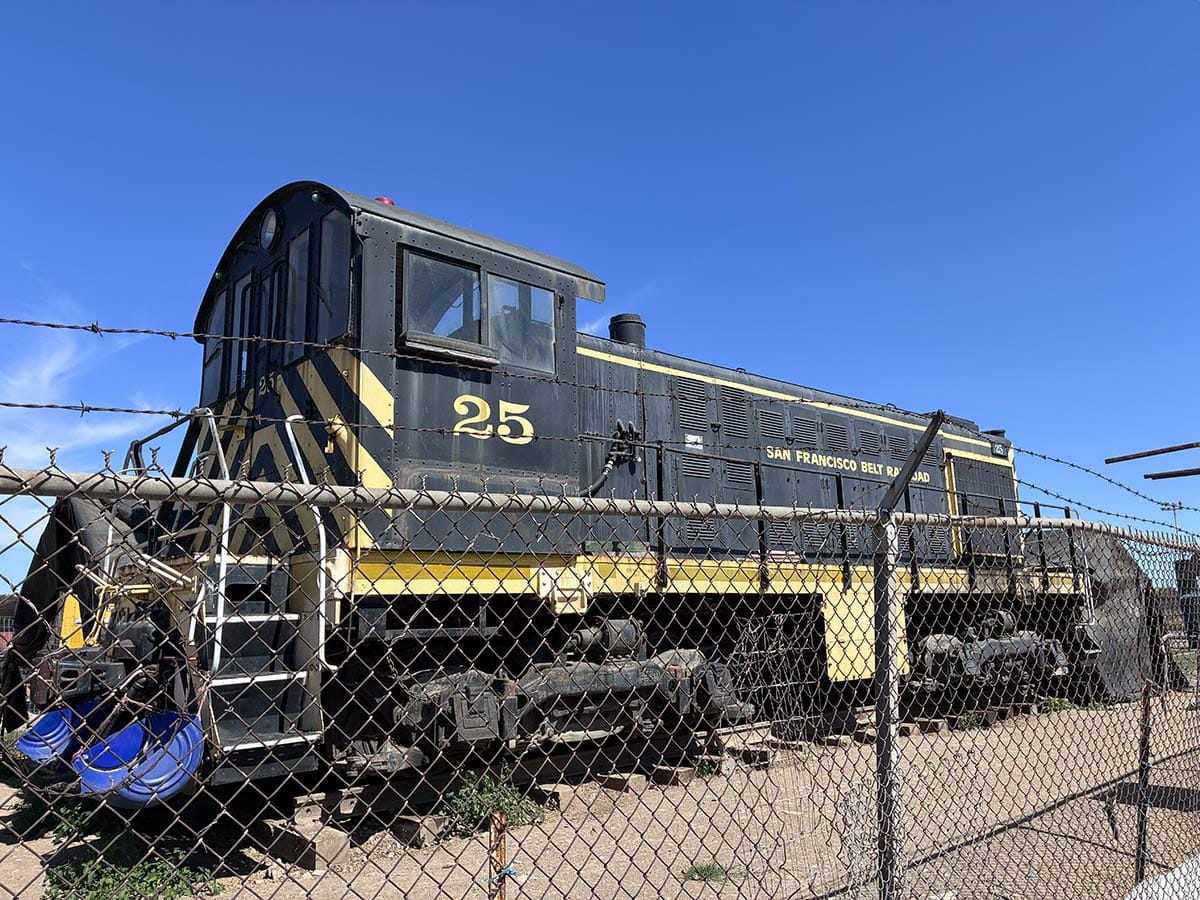
Engines number 23 and 25 are propped up behind the native plant nursery at Heron’s Head Park, sharing yard space with a herd of goats.
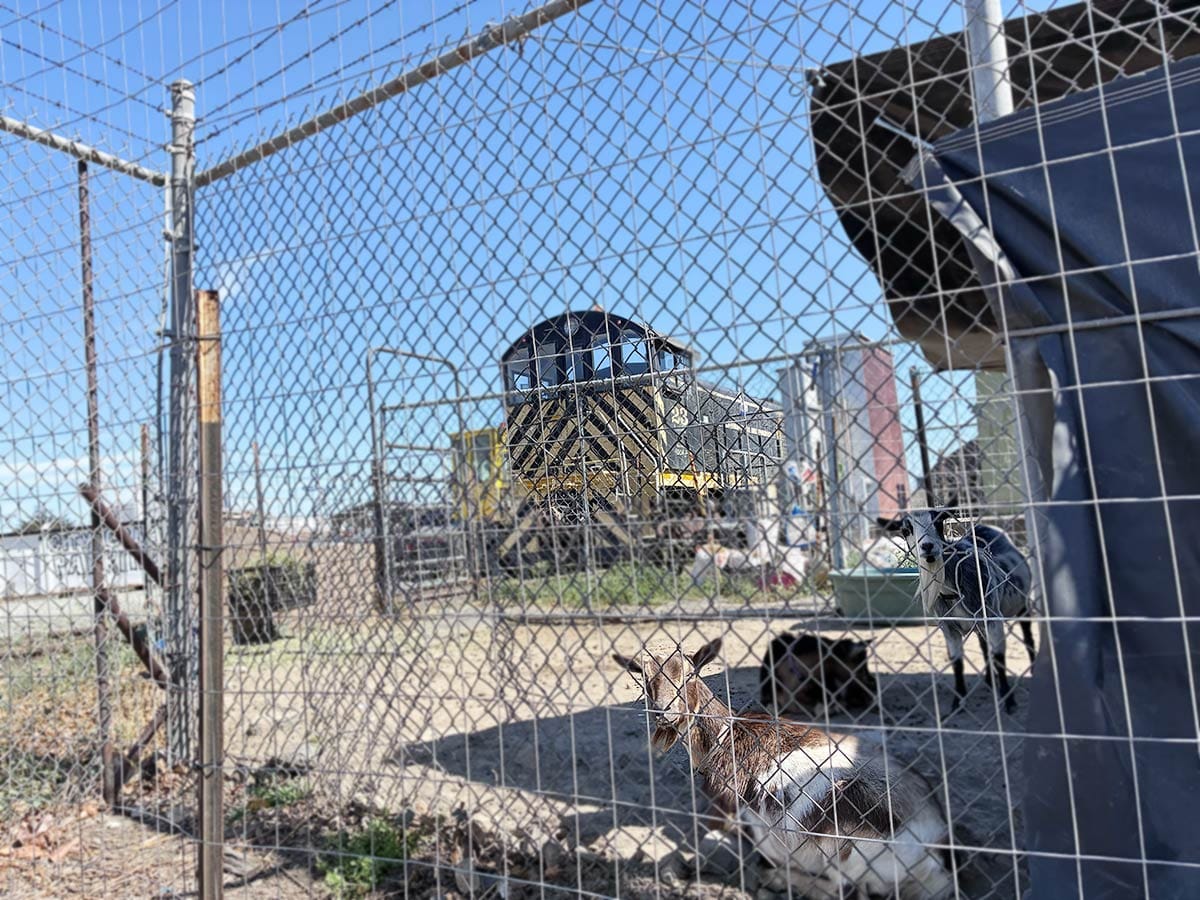
These old locos were most recently used to shuttle contaminated soil full of arsenic, lead, and other nasty leftover chemicals from city construction jobs to main trunk lines. Those trains took the toxic dirt to sites in Utah and Wyoming where it was safely dumped.
Probably safely dumped.
Like with bee pollen, sometimes it is better not to know too much.
You want more? There’s a gentlemen building a model of the State Belt in his basement in Minnesota and you can see shots of the State Belt in the movie Thieves’ Highway.
Woody Beer and Coffee Fund
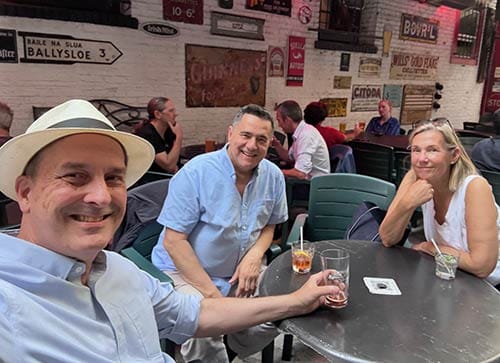
Nice weather for a beverage with a guy in a hat, right? Generous people like Tom G. (F.O.W.) have already donated to the Woody Beer and Coffee Fund to pay for our libations. The hard part is only the scheduling.
Let me know when you are free!
Sources
William H. and Michelle S. Kaufman, The State Belt: San Francisco’s Waterfront Railroad (Wilton, California: Signature Press, 2013)