
Earthquake Dog
The terrier who survived both a unique San Francisco tragedy and a sadly common American one.

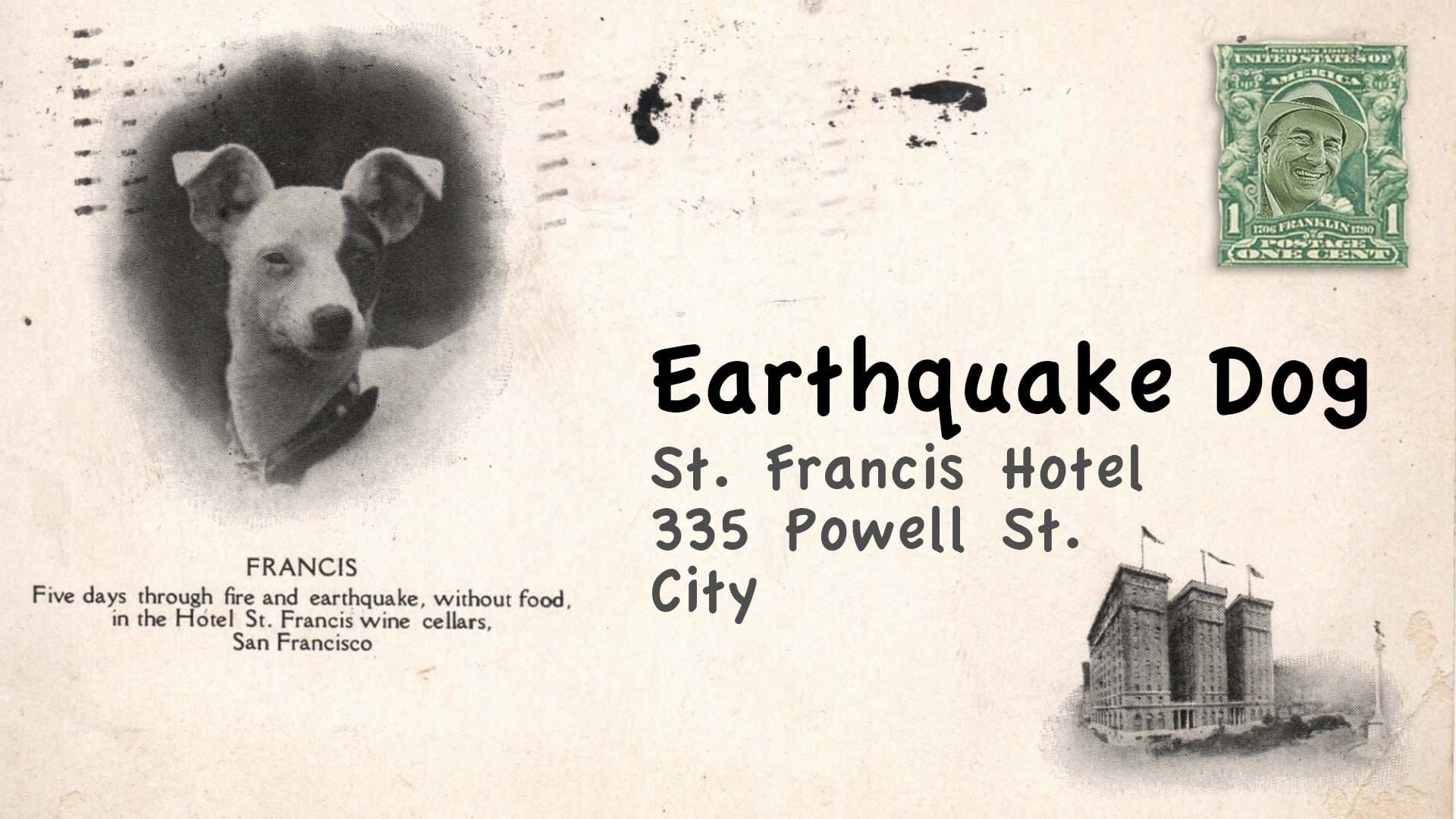
After being violently shaken awake by the 5:12 am earthquake of April 18, 1906, photographer Arnold Genthe found his attic studio covered in mounds of plaster and chimney brick.
Outside assessing the damage in the streets, Genthe ran into a couple of friends. The three decided they were hungry.
“[We] went to the St. Francis Hotel which had not been damaged. […] Inside the hotel, people in all kinds of attire from evening clothes to nightgowns went milling about. There was no gas or electricity, but somehow hot coffee was available which, with bread and butter and fruit, made a satisfying breakfast.”
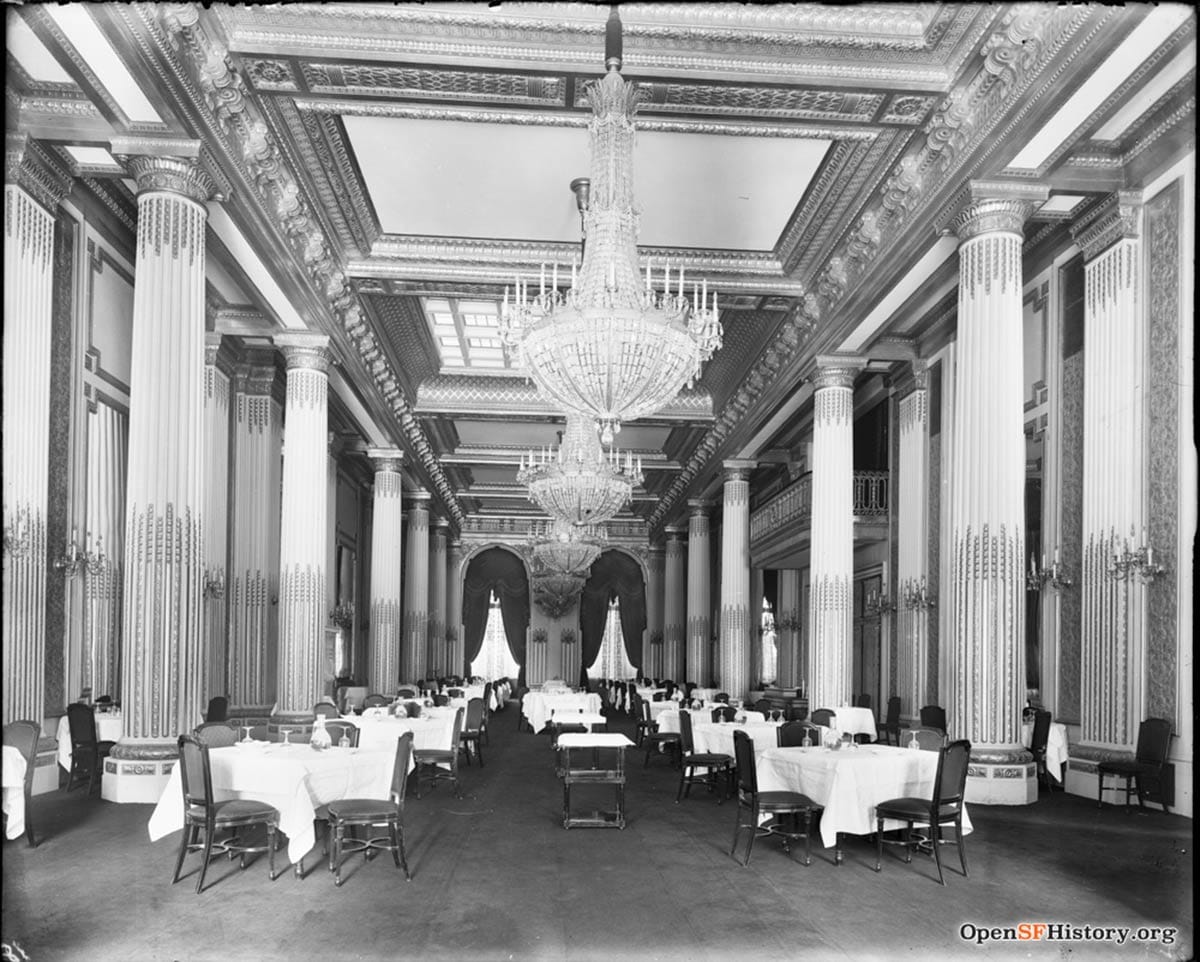
James Hall, the keeper of the St. Francis Hotel’s wine cellar, was likely there checking on his earthquake-shaken stock. He kept a dog as a work companion, a female fox terrier, whom he often left chained with the wine inside a locked wire cage while he was out on other duties.
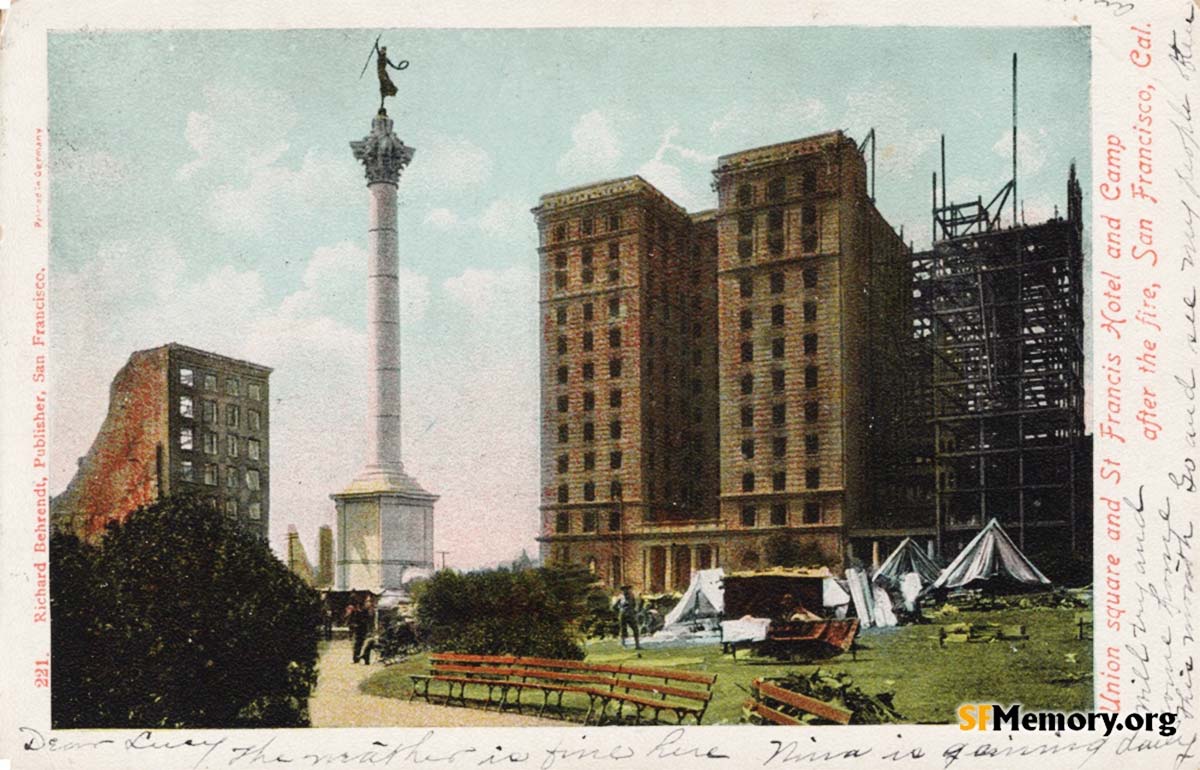
At the jumbled but standing St. Francis, which was in the middle of getting a northside addition when the quake struck, there were many other duties to deal with that morning.
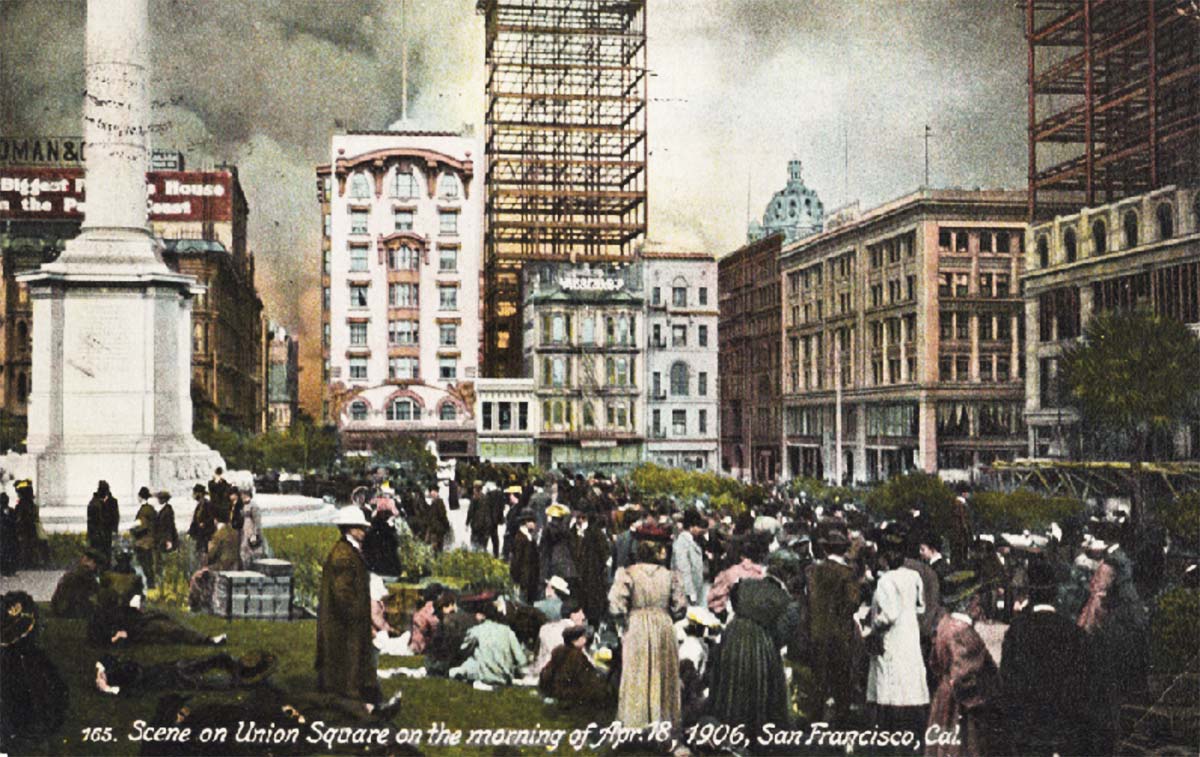
The earthquake had started fires near the Embarcadero and south of Market street. By midday, a maelstrom was headed west. Genthe, with his belly of breakfast from the St. Francis, hiked blithely around town taking photos.
“So many whom I met during the day seemed completely unconscious that the fire which was spreading through the city was bound to overtake their own homes and possessions. I know that this was so with me.”
The Army dynamited blocks to create fire breaks. Genthe’s home was on one and by evening he found himself left with nothing in the world but the camera he carried and the clothes on his back.
Despite the Army’s efforts, by dusk it looked bad for the St. Francis Hotel.
The simple coffee and fruit served in the morning must have seemed like ambrosia from a golden age as the fire and smoke moved in. Guests hurried to pack their bags. Clerks, bellboys, and management rushed to evacuate the two-year-old hotel.
At midnight, the last of the employees retreated from the inferno licking at the steel-framed building.
Too late, James Hall remembered his dog.
Survivor
In the rush to escape the flames, no one had remembered the little dog chained downstairs in the wine cellar. Now no one could get close. The St. Francis Hotel was consumed in the early hours of April 19, 1906.
After the fire passed on to eat blocks farther west and south. James Hall tried to check on his pet, but the ruins remained too hot for any exploration.
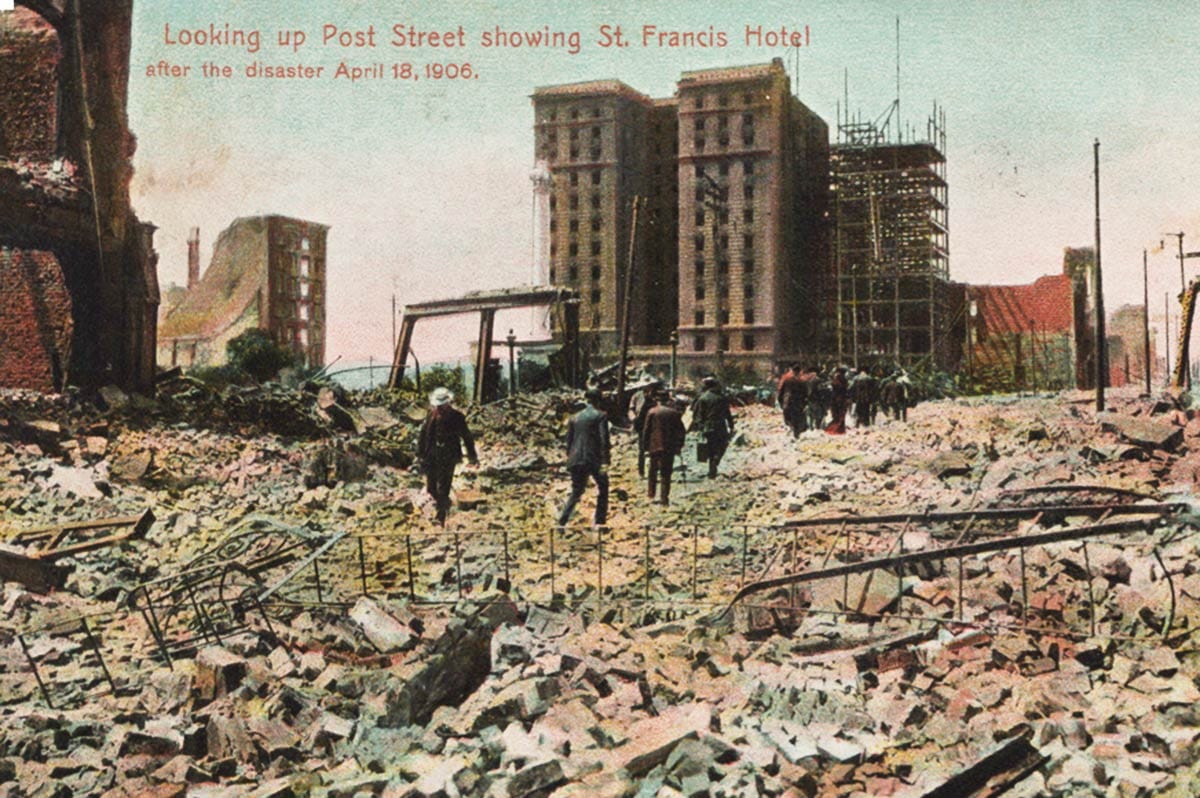
Finally, five days after the fire, it was safe enough for the St. Francis employees to return. Hall went to his wire-caged wine room.
Under some basement machinery was his dog. Around her were the bodies of cats, rats, and mice. The Examiner theorized they had sheltered together from the peril and at the end even shared a strong “bond of friendship” before all perished in the heat and smoke.
All, that is, except Hall’s dog. She was weak from hunger and thirst, but alive.
He carried her out to Union Square park where hotel employees surrounded, comforted, and praised the survivor. Hall nursed the terrier back to health over the next weeks and the story of her resilience and survival was embraced and celebrated by the hotel and the city at large.
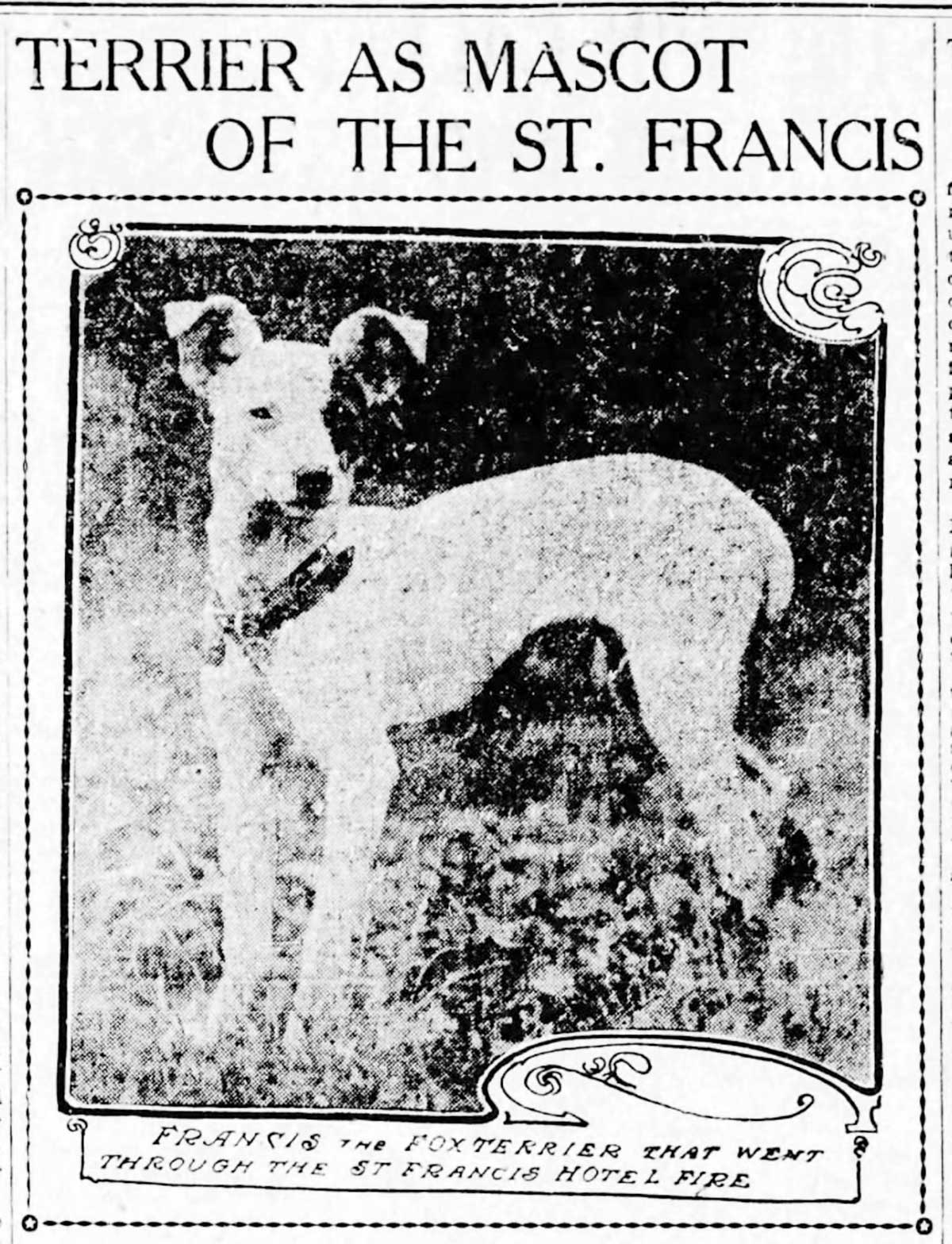
The wife of the hotel manager, James Woods, adopted the dog from Hall, renamed her Francis, and promised she would be “clothed with the dignity of the hotel’s mascot.”
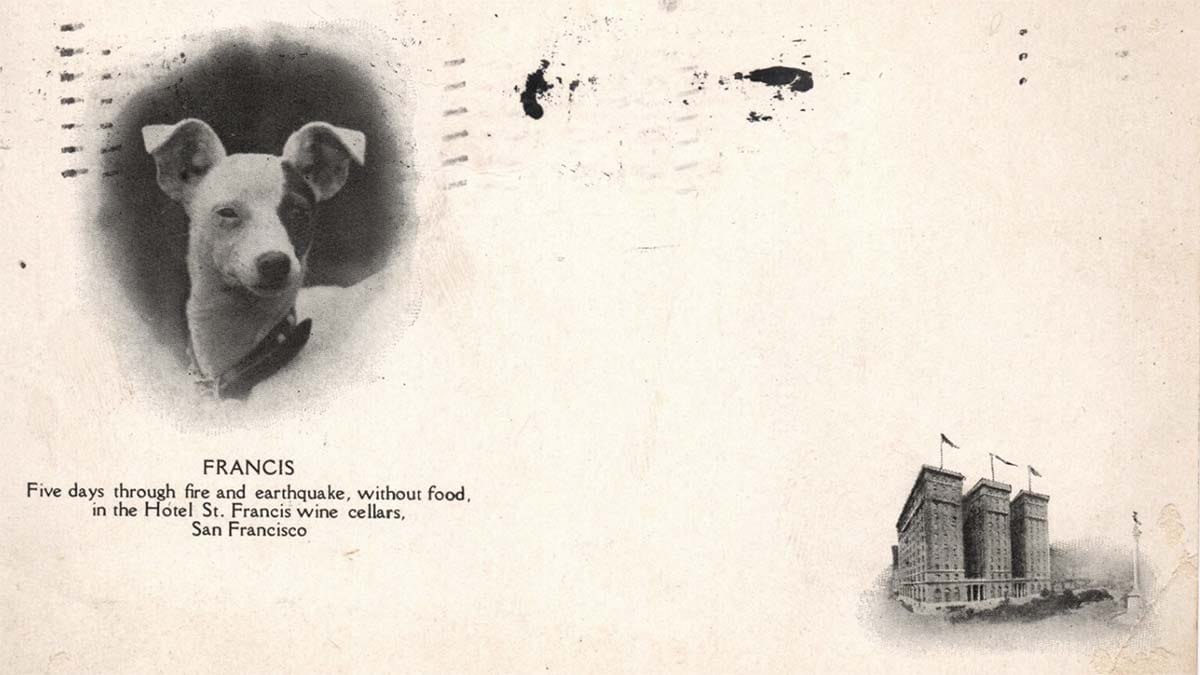
Francis’s image adorned a booklet about the hotel and she even got her own souvenir postcard:
It’s still a good story, especially for a city that features a phoenix on its official seal and flag. We can face great trials and disaster and come through on the other side “clothed with dignity.”
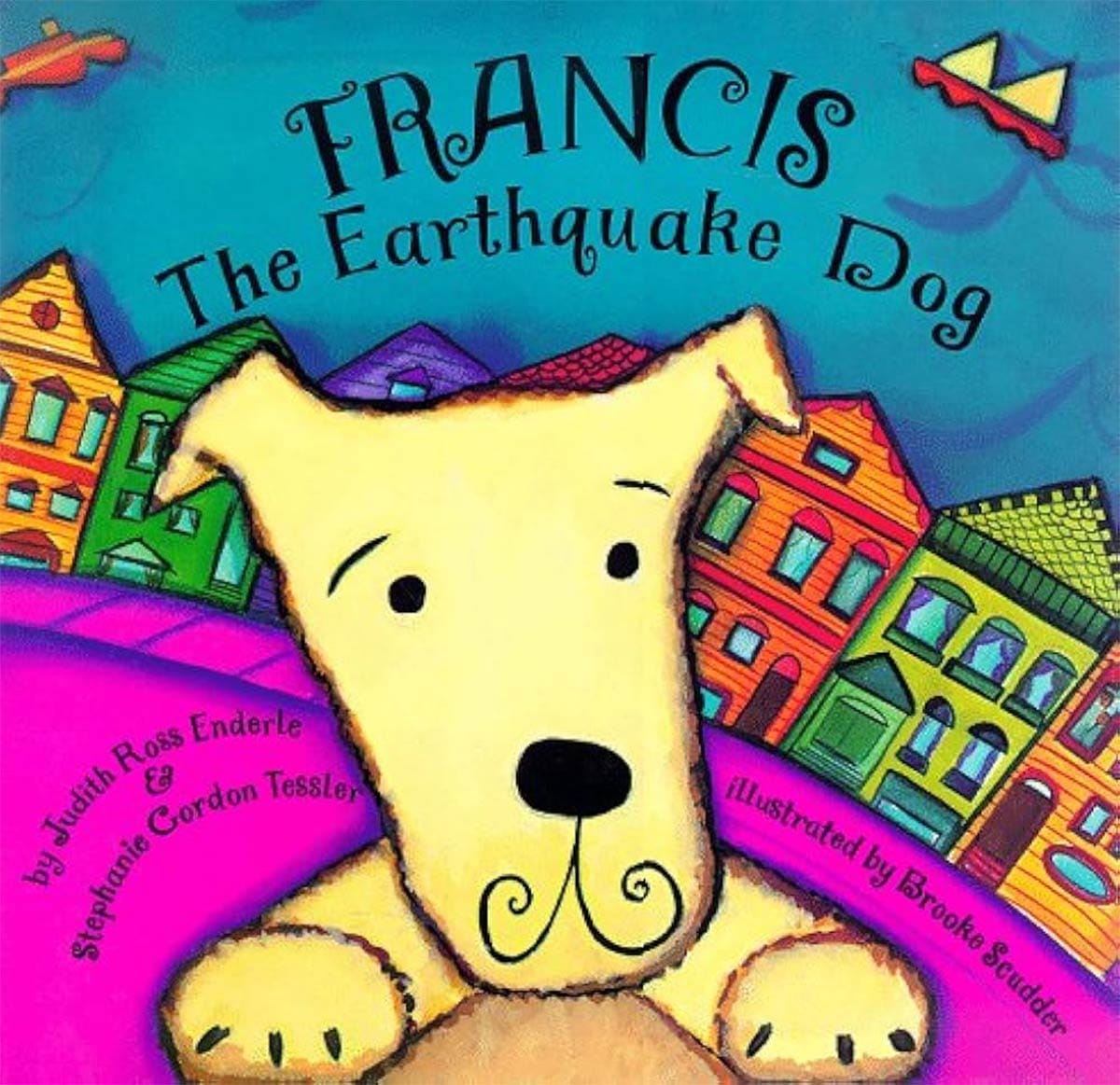
A children’s book about Francis has been written:
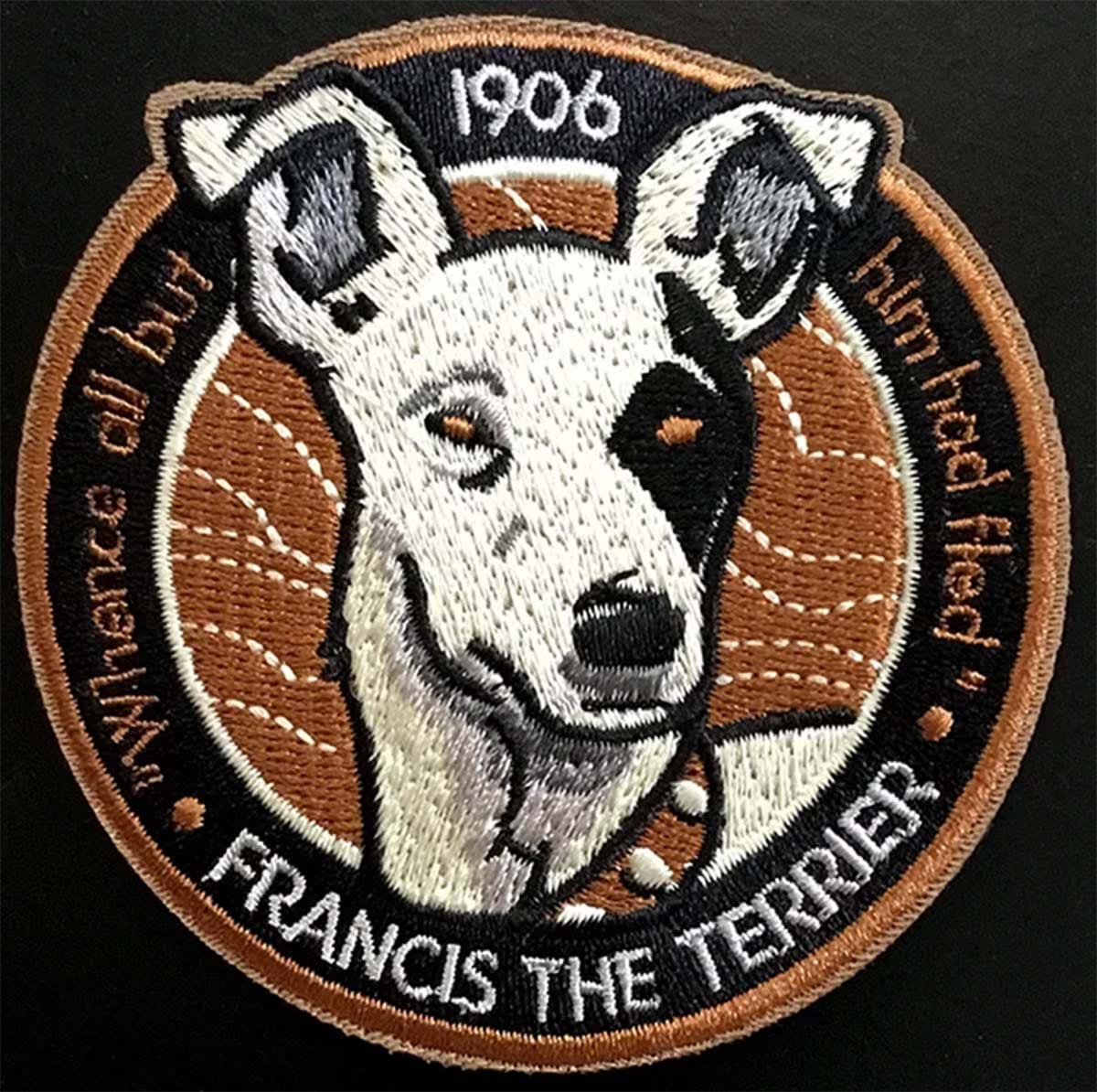
Joshua Ellingson made a cool patch emblazoned with the celebrated earthquake dog, but I don’t think there are any left...
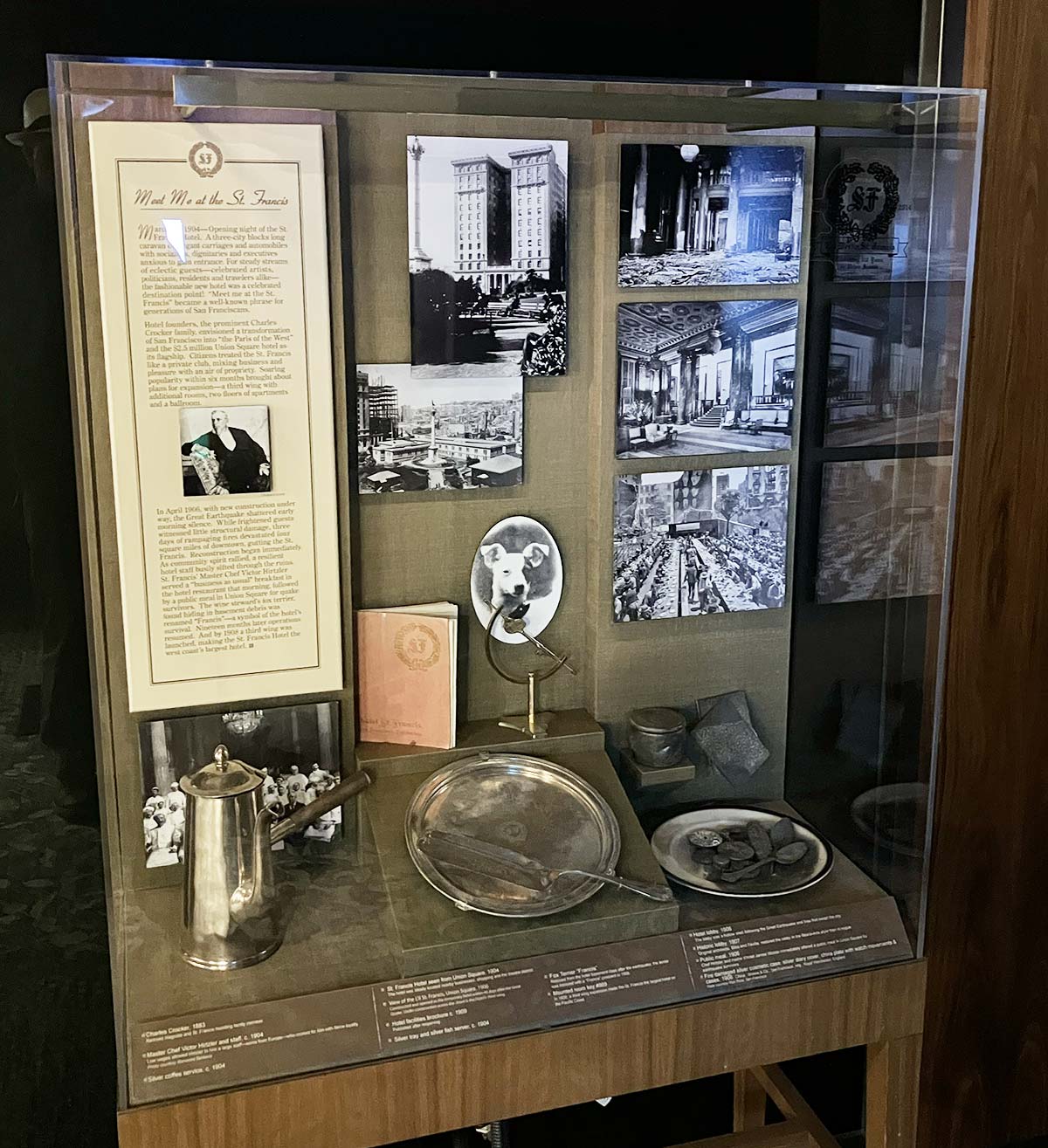
We should leave the story there, and the hotel certainly does in its nice little mini-museum.
But sadly, Francis found herself in the newspapers again six years later, connected to a tragedy much different than an earthquake and firestorm, but one much more familiar to all of us.
Four Shots
Six years after the fire, Mrs. Woods returned Francis to the care of James Hall and his wife. The famous dog didn’t exclusively stay at the St. Francis but often commuted in with Hall or his half-brother Arthur Knabel, whom the wine-keeper had given an assistant manager job in late 1911.
The brothers had been quarreling about personal and work issues. James told his 19-year-old sibling that if he didn’t attend to his job better he might have to let him go. Oh, and that he should look after their younger sister more closely. One of their last fights, on September 17, 1912, was about Francis the dog. Why didn’t Arthur remember to bring her to the hotel?
“If you don't like the way I treat the dog, take care of her yourself,” Knabel replied sharply.
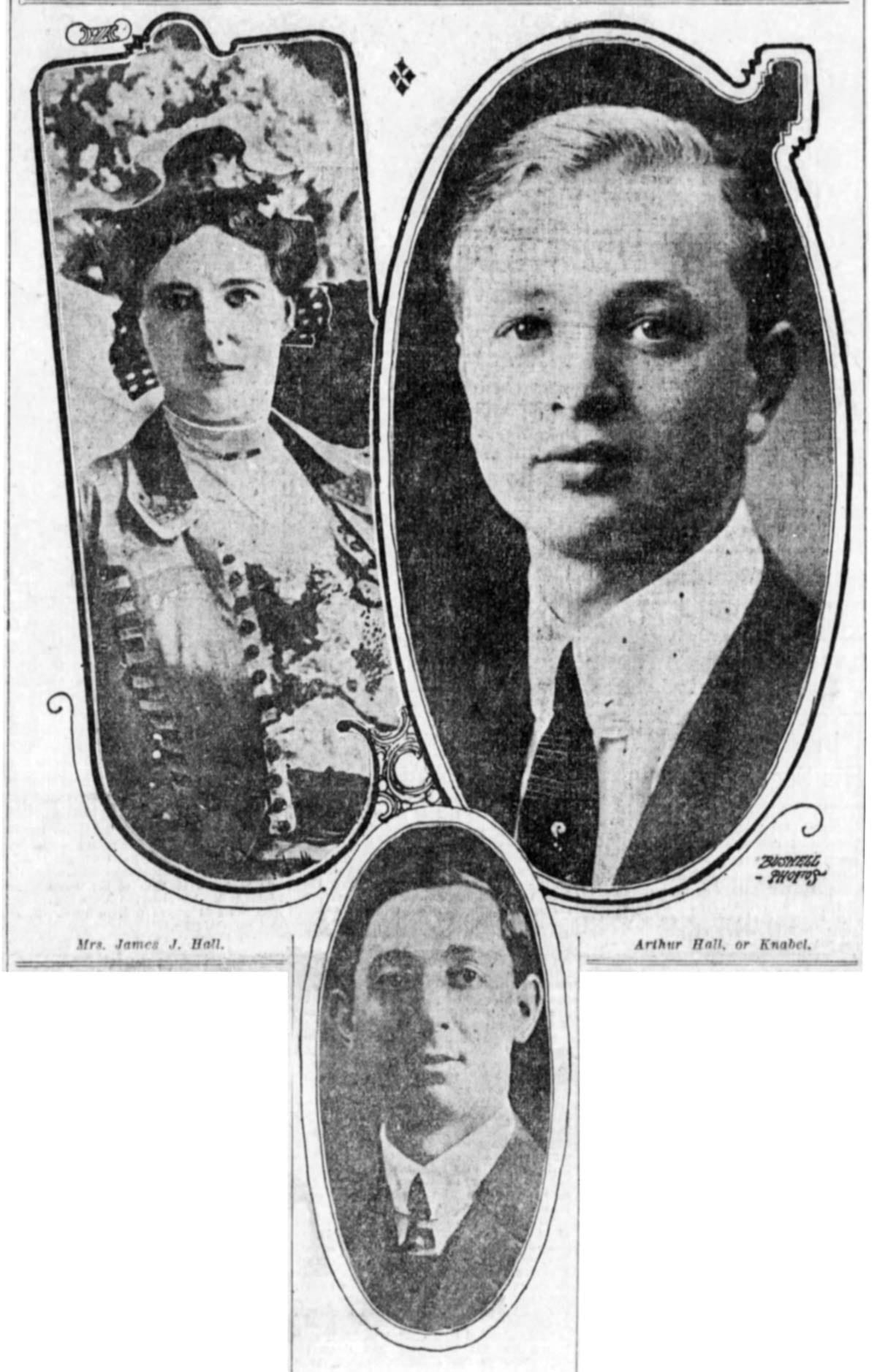
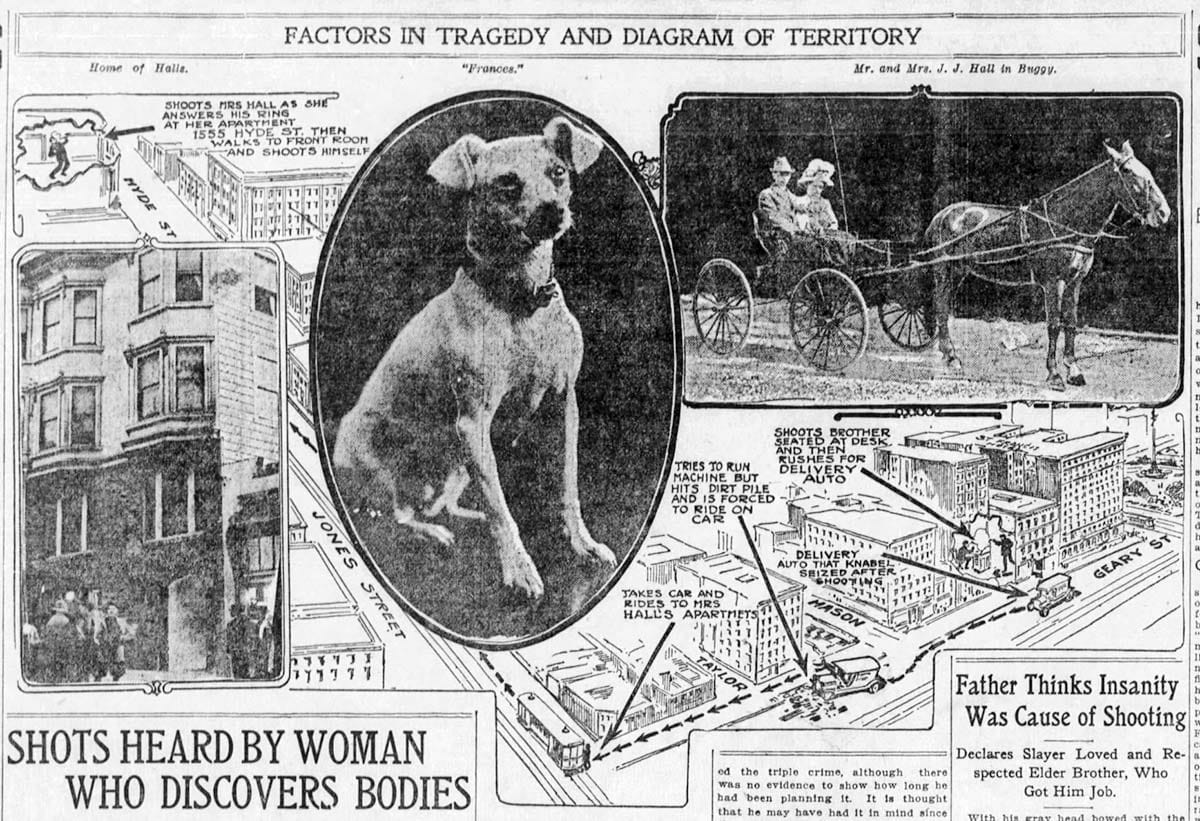
James Hall kept a .32 pistol in his desk at work. At about 4:15 pm on September 18, 1912, Arthur used it to shoot his brother twice in the chest. He then attempted to escape in a hotel delivery truck, but crashed it on the corner—he didn’t know how to drive—and ran off to jump on a cable car.
While James Hall’s murder was being discovered at the hotel, Arthur killed Hall’s wife, his sister-in-law, in the doorway of her Hyde Street apartment with a bullet in the chest. He stepped over her body into the foyer and then shot himself in the temple. Four shots, three people killed.
With all the players dead, the police were at a loss to explain the young man’s motives. Relatives scouted the idea he was in love with his much older sister-in-law. The fraternal arguments were heated, but pretty tame stuff—along the lines of feeding Francis the dog.
The papers kept trying on different ideas, but in the end the police had to go with he was off his rocker and there was a gun.
The newspapers printed portraits of those involved in the family tragedy, including Francis, who hopefully found a new owner.
The anniversary of the earthquake and fire gives us all a reminder to check our supplies and make our disaster plan—which should include how we save our pets.
It’s harder to prepare for gun violence, a systematic national problem we blame on everything from mental illness to heated disagreements over wives and terriers. But it is a solvable problem.
Arthur Knabel couldn’t immediately master driving a truck and crashed after one block, but he easily figured out how to use a gun that wasn’t his to kill two people and himself.
Our answer to disaster prep is making sure we have what we need.
Our answer to guns—at least in part—should be making sure we don’t have what we don’t need.
Here’s information to help you make your earthquake plan.
And here’s information on the work of Everytown for Gun Safety and the Alliance for Gun Responsibility.
Woody Beer and Coffee Fund
Would you like to have a beer or other beverage with me? It could be fun. I am a nice guy who will listen to your stories and, man, that is a great thing, right? Let me know when you are free.
If you want to stand us, we the drink-seekers, you may do so, but it is a choice of the heart, not a requirement.
Sources
“Terrier Lives Through Fire,” San Francisco Chronicle, May 27, 1906, pg. 22.
“Terrier as Mascot of the St. Francis,” San Francisco Chronicle, June 26, 1906, pg. 3.
“Motive Behind Triple Slaying Still in Dark,” San Francisco Bulletin, September 19, 1912, pg. 2.
“Quarrels of Half-Brothers End in Triple Slaying,” San Francisco Examiner, September 19, 1912, pg. 2.
“Kills Brother, Sister-in-Law, and Himself,” San Francisco Chronicle, September 19, 1912, pg. 1.
Arnold Genthe, As I Remember (New York: Reynal and Hitchcock, 1936)