
Watching the Water
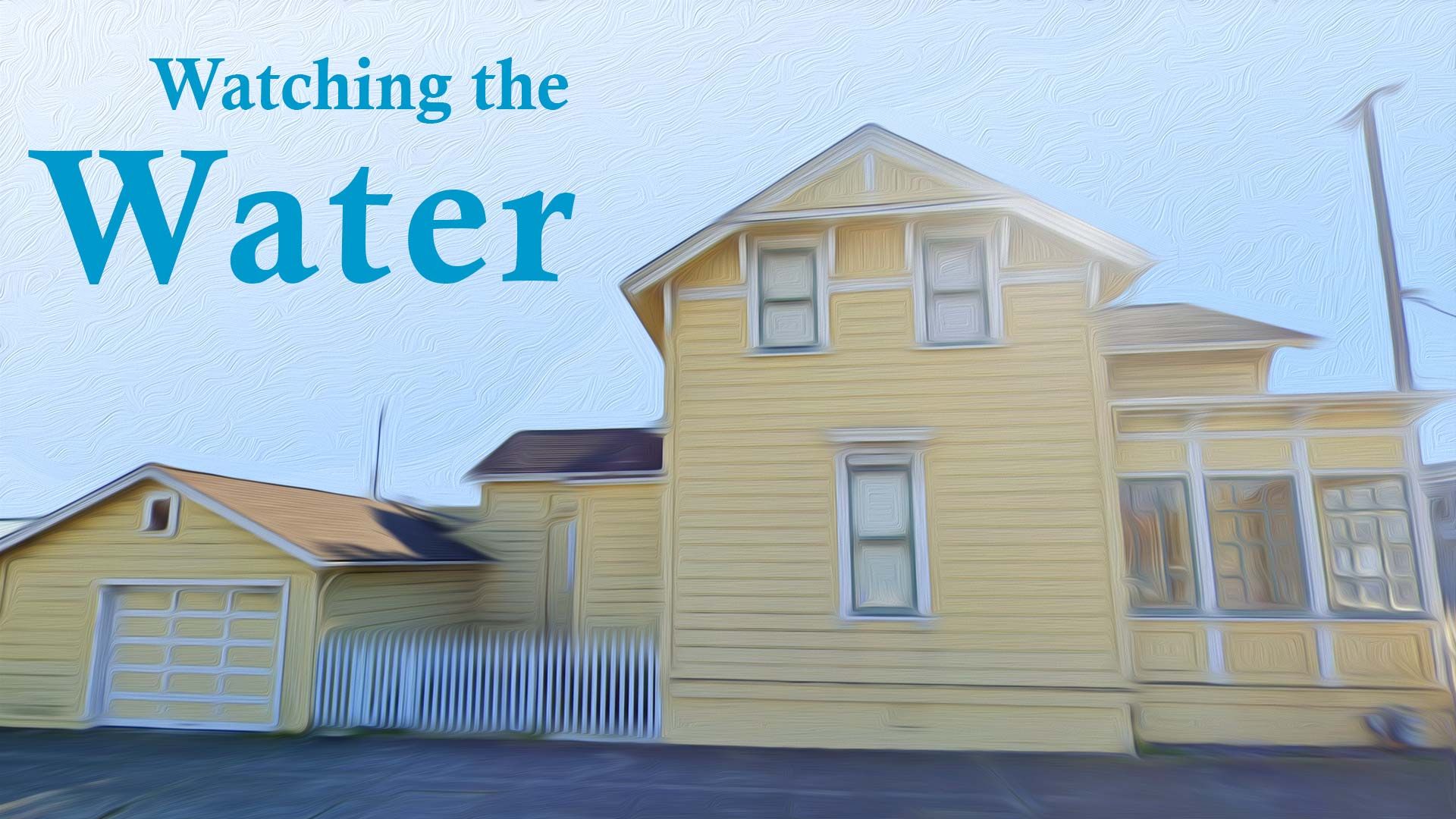
San Francisco’s last reservoir-keeper cottage.

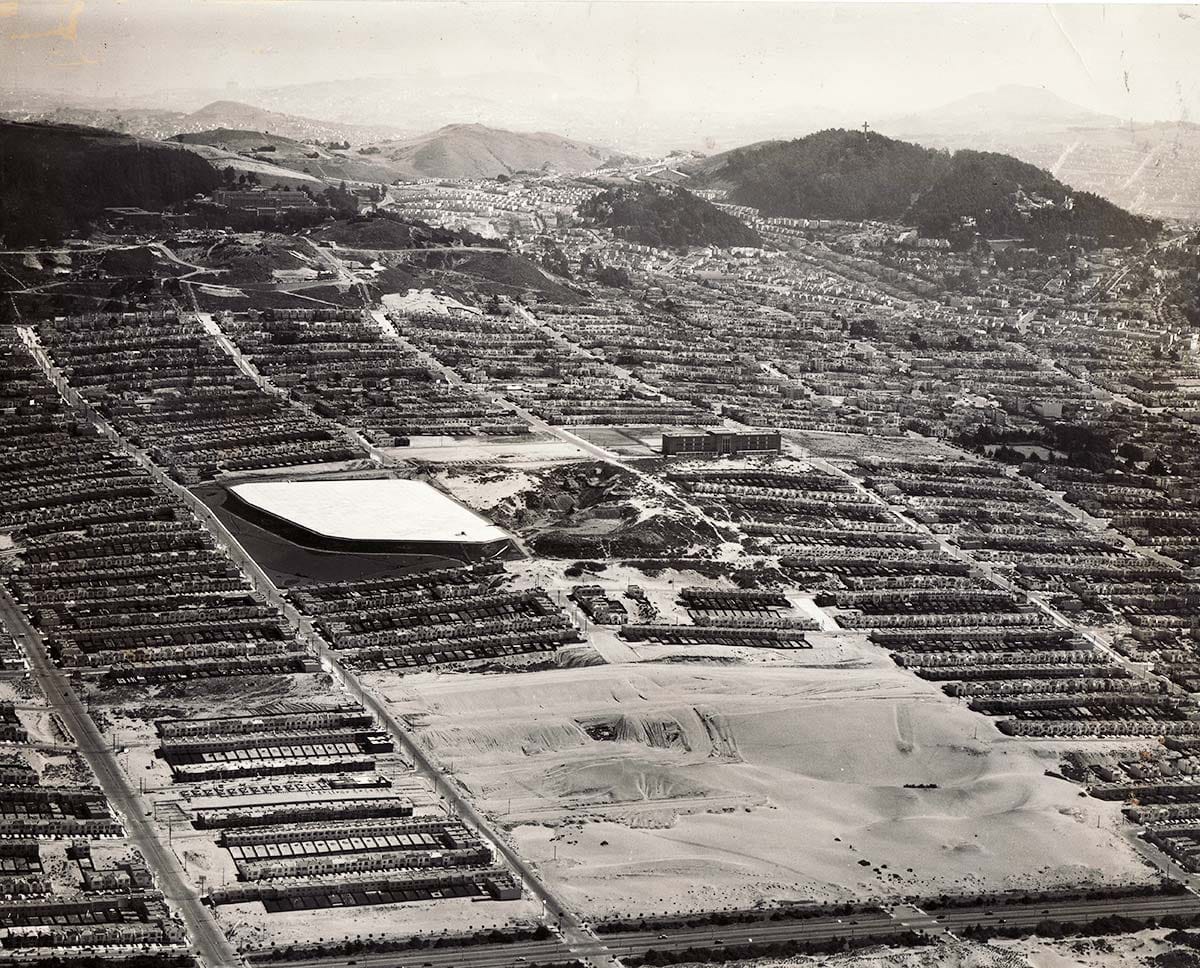
Reservoirs of water are all around us San Franciscans, although I’d say most of us don’t notice them. Some are large, like the full two blocks in the middle of the Sunset District, which non-locals have to remember to navigate around:
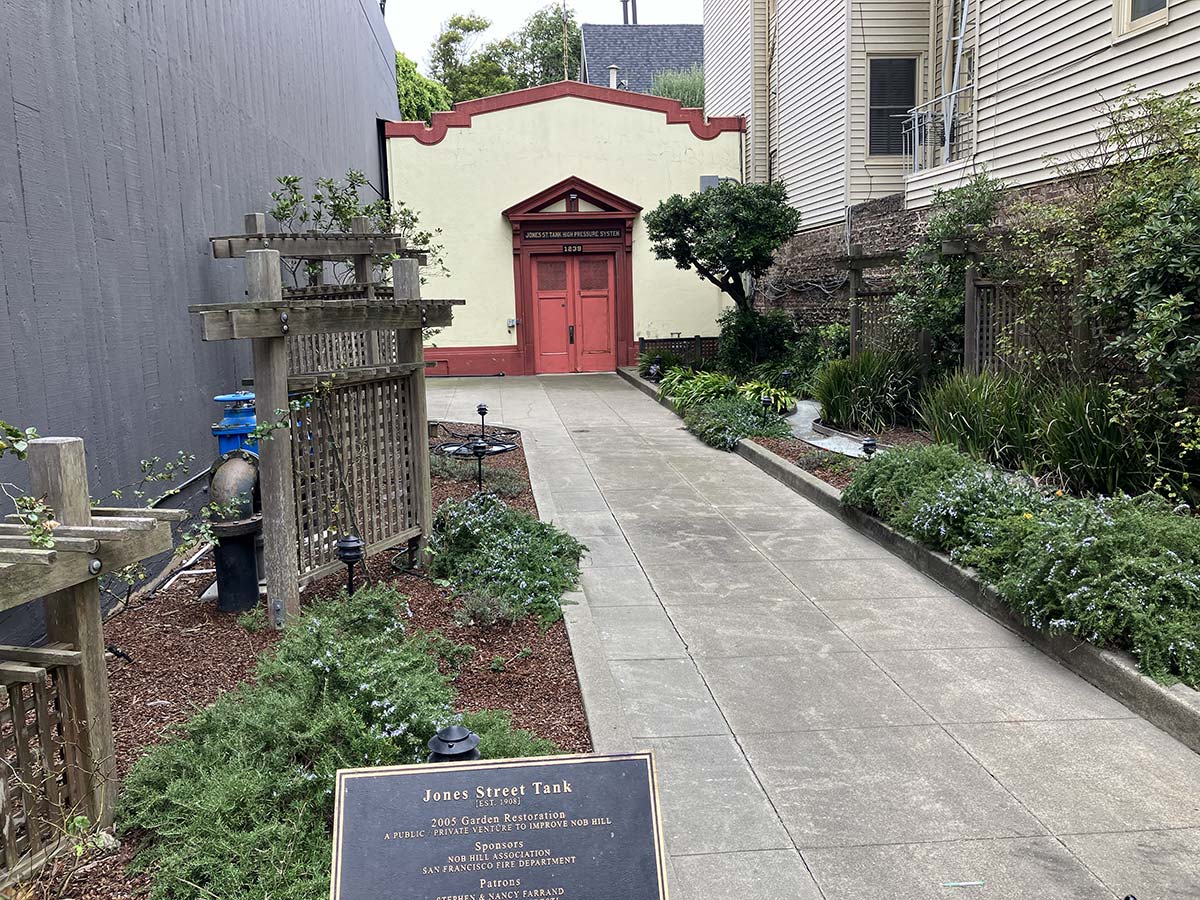
Others are relatively small and tucked away, like the Jones Street tank on Nob Hill which I wrote about in Grab Bag #40:
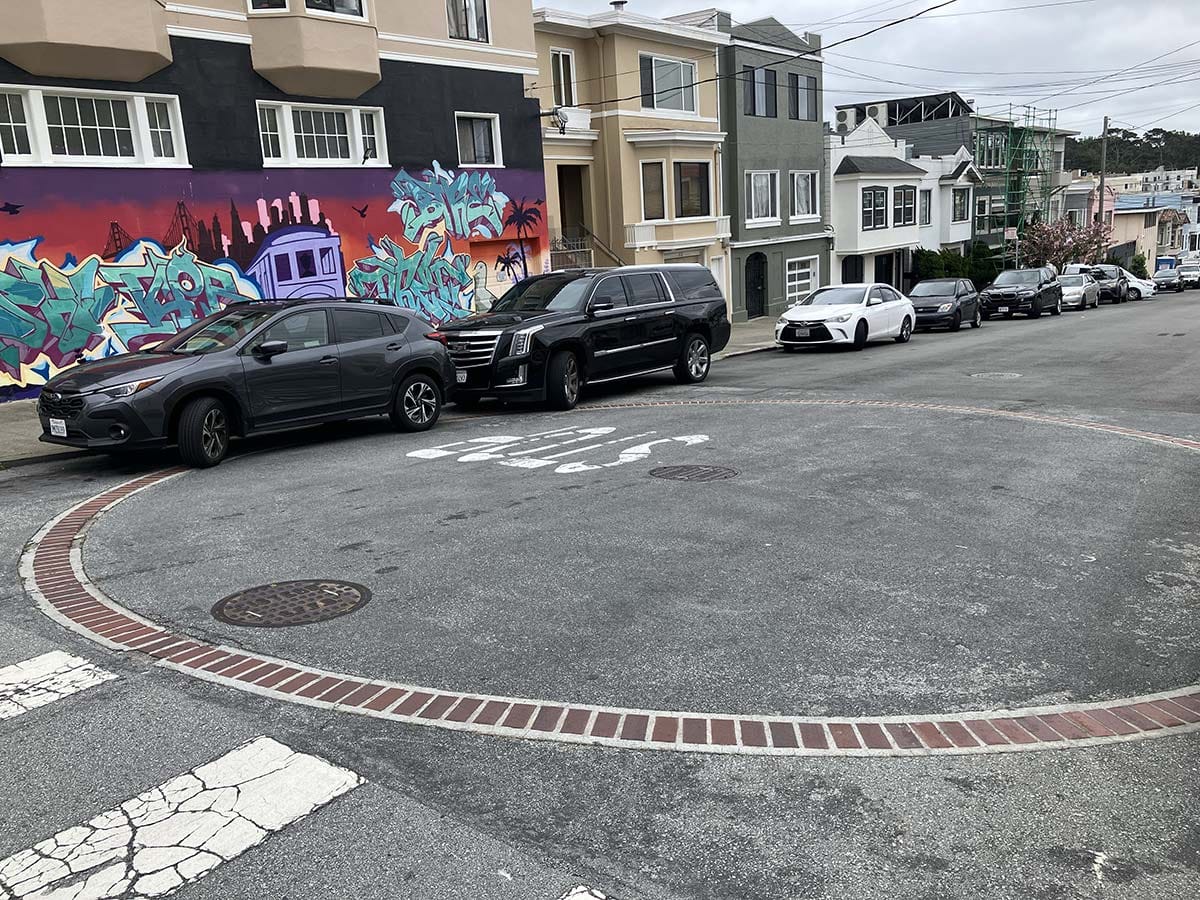
Most are atop hills; some are under our feet. Those circles of bricks in city streets mark reserve tanks ready to be tapped for fire-fighting emergencies.
Before the 1930s, San Francisco bought its water. The Spring Valley Water Company was one of the biggest monopolies of the west in the early 20th century and owned almost all the water-delivery infrastructure across the city.
Holding tanks and reservoirs, pipes and filters, all connected to sources and systems down the peninsula. Topography took precedence over other factors to make sure water moved and was stored in the right places.
Flume elevations, hilltops sites for receiving tanks, and the placement of pumps all needed to be well planned for gravity to do most of the work delivering water and creating pressure for taps.
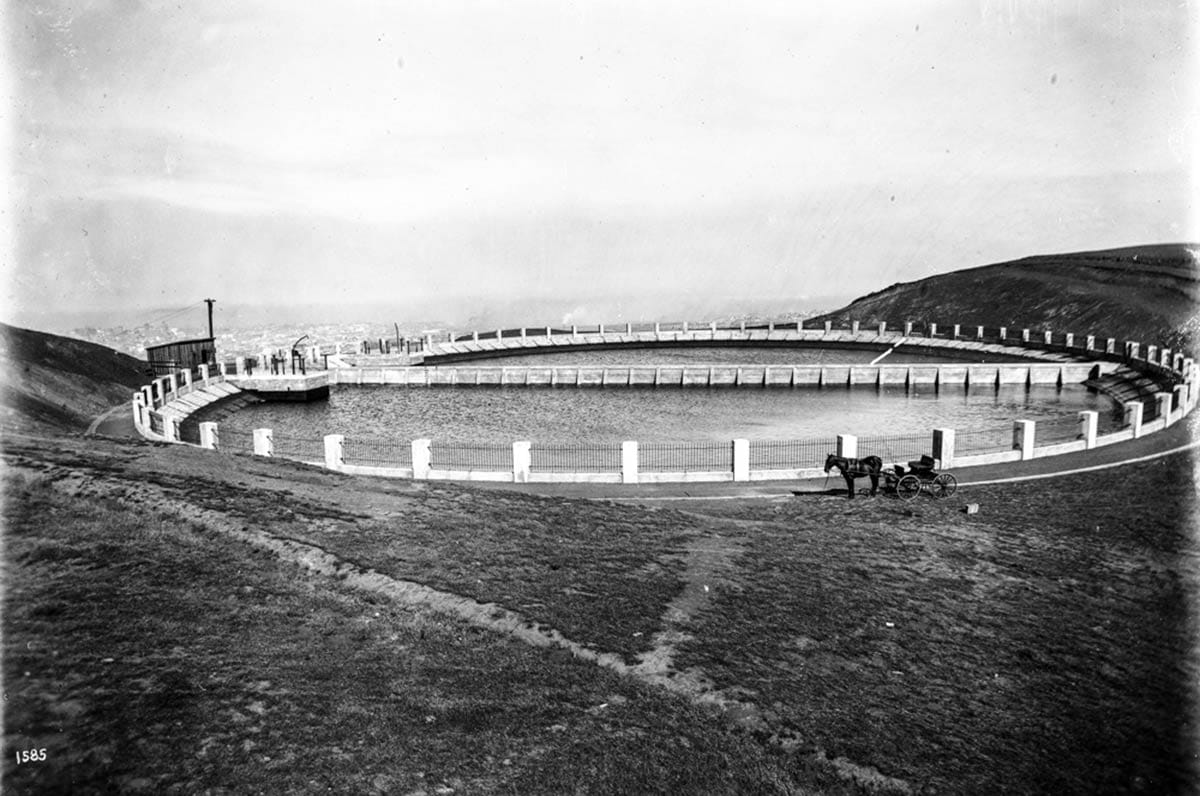
Today, almost all of the reservoirs are sheltered with concrete, hiding the millions of gallons of water around us. It was different 100 years ago, when city reservoirs looked like swimming holes, fishing ponds, or alpine lakes:
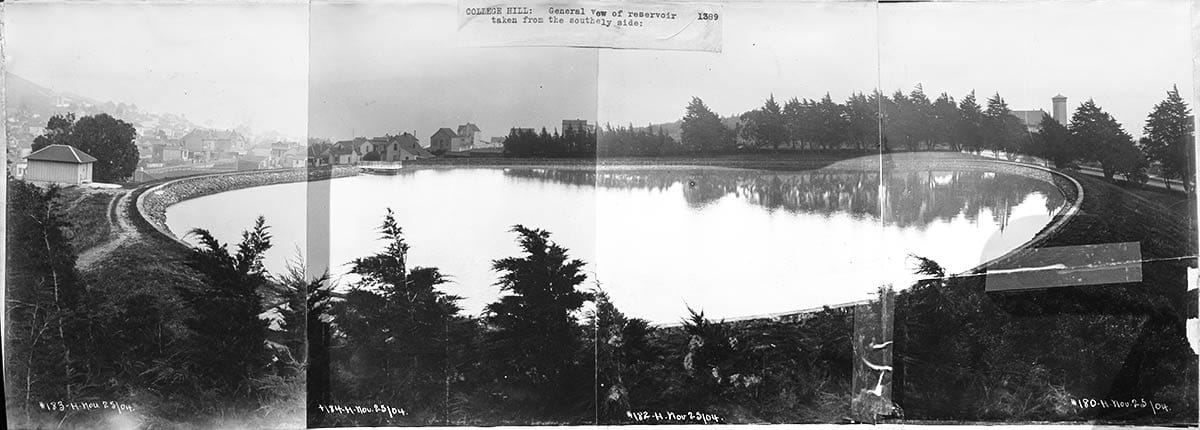
In the late 1800s and early 1900s, because many of these sites were open to the sky, more countryside than city, and constructed on western and southern eminences which streetcar lines and roadways had yet to broach, Spring Valley needed to employ caretakers or “keepers.”
These men ensured smooth operation of the machinery by monitoring and repair, maintained the filtering systems, and acted as security by living on site. Here’s a typical keeper’s cottage beside the Potrero Hill tank at Carolina and 22nd streets:
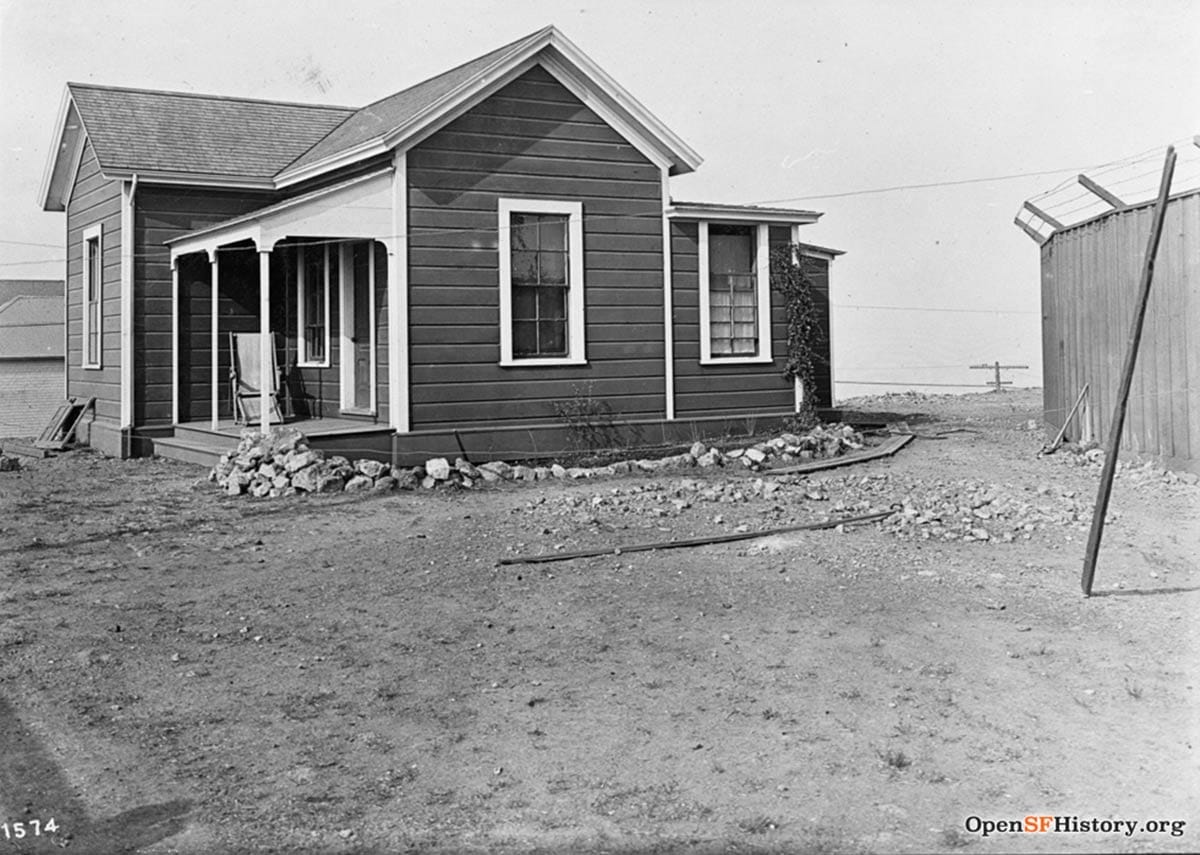
Simple in design, some of these keeper cottages were downright charming. Here’s the one that once stood near the southwest corner of Hyde and Bay streets beside the Francisco Reservoir (now a park):
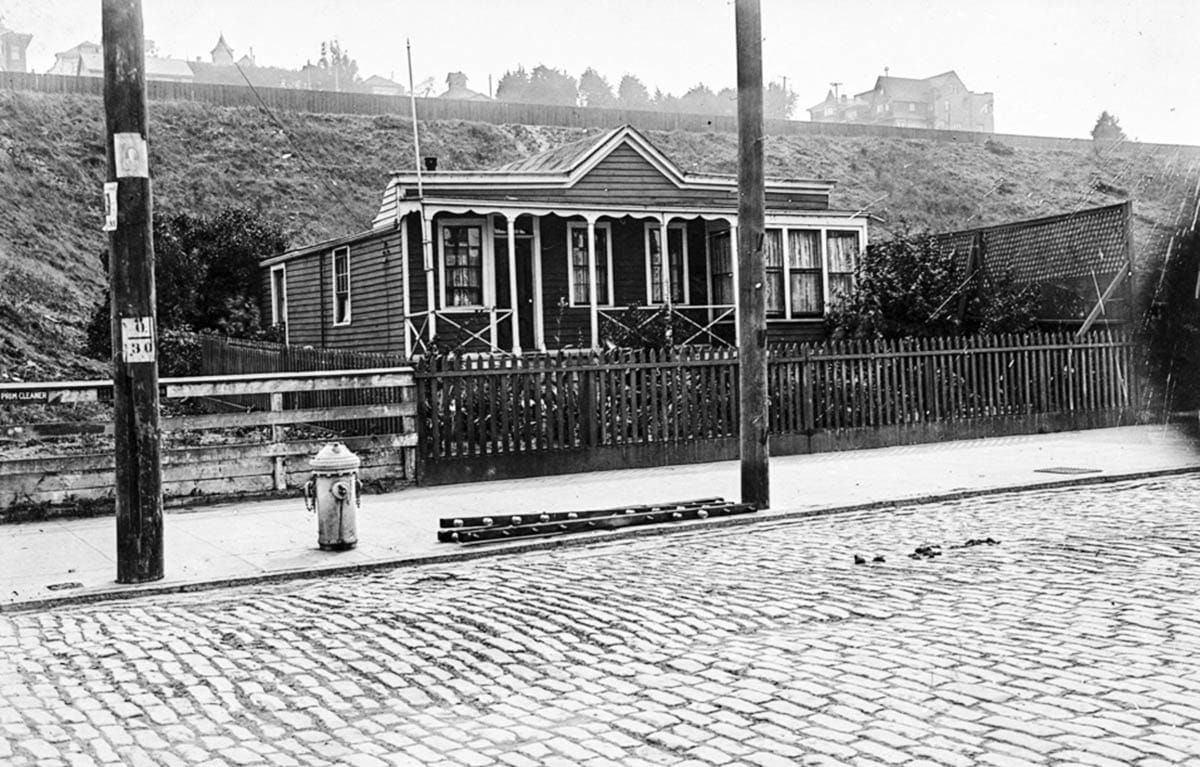
Below is an even bigger Ma and Pa home beside the Laguna Honda reservoir. Keepers were paid between $60 and $80 a month in 1900 (roughly $2,300 to $3,150 in 2026 dollars):
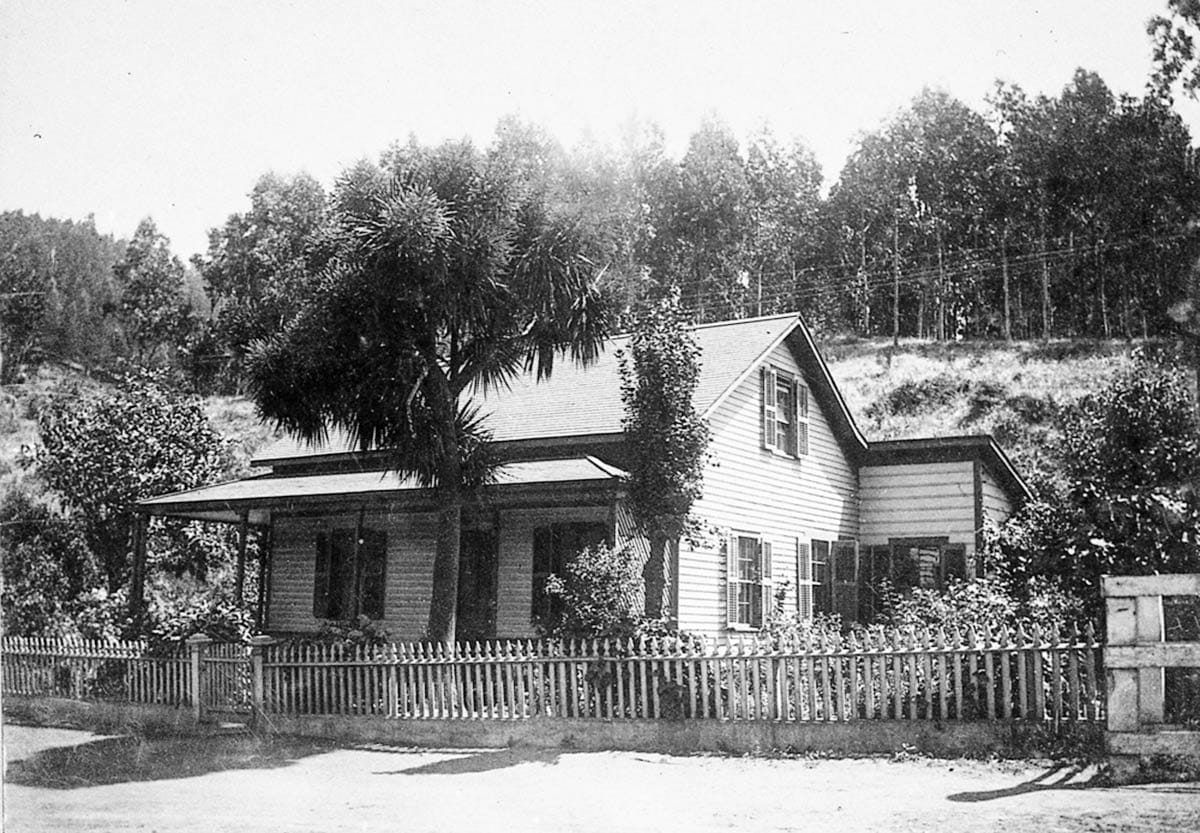
Laguna Honda was a large and early reservoir, constructed at a time when it was a long way to civilization for the keeper and his family. A big house and garden were necessary. If I told you this was in western Marin or Siskiyou county and not the center of San Francisco, you’d believe me, right?
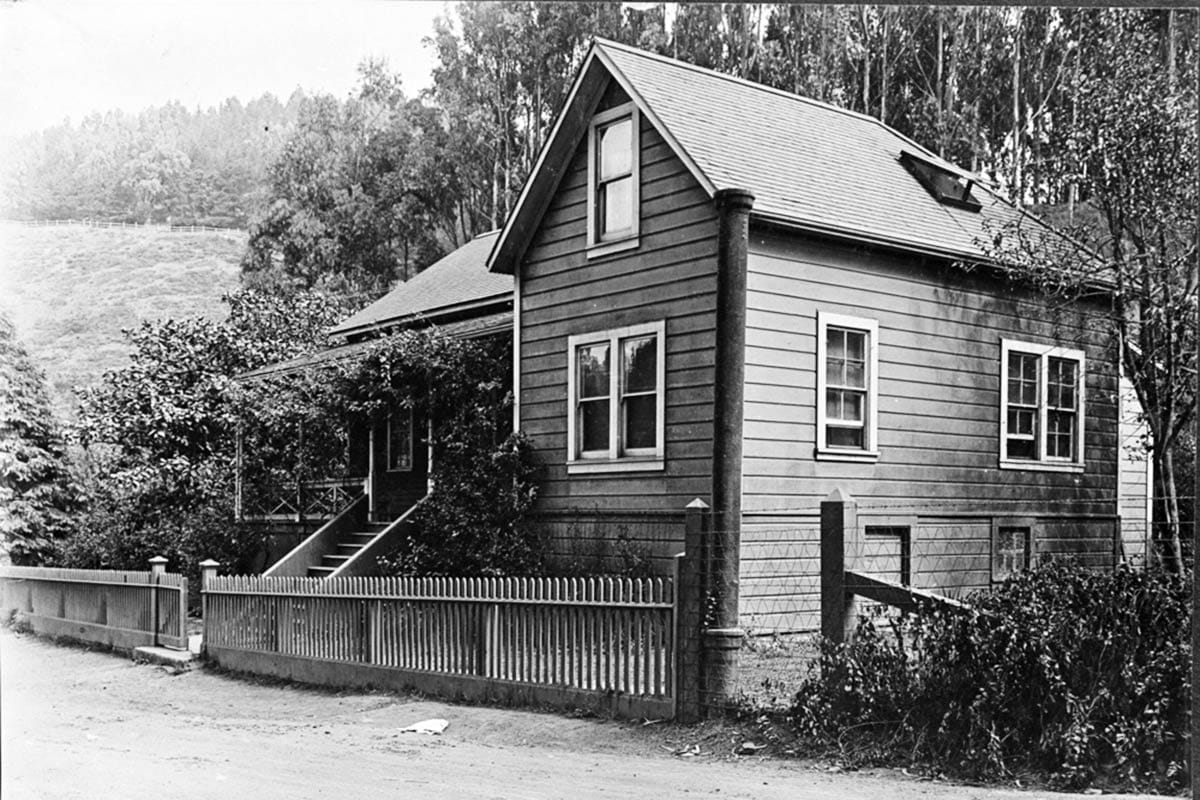
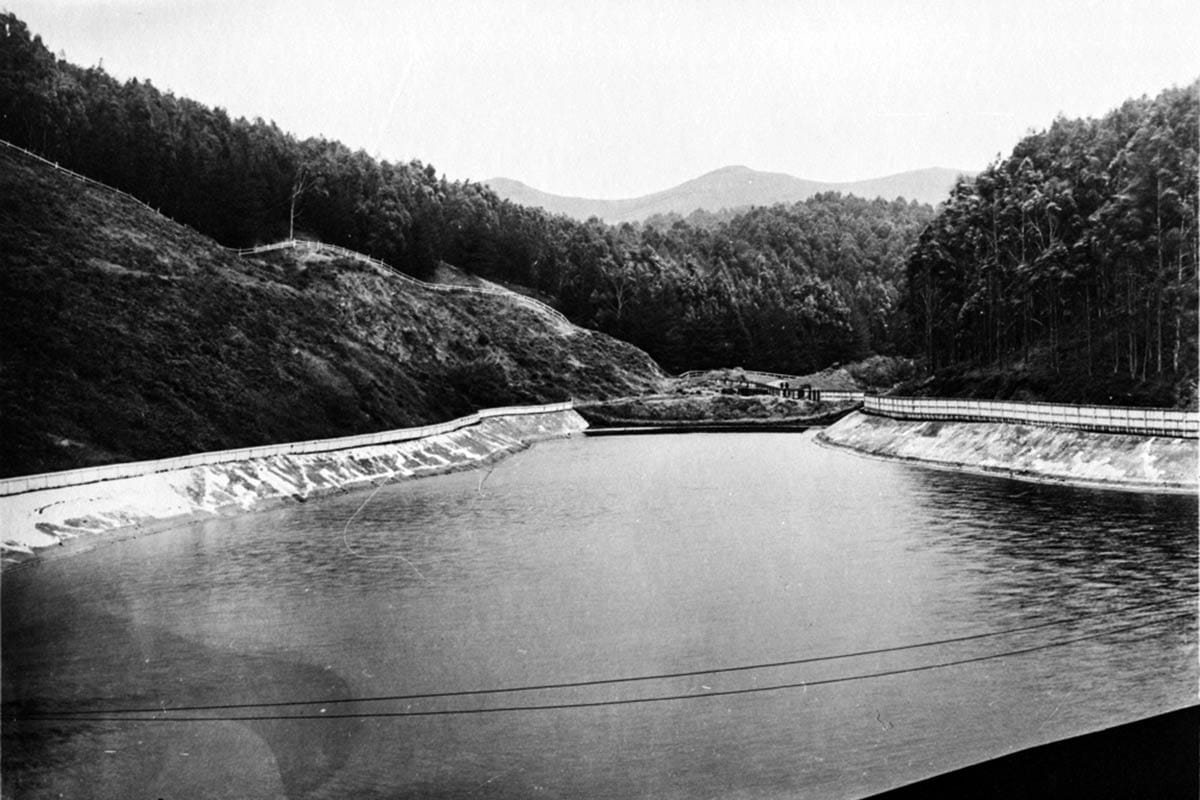
The College Hill reservoir-keeper’s house, like most of the others, had a front porch for rocking and chawing and setting a sharp eye on the grounds.:
Keepers were still employed and still lived at the cottages even after the city took control of its water in 1930, although house rent was deducted from their pay of $165 a month. (About $4,000 in 2026 dollars.)
In 1943, the city had four reservoir-keepers on the payroll. By 1960, as reservoirs began being upgraded and covered with concrete roofs, there were only two.
When College Hill got the concrete treatment that year, Christian Reese, one of the last keepers, was pushed into mandatory retirement by the civil service. The Public Utilities Commission (PUC) gave him and his wife Elizabeth an eviction notice to vacate the keeper-cottage where they had raised four kids and lived for more than 20 years.
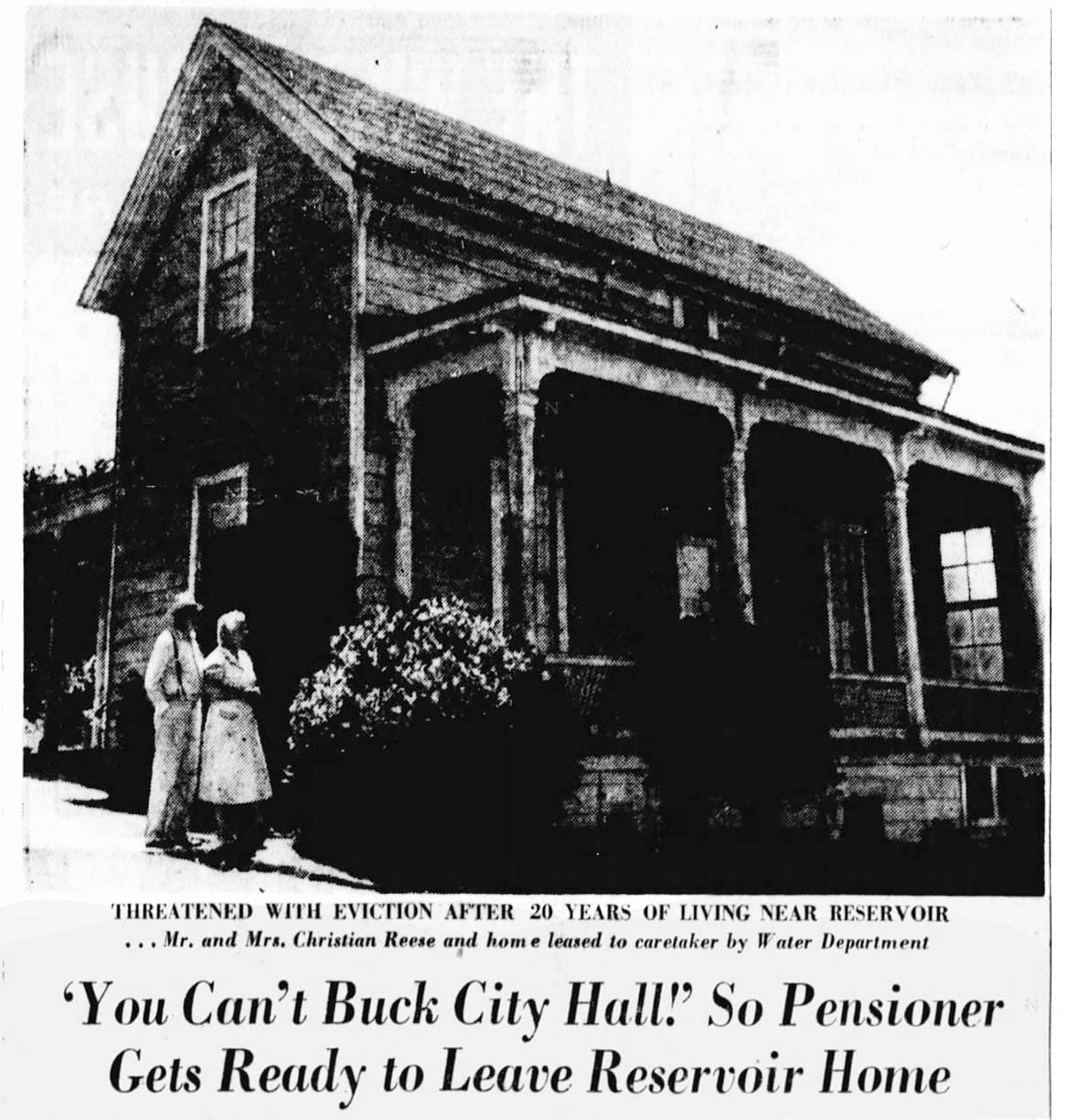
Reese petitioned to stay on and pay rent, noting the city would likely have to hire someone to watch the house to keep it safe from vandals anyway. After mayor George Christopher made his thoughts known, the commission changed its mind, voting 4-1 on June 28, 1960 to allow the Reeses to stay for $30 a month rent.
Reese died in 1962 and while the PUC said his wife could remain, she didn’t stay long. The “still-charming” cottage was boarded up and proposed to be a day care center in 1969.
It’s not there now. Where it stood is now the College Hill Learning Garden. Maybe some Bernal Hill long-timers remember when the old cottage left the scene? If I had to guess, I’d say the early 1970s.
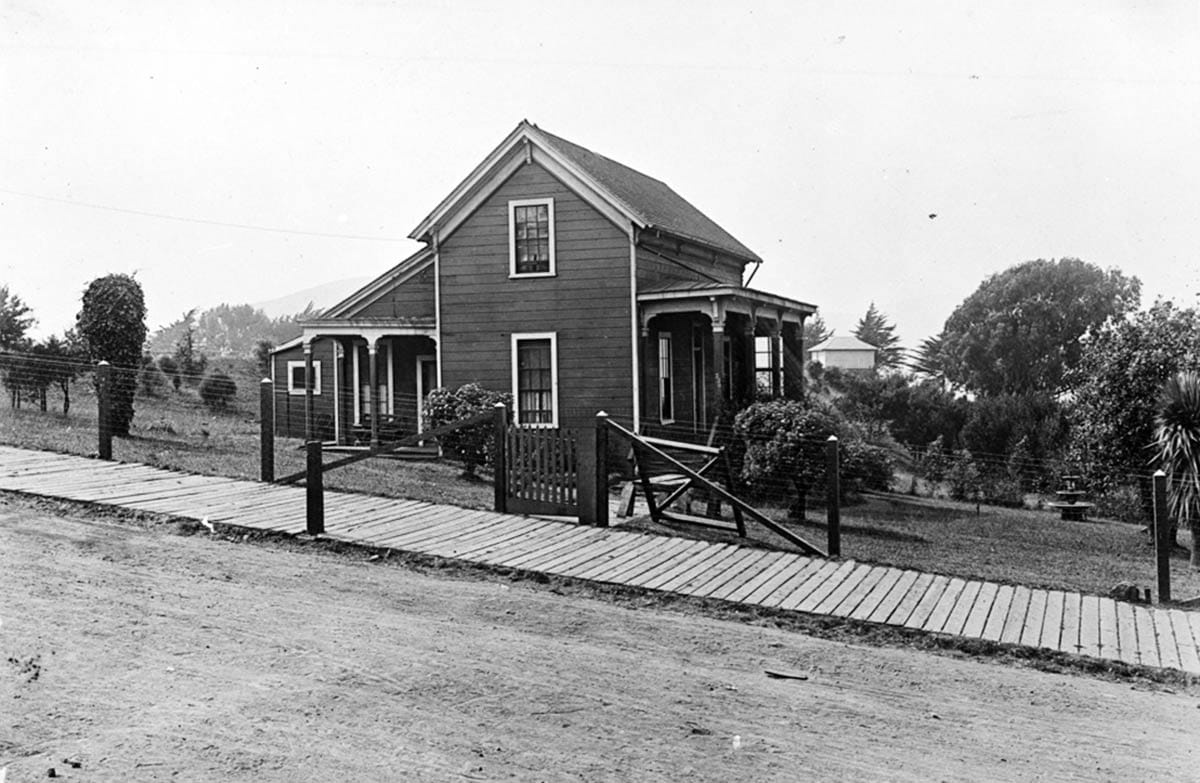
But, guess what... one of the old water-keeper cottages is still around. Here’s a view of it in 1913 at University Mound on the corner of Bacon and University Street in the Portola District:
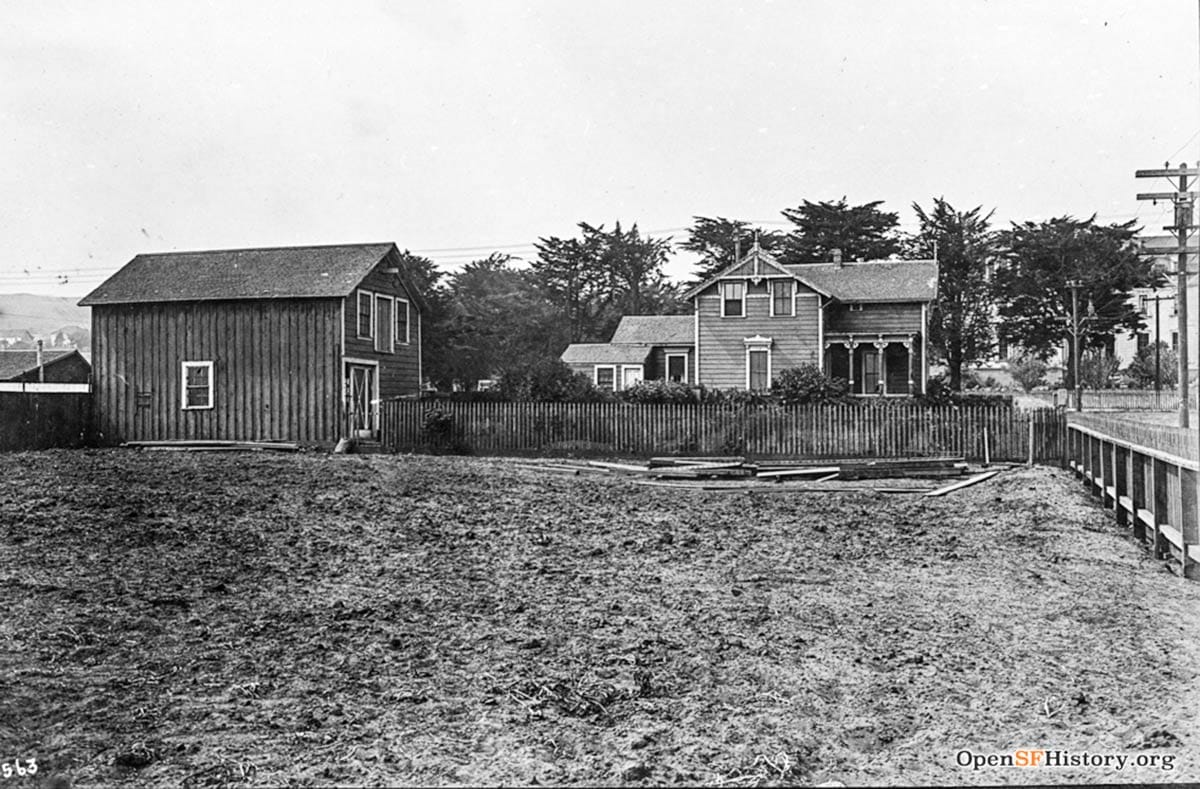
The first University Mound reservoir opened with ceremonies on July 30, 1885 (although water didn’t start flowing until August 5, 1885). The cottage likely was constructed around that time. Today, the PUC seems to use it as an occasional office and storage site.
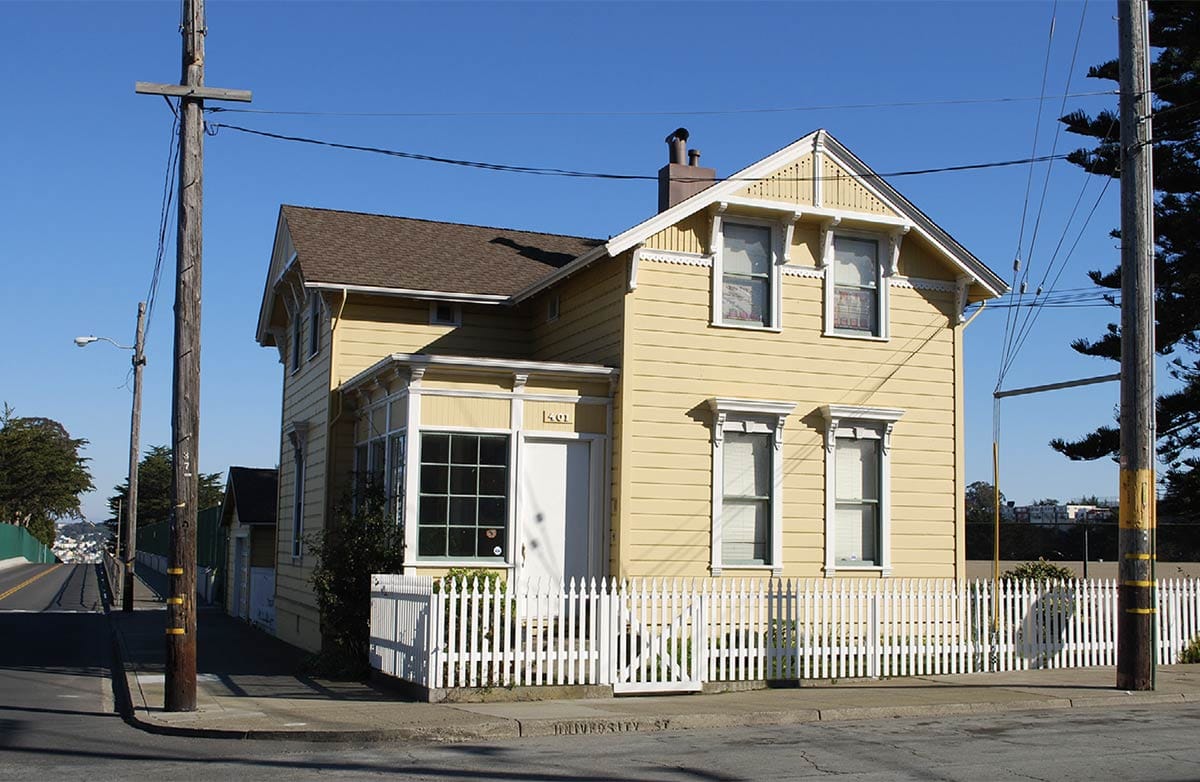
At SF Heritage, I encouraged the PUC and the district supervisor to have this city-owned property designated a city landmark in early 2020.
The pandemic put that idea way on the back burner, but now the city’s Planning Department is actively investigating possible landmark candidates across the city. Maybe it is time to try again.
And if the PUC would like someone to move in, to keep an eye on things, well, I likely can rustle up $30 each month.
Woody Beer and Coffee Fund
There’s a time and a place for everything, they say. I’d say at all times and places it’s nice to have a beverage in hand and good company with whom to chat.
The mission of the Woody Beer and Coffee Fund is to meet this niceness need. Good people like Kris A., Steve C., and Sarah R. (all F.O.W.) contribute to the fund to pay for your drink. The hard part? Figuring out our calendars.
When are you free?
Sources
“A New Water Supply,” San Francisco Examiner, July 31, 1885, pg. 3.
“Drowned in the Reservoir,” San Francisco Examiner, April 17, 1892, pg. 2.
“Inquiry about Water Rates by Board of Supervisors,” San Francisco Chronicle, February 15, 1900, pg. 7.
“Fighter of Flame Gallant in Water,” San Francisco Examiner, June 14, 1902, pg. 4.
“Annual Salary Ordinance,” San Francisco Chronicle, June 4, 1936, pgs. 31–33.
Richard Jordan, “‘You Can’t Buck City Hall!’” San Francisco Examiner, May 19, 1960, pg. 3.
“Caretaker Can Stay in Cottage,” San Francisco Chronicle, June 29, 1960, pg. 5.