
Grab Bag #73
Books, talks, podcasts: a newsy, linksy Grab Bag open to everyone.
Normally the whole Grab Bag is available only to Friends of Woody (a group everyone is welcome to join). But with lots to talk about and share I am making this one open to everyone, so don’t be frustrated with the hard Guess Where below, free members. The answer lies within.
Guess Where
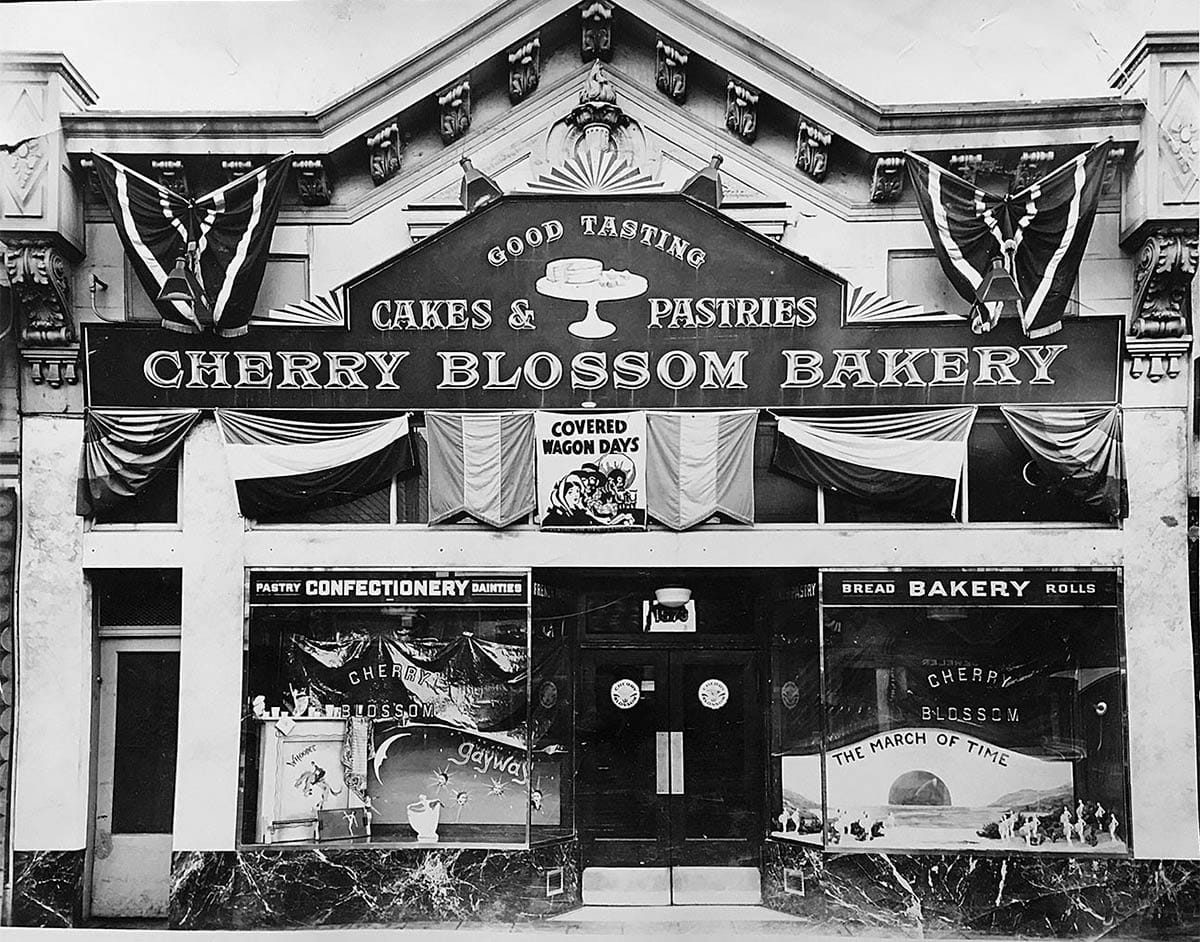
Grab Bags always kick off with a mystery photo from San Francisco’s history. Take your best guess as to where the charming Cherry Blossom Bakery once did business. The answer is at the bottom of the story!
Woody Talking Tomorrow
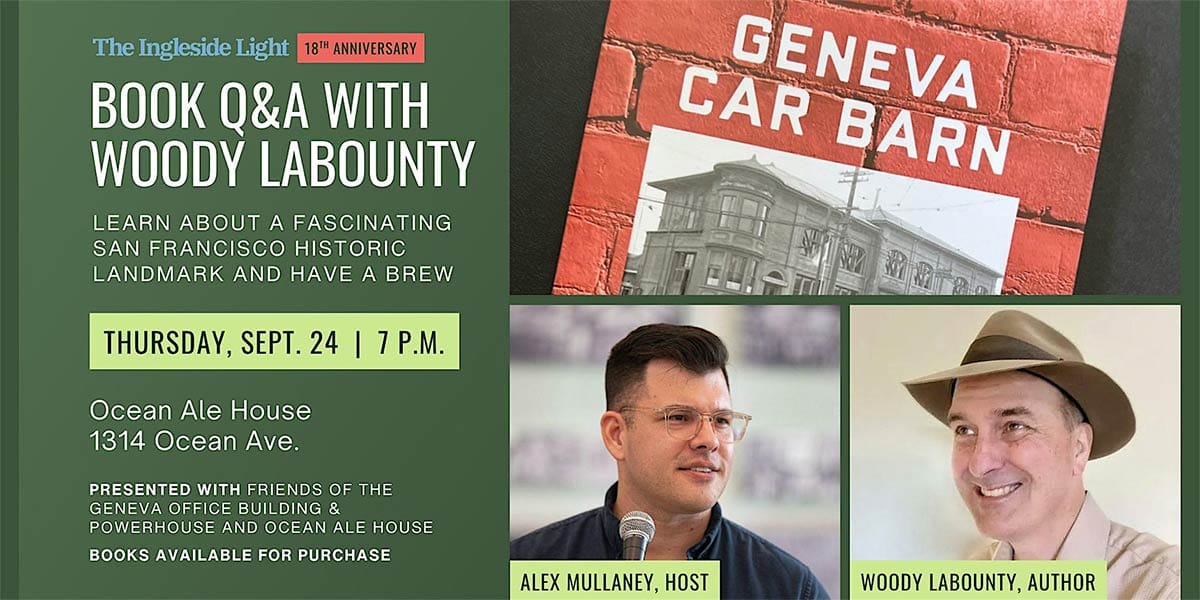
Just a reminder that I will be at the Ocean Ale House tomorrow evening, September 24, to chat with Ingleside Light publisher Alex Mullaney about the Geneva Car Barn (which you might remember I wrote a book about). This could also be a good chance for us to have a beer together, eh?
Art Piece of the Grab Bag
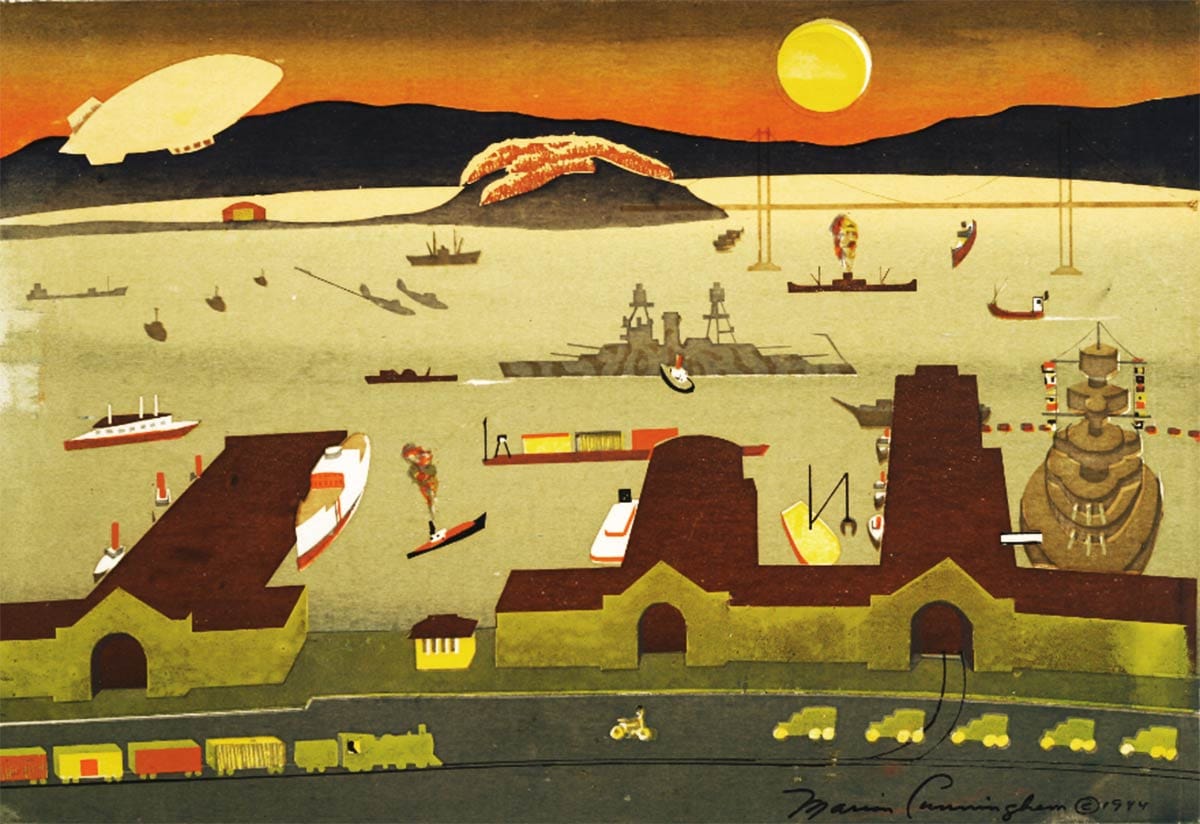
After I wrote about the State Belt railroad last week, Patrick M. (F.O.W.) tipped me off about this great greeting card featuring the art of Marion Osborn Cunningham (a work owned by the National Gallery of Art).
Word on the street is these cards can be purchased at Patrick & Co. Stationary on Market Street.
Haight & Ashbury News
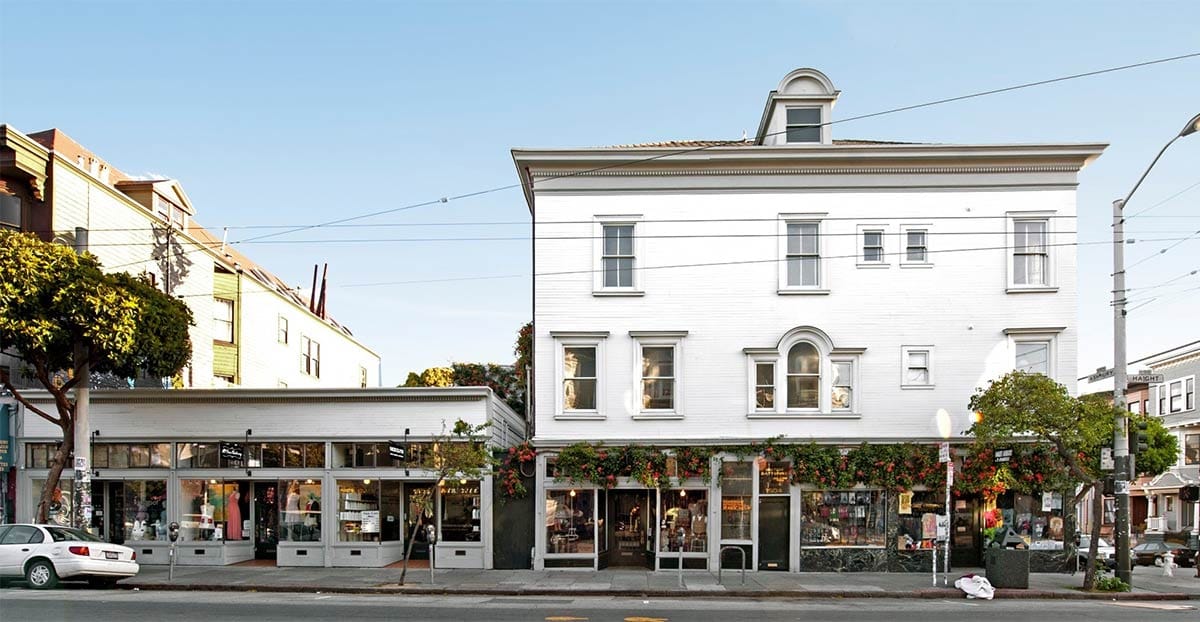
As president & CEO of SF Heritage, I had a busy week at our historic Doolan-Larson house and storefronts on the world-famous corner of Haight and Ashbury streets.
We made a big announcement of exploring a partnership with radio station KEXP and Blue Bear School of Music to turn the historic building into a music and community cultural center.
Read the SF Heritage News announcement.
San Francisco Chronicle reporter J. K. Dineen wrote a nice story about the plan. Maybe this gift link will get you through the paywall and maybe not.
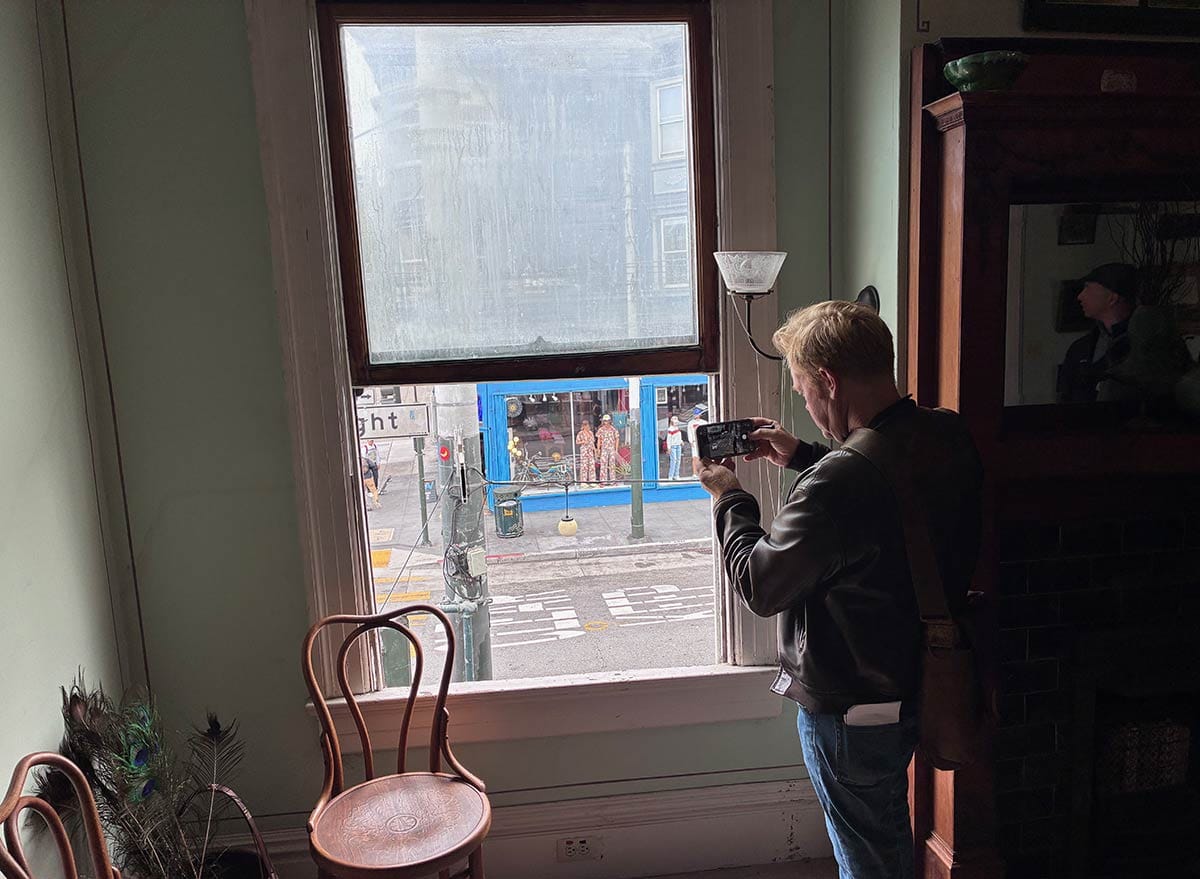
And the mayor dropped by to offer his best wishes, which was nice of him.
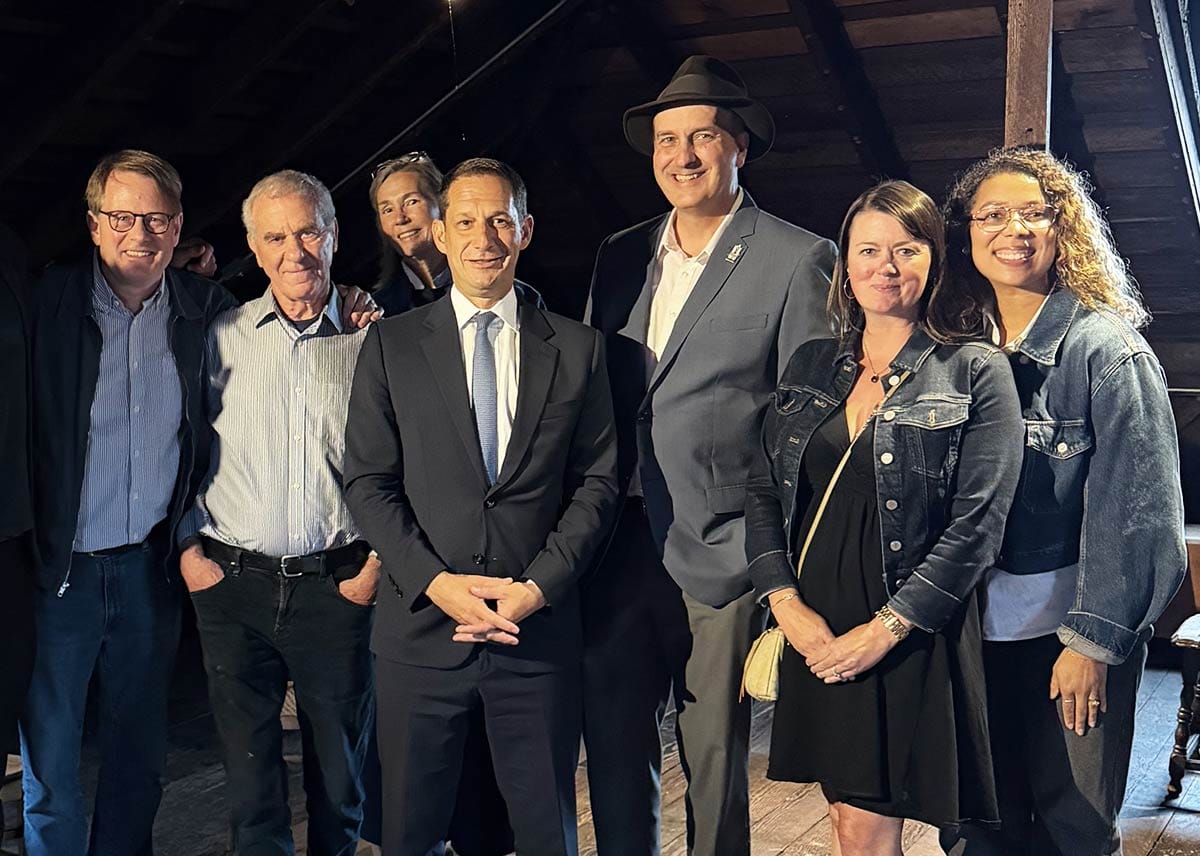
There is still a lot of negotiation. There are still details to figure out. This will take a number of years.
But we believe that, together, the three nonprofits can do justice to the most famous intersection in the world and create a place that will be a great benefit to the neighbors, increase the economic vibrancy of Haight Street, and enrich the experience of millions of visitors who make that corner a stop on their travels.
And we think we can share a lot of important history in a very cool building in very cool ways, which is exciting.
Much more talking (and listening) to do, but we are taking the first steps.
In Some Degree Improved
In 1856, Sir Henry Veel Huntley published the book, California: Its Gold and Its Inhabitants, a travelogue drawing from diary entries of his travels in 1852.
An educated and haughty Englishman, he recoiled at almost everything the locals did: spitting tobacco, serving meals in odd courses, being obvious about trying to make a buck, talking too much, a tendency toward shootin’ and knifin’ each other…
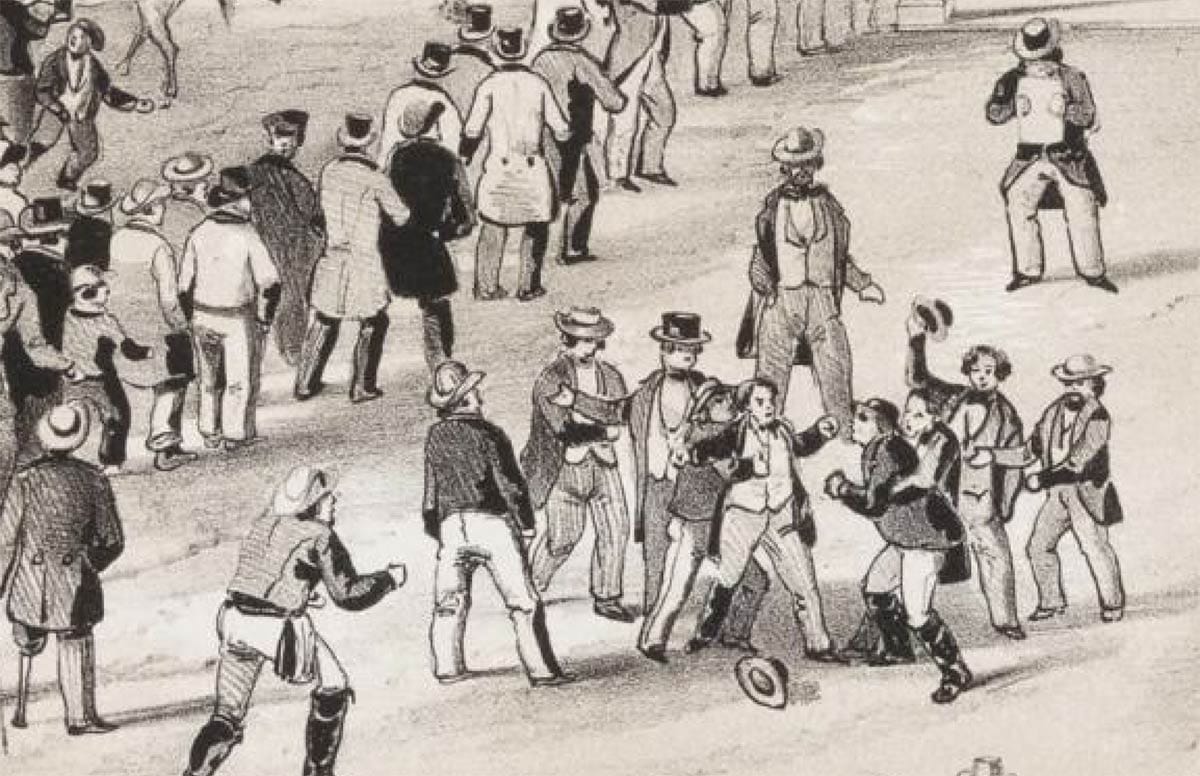
Huntley was quick to note when our definition of “democracy” proved elastic or perverse:
“This is a ‘free country,’ and every man pleases himself.”
In the book’s preface he somewhat qualified his diary opinions of four years earlier:
“In speaking of the American, it must be borne in mind that he is represented as he is found in California, so far as respects the mass at that period; since, matters have in some degree improved.”
While tobacco spitting and random murders may have decreased from the 1850s, I’m not sure the “I’m getting mine” attitude is much better in 2026, San Francisco included.
But we can still hope for some further degree of improvement, right?
The Last Race at Ingleside
From all the way in Bloomington, Indiana, Paul Staggs found me to share a very neat program. Here’s the cover:
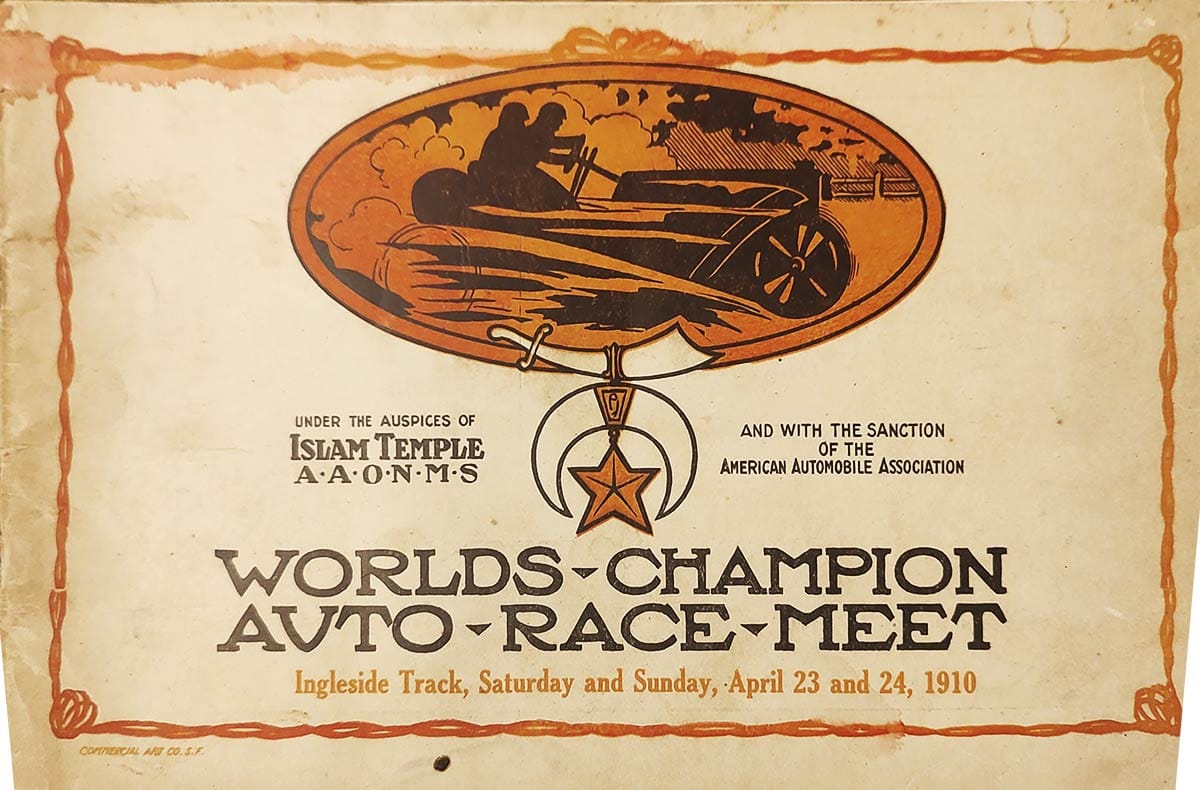
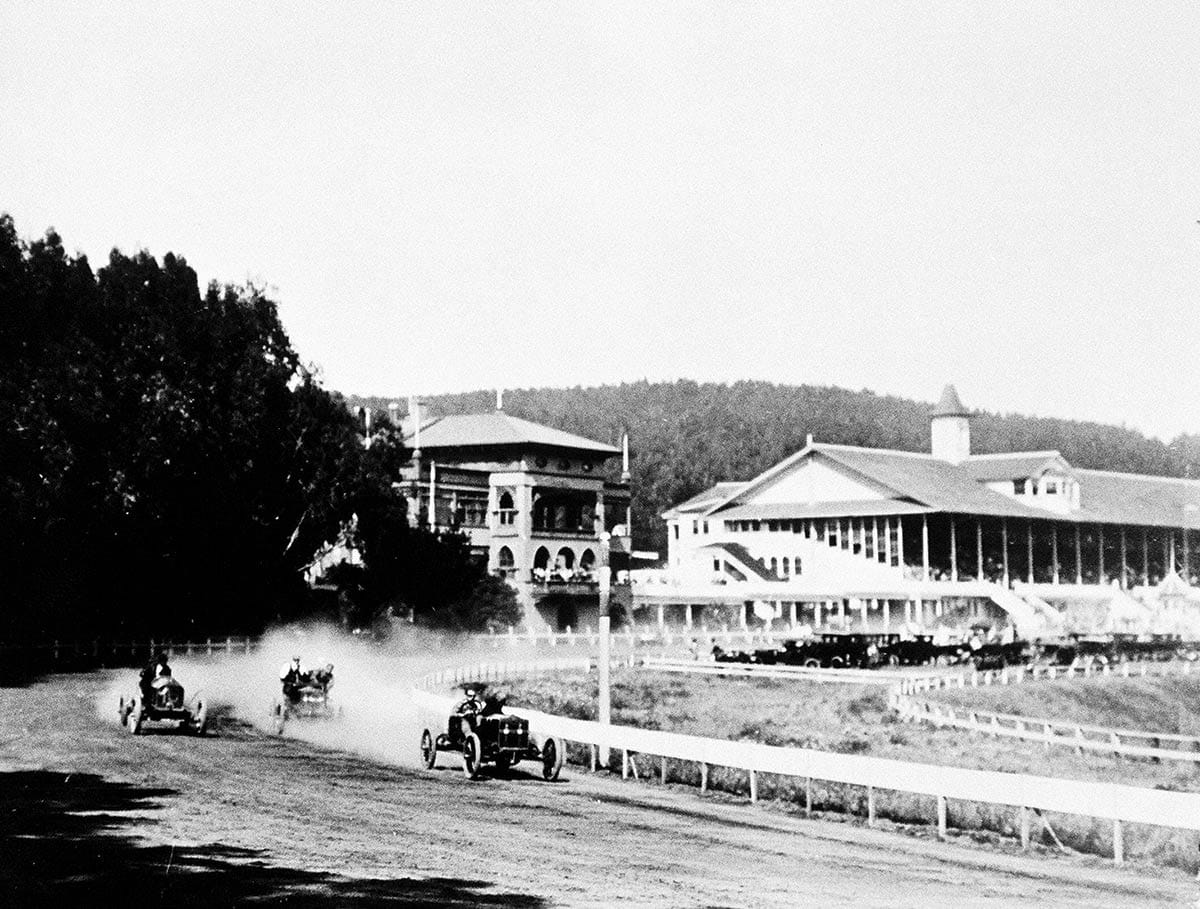
The Ingleside racetrack operated where today the handsome homes of Ingleside Terraces stand south of Ocean Avenue between San Francisco State and City College. Urbano Drive somewhat traces the old horse-racing oval.
(You can learn more from my Top 10 slides story or read the whole darned history I wrote about the neighborhood, which is still available as an ebook.)
Mr. Staggs was a little confused about the dates of this meet, which featured record-setter Barney Oldfield, the first man (but not the last) to drive 60 mph. From what Paul could discover from Indiana, racing ended at Ingleside before the 1906 earthquake.
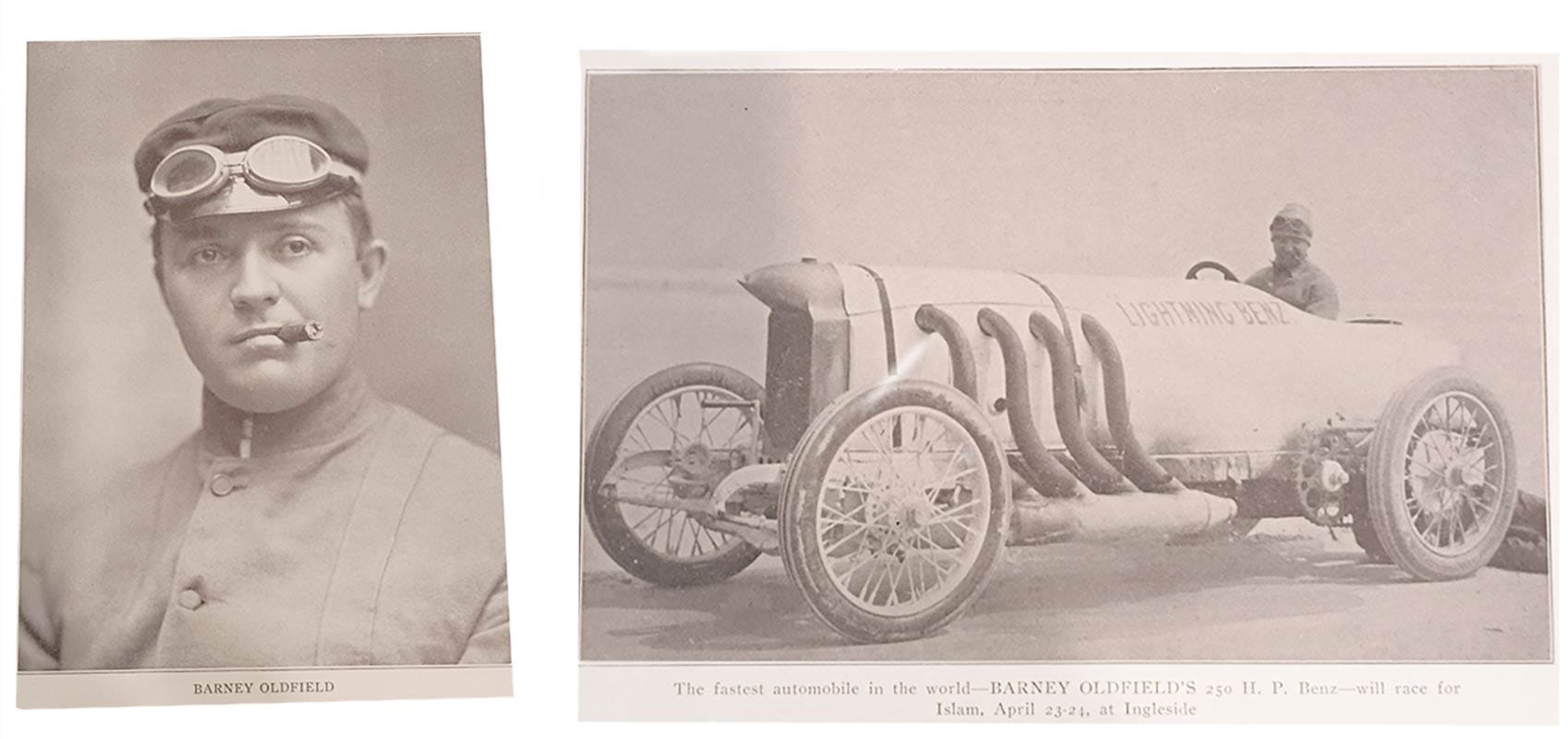
The last horse race at the Ingleside track took place in December 1905, four months before the great quake and fire. (The track’s stables housed refugees for years after the disaster.)
But special meets for bicycle and early automobile races were periodically run on the oval before the land was sold for the Ingleside Terraces housing development.
Surveying for Ingleside Terraces had begun the month before and Joseph Leonard’s Urban Realty Improvement Company closed the deal to acquire the land the same month as the Shriners’ meet.
In mid-May 1910, the first street was graded through the middle of the old track.
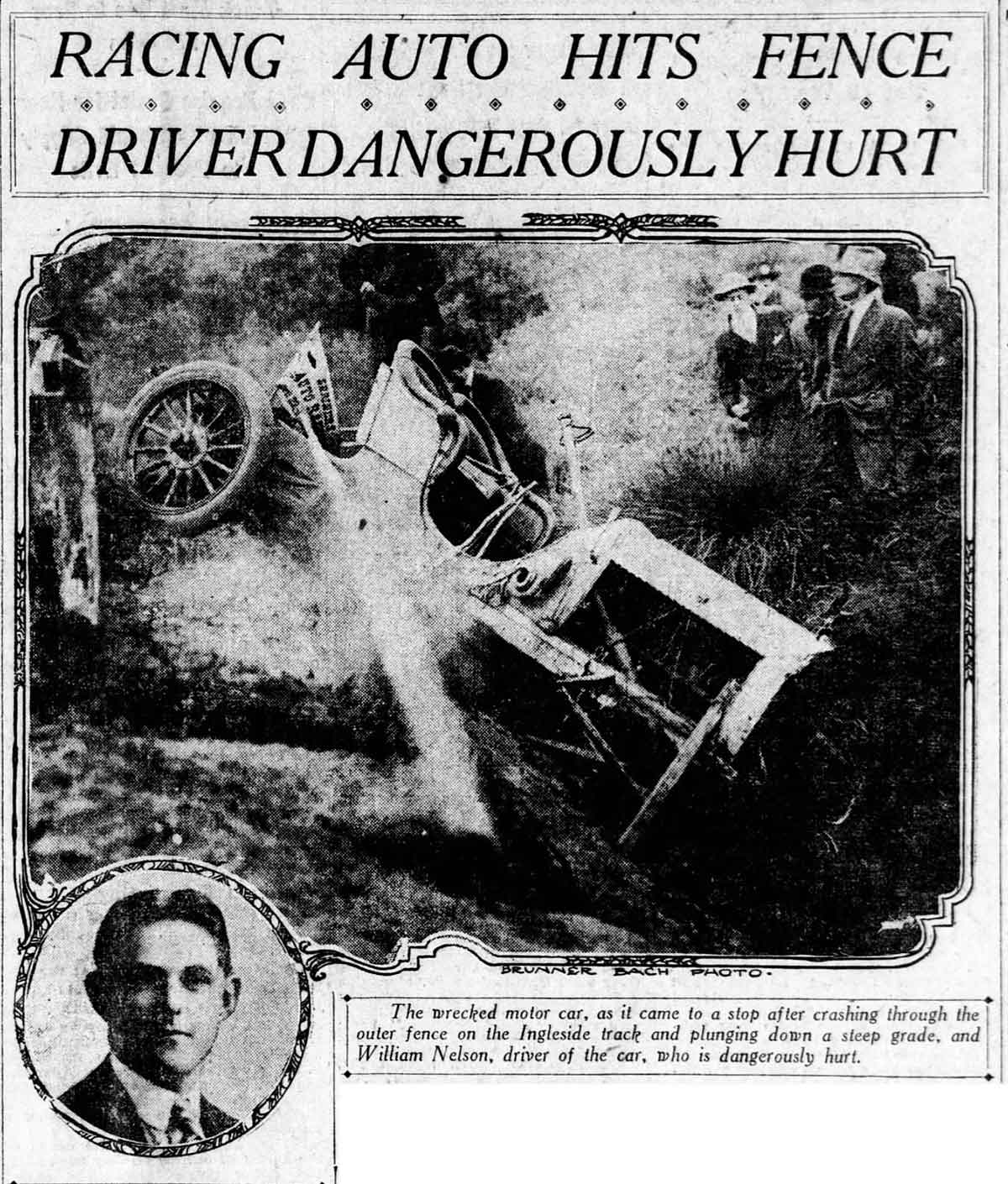
So, the Shriners’ big weekend represented the last races at Ingleside, which maybe was a good thing. Two cars crashed through the fence on turns with three men very scraped up and bruised.
Artsy Photo of the Grab Bag
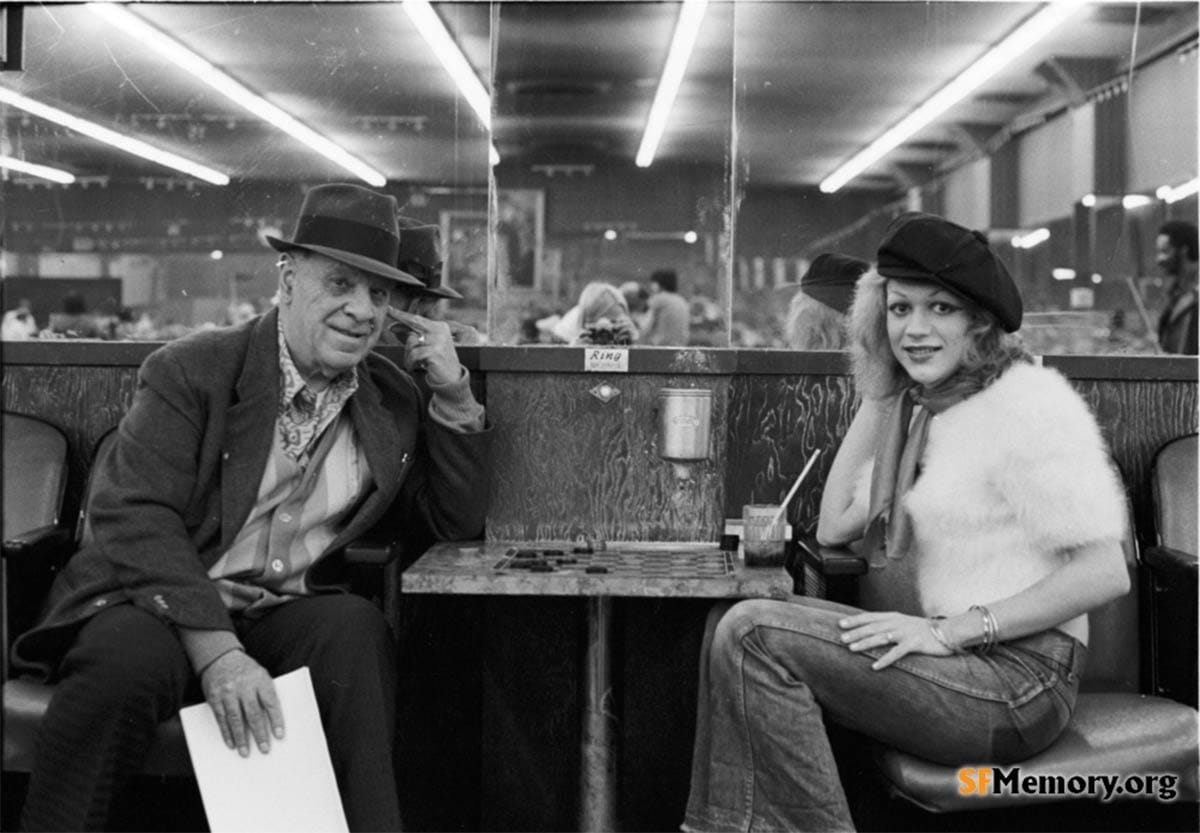
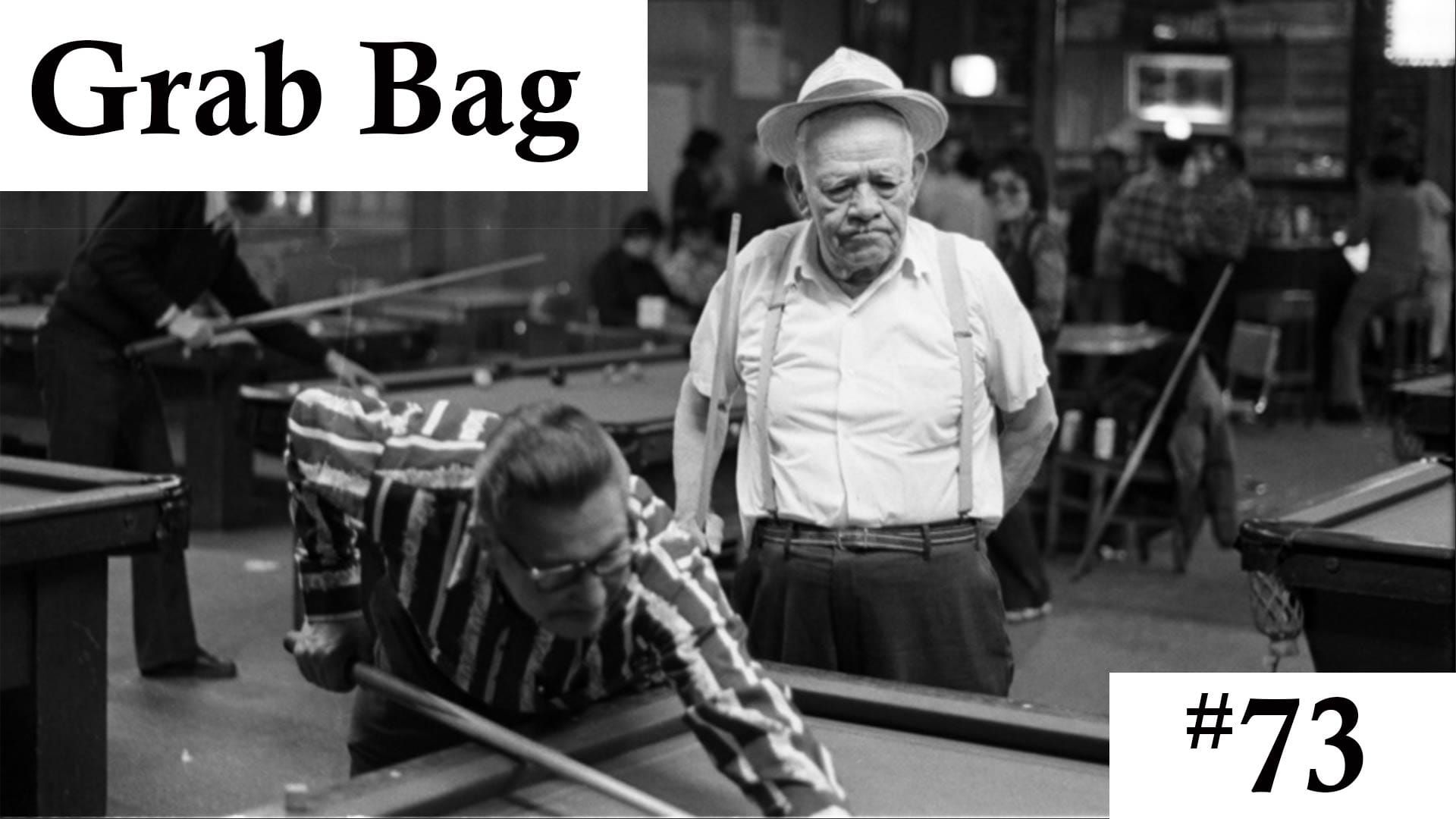
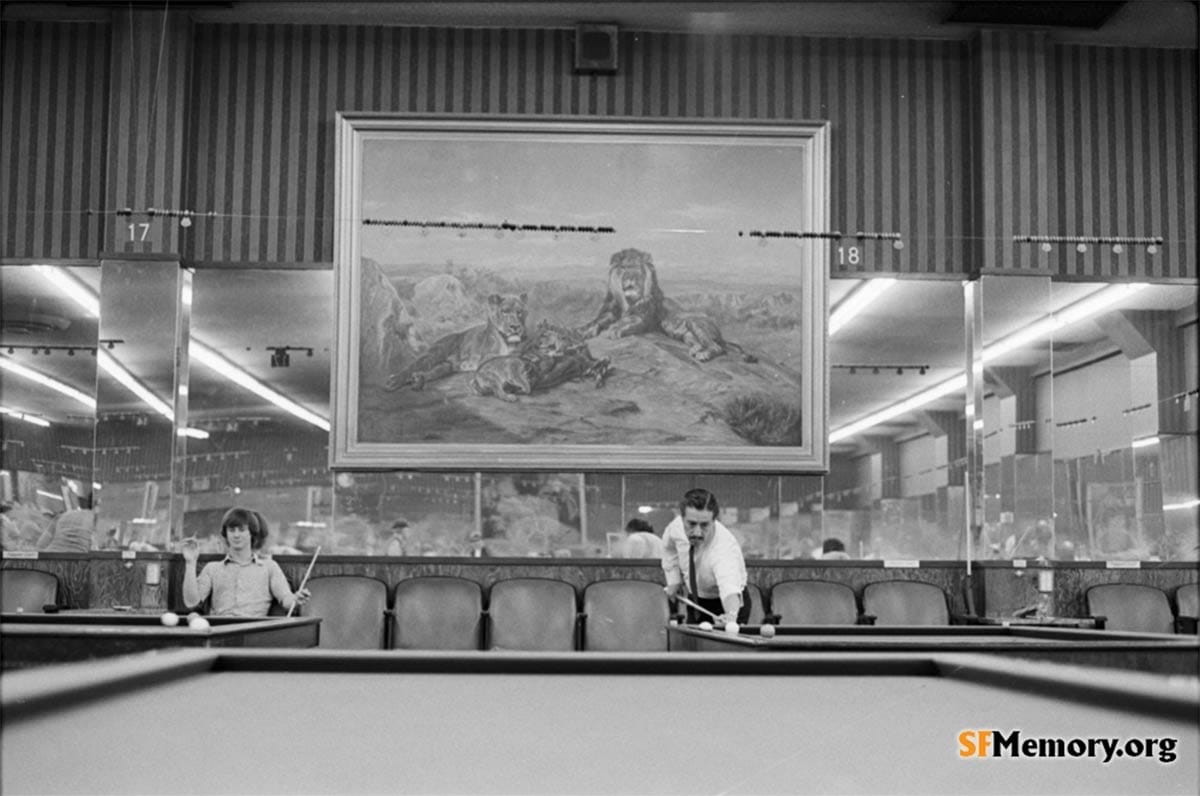
My old friend David Gallagher just made another update to his great SFMemory historical photo site. This batch has lots of streetcar shots, but also a series of portraits and views taken by photographer Diane Ross in Palace Billiards on Market Street in 1974.
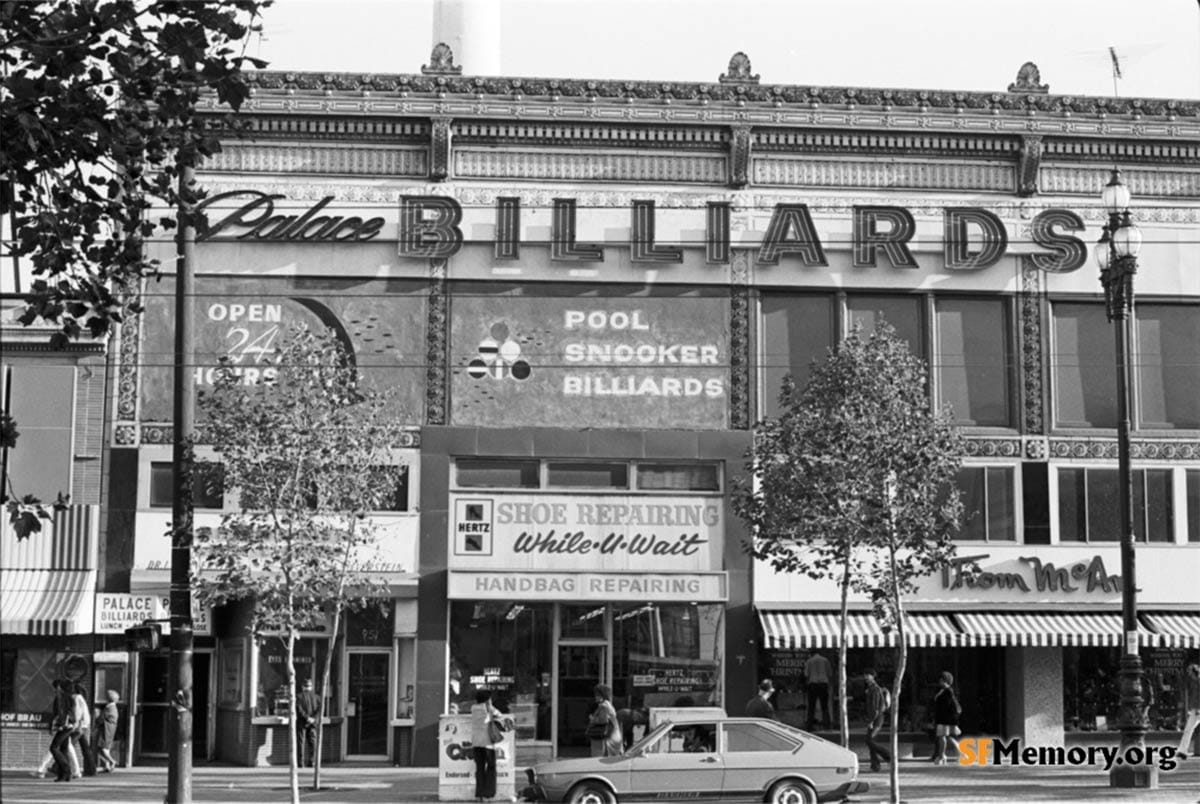
Palace Billiards stood on the south side of Market Street between 5th and 6th streets between the Kress department store and the St. Francis movie theater.
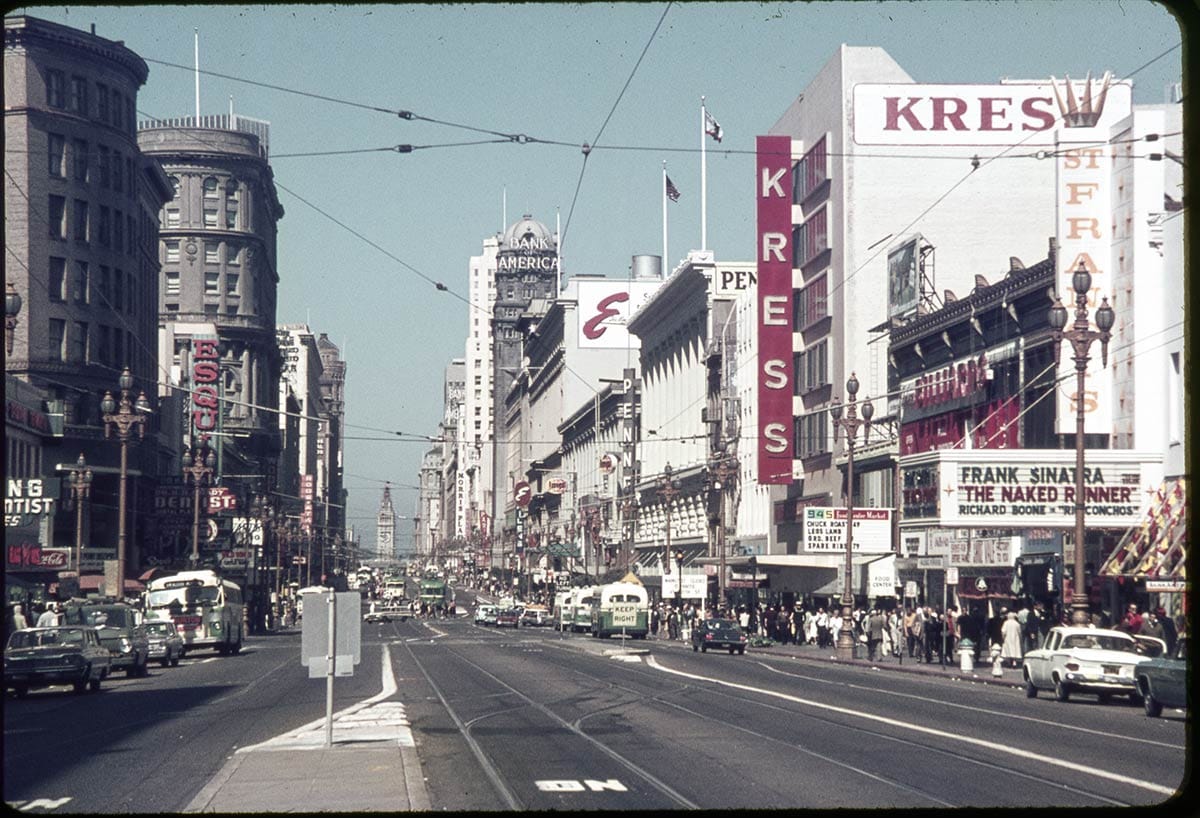
Just from the clothing, the postures, the expressions on the faces of each individual, you know that these human beings had interesting stories to share over a rack or two.
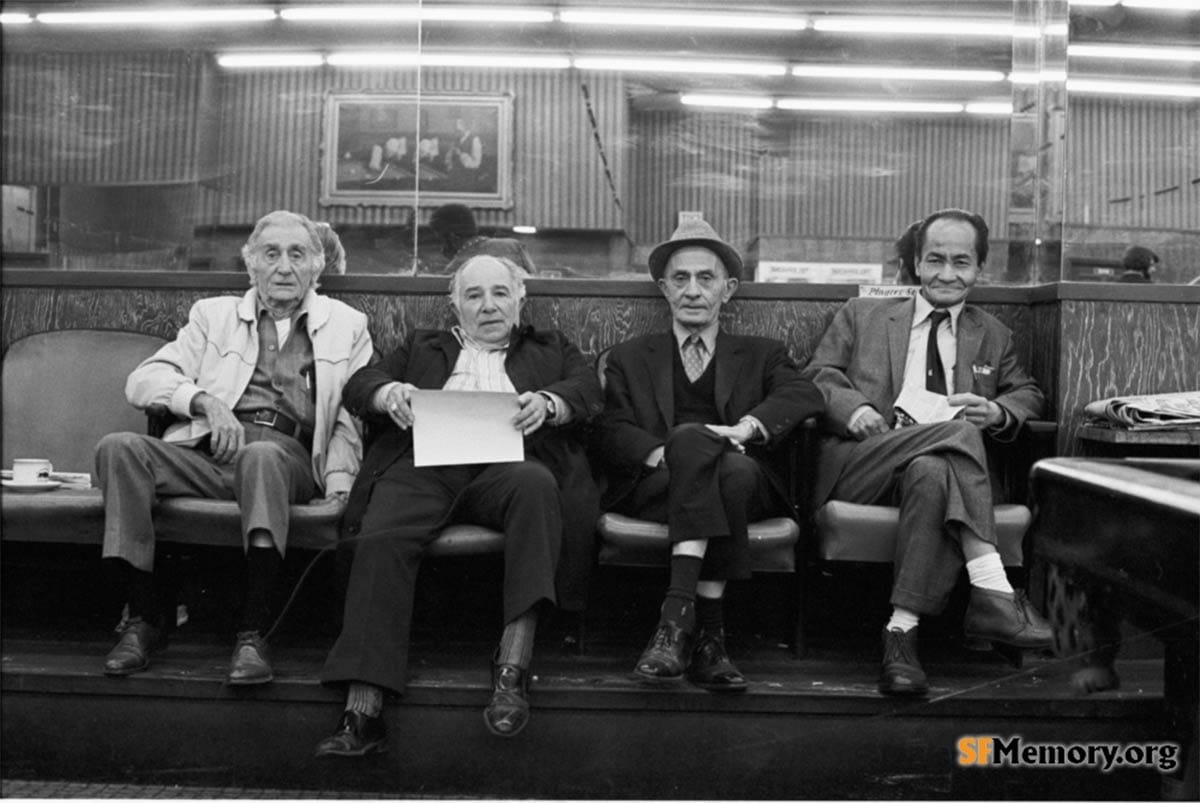
The old building was torn down in 2011 and an IKEA stands in its place.
See all the Palace Billiards images on SFMemory.
More Woody Talking
Speaking of David, you may remember we recorded some 375 episodes of west-side San Francisco history podcasts back in the 2010s at Western Neighborhoods Project.
Our later co-host Nicole Meldahl kept Outside Lands San Francisco chugging on when she took my place as WNP executive director.
Guest hosts Al Barna and Randall Ann Homan recently had me return to talk about the city’s legacy businesses program (which SF Heritage initiated) and to share some of my favorites on the left side of town.
Frequent Woody readers will not be surprised if Simple Pleasures and the Plough and the Stars are mentioned. 😄
Time Travel Meal via Old Postcard
In the same city and about the same era as the Palace Billiards shots, but in every other way completely different, what do you say we meet about 1976 for a corned beef sandwich at “The Edwardian” on Fillmore Street?
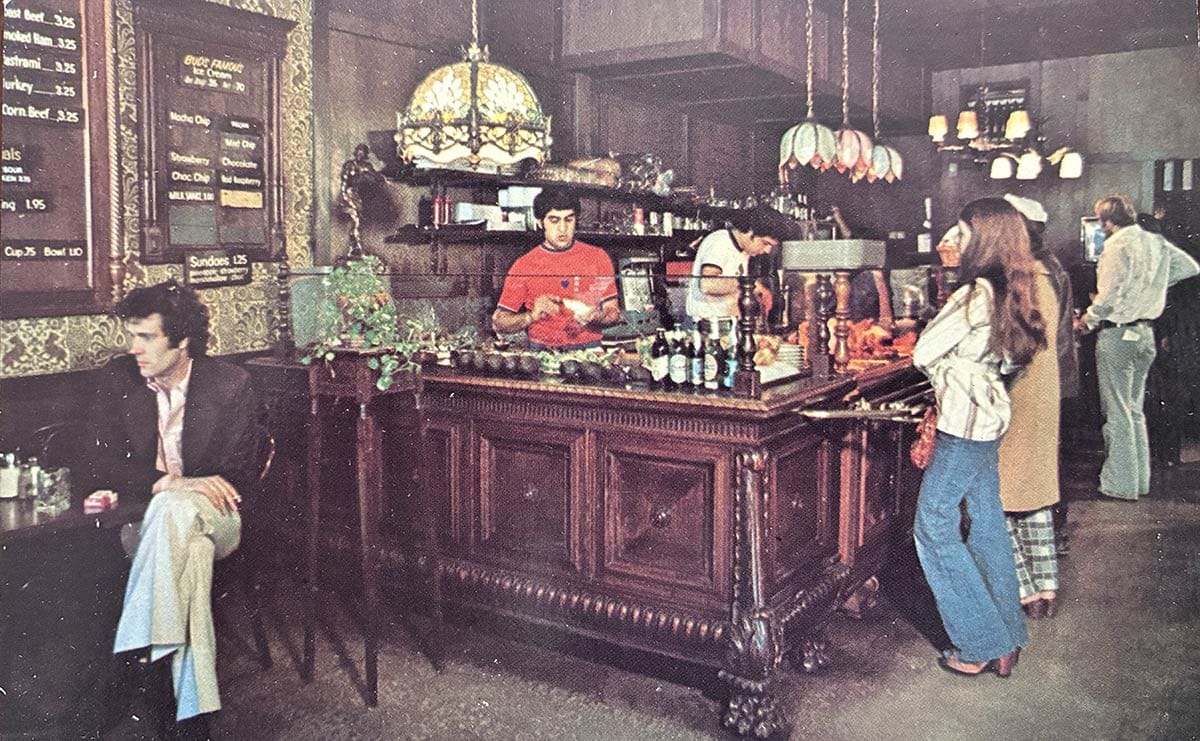
The postcard’s back reads: “San Francisco’s most beautiful restaurant set in a warm atmosphere amid Victorian antiques, featuring hofbrau style food, generous sandwiches and delightful fresh sandwiches.”
The Edwardian had a branch at 1150 Polk Street for a while and in 1979 you could get a “complete Thanksgiving dinner” at either location for $4.95.
I drank with these yuppies at the dawn of the 1980s, but across the street at the Pierce Street Annex. (I wrote about that in Grab Bag #46, this week all free to all.) Apparently, I missed out on some good sandwich.
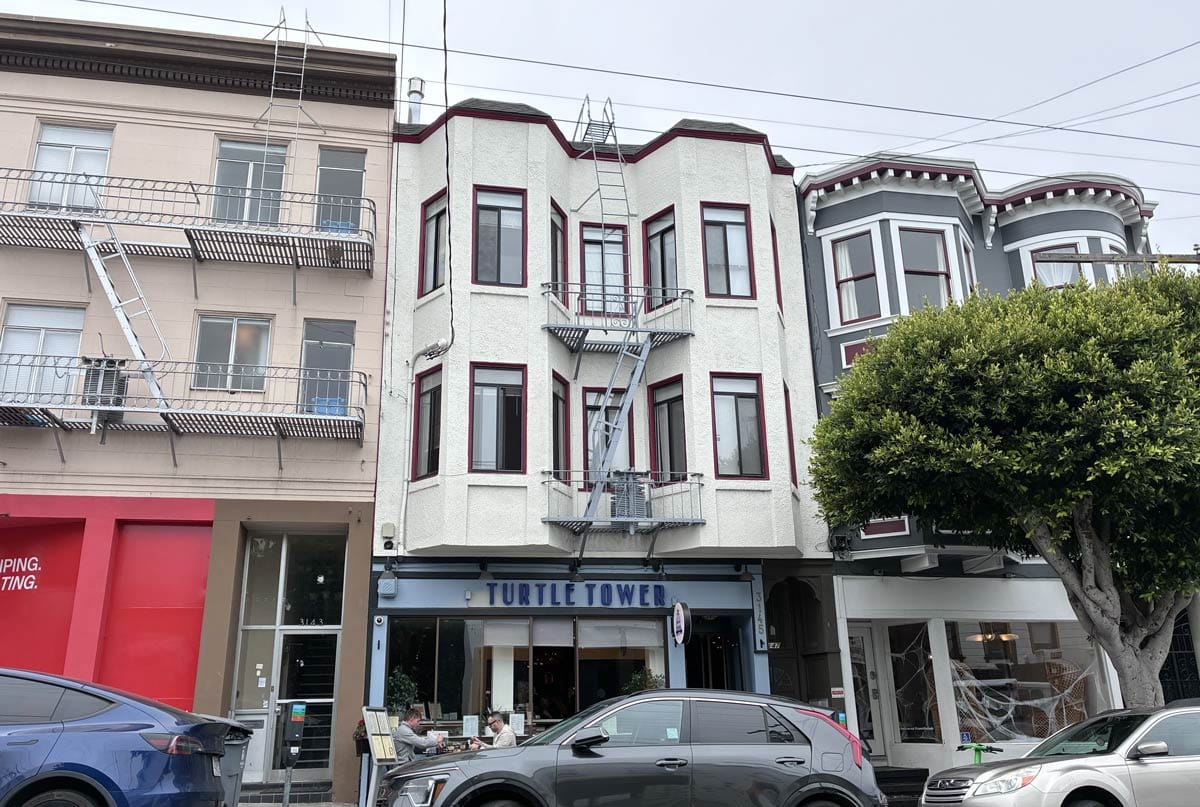
Today, you can get pho in the same location instead. Vietnamese restaurant Turtle Tower recently moved into 3145 Fillmore Street.
Book Recommendation of the Grab Bag
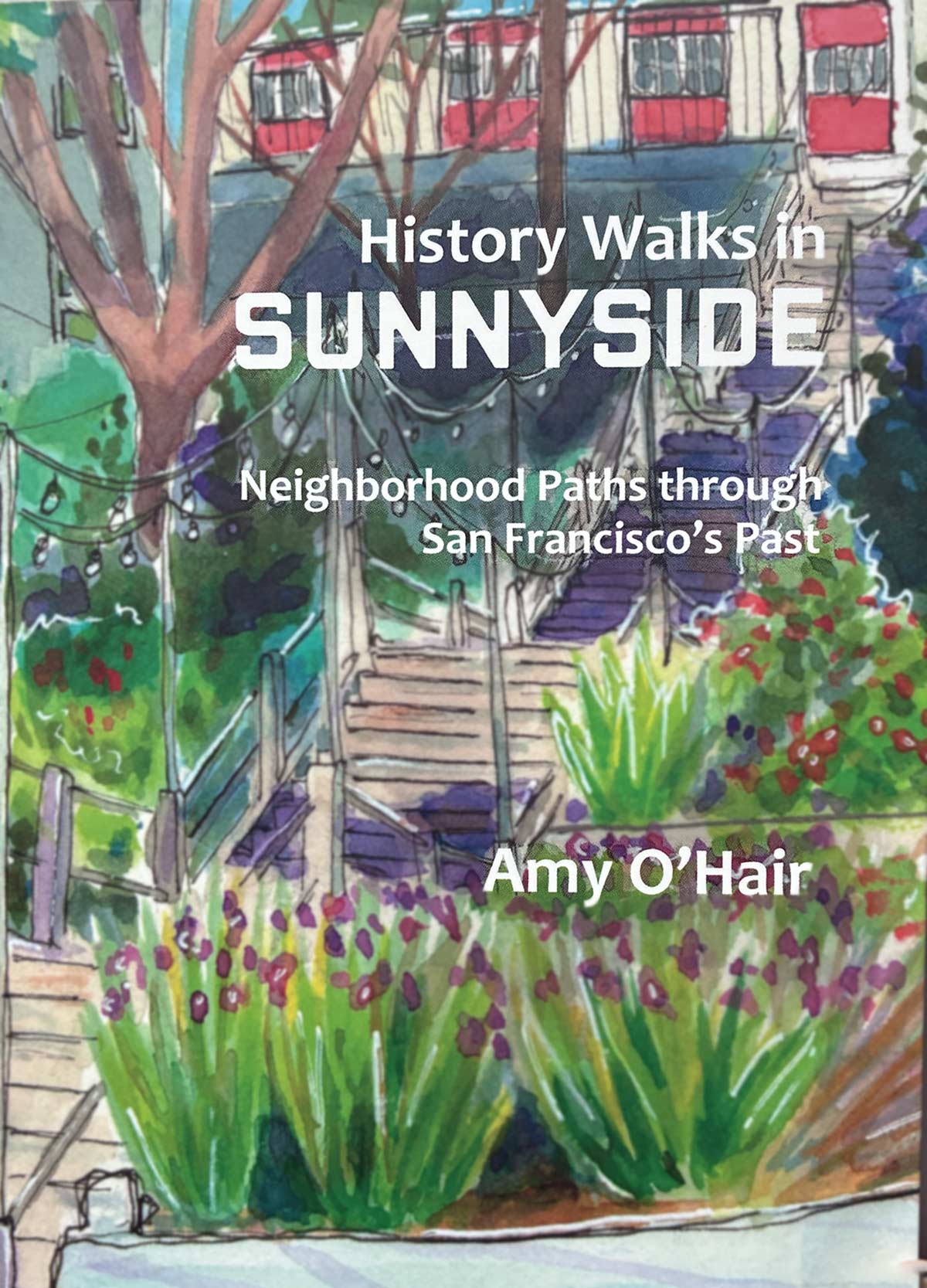
My history friend Amy O’Hair just came out with a terrific little book, History Walks in Sunnyside: Neighborhood Paths through San Francisco’s Past. It is a very handsome thing.
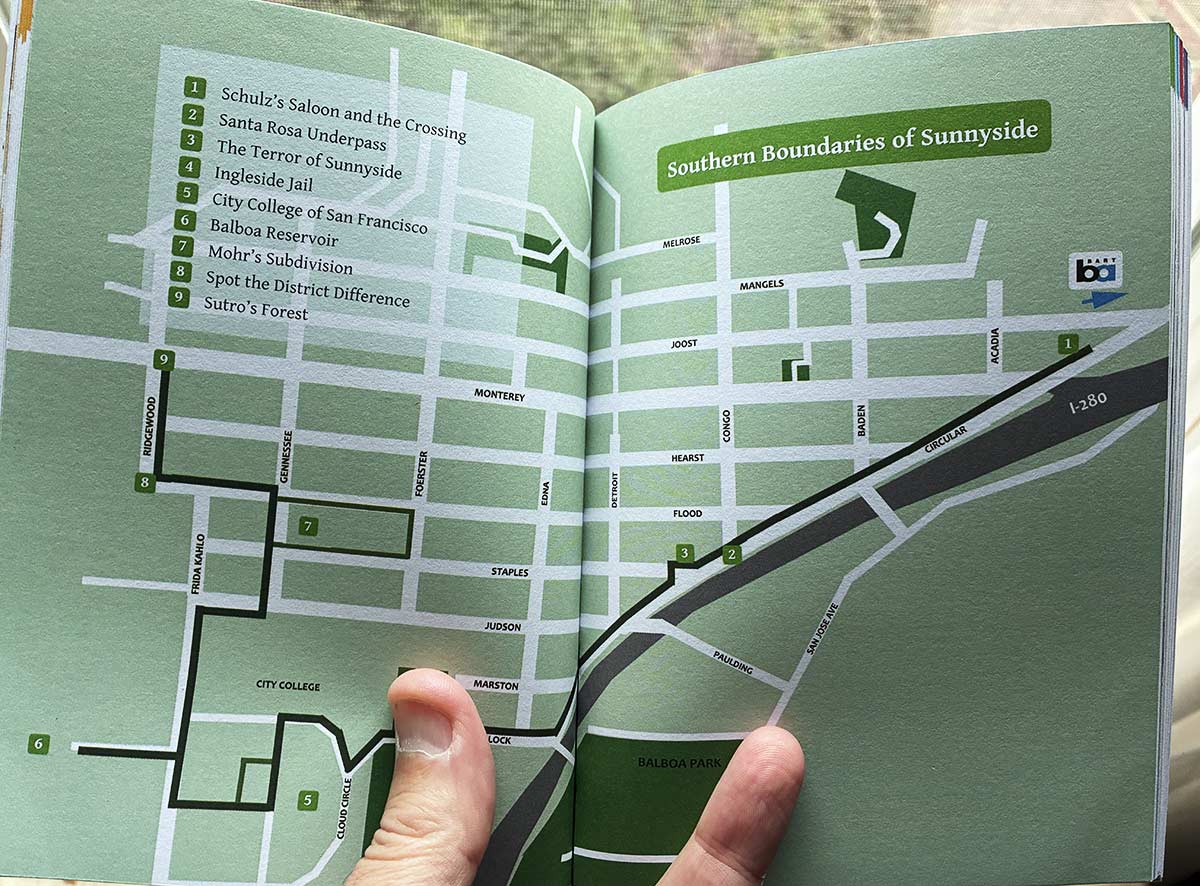
Amy is a superb researcher and chronicler of the neighborhood nestled on the south side of Mount Davidson between Glen Park and City College. She blogs about it at her Sunnyside History Project, which was an invaluable resource for chapters of my Geneva Car Barn book published in April.
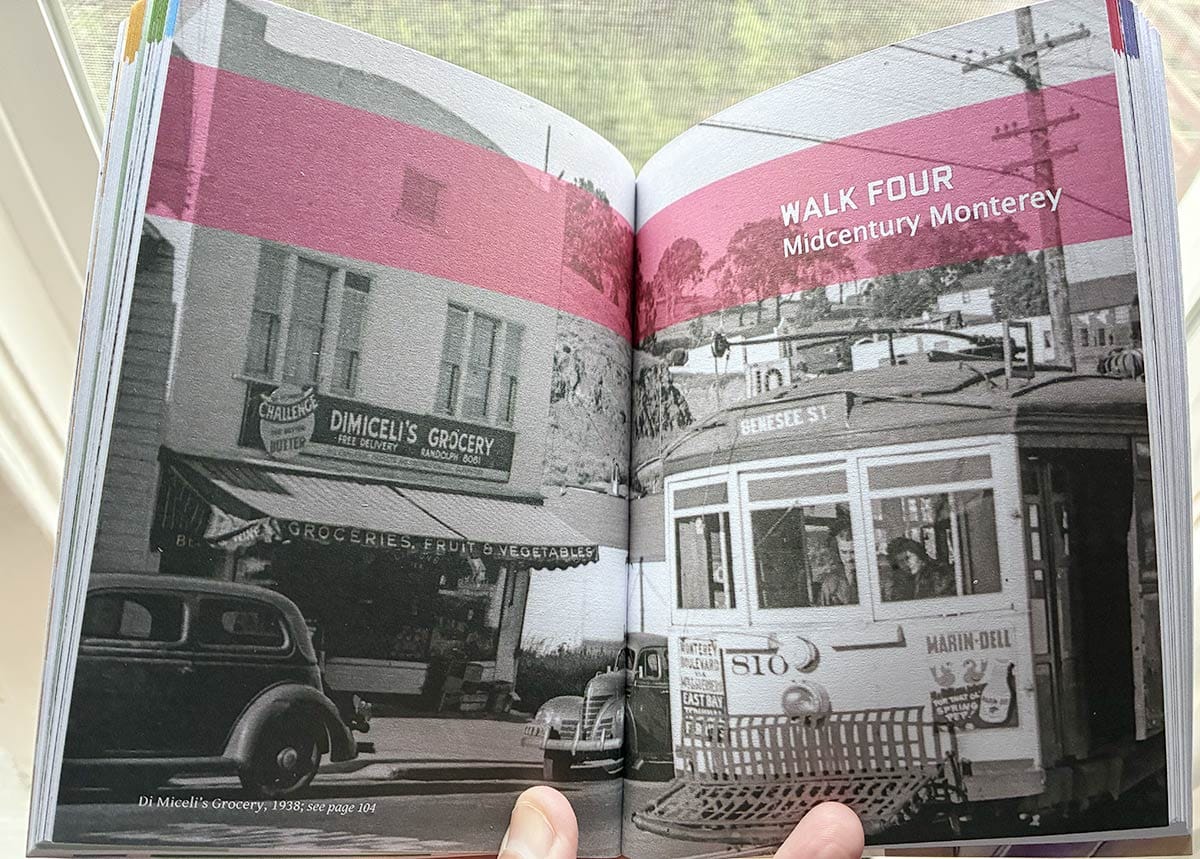
With this pocket-sized volume (well, big-coat-pocket-sized perhaps), Amy created a very attractive, accessible, and entertaining book to share her years of deep digging and encourage people to get outside and learn the neighborhood’s ins and outs and ups and downs (there are a number of staircase paths in Sunnyside).
You can buy it here, and Amy says it is also on the shelves at Bird and Beckett in Glen Park, and Dog Eared Books in the Mission District.
Guess Where Answer
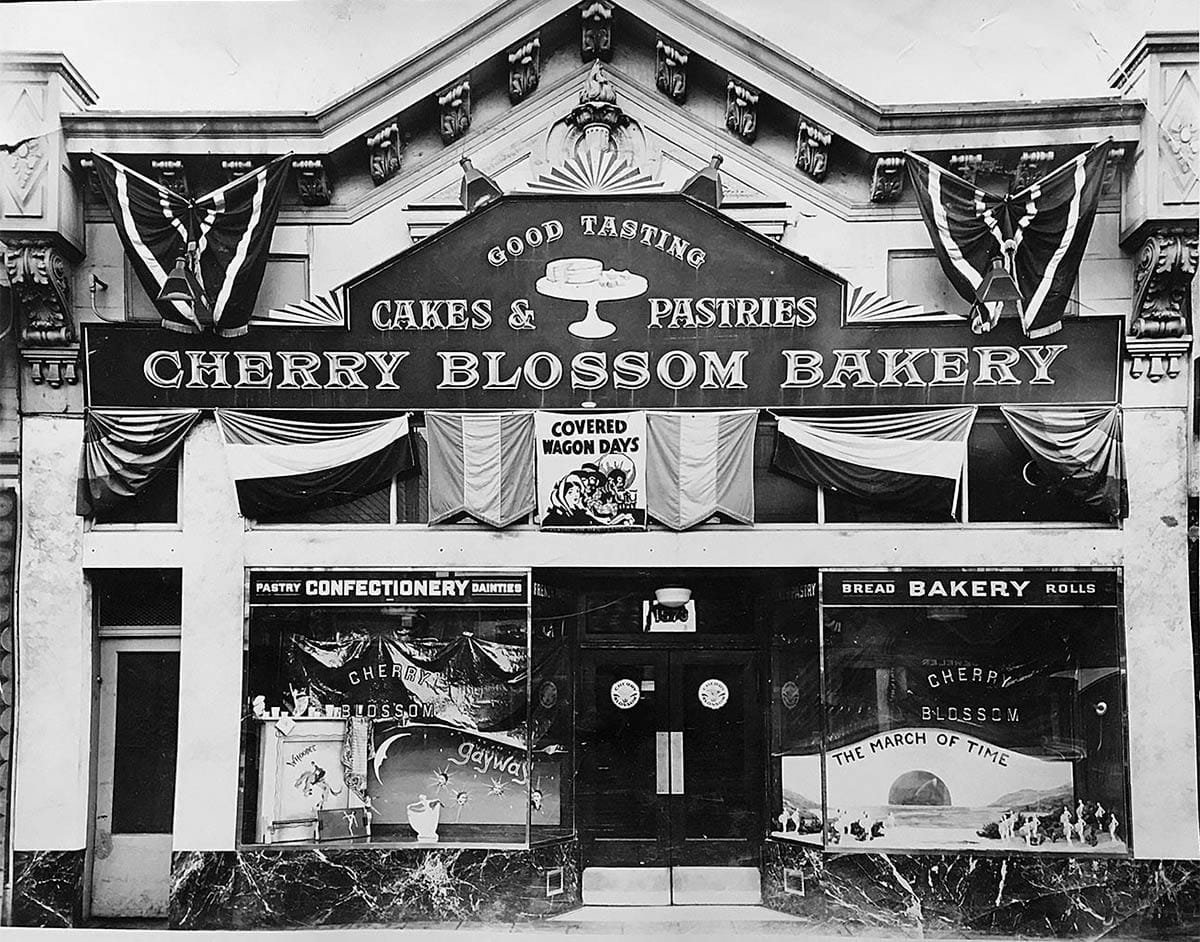
No one will blame you for not recognizing this nice building at 1573 Haight Street between Clayton and Ashbury streets. It looks a little different in 2026:
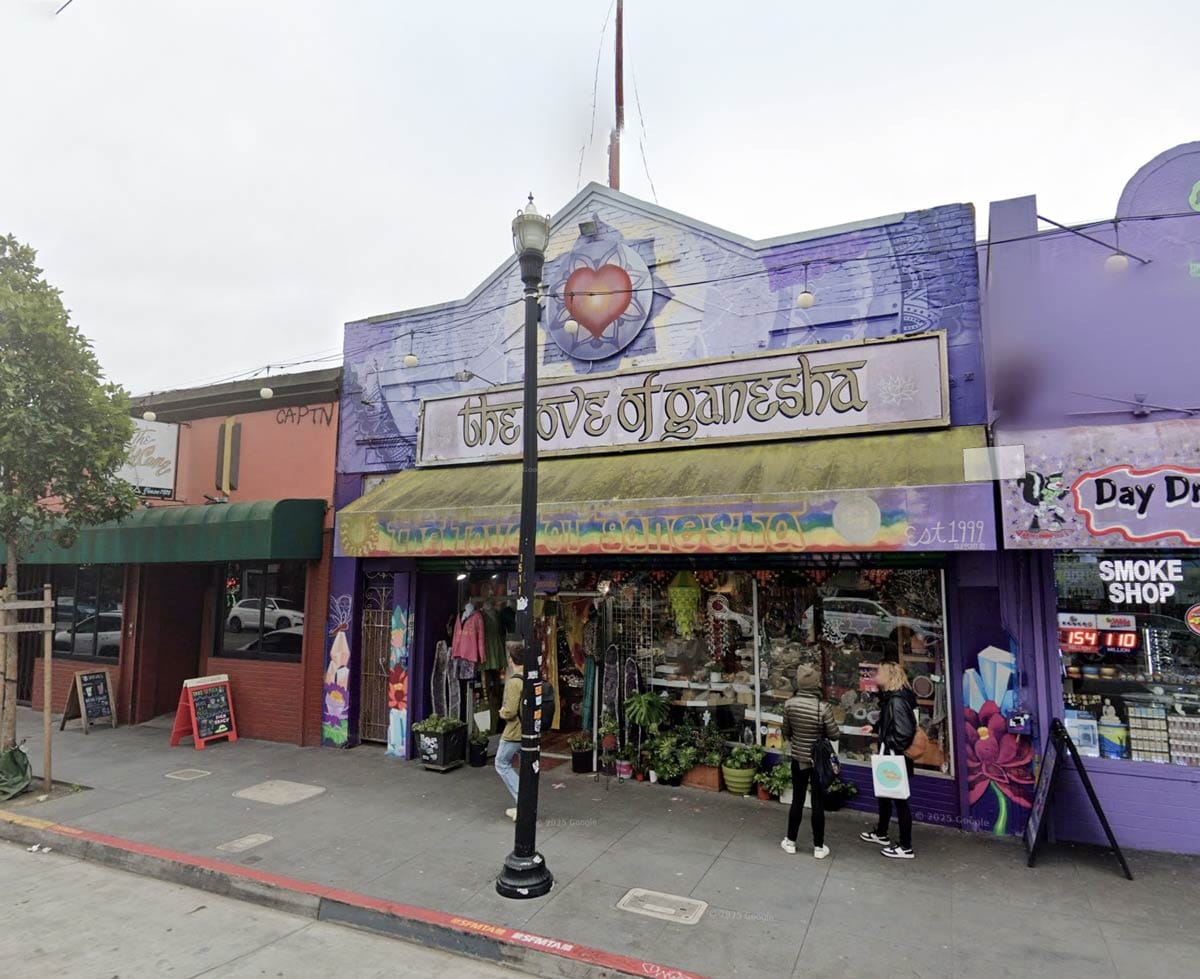
The real question you should investigate is does “The Love of Ganesha” still look like this inside?
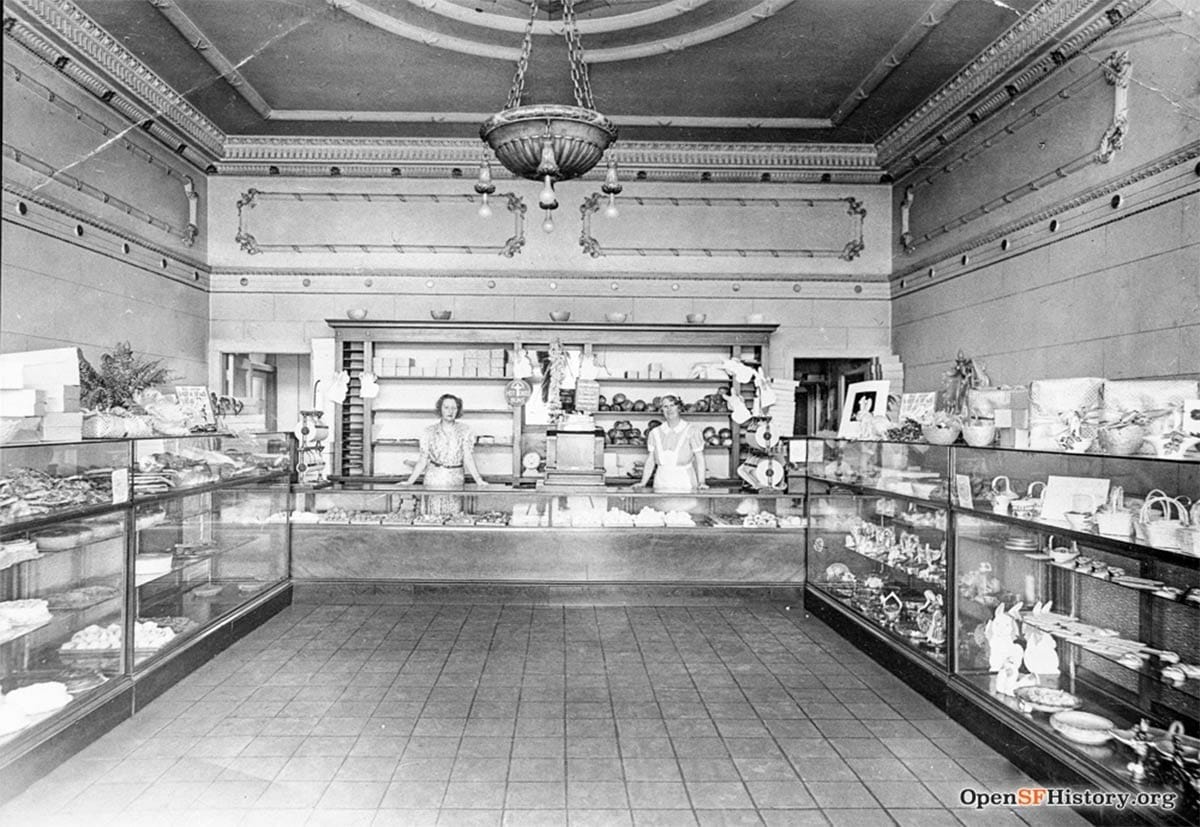
I showed off the Cherry Blossom Bakery in a four-article series on Haight Street commercial history for SF Heritage in 2022. For posterity’s sake here are all the posts:
Part 1: Haight-Ashbury's Retail Beginnings
Part 2: Haight-Ashbury: Well Groomed, Brisk, and Alive (1906-1950s history)
Part 3: Haight Street Turns On (1960s & Summer of Love)
Part 4: Haight Street Renaissance (1970s-1980s)
Woody Beer and Coffee Fund
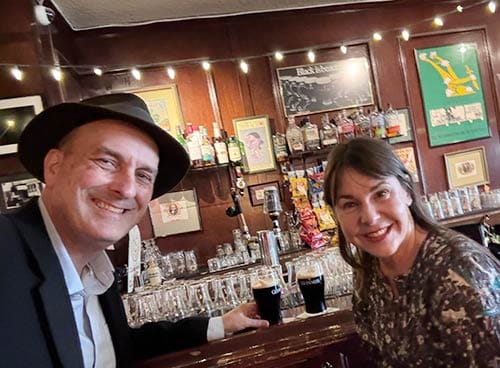
Great thanks to Linda G. (F.O.W.) for contributing to the make-Woody-buy-someone-a-drink fund. Referencing last week’s State Belt post Linda wrote “Thanks for another fascinating story and trip down memory lane.”
No, thank you, Linda. It is a great honor when people read what I write.
All you reading now: let me know when we can have a coffee or a beer or a tea or malted milkshake. I need to spend down some of this fund.
Sources
“Start Survey of Ingleside Tract,” San Francisco Chronicle, March 2, 1910, pg. 9.
“Speeding Automobile Crashes into Fence,” San Francisco Chronicle, April 25, 1910, pg. 1.
“Ingleside Club Buys Fair Stock,” San Francisco Chronicle, May 16, 1910, pg. 5.
Jonathan Eddy, “Edwardian Sandwiches and Tsin Tsin Potstickers.” San Francisco Examiner & Chronicle, May 19, 1974, Datebook section, pg. 13.