
Ocean Beach Pier
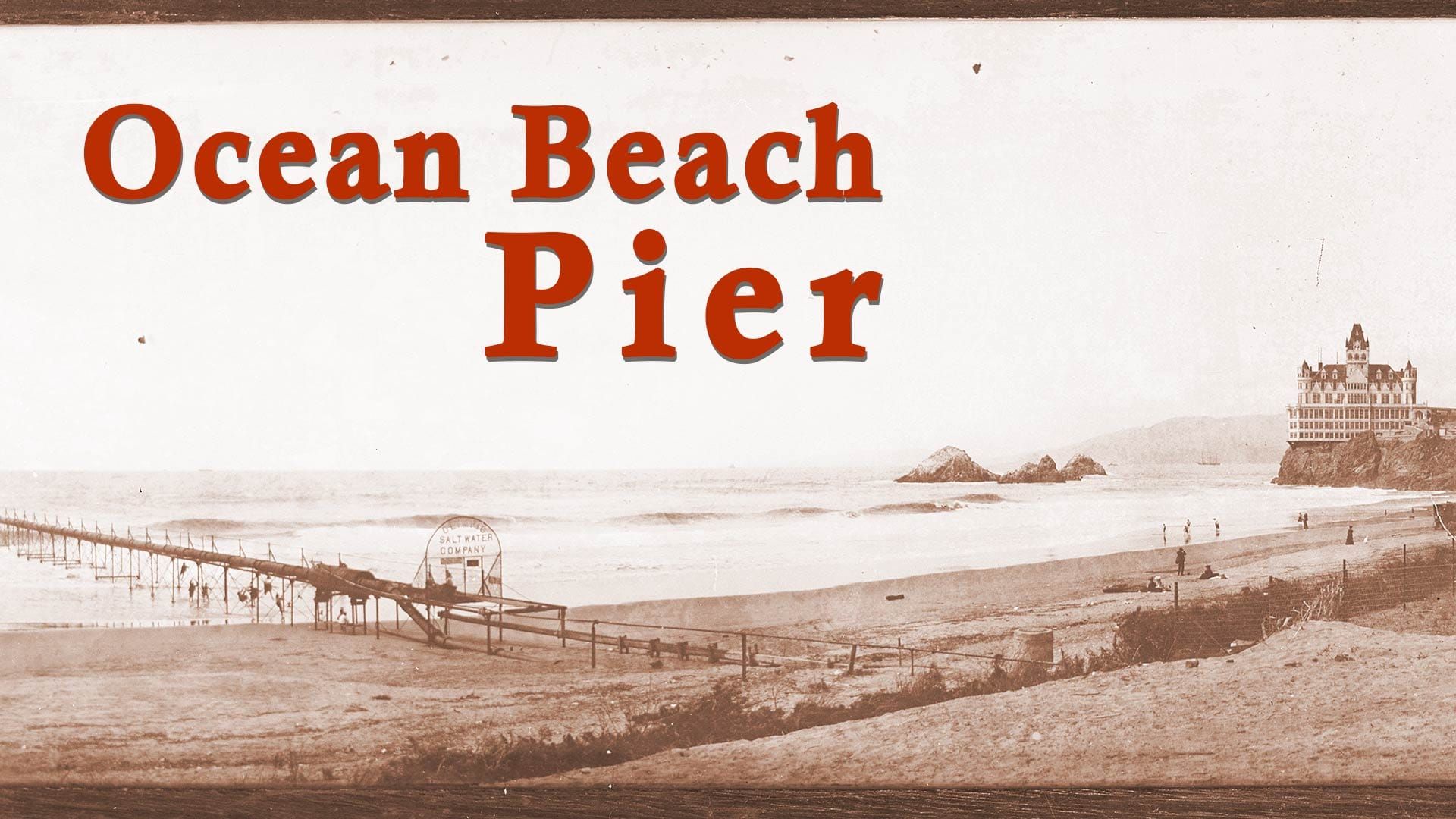
From 1894 to 1967, an unusual San Francisco pier served an unusual purpose.

In the post I wrote a few weeks ago about The Gables bar, I mentioned the M&M Baths next door which “used salt water straight from the Pacific.”
The M&M wasn’t the only swimming facility with salt water pools. How they received their ocean brine explains a mystery for many looking at old views of San Francisco’s Ocean Beach.
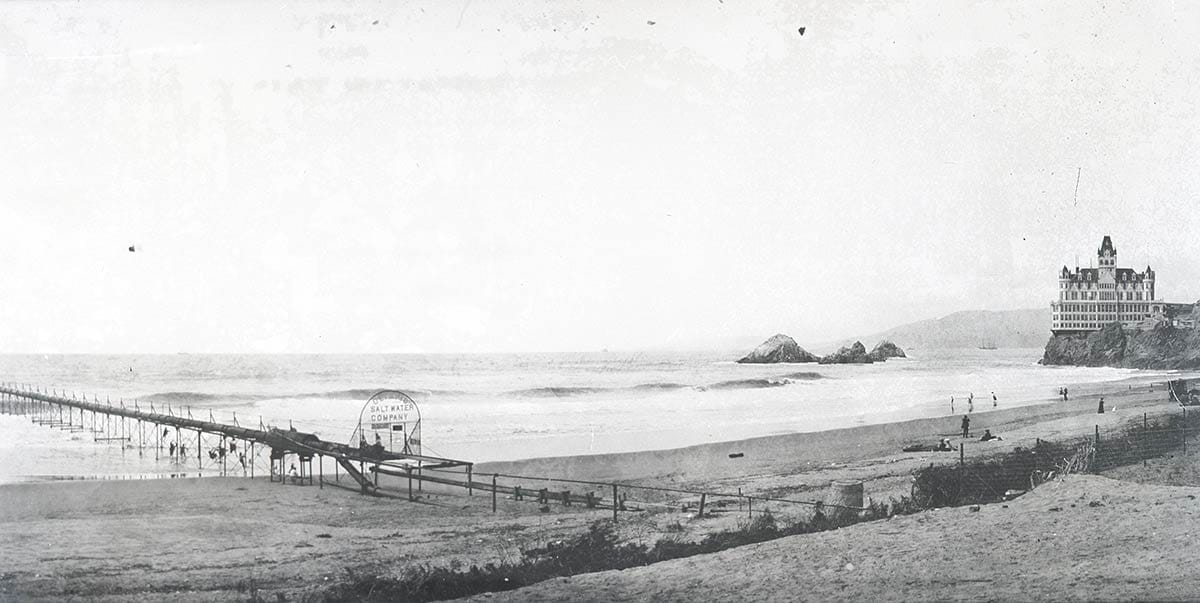
Between the 1890s and 1960s, aerials shots and photos south from the Cliff House and Sutro Heights show a pier stretching out past the beach breakers. From a distance it could be mistaken for a place to promenade, launch small craft, or fish.
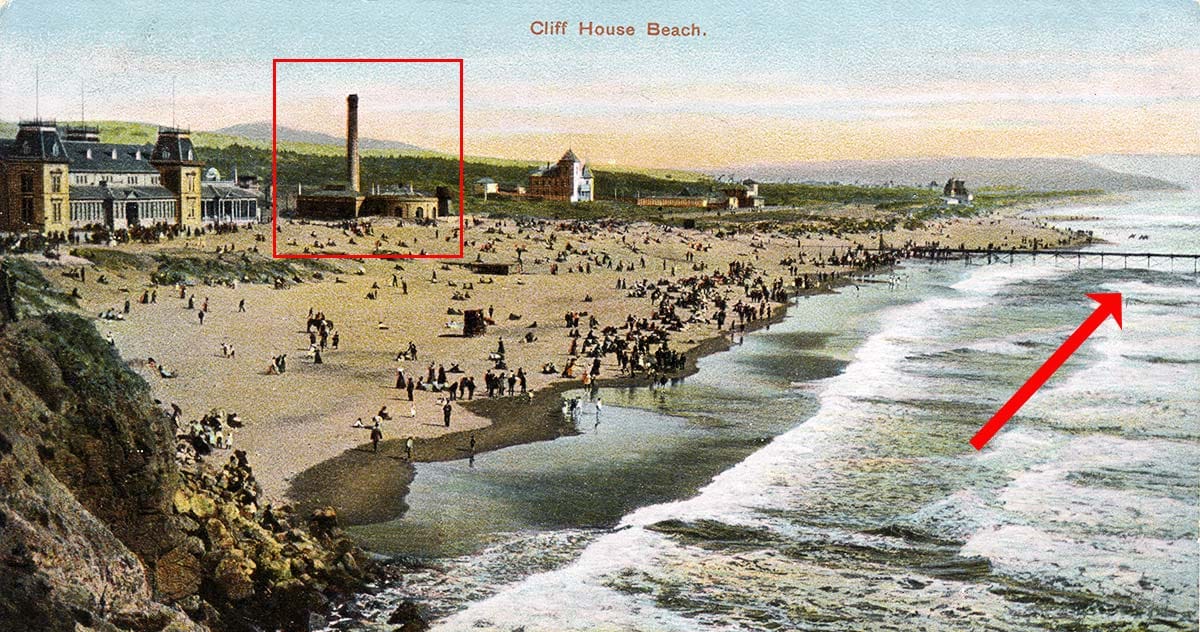
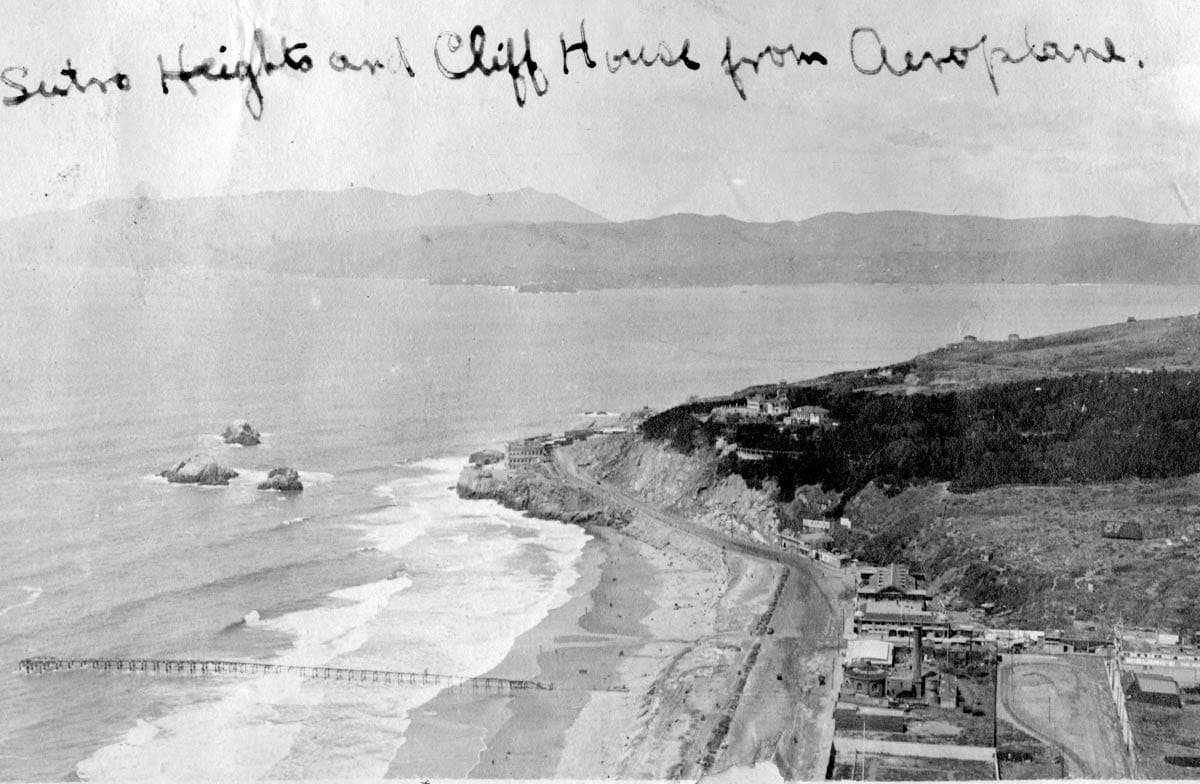
But up close, the pier was little more than a support structure for a long iron pipe emerging from the sand just south of where Balboa Street intersects with the beach:
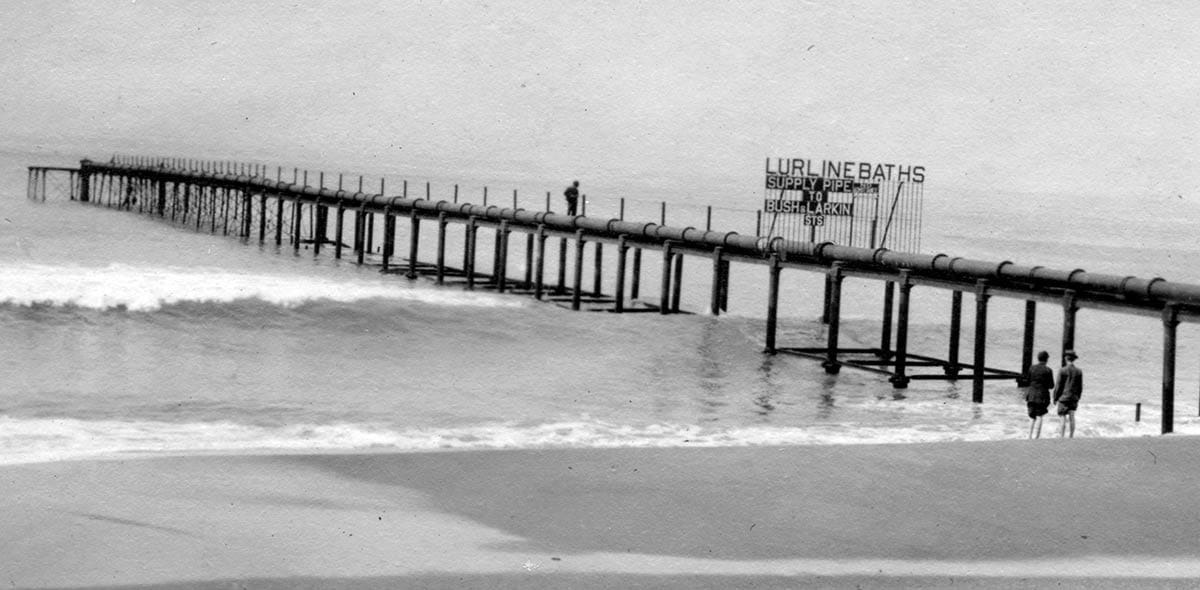
So this wasn’t some large pleasure pier like in Santa Monica. The framework, the pipe, and a nearby smokestack and round brick pumphouse were all part of an early 1890s idea to boost membership in an athletic club.
While the health benefits of salt-water immersion had been promoted since antiquity, increased pollution of bays, rivers, and lakes only increased the popularity and reputation of seaside swimming and wading in the 19th century. Salt water bathing and even breathing ocean mists were considered salubrious and restorative.
William Greer Harrison, president of the athletically focused, all-male Olympic Club, came up with the idea of pumping seawater from Ocean Beach to the club building on Post Street between Mason and Taylor streets for a saltwater pool. He believed the addition would juice membership enrollment and bring in some new blood.
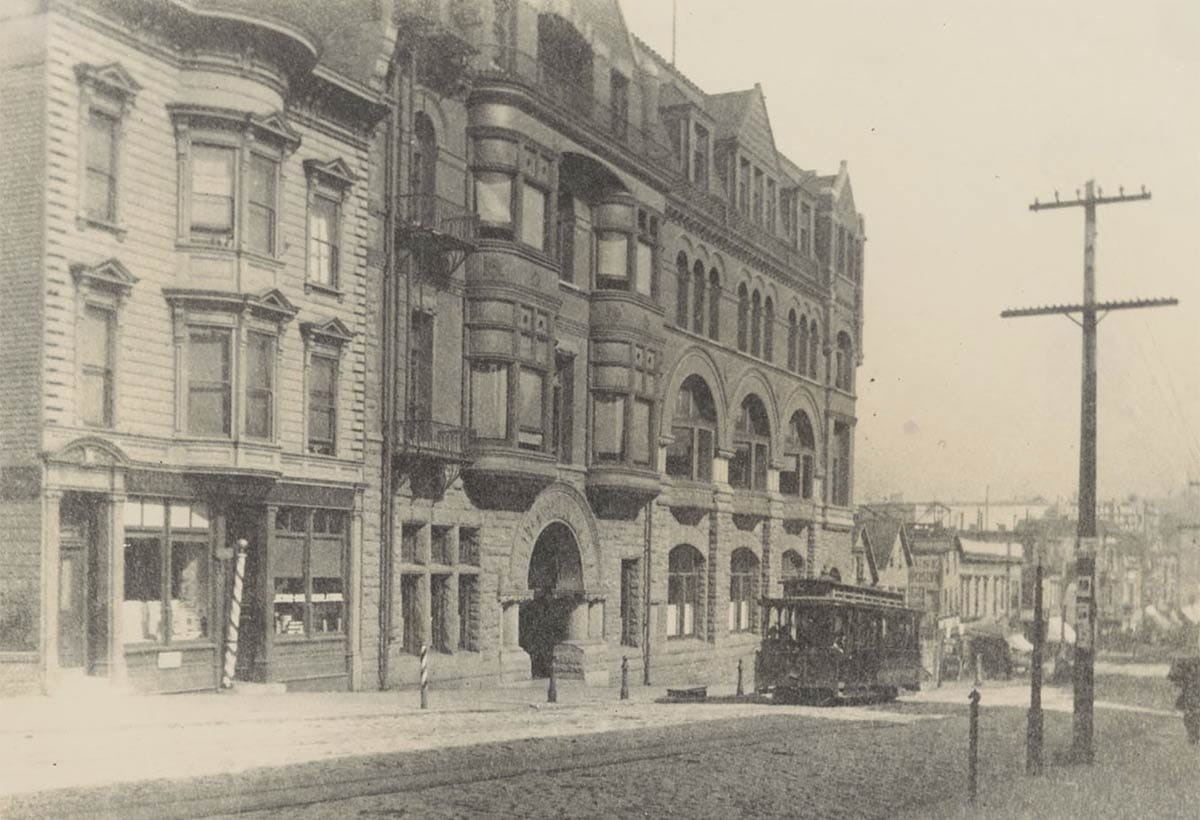
In 1892, the directors of the newly formed Olympic Salt Water Company—all but one of who were Olympic Club members—secured rights from the city to transport seawater across town for fifty years.
The company built an iron pier supporting and protecting a 16-inch-diameter intake pipe that ran more than 300 yards out from the shore. A pumping station a few hundred yards from the surf and just south of today’s Balboa Street sent the water through miles of pipe across the then-mostly-empty Richmond District and Western Addition to Post Street and other points east.
Part of the pitch given the board of supervisors was the company would make salt water available for baths in private homes along the route, to use for flushing sewer lines and cleaning streets, and for fighting fires on the west side of town. (More than 40 hydrants along the route were connected to the salt-water pipe as far as Van Ness Avenue.)
The whole enterprise, however, was really about doing laps in salty water and filling soaking tubs. Bathhouses like the M&M, Neptune, and Hamman were the primary customers outside the Olympic Club.
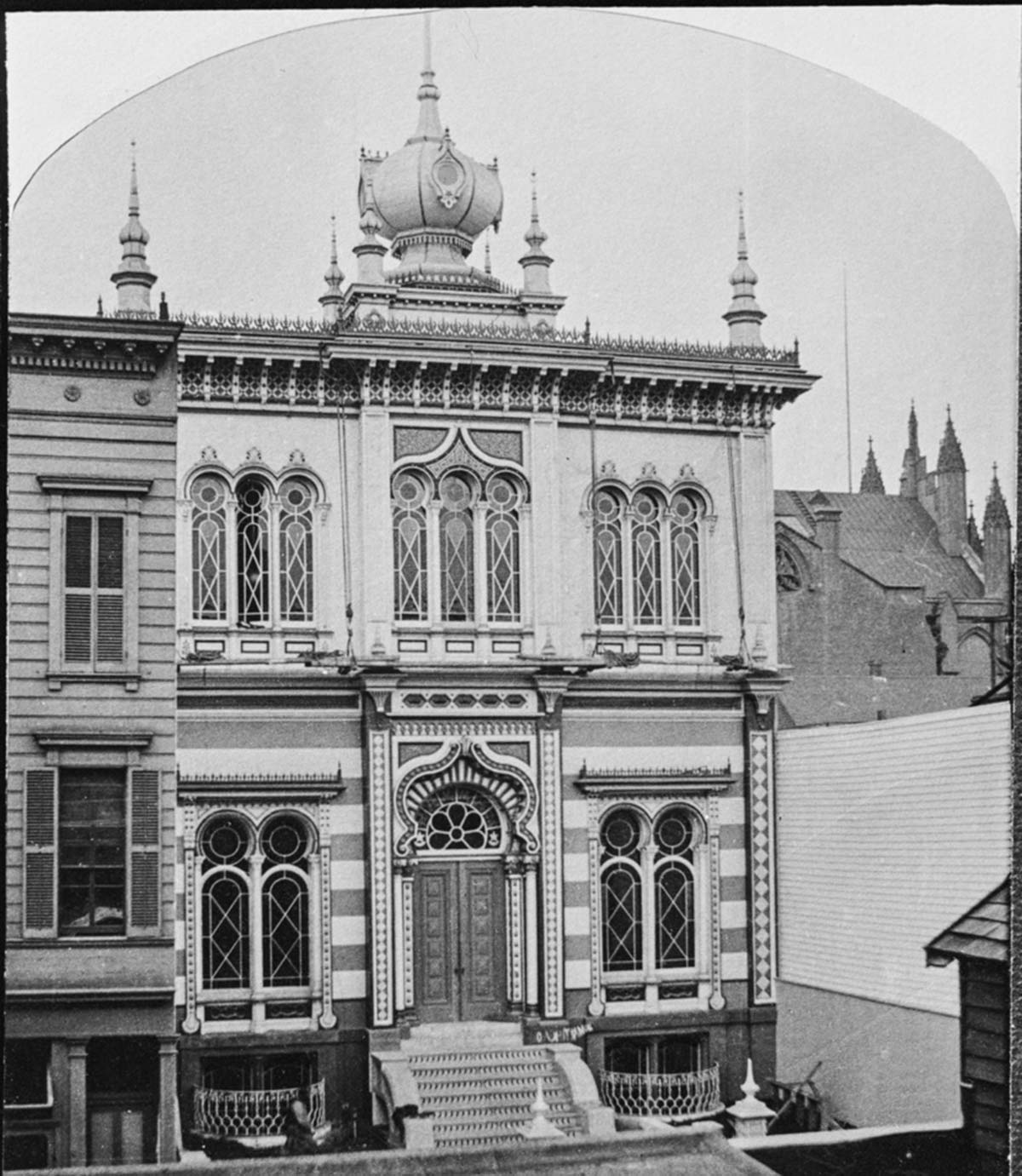
The Olympic Club contracted for 200,000 gallons of seawater a day and the new pool or “plunge” opened in 1894. It proved an immediate success and, as hoped, increased membership.
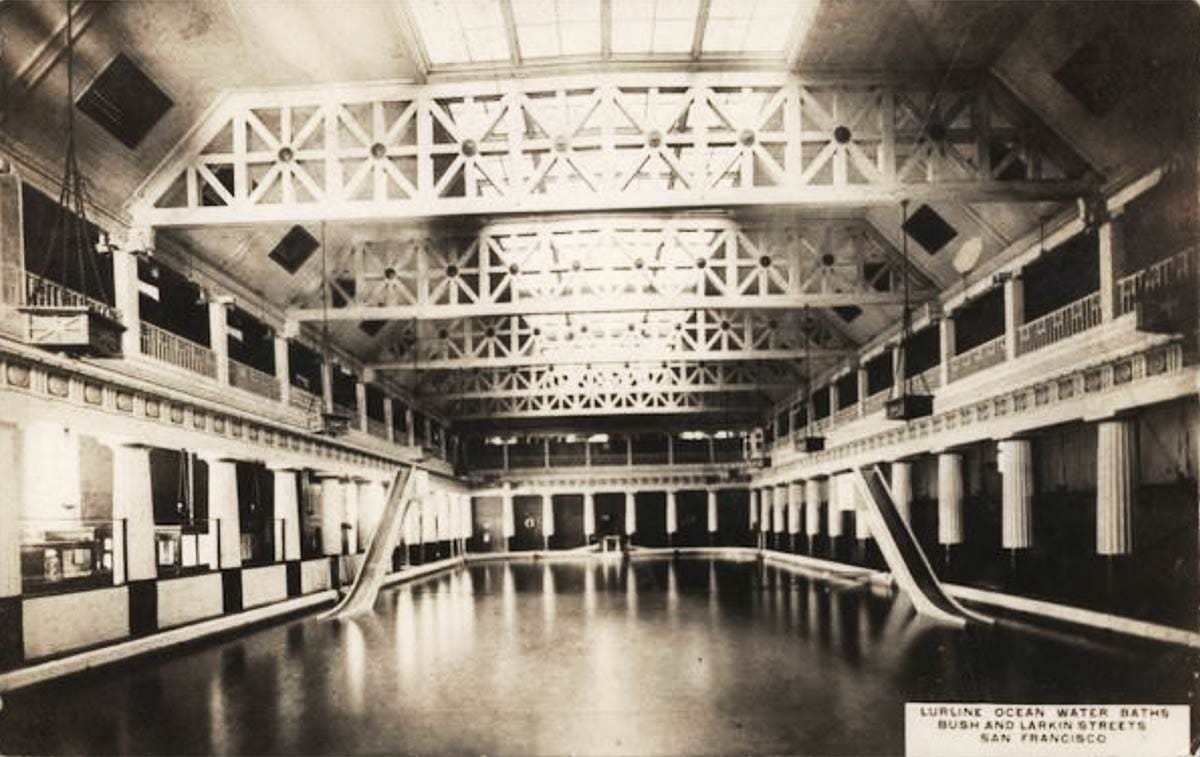
The pipeline inspired construction of a new enterprise, the Lurline Baths, on the northwest corner of Bush and Larkin streets. The swimming pool center opened to the public in 1894.
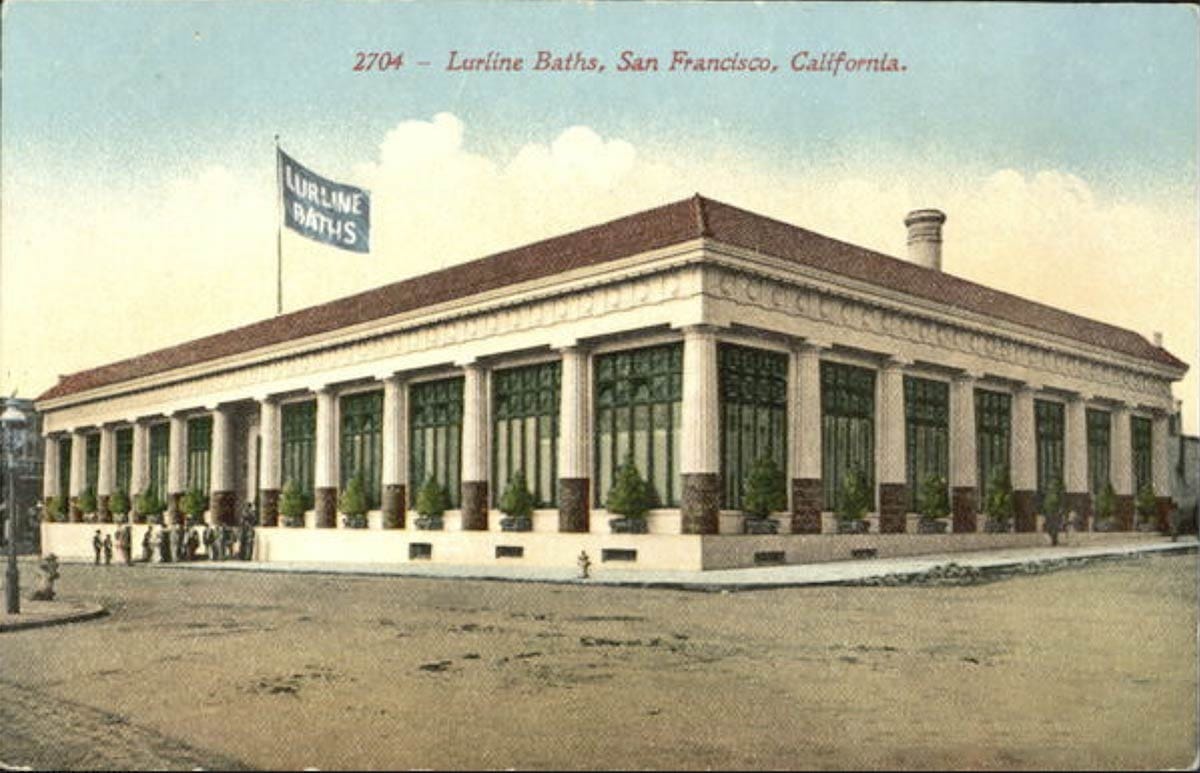
For 30 cents, one could rent a suit and swim not only in cold brine, but also in heated water courtesy of an arrangement with the nearby Sutter Street Cable Company to run the ocean-water mains through its powerhouse steam engines.
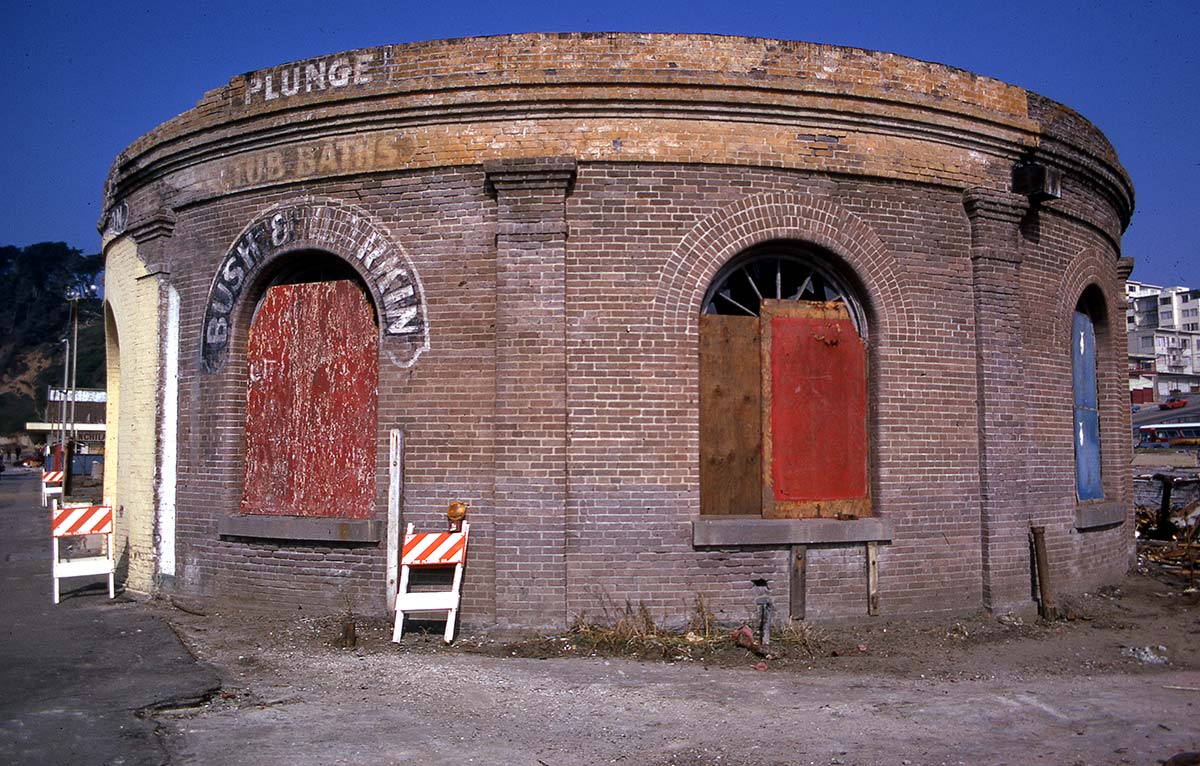
The Ocean Beach pumphouse which made all this water delivery possible was a 30-foot-in-diameter brick building designed to look like “the porter’s lodge of an English county home.”
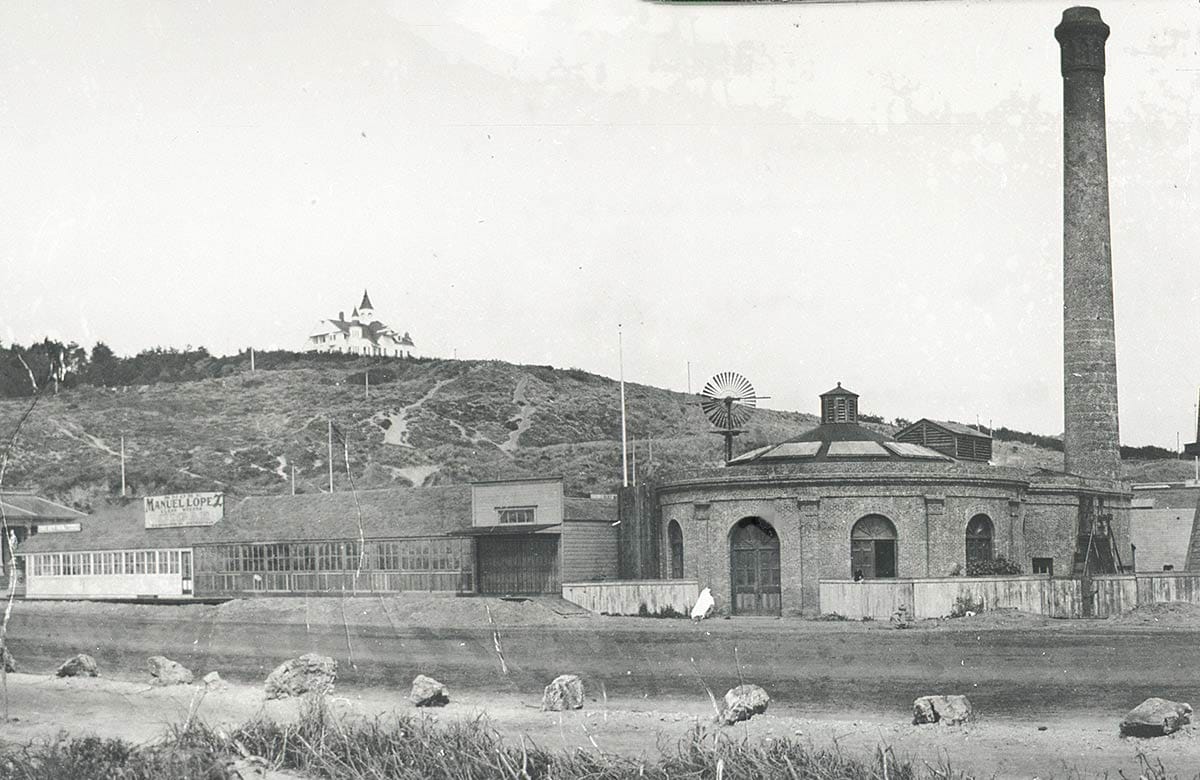
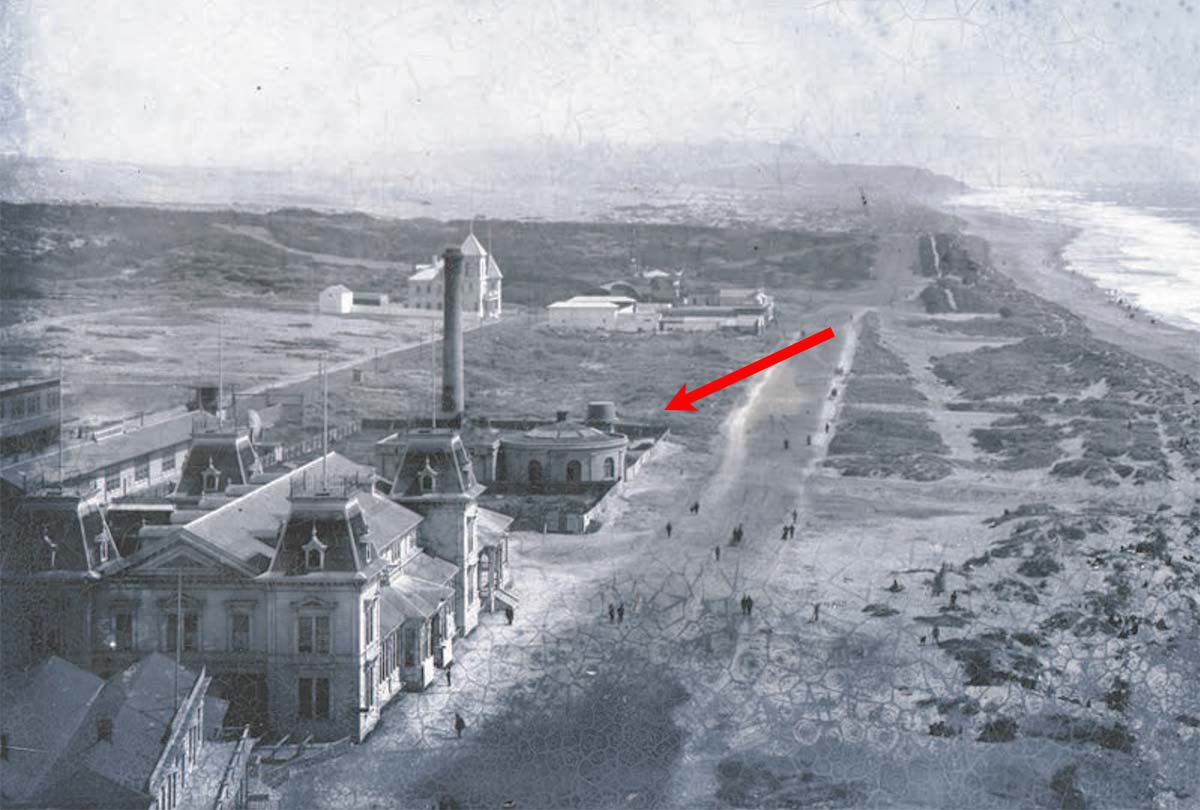
Capped by a sky-lighted roof with a vented octagonal finial, the powerhouse held a 22-foot-deep well and pumping machinery powered by three coal-oil steam engines in an attached building. An 80-foot-tall chimney loomed above the whole operation.
Up to three million gallons of seawater a day were drawn from the pier’s intake pipe and sent though a metal pipeline under Balboa Street and today’s Geary Boulevard.
The line led to the company’s five-million-gallon reservoir and settling tanks on Masonic Avenue just north of Geary in Laurel Heights, which today perhaps is better described as “Trader Joe’s Heights” because of the popular supermarket on the reservoir site.
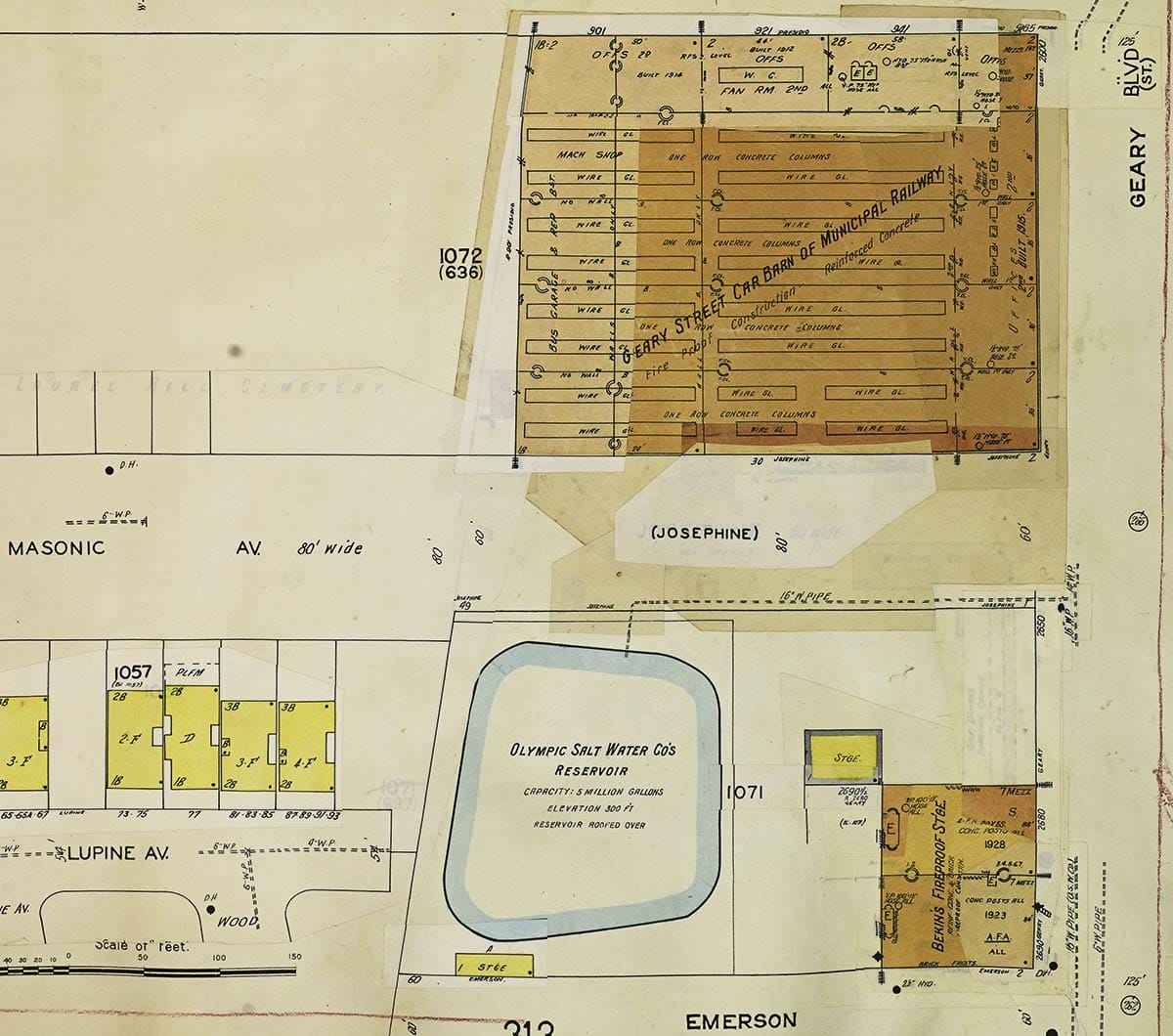
From the reservoir 300 feet above sea level, gravity did the work to get the water to the Olympic, Lurline, and other pools east.
The popularity of salt-water swimming remained high into the 20th century. When the Olympic Club constructed a new clubhouse after the 1906 earthquake and fire, a replacement salt-water tank was installed inside.
As the Annals of the Olympic Club explained in 1914: “Ask any Olympian what he regards as the most entertaining feature of his club, and without hesitation he will reply—‘the swimming tank and its salt-water accessories.’”
The Lurline Baths facility was also rebuilt after the 1906 disaster. Other salt-water pools went into the new downtown homes of the Elks Club, Press Club, Concordia Club, and Metropolitan Club after the earthquake and fire.
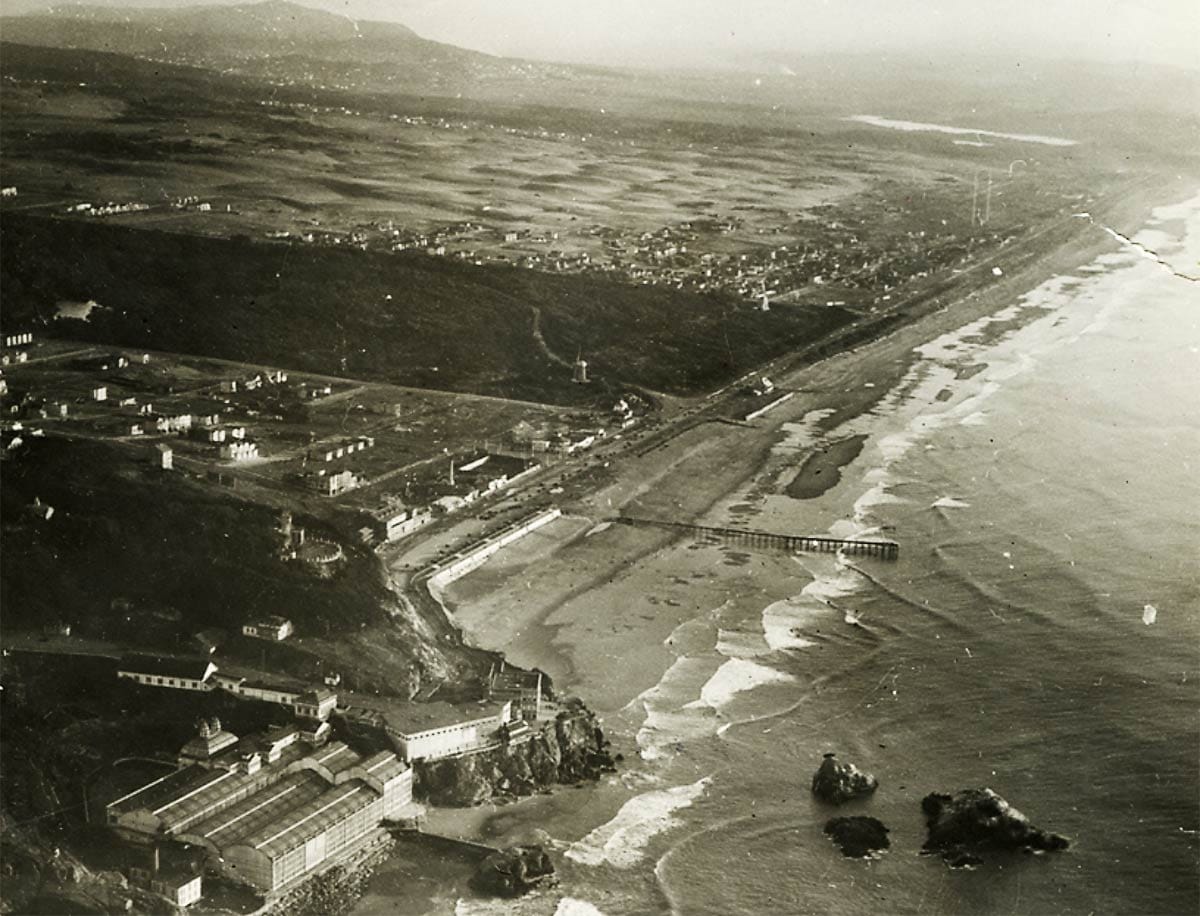
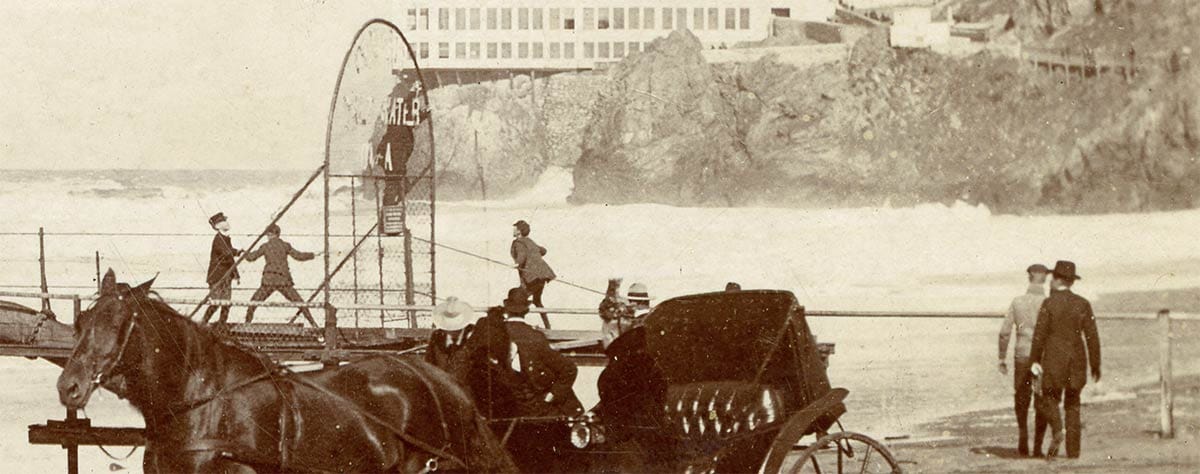
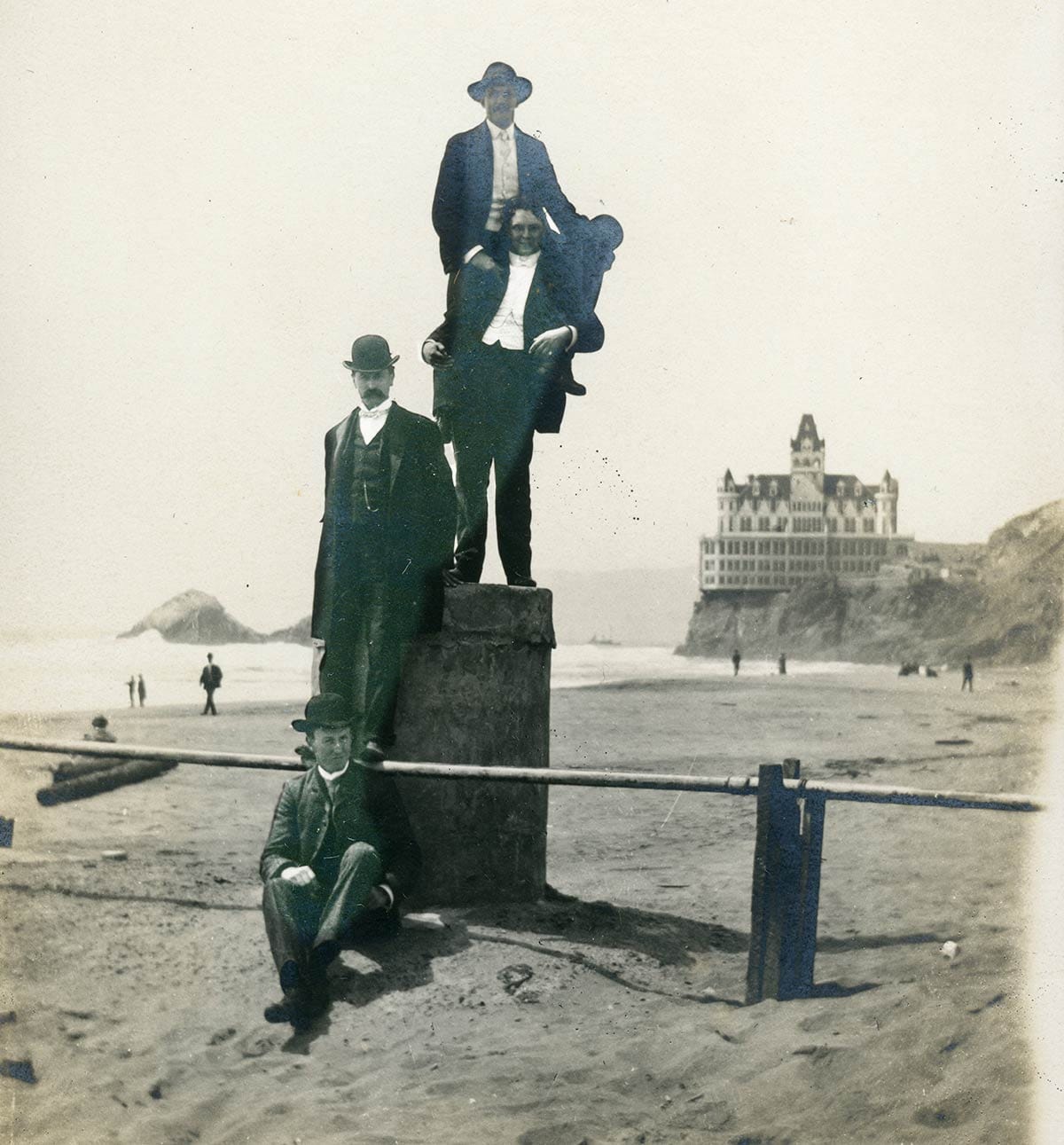
Usually called the Olympic or Lurline pier, the landmark was never meant to be used for more than supporting a big pipe and sucking up seawater. The company erected fences to discourage beach-goers from walking on it, but lots of old photos show kids clamoring up the sides.
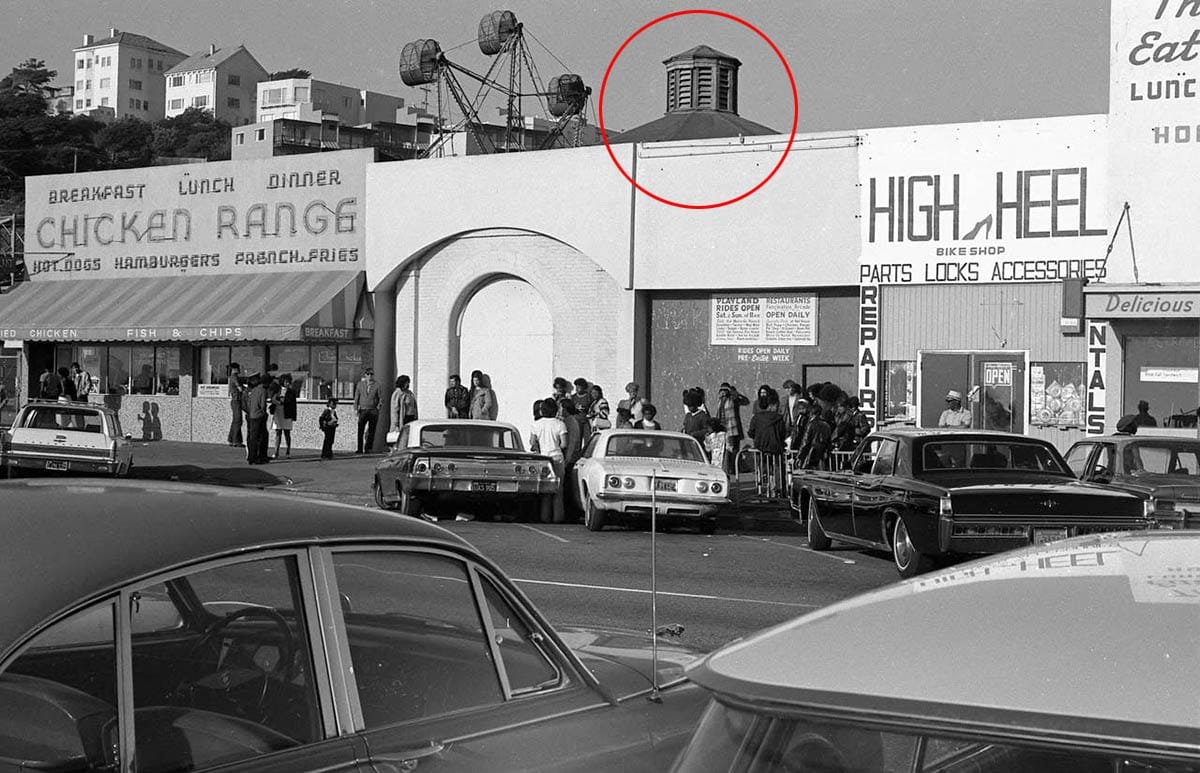
Beachside amusements slowly encircled and hid the once prominent pumping station complex on the Great Highway. By the 1920s, the Chutes water ride and fried-food eateries surrounded the site. An arched doorway set between the Sea Lion/Chicken Range restaurant and the Pie Shop was an inconspicuous entry point to the pumphouse.
The Olympic Salt Water Company’s franchise from the city expired in the middle of World War II, but operations had taken a hit earlier than that. Competition, maintenance issues (salt water is tough on pipes!), and changing tastes had closed Lurline Baths in 1936.
At the beach, the big pumphouse chimney came down the same year. The pier, damaged a big storm in 1905 and battered by hunks of the shipwrecked Yosemite in 1926, was a continual maintenance problem.
The Olympic Club stepped in to formally bring the pumping company in-house, reorganizing it as the Ocean Salt Water Company to keep the water flowing and the members’ pool salty.
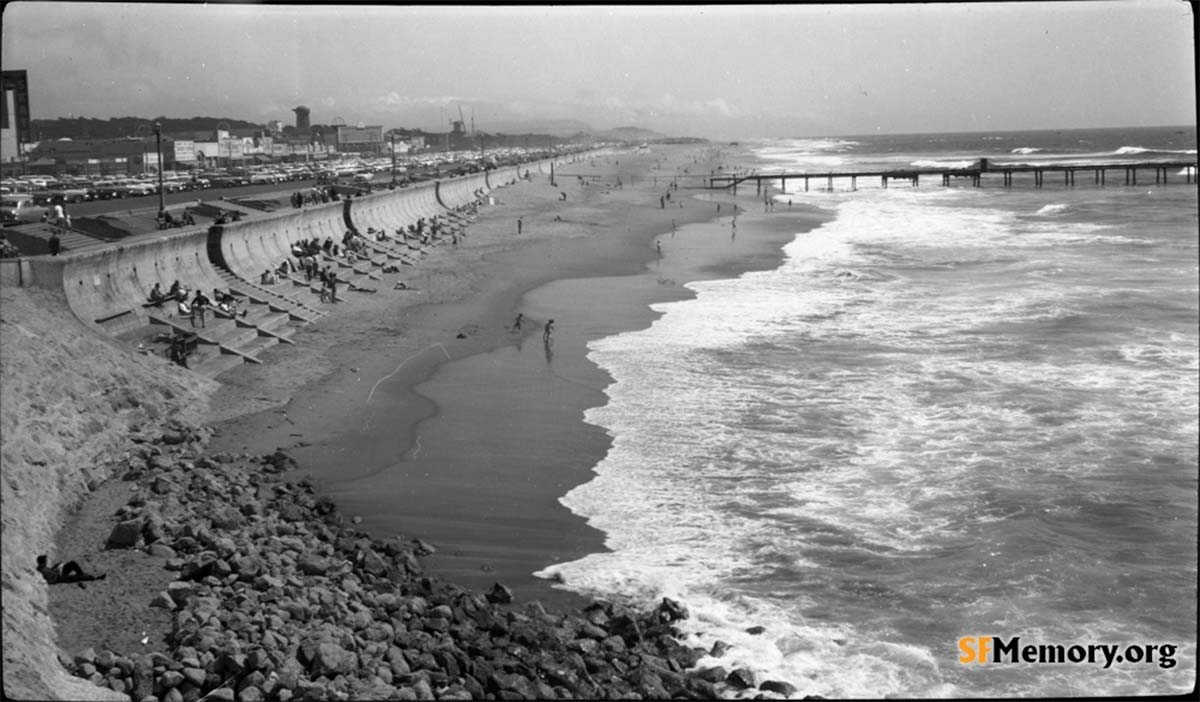
The water kept still flowing into the early 1960s—Steinhart Aquarium at Golden Gate Park’s Academy of Sciences was a customer until 1962—but extensive damage to the pier from a boat accident around that time spelled the beginning of the end.
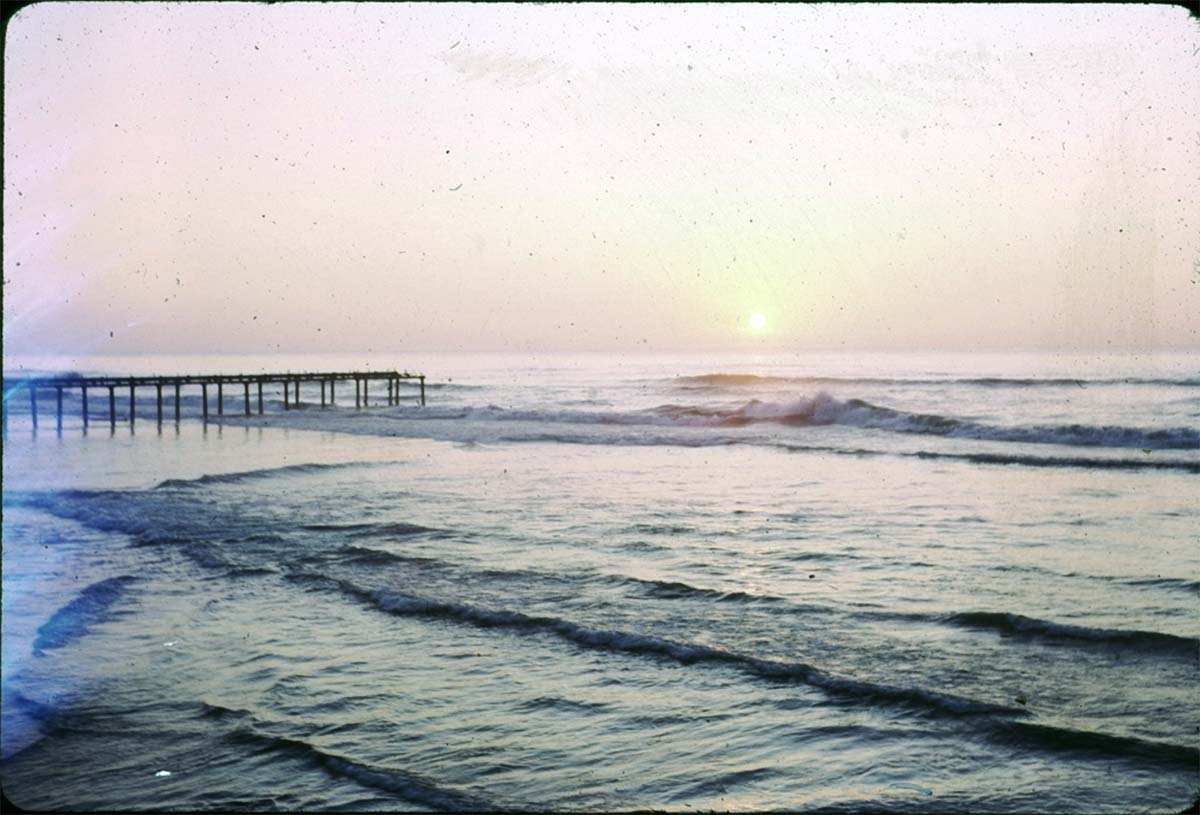
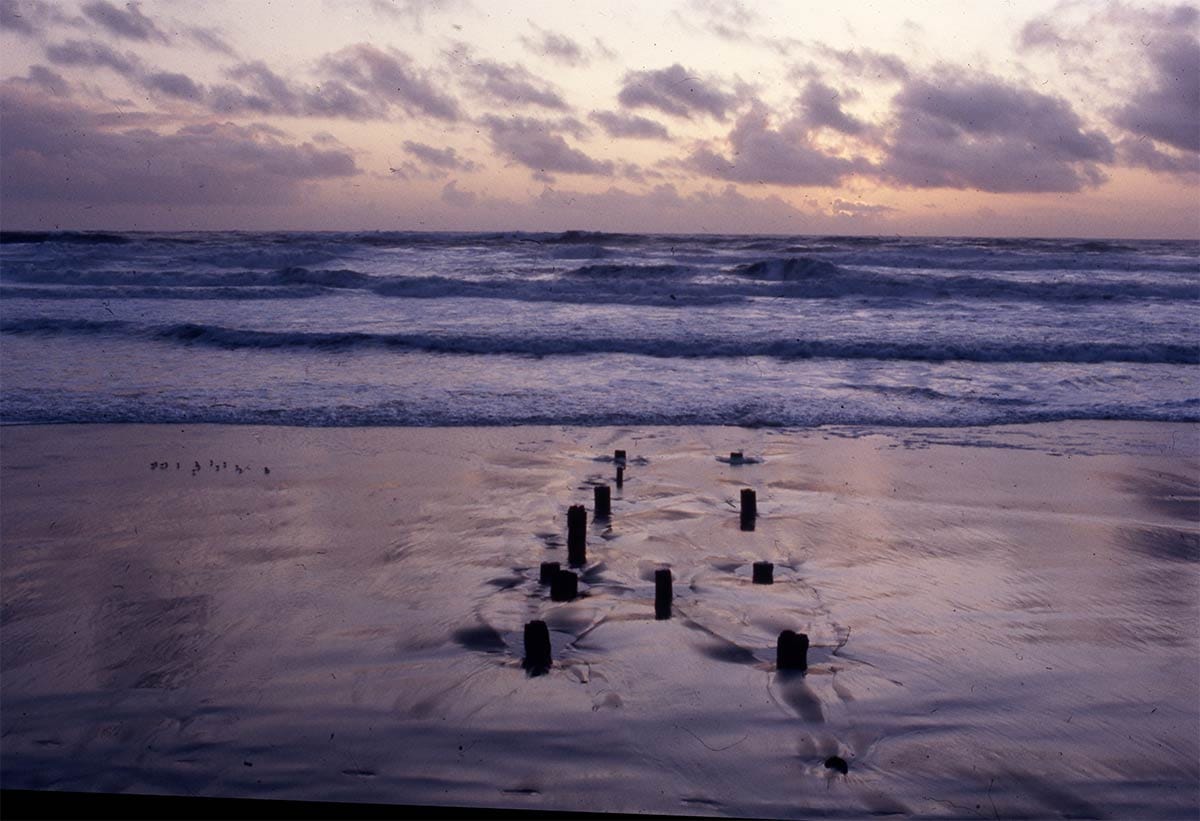
The Olympic and other clubs moved on to fresh-water pools and the pier’s remaining infrastructure was removed in 1967.
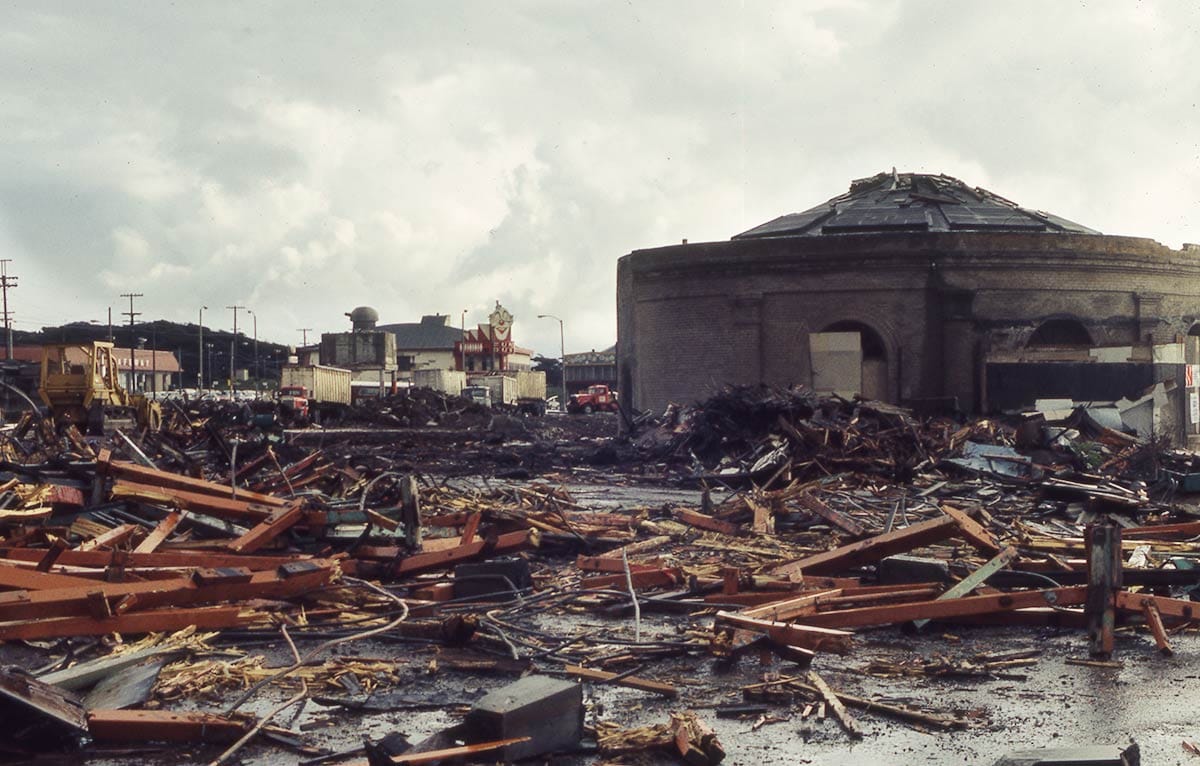
The sturdy old brick pumphouse held on a few more years. After Playland closed in 1972, demolition of the block revealed for the first time in decades the industrial yet elegant 1890s building with its arched window openings.
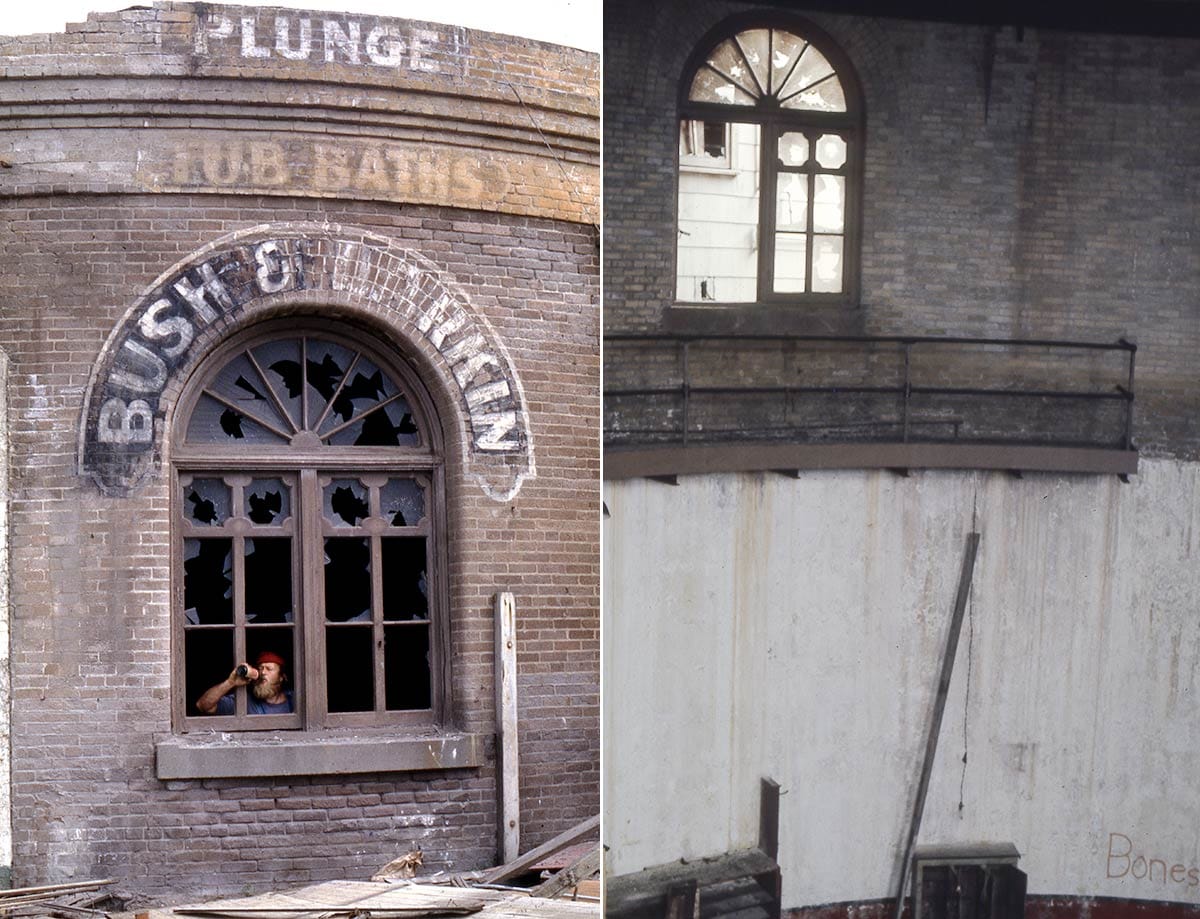
Passersby likely were confused by the faded lettering referencing Bush and Larkin streets, six miles away, where the long-gone Lurline Baths had once offered an ocean water plunge.
There are still salt-water pools in San Francisco. The Chinatown YMCA, the fancy Equinox sports club at 747 Market Street, the Fitness SF on Fillmore... I believe the Metropolitan Club’s pool downtown might still be salt. (Can a member let me know?)
Hopefully swimmers at these saline pools enjoy all the salty health benefits even if their water is not sucked from the surf of Ocean Beach.
Woody Beer and Coffee Fund
The Woody Beer and Coffee Fund is kind of like giving me a tip, except I spend it on buying beverages to enjoy other people’s company.
You can contribute, or redeem a drink, or both. Or neither, I suppose, but shouldn’t we all consider engaging with the world more? I know it’s scary, but, c’mon, let’s have a beer or a coffee together.
When are you free?
Sources
Lots of view of the pier on Gary Stark’s Cliff House Project site.
“The New Engines,” San Francisco Call, April 18, 1894, pg. 7.
Beach Landmark Being Demolished,” San Francisco Chronicle, May 29, 1936, pg. 3.
Richard Demorest, “A Midget Utility Brings the Sea into the City,” San Francisco Chronicle, This World Section, January 30, 1955, pg. 3.
Will Stevens, “Salt Swim Tradition of Olympic Club Periled,” San Francisco Examiner, April 22, 1957, Section II, pg. 24.
“3 Clubs May Close Salt Water Pools,” San Francisco Chronicle, April 22, 1957, pg. 33.
George F. Lineer, “Olympic Clubbers Have a Problem,” San Francisco Chronicle, July 3, 1957, pg. 5H.
Harry Bergman, “Another Landmark Goes—75-Year-Old Lurline Pier at SF’s Ocean Beach,” San Francisco Examiner, March 20, 1967, pg. 3.